

Drawing on his experience with Fe y Alegría and the Xavier Network, Daniel Villanueva, SJ, reflects on how effective networks function and the areas that require careful attention in leadership to ensure lasting impact. He examines in depth the elements that make networking strong and meaningful, identifies the current challenges and obstacles networks face, and offers key reflections for the years ahead.
Read More
Michael Schöpf SJ (ECE), the International Director of the JRS, illustrates how, as displacement increases and humanitarian aid decreases, the JRS must grow into a unified global mission—strengthening identity, governance, skills, and services, and deepening collaboration—so it can continue to provide hope, accompany, serve, and defend migrants and refugees in an increasingly divided world.
Read More
Cedric Prakash SJ (GUJ) affirms that collaboration is central to the Jesuit approach, from St Ignatius and Vatican II to the General Congregations and the magisterium of Pope Francis. Building on this tradition, he provides a critical analysis of the genuine obstacles to authentic collaboration, particularly clericalism, patriarchy and the concentration of power, paying specific attention to the Indian context. He denounces superficial forms of collaboration, emphasising the urgent need for relationships based on co-responsibility, subsidiarity and communal discernment. He highlights that, today, collaboration is an indispensable requirement for justice, human rights, peace and care for creation.
Read More
Pavulraj Michael SJ (MDU) analyzes prophetic leadership and governance within the Society of Jesus, highlighting the biblical tension between memory and vision as demonstrated in Jesus Christ. Referencing GC 35, the Constitutions, and Ignatian spirituality, he depicts Jesuit leadership as contemplative, discerning, and mission-driven, characterized by service rather than authority. He emphasizes discernment, collaboration, and networking as key practices that allow Jesuit governance to tackle contemporary challenges creatively and faithfully in pursuit of the universal mission.
Read More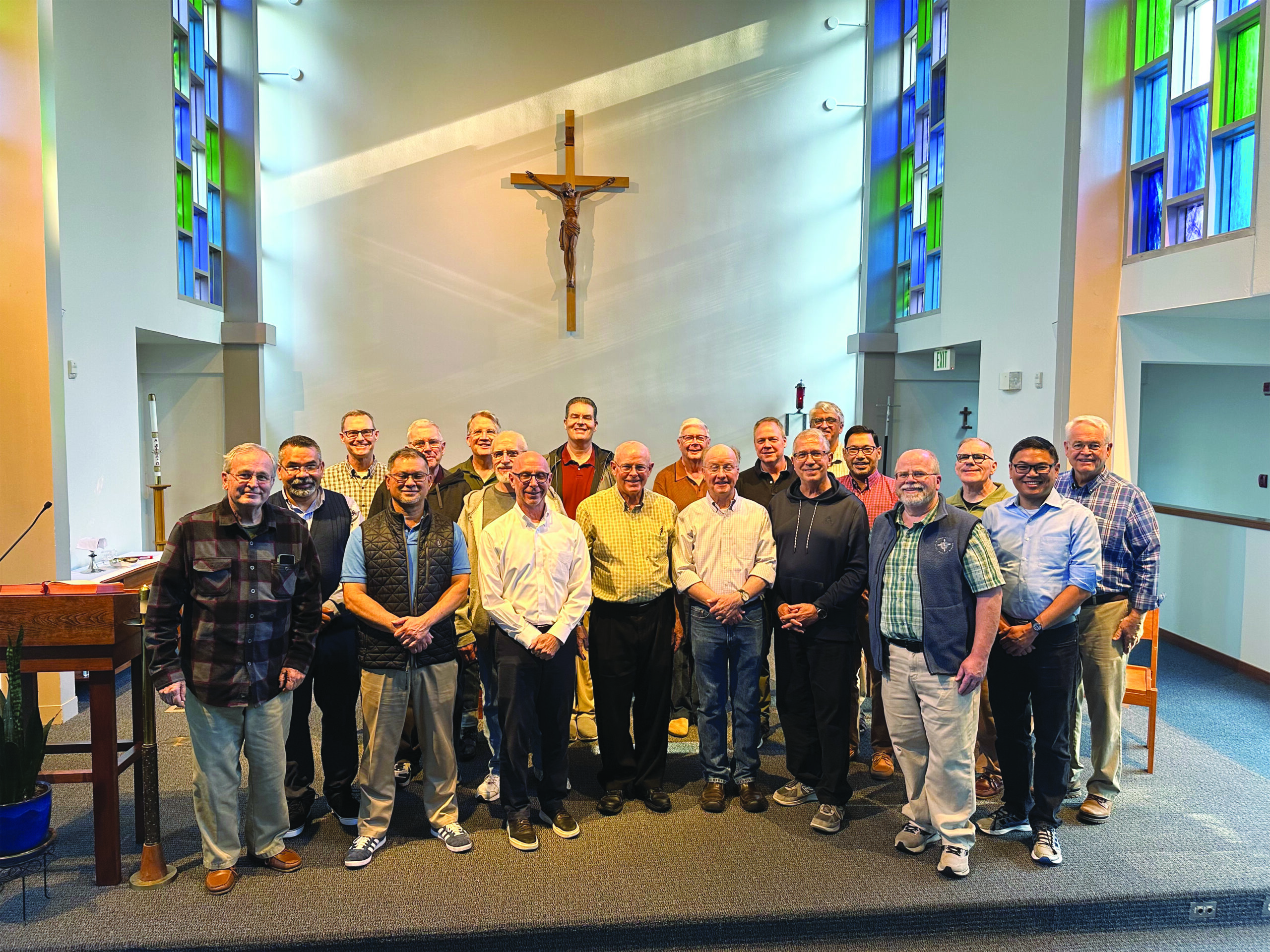
Sean Carroll SJ reflects on the commitment of the USA West Province to discernment in common as a guiding vision for Jesuits and their lay partners: 'Discernment in common is not simply a tool that we use, but also a way of being together as Jesuits and apostolic partners.' He discusses the successes, challenges and lessons learned in developing the capacity for communal discernment across ministries. He also provides concrete examples of initiatives in education, youth engagement and migrant support in his province.
Read More
Mark Raper SJ (AUS) reflects on the process of establishing the JRS as a tangible manifestation of communal Ignatian discernment, inspired by the approach of Pedro Arrupe. Drawing on his experience, Mark outlines the key elements of a truly communal discernment process. Through accompaniment, prayerful listening, and careful analysis of reality, discerning God's will leads us to make risky decisions that constitute a prophetic faith–justice response, transcending ideology.
Read More
Gasper Lo Biondo, SJ, and Peter Bisson, SJ, reflect on how General Congregation 35 reshapes the Jesuit faith–justice mission in a postmodern and globalized context. They reflect on the postmodernity’s attention to human subjectivity, despite its risks, creates new possibilities for a post-secular public presence of faith. Grounded in Ignatian experience and discernment, GC35 affirms the inseparable link between the service of faith and the promotion of justice, calling Jesuits to engage interiority and relationships as sources for mission in a fragmented world.
Read More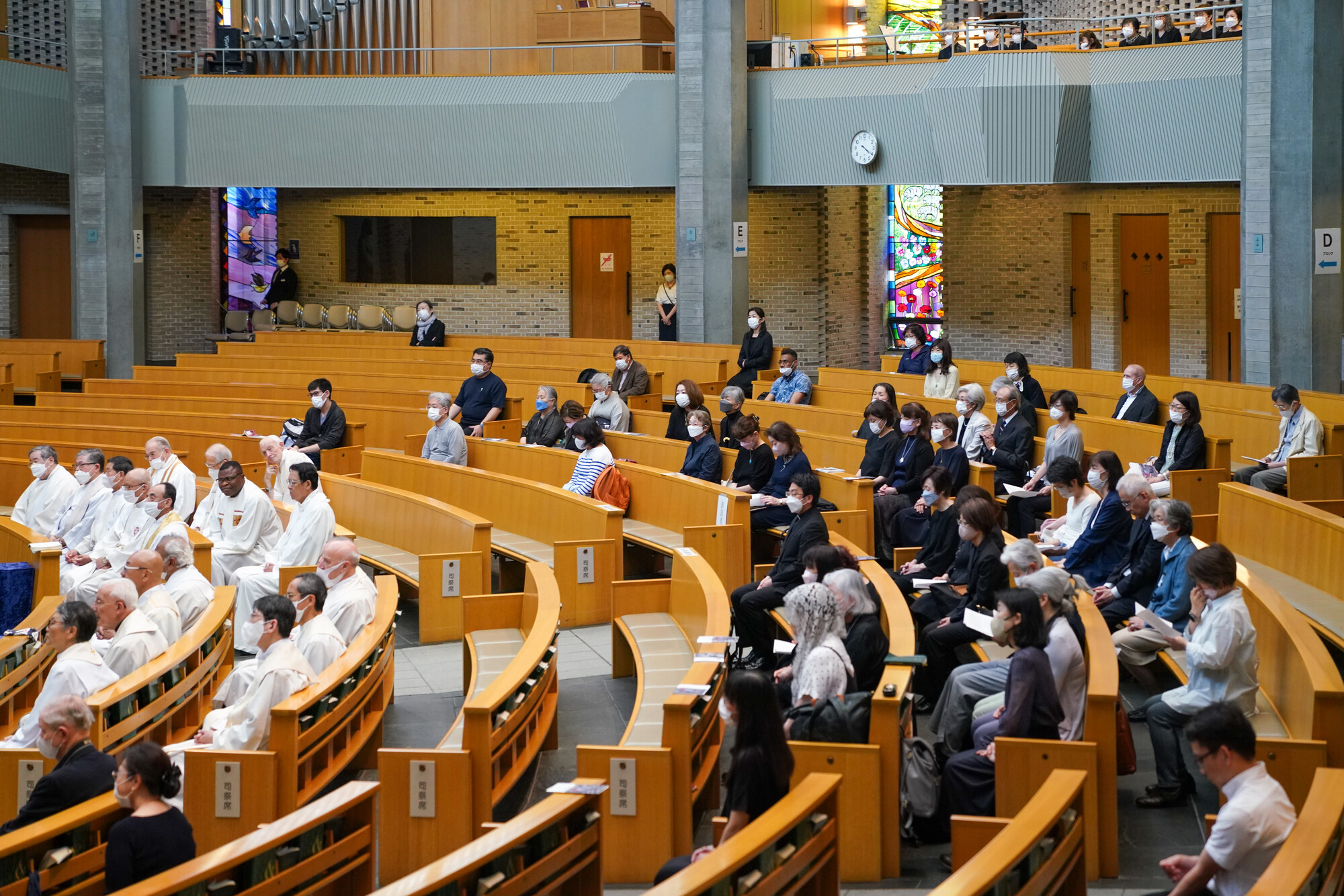
Renzo De Luca, SJ, reflects on the challenges and opportunities of living in an increasingly secular Japan. Drawing from two decades in Nagasaki and active involvement in interfaith dialogue, he notes that secularization influences all religions—not just Christianity—indicating a broader cultural shift. Despite this, moments of crisis, like the tsunami and the pandemic, reveal a hidden spirituality that seldom appears in daily life. Looking at Japan’s history, from Saint Francis Xavier to Pedro Arrupe, De Luca emphasizes how missionary bravery, cultural adaptation, and genuine charity created pathways for the Gospel. He concludes that today’s crisis lies in hearing and communication, advocating for renewed methods that learn from and engage with modern culture while trusting that God still guides the mission.
Read More
Thomas Massaro, SJ, revisits Pope Paul VI’s 1965 mandate calling the Society of Jesus to confront modern atheism and traces how this mission influenced General Congregations 31 and 32: “to do research, to gather information of all kinds, to publish material, to hold discussions among themselves, to prepare specialists in the field, to pray, to be shining examples of justice and holiness, skilled and well-versed in an eloquence of word and example made bright by heavenly grace,” where the words of the pope (7-05-1965). Massaro demonstrates how the challenge of atheism, once addressed explicitly, later became integrated into broader Jesuit priorities such as evangelization, justice, and inculturation. Massaro concludes by asking how today’s Jesuits might renew creative fidelity to this call and allow the struggle against atheism to shape their apostolic mission.
Read More
Andreu Oliva de la Esperanza SJ (ECU, El Salvador) reflects on the renewed vision of community offered by GC 35, which affirms that Jesuit community is not only for mission but is itself mission. Drawing from his experience in Central America, he highlights the tension between apostolic work and fraternal life, emphasizing that authentic companionship strengthens our service. He stresses the need for communities rooted in friendship, simplicity, solidarity with the poor, and Gospel coherence. Oliva calls for renewed structures and shared discernment so that Jesuit communities may better witness to the Kingdom of God.
Read More
Francisco José Ruiz Pérez, SJ, reflects on how communitas ad dispersionem has shaped Jesuit life from his entry into the Society in 1981 to the present. He traces the evolution from an initial emphasis on dispersion and mission—often at the cost of community—to a renewed balance integrating identity, community, and mission. He highlights how friendship in the Lord, the distinction between mission and tasks, and especially the growth of communal discernment have reshaped Jesuit community life. Today, he sees the Society called to live a deeper, more interconnected communitas ad dispersionem within a global, collaborative apostolic body.
Read More
The Society of Jesus proclaims itself as ‘one apostolic body’, united in mission and service to a faith that does justice. Yet fifty years after communitas ad dispersionem became part of its official language, Jesuits worldwide struggle to embody this vision. The Four Universal Apostolic Preferences, meant to guide and renew Jesuit mission globally, have often been met with limited understanding and growing frustration among younger members, who find them abstract and difficult to apply in practice. These random thoughts are entirely my own, based on my experience. I realise that many of the thoughts and ideas have been addressed by many before now.
Read More