
Collaborating to serve a mission that surpasses us
Abstract
Drawing on his experience with Fe y Alegría and the Xavier Network, Daniel Villanueva, SJ, reflects on how effective networks function and the areas that require careful attention in leadership to ensure lasting impact. He examines in depth the elements that make networking strong and meaningful, identifies the current challenges and obstacles networks face, and offers key reflections for the years ahead.
Experience teaches us that the decision to collaborate is not initially organizational. It originates from the encounter between a demanding call that exceeds us and a spiritual openness that must be translated into structures and processes. It happens when we accept that the mission we are sent on surpasses our personal abilities and usual organizational methods. Only then can we walk with others, trust in shared processes, and be guided by a mission we do not control but aim to serve faithfully.
1. Principle of reality
1.1. A response that cannot be improvised
Less than three days after the war broke out in Ukraine, the Society of Jesus launched a humanitarian response with unmatched speed and coordination. Within hours, provinces, social works, Jesuit NGOs, universities, and the Jesuit Refugee Service collaborated on a unified effort: clear, impactful, internationally coordinated, and rooted in a strong local presence.
None of this was improvised. It was made possible because JRS was already operating in Ukraine and neighboring countries, and because the Xavier Network - a global network of Jesuit NGOs and mission offices - had gained fourteen years of shared experience in international emergencies. Years of learning, correcting mistakes, building trust, sharing leadership, and refining procedures across diverse contexts such as Indonesia, Haiti, the Philippines, Nepal, the Democratic Republic of Congo, South Sudan, Lebanon, and Ethiopia.
This journey enabled quick coordination of local needs within a single shared program—called "One Proposal"—and connected it to a global initiative that linked the General Curia, the provinces, and international solidarity actors through one support and accountability channel. That framework remains the main driver of our response to people displaced by war and continues to inspire the potential for future coordinated efforts.
1.2. A sense of community that becomes visible
For several years now, even in schools in remote areas, a map of the world showing the reach of the Society of Jesus's educational work has appeared on the walls. It features traditional Jesuit schools alongside those of the Jesuit Refugee Service and Fe y Alegría, forming the Jesuit Global Network of Schools.
This seemingly simple yet deliberate gesture is the visible part of a growing process of international collaboration. Thanks to it, we have been able to share common tools such as global identifiers, promote campaigns like the Red Chair, and incorporate the Universal Apostolic Preferences into the daily life of our centers in ways that were unthinkable just a few years ago. All of this stems from work that began in earnest in 2012, at the first global meeting in Boston, which, fourteen years later, has fostered a sense of belonging unprecedented in our educational history.
1.3. An expanding "we."
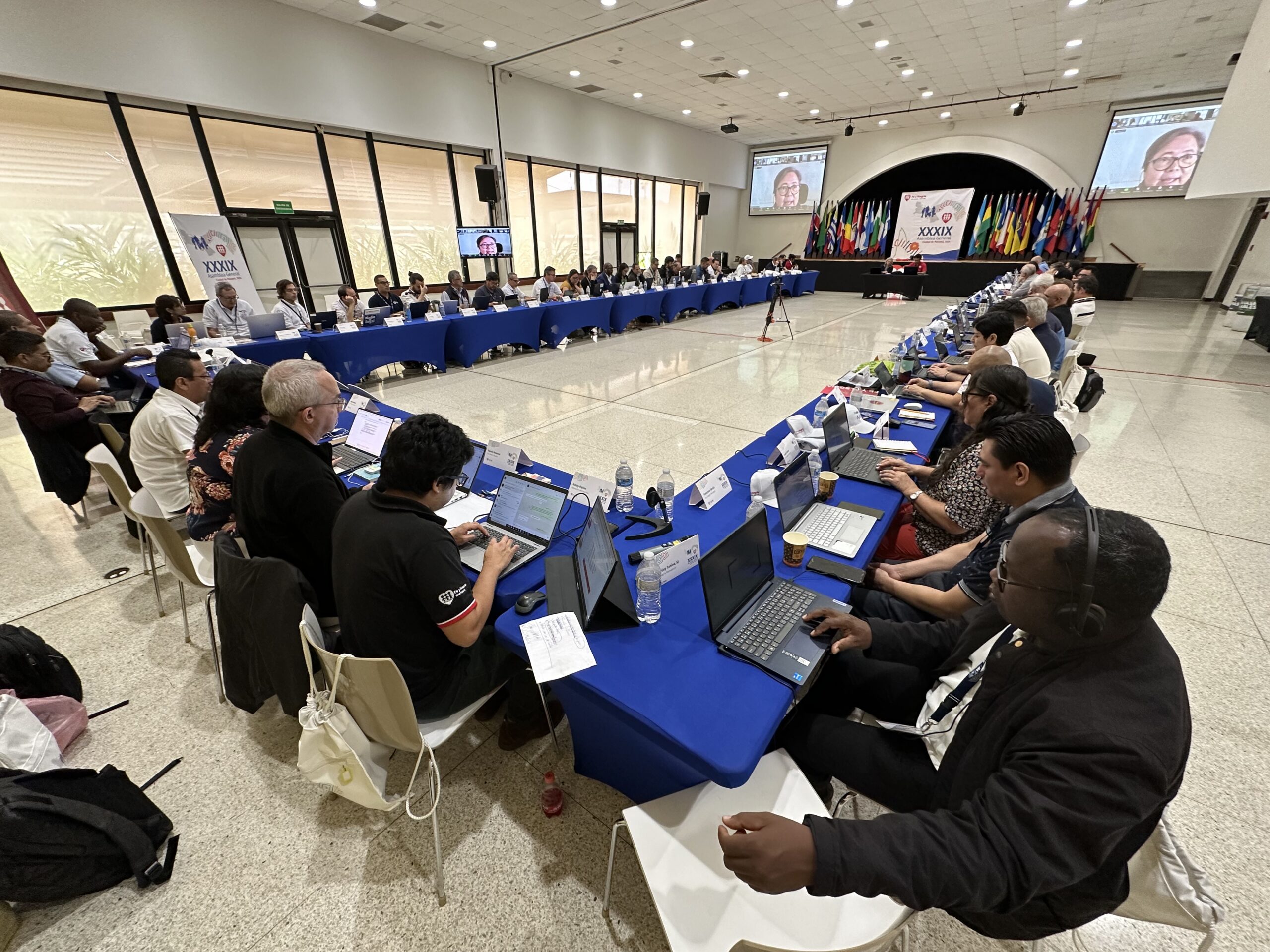
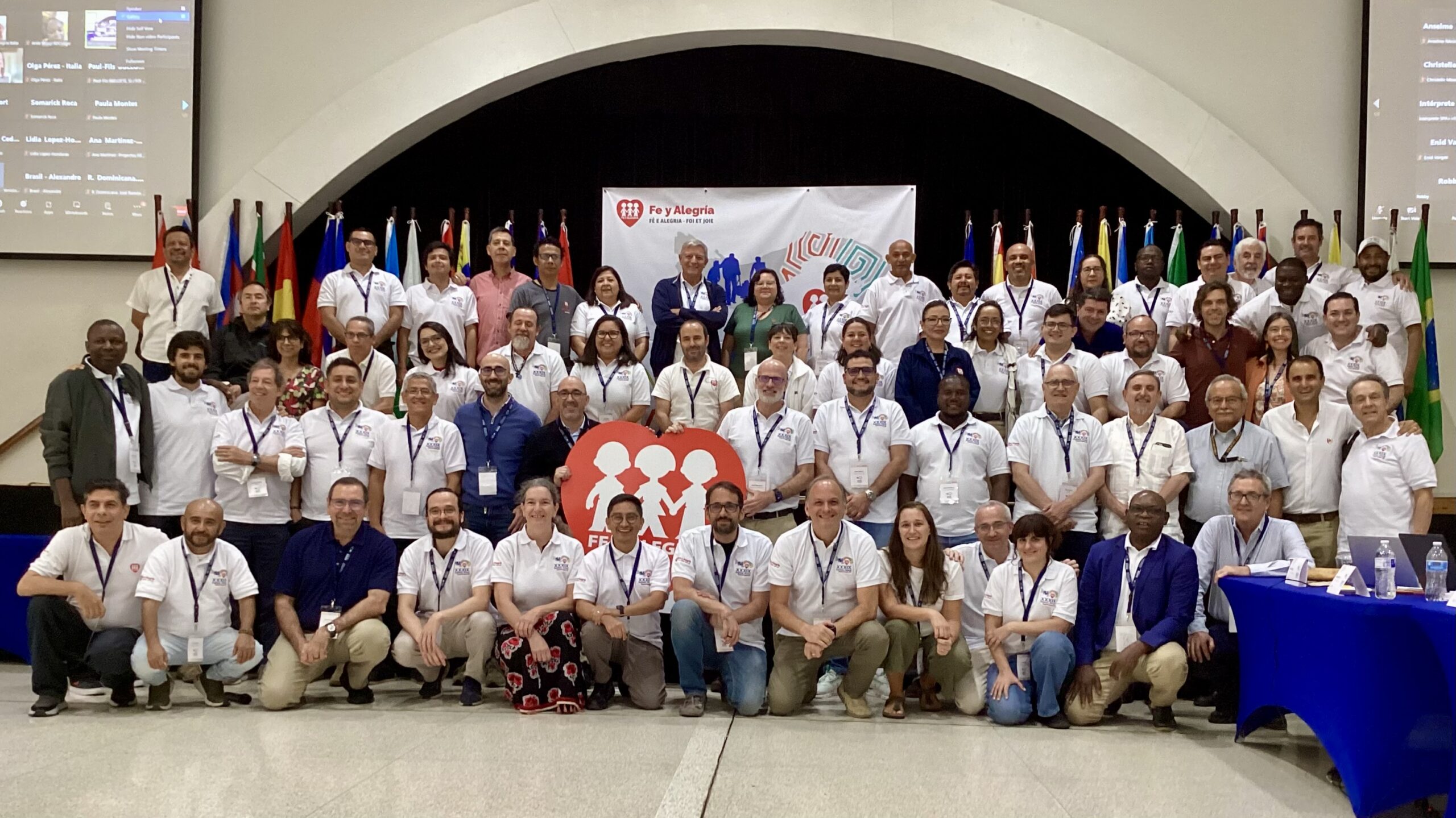
Fe y Alegría is one of the most extensive and important networks on our apostolic map. In its seventy-year history, the Society of Jesus has collaborated with more than 120 religious congregations that have played a key role in developing this educational mission for the poorest.
In a context of declining vocations, many congregations see in Fe y Alegría a true space for collaboration that allows them to extend their mission beyond numerically fragile presences. During a recent meeting with religious sisters in Peru, a provincial shared her emotion: "Thanks to the Fe y Alegría network, we are not only maintaining our current presence, but also exploring new ways of working in the Amazon, fostering hope and a spiritual energy that is very important for us today."
These simpler presences—supported by shared institutional processes and focused on enhancing charismatic density beyond property or management—are opening new inter-congregational opportunities. Everything indicates a different way of being Church, especially on the frontiers, where the Spirit urges a greater evangelical radicalism and a form of synodality that is also reflected in structures and networking.
1.4. Being part of something greater
These examples are not isolated instances. They indicate a deep change that has sped up in recent years. They reveal new ways of understanding and living out mission, capable of unleashing a collective force that drives us further than we could ever go alone.
Every time I reflect on collaboration and networks, I think about the Incarnation. Looking at the world broadens both the heart and the mind. The mission isn't confined to one work, one region, or one country. Therefore, international collaboration isn't just a strategic operation but a spiritual and apostolic outcome of our desire to serve a universal mission and our awareness that we are part of something greater than ourselves.

2. Lessons from practice
It is important to recognize that collaboration within the Society of Jesus does not stem from globalization or technological progress, but from a gradual and deepening shift in how we understand our mission—becoming increasingly universal—and how we live it as a united international apostolic community. Jesuit collaborative efforts at this supraprovincial level, which have been particularly emphasized over the past 20 years, have not only produced tangible results but have also created a new way of understanding the mission, leadership, and scope of our apostolic work.
2.1. Clear mission and architecture at the service of the local
The experience with the Xavier Network shows the importance of having a clear and simple shared mission, mainly focused on common projects and emergencies. This approach makes collaboration more precise and prevents trying to cover everything. It has also been vital not to add unnecessary layers of structure, which allows member institutions to act and stay visible without replacing the organizations that actually do the work. The principle of subsidiarity is a key aspect of global networking.
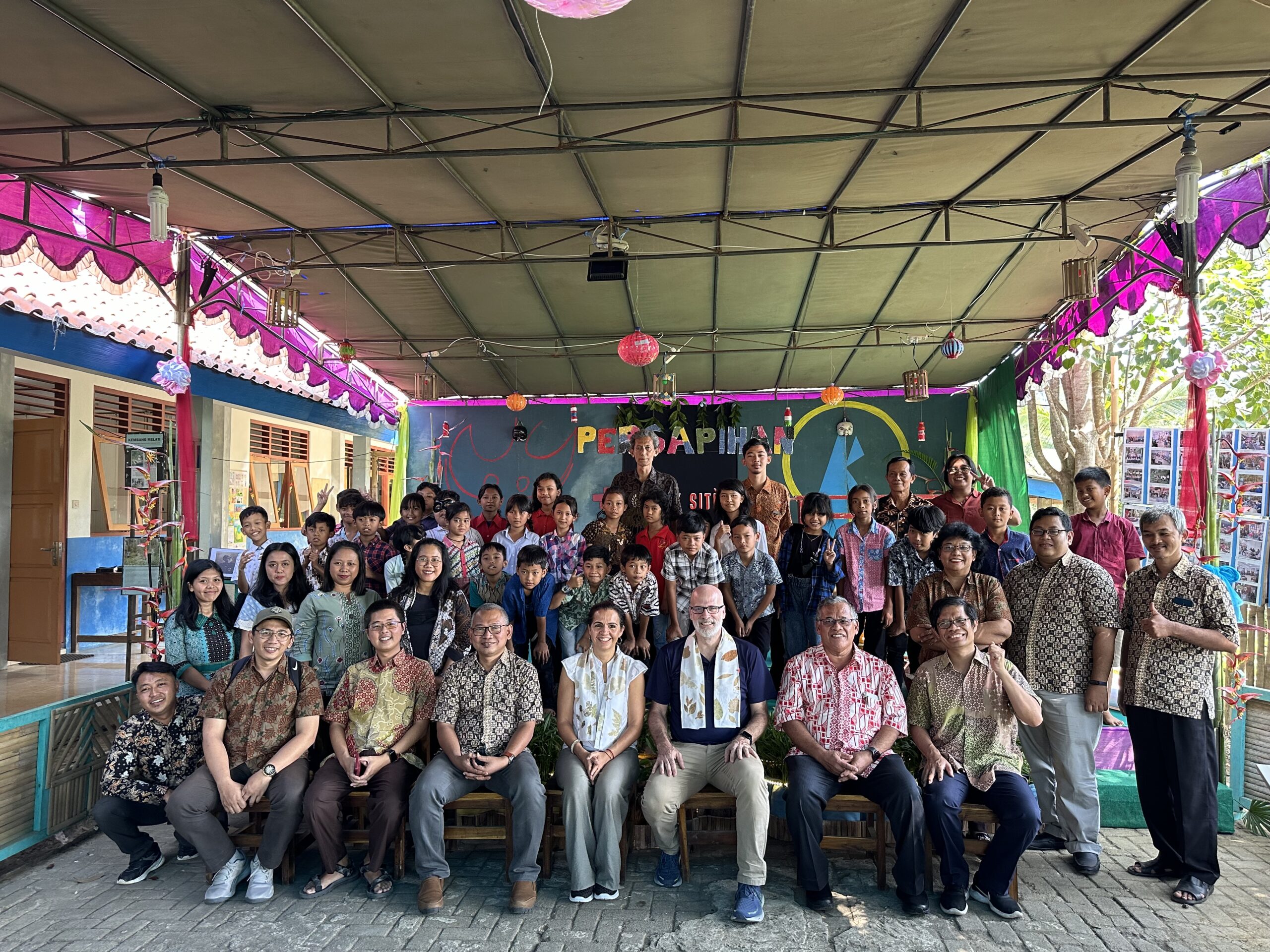
This insight is confirmed through work with the Kanisius Foundation, a Jesuit educational network with nearly 200 schools in Central Java. A carefully designed institutional structure has enabled it to sustain a century-long presence and, today, plays a significant role in improving public education in Yogyakarta. Getting the institutional structure right can determine whether a long-term apostolic initiative succeeds or fails.
2.2. Time as a condition for collaboration
Working with the Global Jesuit School Network shows that networks cannot be improvised. They require time, clear phases, and growth periods. Mutual understanding, ongoing dialogue, and shared themes are necessary for any joint action plan. This network has already experienced this process over two 6-year cycles, proving the suitability of the pace and approach. Rushing these processes often results in frustration or superficial efforts.
The Global Ignatian Advocacy Network, with over 17 years of history, shows that it takes years to find the right dynamics to articulate, permeate, and align the right actors and efforts for international collaboration. Collaborative work has a methodology, a strategy, and takes time.
2.3. Diversity and adaptation to context
The experience of the Jesuit Refugee Service underscores the importance of tailoring strategies to specific regions and institutional contexts. Global efforts only succeed when they are adapted to the unique realities of each conference and province. Every network that operates beyond a single conference understands this. Otherwise, networks that attempt to unify everything tend to weaken the overall apostolic mission.
In Fe y Alegría, this conviction is especially clear. The true strength of the network comes from the deep value of the local. The network only makes sense and will only succeed if our collaborative efforts support, enhance, create value, and improve the specific local mission. Therefore, it is possible to build networks based on listening, dialogue, and collective discernment from the communities we serve. This requires spaces, methodologies, and dialogical processes that ensure this complex building process.
2.4. Complementarity and representativeness
A key lesson from working with university networks is that collaboration can be hindered when it involves entities with very different institutional priorities if there is no clear shared mission. Therefore, it is essential to connect academia with other apostolic fields. Universities offer a unique ability to think through and develop answers to questions that emerge from apostolic practice. These are questions many agents ask, but they often lack the time or resources to explore in depth. Academia also provides research and data, which support strategies across different regions, such as in advocacy, relationship building, or dissemination. This is where one of the main strengths of international networks becomes evident.
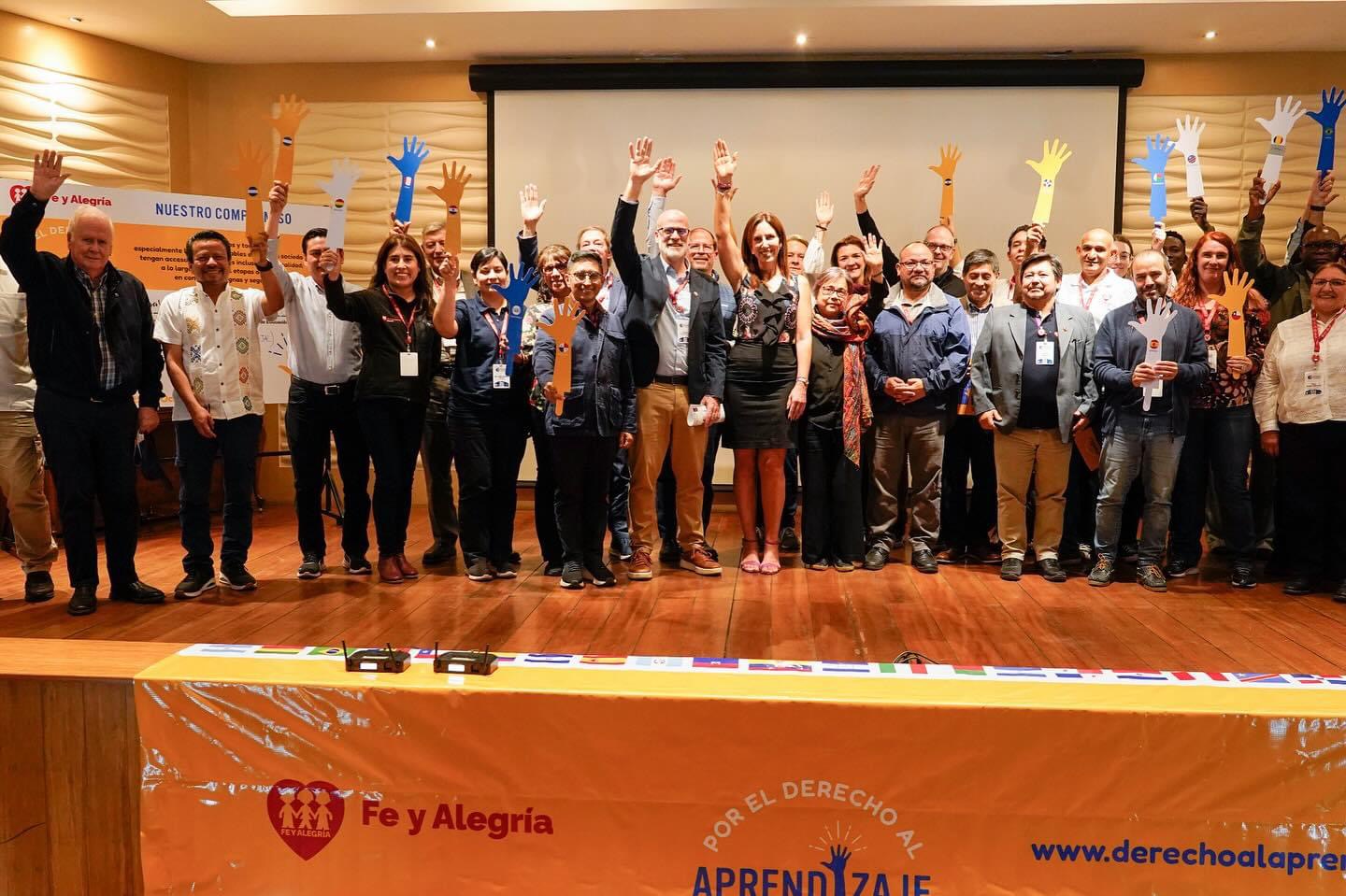
While working with GIAN for the right to education, we have discovered that there is still a wealth of collaborative experience that remains unintegrated at the international level. The more we explore the apostolic map, the more we realize that many initiatives are not yet known to our networks. There are real networking treasures in Indonesia, India, and the Philippines, for example, that stay largely unseen and are only loosely connected to larger-scale efforts. It is difficult to admit, but even today, collaborative efforts are still limited by communication gaps or a lack of representation on the international stage.
2.5. Co-creation and openness
Working with youth networks like MAGIS or RG21+ teaches an important lesson, one that can be uncomfortable for institutions at times. When collaboration is genuine, the outcomes cannot be predicted or easily controlled. These networks become genuine spaces for co-creation, where young people not only participate but also redefine the very goals of the shared mission. Embracing collaborative dynamics means accepting uncertainty. It’s not just a symbolic act but an institutional shift: letting go of control and trusting others. Networks provide methods and structure, but the mission truly comes alive when the members of the networks can envision and commit to a genuinely shared goal. The outcome is often unpredictable.
Finally, working in inter-congregational spaces shows the openness that these collaborative efforts require and actually broadens our identity. Collaborating means accepting that our identity engages in dialogue and complements others, truly contrasting our sense of community, and pushing us to find common ground and refine our goals. Moving forward in collaboration involves accepting this exposure as part of the journey and growing from it.
3. A new way of proceeding
A fundamental conviction emerges from these experiences. Our apostolic body has two sides: hierarchies and networks coexist. Networks are not just support functions, but active apostolic agents with their own power, like the works. That's why they need a direct connection with Jesuit leadership and official spaces for coordination with other mission actors. We are on that journey.
In the past, leading the mission was primarily about the apostolic coordination of institutions, but today it also includes supporting and energizing networks. This should be kept in mind at every apostolic level. The secretariats of the General Curia have long integrated their regional leadership with those responsible for international networks. However, despite years of working groups and dialogues at the highest level, the question raised by GC36 about the right level of governance for Jesuit networks remains unresolved.
Our apostolic body is adopting a more complex and, at the same time, more unified structure. It is organized like a web where territorial regions, apostolic sectors, and cross-cutting networks intersect. One of the achievements of the last General Congregation was the creation of the position of Discernment and Apostolic Planning, as well as the development of the triad that guides our approach today: discernment, collaboration, and networking. These are not separate concepts; they are interconnected facets of the same spiritual and apostolic energy. Networks enable collaboration. Collaboration fosters the conditions for genuine apostolic dialogue. And this dialogue allows for true discernment as a community. Without networks, collaboration cannot expand. Without authentic collaboration, community discernment remains superficial.
Finally, it is very important that, as the sectoral secretariats develop global networks, working groups have formed within them that focus on their shared themes. Ecology, migration, education, and global citizenship are becoming cross-sector themes, naturally emerging in each secretariat and calling for development as common areas of focus.
4. Ways to move forward
All of the above points to a new approach that is clearly apostolic, relational, and in ongoing discernment. This approach is guided by mission rather than structures, operating from a systemic logic that begins with reality, embraces its complexity, and seeks to articulate it without simplification. It is a necessary way to respond to a mission that is no longer confined to the local level but requires articulation and supra-provincial agency. From there, I cannot help but conclude this article with some reflections on the coming years.
The first point is clear. Mission and identity are the true glue of any network. Collaboration only works when we recognize that we are part of something larger and shared. Reinforcing a deep sense of universal mission requires integrating this aspect into everyday practice at the work, provincial, and conference levels. It is crucial to keep developing broad frameworks of shared mission, such as the Apostolic Preferences, while also paying attention to similar tools of the Church and civil society, like the United Nations Global Compacts and their Church-related implementations in areas like migration and education.
Secondly, networking requires a solid institutional framework. Goodwill alone is not enough. It is essential to strengthen the Secretariats of the General Curia as spaces for sectoral coordination and, at the same time, to establish stable channels for dialogue with global intersectoral networks. If apostolic structures directly connected to the General Curia are not chosen, the Conferences of Provincials serve as the natural space for coordinating international apostolic efforts. To achieve this, we must create conditions that enable these regional coordination spaces also to oversee global dynamics. We need an international arena where we can engage in dialogue with a comprehensive vision and, before forming new networks, attend to existing ones and maintain the coherence of the entire system.
The third insight is that networks require leadership based on persuasion, encouragement, and trust, rather than hierarchical authority. Finding suitable candidates for this role can be difficult. Therefore, investing in international and collaborative leadership programs that combine management, interculturality, and Ignatian spirituality remains essential. Additionally, careful selection processes and ongoing support for those in these roles are vital. Many of our challenges at this level are more related to profiles and capabilities than to structural or strategic issues.
All of the above requires overcoming institutional individualism and strengthening a collaborative culture. Self-sufficiency and silo mentality continue to weaken our networks. Today, leading and influencing apostolically means accepting hybrid works and processes in which our presence will not always be about control or ownership. It means fostering interprovincial generosity and expanding the "we" as the true subject of mission, collaborating with other religious congregations and civil society. There is no apostolic horizon without collaboration with those who share, from different places, a commitment to justice, human dignity, and the common good. Although this step may seem simple, it continues to be a serious challenge in the formation of our scholastics and often requires a reconfiguration of the Jesuit identity concerning "our" apostolates and mission.
Finally, it is crucial to establish stable spaces for reflection and discernment on the practice of collaboration. In 2012 at Boston College and in 2017 at Georgetown, two international meetings focused on studying networking. In 2024, an apostolic planning meeting occurred in Rome, with reflections and dynamics that took place within this same international organizational framework. We need more experiences like this. The apostolic body learns little if it cannot systematize its own experiences.
5. The future as a common task
The latest General Congregations have made it clear: networking is not just a technical option, but "an indispensable condition" for our mission. By supporting and encouraging networks, the Society acknowledges that our organization is closely tied to the mission we pursue.
May this article help us realize that, as we collaborate and create structures for it, we are wiring our apostolic body, giving concrete form to how the mission can unfold in the future. Today, the future of our apostolic map depends on the ability to creatively combine existing institutions and make them work together—and with others—in new ways. It is not a question of opening more works, but of discerning with clarity and leadership how to missionarily articulate those we already have. That is where our responsibility lies today.
I firmly believe that how we set up our networks today and promote collaboration will largely determine how far we can go tomorrow as an apostolic body serving the greater good. The mission will continue to challenge us. Our task is to respond together.

Daniel Villanueva SJ is a Spanish Jesuit and systems engineer. He studied theology in Spain and the United States and holds a Global Executive MBA from Georgetown University and ESADE. Since 2023, he has been General Coordinator of the International Federation of Fe y Alegría, after holding management positions at Entreculturas and Alboan. His work focuses on international cooperation, education, technology, and global governance. He is a member of the governing bodies of institutions such as the Jesuit Refugee Service and Georgetown University.