
Pedro Arrupe and Discernment in Common: the Founding of Jesuit Refugee Service
Abstract
Mark Raper SJ (AUS) reflects on the process of establishing the JRS as a tangible manifestation of communal Ignatian discernment, inspired by the approach of Pedro Arrupe. Drawing on his experience, Mark outlines the key elements of a truly communal discernment process. Through accompaniment, prayerful listening, and careful analysis of reality, discerning God's will leads us to make risky decisions that constitute a prophetic faith–justice response, transcending ideology.
Reality is superior to ideas… Ideas are discussed, reality is discerned. Discernment is the charism of the Society.
Fr Pedro Arrupe gave a master class in communal discernment in Bangkok on 6 August 1981. His impromptu talk to Jesuits from the Thai Region and those working with refugees in Thailand was his last talk as General [1]. Later that night he took the flight to Rome and on arrival had the cerebral stroke that incapacitated him.
Days earlier, at the beginning of August 1981, Fr Arrupe had met me in Manila. He was there for a celebration of the arrival of the first Jesuits to the Philippines, four hundred years earlier. There he asked me to coordinate the new Jesuit Refugee Service in Asia Pacific. Although I could not then travel to be with the other refugee workers in the gathering in Bangkok, his instructions in that talk, which he referred to as his ‘swan song’, and his letter that founded JRS, would guide me during the next twenty years with JRS, and indeed for twenty years following that in successive postings as a major superior.
Fr General Pedro Arrupe had founded the Jesuit Refugee Service (JRS) the previous year, after an extensive consultation and discernment on the refugee problem. His letter, issued in November 1980 on the feast of St Joseph Pignatelli, gave six clear points on how JRS would facilitate the Society’s response to the refugee problem. But that letter gave no detail about the precise services JRS would offer to refugees. Although he prophesied that JRS would bring tangible healing to refugees, deeper acknowledgement of their plight, and a beneficial impact on the Society, he gave no instructions on what, precisely, the JRS field personnel should do. That was for discernment on the ground.
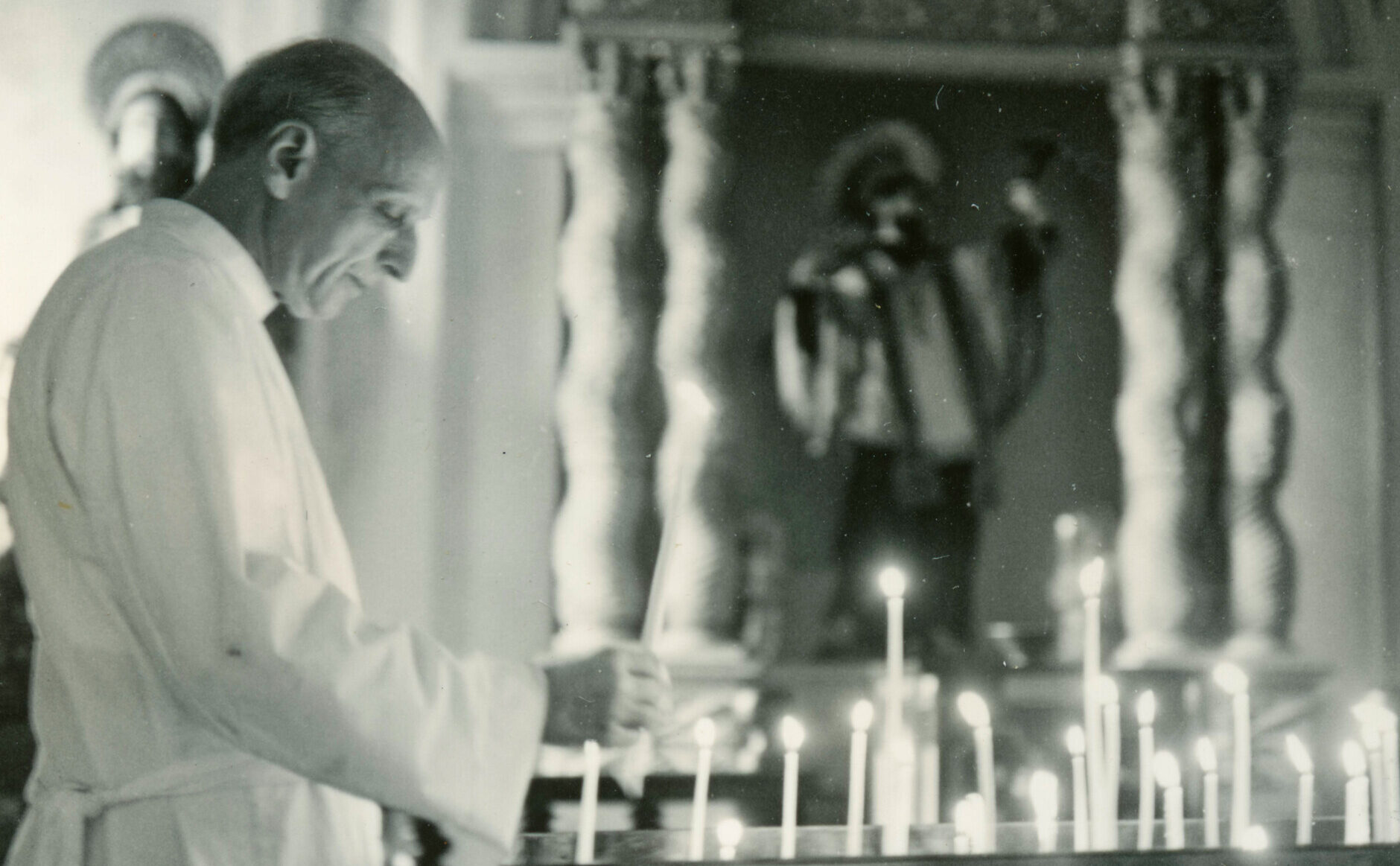
Pray much: instructions for discernment in Arrupe’s swan song
Fr Arrupe’s ‘swan song’ was full of rich insights for how to engage constantly in communal discernment on the realities that created the refugee situation and the ways in which the Society and JRS could respond – thus enabling them to live the prophetic character of Ignatian ministry. This is especially apparent in a seemingly strange diversion he made towards the end of his talk, as if he were thinking aloud. “I will tell you something I ask myself very often. Should we give spiritual help to the guerrillas in Latin America? No, you say? Well, I cannot say no.” On later reflection I realised that it was not a diversion at all. Almost a decade after GC 32 Decree 4, Our Mission Today: The Service of Faith and the Promotion of Justice, the Society was facing immense difficulties, both because of the Vatican’s clear antipathy towards Fr Arrupe and his authority, and because of apostolic choices on the ground that were sometimes interpreted in ideological terms. As Philip Endean put it, “Arrupe’s Ignatian spirituality and sensitivity to his own experience leads him to question the orthodoxies of Cold War politics.” [2] Fr Arrupe was proposing that the way of JRS, rooted in what JRS would learn from accompanying refugees, was another way of seeking justice, and that it would bring great benefit to the Society.
The day of 6th August commemorates both Hiroshima Day and the Feast of the Transfiguration. That day, Don Pedro met Jesuits who had come to Thailand to accompany the refugees in response to his appeal when he founded JRS. Typically, he first listened to them. “I can see that you are happy. But I can also see that your work is burdensome,” he said. He did not tell them how to do their work, but encouraged them to plan together what they were to do. “The situation is changing greatly,”he said. Therefore, they were to discern together and choose prudently the way in which they engaged in accompanying refugees. He insisted that communal discernment would shape this new apostolate, even if it must suffer birth pangs as it is born. “For this reason, a fortiori, great risks have to be taken,” Fr Arrupe reasoned. His advice was practical as well as spiritual:
“ The situation all across the world is changing greatly. It is difficult, then, to have a fixed plan… and you are experimenting…this is where prudence comes in … what this means is that we make a communal discernment as a group, then set a policy … In all this you have to think and pray as a group. The ‘elasticity’ of this experimentation … should be all in one direction – the direction pointed out by the Holy Spirit.”
Fr Arrupe envisaged that, given the demanding situations in which JRS would work, this discernment would involve robust discussions.
Everybody has to express his opinion and his experiences clearly. And at the end there has to be a conclusion of some kind. Perhaps someone will have to change his opinion or at least act according to the opinion of someone else. That is the price we have to pay.
He explained the need for a coordinator who would enable them to gather, reflect on their experiences, and ensure implementation:
It is necessary to have somebody full-time to consider all the things we have discussed … (a person) who can hear opinions … (who has) an ear for every one of you…and for everything that is going on… who executes the policy.
Fr Arrupe went on to insist: “Pray. Pray much. Problems such as these are not solved by human efforts.”
Given his own experience, starting with the relief he offered to survivors of the nuclear explosion in Hiroshima, Fr Arrupe was well qualified to give advice to the JRS workers. He had spoken on this topic in a widely distributed lecture entitled ‘Rooted in Charity.’ In that talk, he criticised forms of ‘emergency relief’ that ignore the rights of those being served. He said: “There is an apparent charity that is a disguised injustice, whereby we give to a human being out of ‘benevolence’ what is his due in justice. The almsgiving becomes but a subterfuge.” Fr Arrupe knew that precisely where there are urgent needs, assistance given generously and with good intention, may delay or impede justice. In Thailand, Don Pedro warned: “Situations such as these are very difficult and complicated. Everything must be done with great discernment. It is not enough to have a great idea one day and go straight ahead and act on it. No, that could be very bad … The mixture of prophecy and prudence, security and risk, makes for complex situations.”
Precisely for these reasons, the team on the ground should be reflective and flexible, and to have expertise in or in close contact with the field. As for the characteristics of their discernment, Fr Arrupe had described the practice earlier in his generalate, “how to distinguish the important and the secondary, the permanent and the transitory, the universal and the particular, the essential and the accidental.”
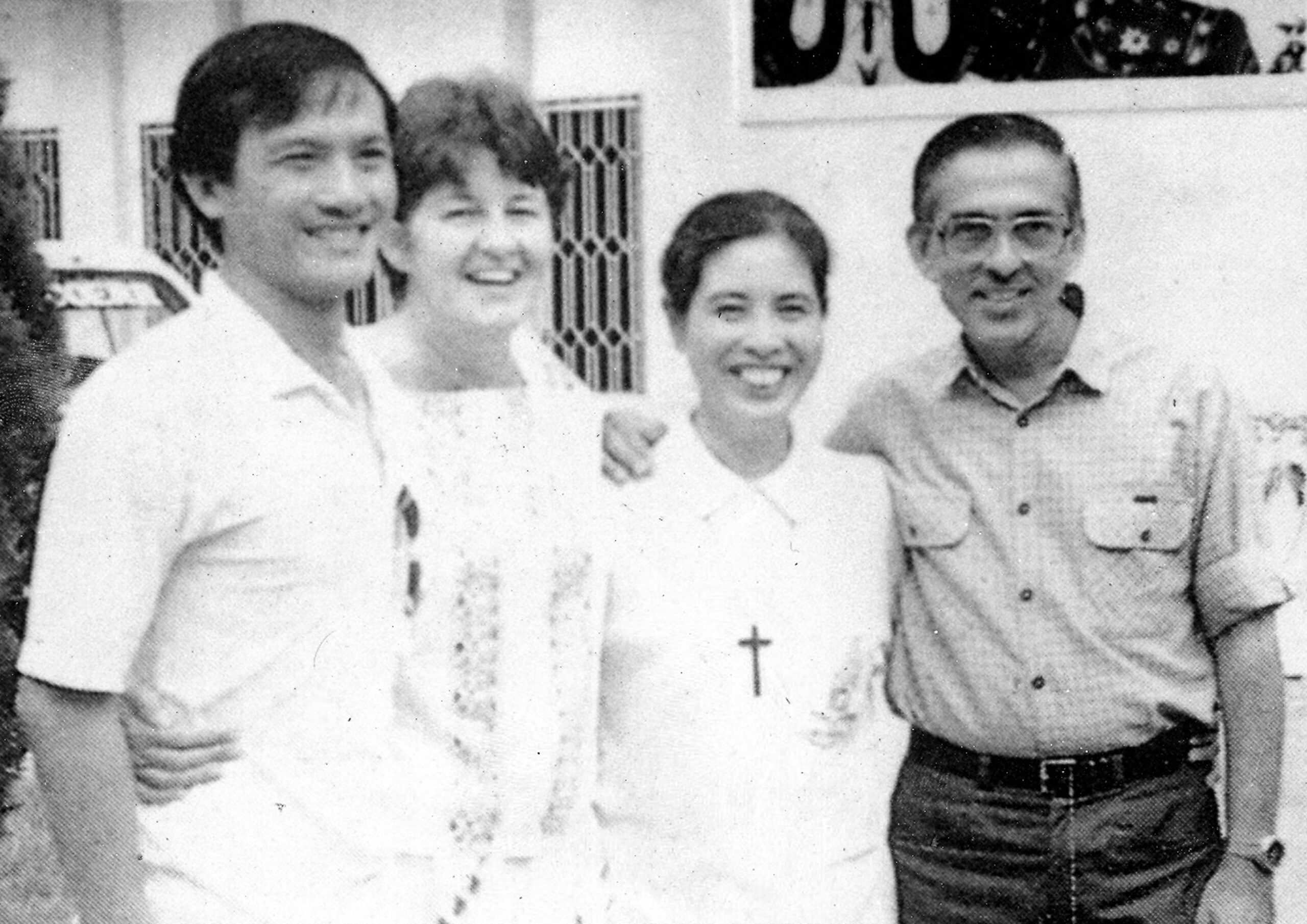
The first JRS team sent to Cambodia in 1990. L to R Engineer Jub Phoktavi (later entered the Society), Sr. Denise Coghlan RSM, Sr. Marie Jeanne Ath Lom (Providence de Portieux), Brother Noel Oliver SJ.
Presence, conversation and enhancing capacity: the early years in JRS Asia Pacific
As is well known, Fr Arrupe took the flight to Rome on the evening of 6th August and suffered a cerebral stroke on arrival at Fiumicino Airport on the 7th morning. With the confusion in Rome following his stroke and the eventual appointment of Fr Paolo Dezza, it was a year before I was formally assigned to the role of regional director for JRS Asia Pacific. My first action was to convene JRS workers for a discernment about how to proceed. An early account describes our first meeting. Though we did not use the terms so much, it was a ‘communal apostolic discernment.’
Each of us spoke of our own work, sharing what we had learnt from our time with the refugees. We spoke of the deep human anguish of refugees who had lost homeland, close family members, their freedom to choose, their works and their dignity. Perhaps the most pervasive problem was the sense of powerlessness. … We asked how JRS workers can be companions of our refugee people. Again and again, we turned to prayerful discernment of this question. We saw our first service as to share, even in some small measure, the lives and sufferings of the refugees, to be able to love and respect them, to be a sign of solidarity and hope.[3]
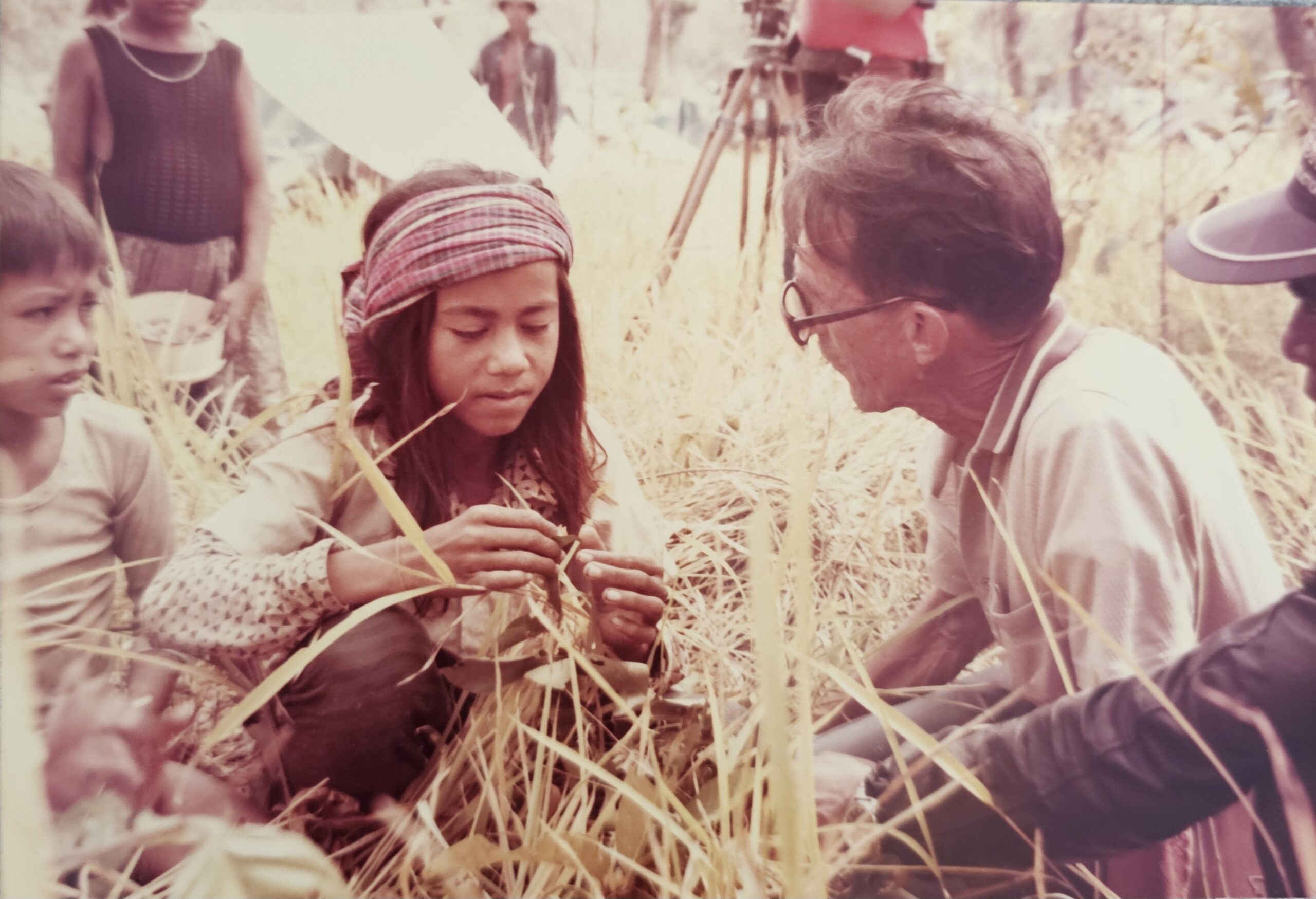
Fr. Pierre Ceyrac SJ, who spent 12 years in the Cambodian camps, speaks with a girl displaced by the shelling of the camp in 1985.
Our early, regular discernment together led to adoption of clear ways for JRS workers to be close to the refugees and, on examining the needs in each place, to decide what services to bring. The projects undertaken were those that fostered presence, conversation, and enhanced the capacity of the refugees. The discernment by field workers should in turn help the Society and its members discern how to face contemporary needs.
As Fr Arrupe had prophesied so astutely, it was clear that constant discernment was needed to deliver humanitarian assistance, not least thanks to geopolitical manoeuvrings in the region. While generous and courageous assistance was and is offered to refugees, there are powerful forces of evil at work when people are uprooted and driven from their homes and homelands. Kindness and cruelty grow together, and we who try to serve the refugees must learn to wait in joyful hope for the harvest, wrote Bill Yeomans SJ, who worked in several camps in Southeast Asia in the 1980s. JRS joined together with grand large-scale efforts for life-saving assistance. However, it became evident that even efforts to strengthen protection of refugees and to assist them could be subverted or instrumentalised, jeopardising their safety.
One challenge facing the JRS team serving in camps for Cambodian refugees on the Thai-Cambodia border called for a discerned decision. By the early 1980s, a political and military alliance had been formed at this border between the USA, China, Thailand, and Western governments, to oppose Vietnam (‘the enemy of my enemy is my friend’). The Vietnamese army had driven out the Khmer Rouge and installed the Heng Samrin government loyal to Vietnam. An ad hoc humanitarian organisation was constructed to give food, water, and shelter to the refugees, called the UN Border Relief Operation (UNBRO). At the same time, UNBRO discreetly allowed an armed movement to be provisioned. For the Thai, the camps that straddled the border provided a convenient buffer against a possible Vietnamese incursion. When these camps were shelled in 1985, the refugees were brought back clearly into Thailand but still remained close to the border.
The refugees were caught in the middle. On the one hand they were given life-saving assistance. On the other hand, their presence gave cover to underlying political and military purposes. They were ‘instrumentalised’ to maintain a war effort that continued the division of their country. Among its members, several felt that JRS should protest this injustice loudly and leave. Others were of the view that if the people were being exploited, then JRS should continue to accompany them and not leave them at the mercy of the armed factions. It was a question to discern. By good chance Fr Howard Gray, one of the known spiritual gurus in the Society at the time, was on hand and agreed to facilitate a decision-making process.
The deliberation lasted about six weeks and involved thirty members of JRS who met once a week in a simple village wat (temple) close to the Thai-Cambodia border. Most participants were Christian, a third were Jesuit, a few were Buddhist and some were non-believers. The diversity of the group was something that Fr Arrupe had foreseen in his talk in 1981: “… how terrific it would be for the Society to have non-Christians coming to work for the poor in the villages, coming motivated by philanthropy…”There were other aspects of the gathering that recalled his talk in Bangkok: “To come to agreed policy you will have to face tensions because we have different opinions.”
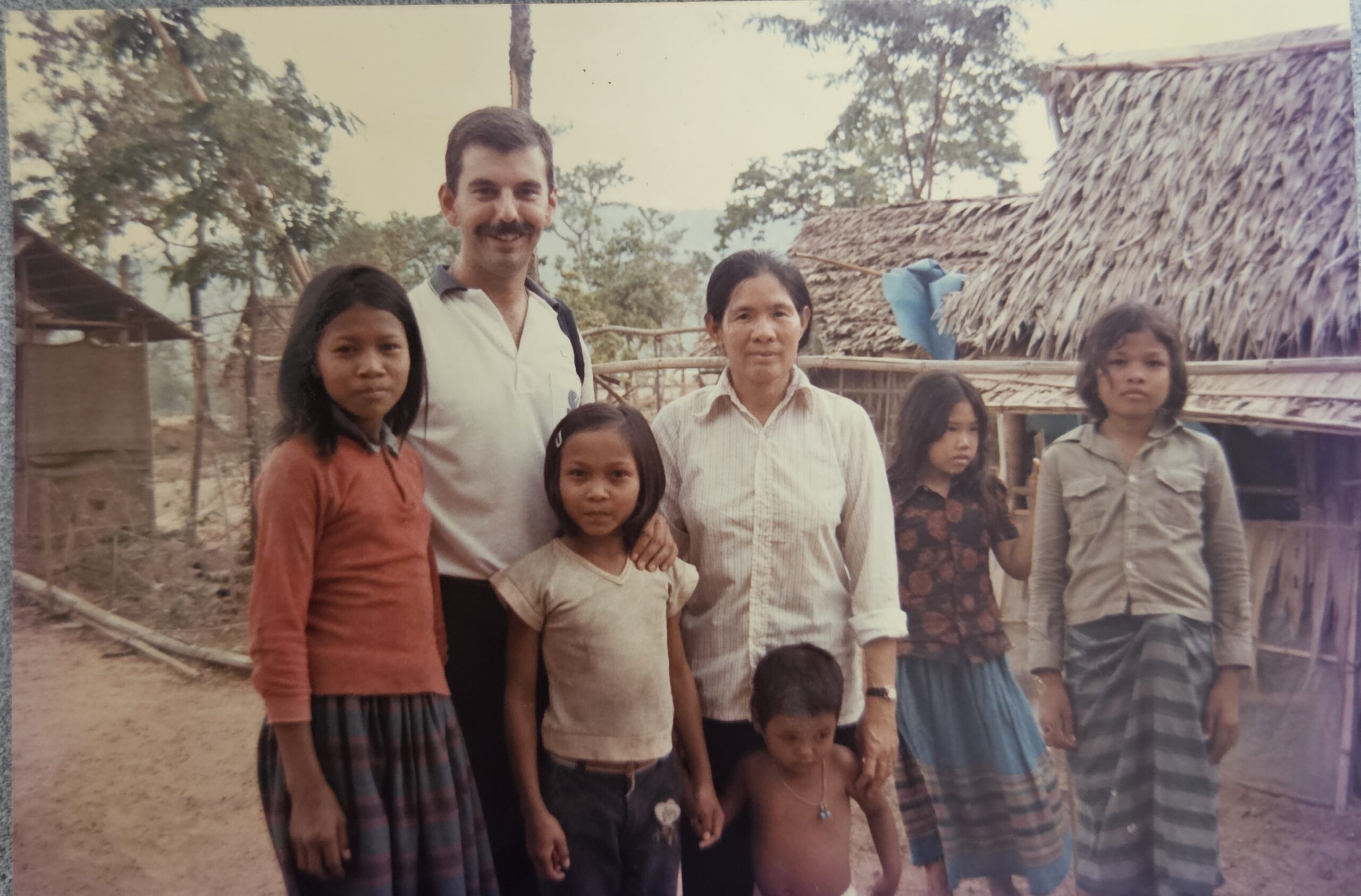
Fr. Kike Figaredo SJ with Madam Long Lean who gathered unaccompanied children and looked after them.
All participants indicated that they were intent on finding the most appropriate outcome. Howard interviewed them and confided to me that several were not ‘free’ or ‘indifferent’ on the question for decision, so this would not fulfill all that is required in a true discernment. Nonetheless, he encouraged me to proceed, using the method of discernment. All thirty agreed to pray or to reflect for at least half an hour each day on the considerations that Howard would present each week and to share sincerely the outcome of their reflections. At the end of the six weeks each person was asked his or her personal decision on the question. The group was evenly split between those who wanted JRS to pull out completely and protest, and those who felt JRS should remain faithfully serving the refugees.
Howard Gray indicated that it was then up to me, as JRS Director, having listened to all the interventions, to make a final decision. As an outcome of this discernment, I decided that a JRS team would remain in the camp working actively for reconciliation and preparing for the repatriation of the refugees to Cambodia. Another team would establish in Cambodia and prepare to receive refugees, while also working actively for reconciliation. Both teams, especially the new team in Cambodia, would serve the poorest people, especially the many people wounded in the war who had lost limbs in the conflict or in their flight to the heavily mined border, since whichever faction ended up in power, care for the disabled would always be needed. The decisions taken because of that deliberation had immense ramifications into the future.
Key elements of the discernment process
Reflecting on this example, one can identify elements of a prudent and even discerned communal decision-making process. These elements could apply if the purpose is to make a review, an evaluation or a major decision for an apostolic work or institution, to assess a socio-political trend, or to make an apostolic plan.
First, the discerning group needs a shared starting point. In this case, all engaged in the discernment were members of a team carrying the JRS identity. The core purpose of JRS had been outlined by Fr Arrupe and developed in the lives and reflections of the JRS workers. (The formula ‘to accompany, serve and defend the rights of refugees’ was not made explicit until the mid-1990s after considerable consultation.) Having a commonly agreed starting point, the group could also expect to arrive at shared conclusions, even if the outcome was not the one any member had initially wished or foreseen. In the case of a discernment among Jesuits, the starting point, or shared lens, includes all that binds us as friends in the Lord, our shared experience of the Exercises, the Formula of the Institute, the Constitutions, membership of the universal Society, among many factors.
Second, having a shared starting point helps to find clarity on who should be included in the discernment process.
Third, all who do participate should attempt to have an open mind. Even if they come with a conviction of what should be done, they are asked to put this aside and listen without prejudice to all the reasons and arguments that will be put. In Ignatian language this is ‘indifference.’
Fourth, all are asked to be open to one another, hospitable, welcoming, listening, generous, patient, and to put the best interpretation on what is said by others. This is the spirit of Annotation 22, the ‘Presupposition’ of the Exercises. Moreover, all St Ignatius says about individual discernment in the Exercises is important for the individual to observe when participating in a communal discernment.
Fifth, and most importantly, all depends on the quality of listening, especially by the one who must formulate the final decision, to know how each one is being led and what is most prudent for the group or community to do. ‘Listening’ means attending to information, to every nuance, reflective opinion, desires and passions. “Discernment is always done in the presence of the Lord, looking at the signs, listening to the things that happen, the feeling of the people, especially the poor,”[4] explained Pope Francis in his first extended interview to Jesuit journal La Civiltà Cattolica.
Sixth, it is assumed, but may need to be clarified, that all desire to emerge with a common narrative, that is, to reach a shared understanding of the complex context and to agree on a path forward in such intricate circumstances.
Seventh, there should be understanding among all participants about the process. It is neither a decision by democratic vote, nor an autocratic decision, but rather an intense listening to collective reflection and prayerful wisdom. We believe that the Spirit of God works among us in this way. At the end, the leader, having listened attentively throughout, should formulate, with the advice and counsel of other participants if needed, what they understand to be the most prudent way forward. The outcome of the discernment cannot be delegated to a facilitator or to a sub-group.
Eighth, the question to be discerned should be put in a clear statement.
Finally, the process may be slow, since communal decisions take time to learn, think, reflect, listen to one another, and to pray. Instant discernment is possible but rare. “The Jesuit always thinks again and again, looking towards the horizon towards which he must go, with Christ at the centre,”[5] said Pope Francis.
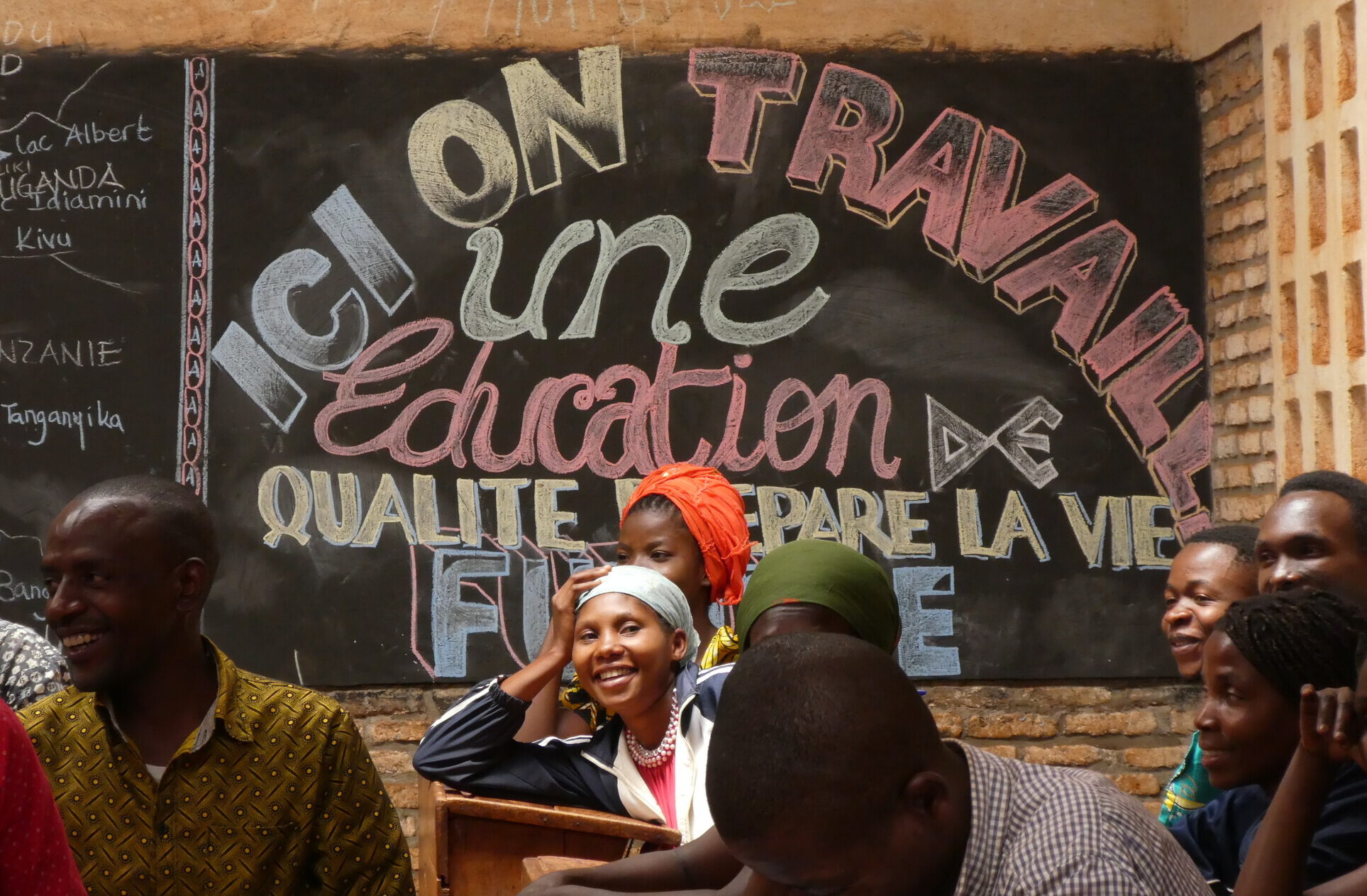
Despite all the detailed reflections and instructions on discernment, it is useful to remember that personal and collective decision-making is a natural process. As Karl Rahner put it:
It may be said too that nearly everyone in grave decisions makes a choice more or less exactly in the way Ignatius conceives it, just as the man in the street uses logic without ever having studied it, and yet it remains useful to draw inferences by means of logic that one has studied. In such decisions a man thinks things over for a long time.[6]
There is a pragmatic value in a communal approach to decision-making. Building consensus enables greater cooperation, a sense of ownership and the clearing of blockages. The involvement of diverse participants can lead to new information and original perspectives, all of which can lead to better decision making. These natural steps enable us to work in union of hearts and minds, transcending personal, social, national, and ideological differences in a shared concern for our common mission.
Saint Ignatius and discreet charity: Listening to the people we serve
St Ignatius does not speak of discernment in common. Nor is the word ‘discernment’ much used in the Jesuit Constitutions. There, Ignatius uses the phrase discreta caritas and often refers to the need for prudence[7]. Prudence, Fr Kolvenbach remarked, is the central value in discernment, more central even than charity. Without prudence, charity is caritas indiscreta.[8] When the Jesuit Constitutions refer to ‘discretion’ it is often as a quality that is essential to superiors in their decision making.
Discernment in common offers a centre point, a balance between a debating or parliamentary approach and an autocratic decision by an individual. There are people who push for greater democratisation and there are superiors who micro-manage, keeping all power to themselves. Discernment helps find a balance between these approaches. In the Society today there is an increased expectation for consultation and for greater participation in decision making and planning. In discernment in common, all participants have a responsibility to express the fruit of their prayer and reflection. Ultimately, as Fr Arrupe remarked in Bangkok, someone has the responsibility to make the decision, someone who will listen to all, consider all that is discussed, and everything that is going on in the context, is open, prudent and with courage to decide and execute.
Although St Ignatius and the Constitutions do not refer to communal discernment much, we learn about discernment from the life of St Ignatius who combined a movement to deeper interiority with a search for companions. Together those companions plumbed the depths of their own hearts and the heart of their times. They survived by begging and shared in the lives of people who lived precariously. All this helped them to read the ‘signs of the times,’ to move in the currents of culture, and to assess history and humanity prudently.
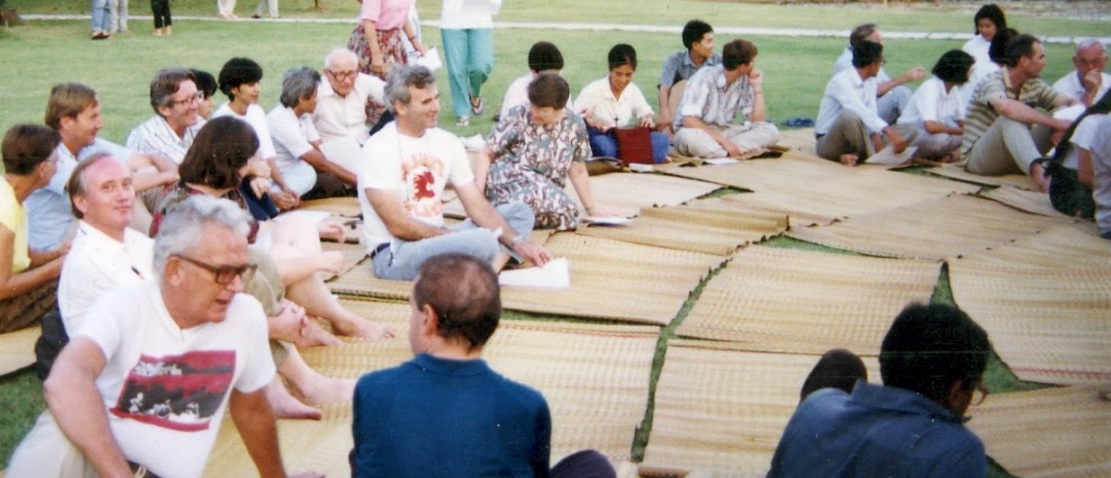
JRS Annual meeting 1989. (picture shows Ando Isamu JPN, Tom Steinbugler PHI, Dieter Scholz ZIM the International Director, Herbert Liebl, Howard Gray DET, Mark Raper ASL, Andy Hamilton ASL, among others)
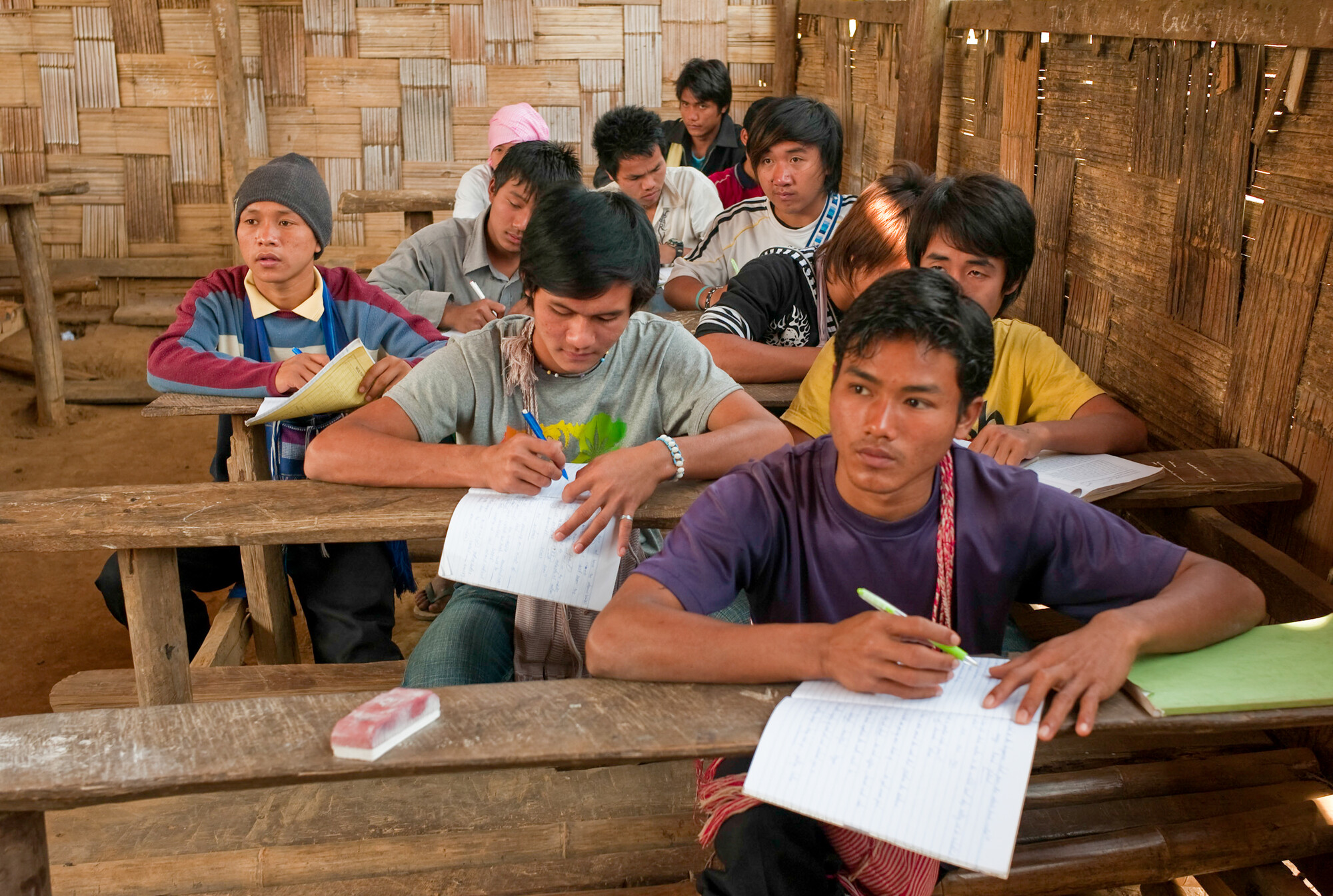
In any Jesuit apostolate we must not only listen to our colleagues, but also to the people being served. Fr Arrupe insisted in the case of the refugees that “God is calling us through these helpless people.” Listening requires respect. Respectful listening is sometimes the greatest gift to a refugee. Indeed, respectful listening invariably leads to the discovery that these people are not at all ‘helpless.’ Many refugees have considerable capacity but have been rendered helpless and could become even more so if left in situations of dependency and destitution. Such a discovery, and discernment, leads to designing responses that would increase the personal and communal capacity of the refugees. Many refugees are survivors who have already taken daring, creative initiatives. A big part of the work of JRS is to help them live as free men and women.
Even with his prophetic vision ‘for today and for the future,’ Fr Arrupe could hardly have imagined how the phenomenon of forced displacement would explode. Between 1985 and 1989, there were five major international emergencies that forcibly displaced people. In 1990, as the political and military confrontation ceased to balance opposing forces with the end of the Cold War, this number exploded to twenty. By 1994 it was twenty-six.[9] Today there are approximately fifty-nine active armed conflicts across more than thirty-five countries, the highest number since World War II, and they are becoming more complex, with armed groups, shifting alliances, criminal intentions, and violence. At the same time, there is now the steady dismantling of the international humanitarian system, so painstakingly erected in the eighty years since World War II. Moreover, because people seeking refuge are increasingly refused the right to cross borders, there is a massive growth in those who are internally displaced, who are the victims of conflicts within their own countries and who remain without a home. This is our experience in Myanmar where there are now over three and a half million internally displaced persons, in addition to one million Rohingya refugees in Bangladesh and half a million refugees in Thailand and India, along with countless others escaping conscription and poverty.
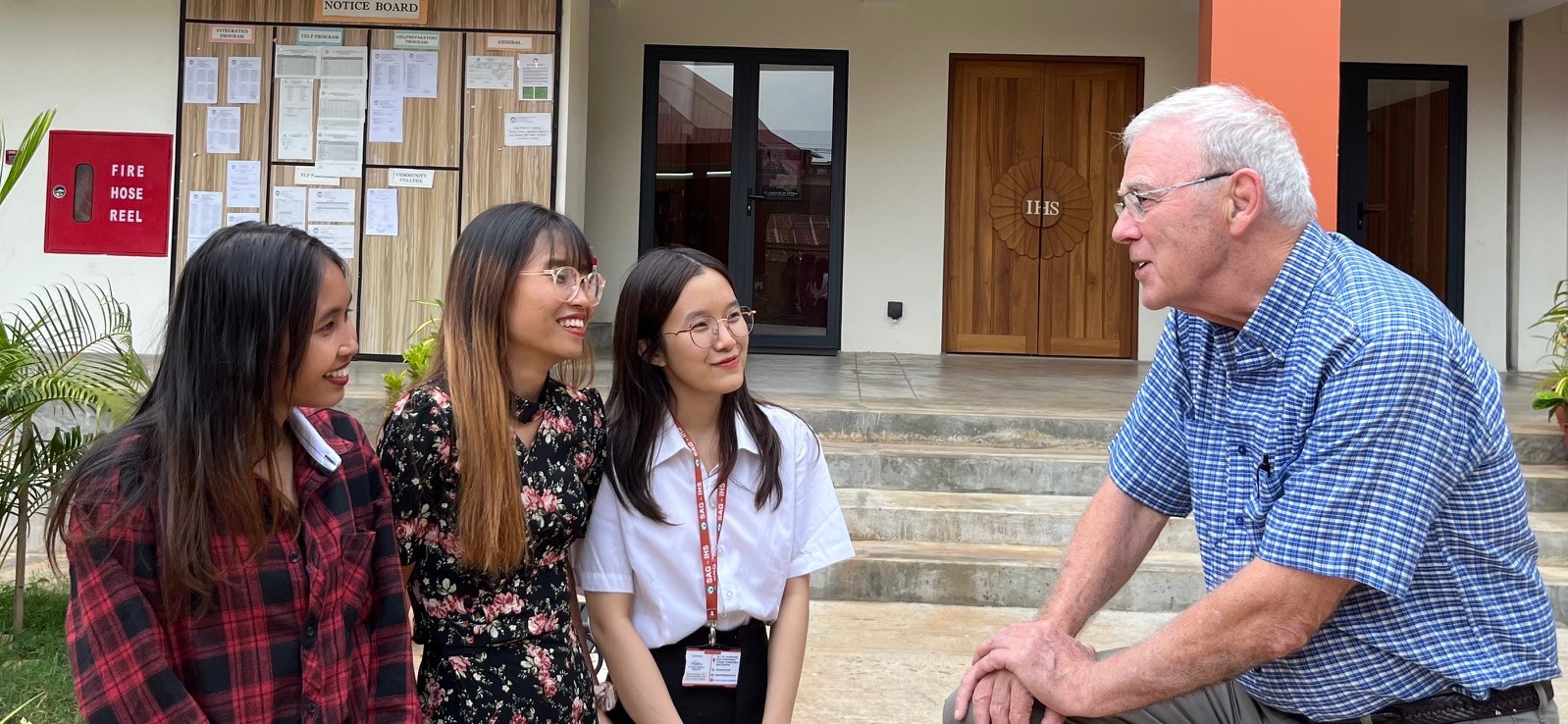
Mark Raper SJ, Thida, Zar Zar, Nang Khin
Conclusion
Consequently, JRS has grown into a large agency that is present in over 50 countries. JRS is sometimes seen to operate with autonomy, even though it is the only international apostolic work of the Society directly governed from Fr General’s Curia. Discernment within the Society about this service becomes ever more important today if we value the insight of Fr Arrupe who insisted back in 1981, “there has to be a basic unity of minds for this new type of apostolate just about to be born.”
JRS is considered to be such a significant part of Fr Arrupe’s legacy that it is also referred to as his swan song, just like his talk to JRS workers in Bangkok. When Fr Pedro Arrupe prophesied that JRS would bring great benefit to the Society of Jesus, he believed - I am sure - that by accompanying and listening to the refugees, and by reflecting on what is learnt from them in a discerning way together, the Society of Jesus would respond more decisively, not only to them but also to the deep needs of our time. It would refine its way of working for justice by accompaniment, research and communal discernment. Its initiatives would be flexible, collaborative and bold, fuelled by careful listening and by prudent and discreet charity. Communal discernment offers a path that leads to this prophetic ministry that Fr Arrupe called us to when he founded JRS: “This work will be a school in which we learn many things.”
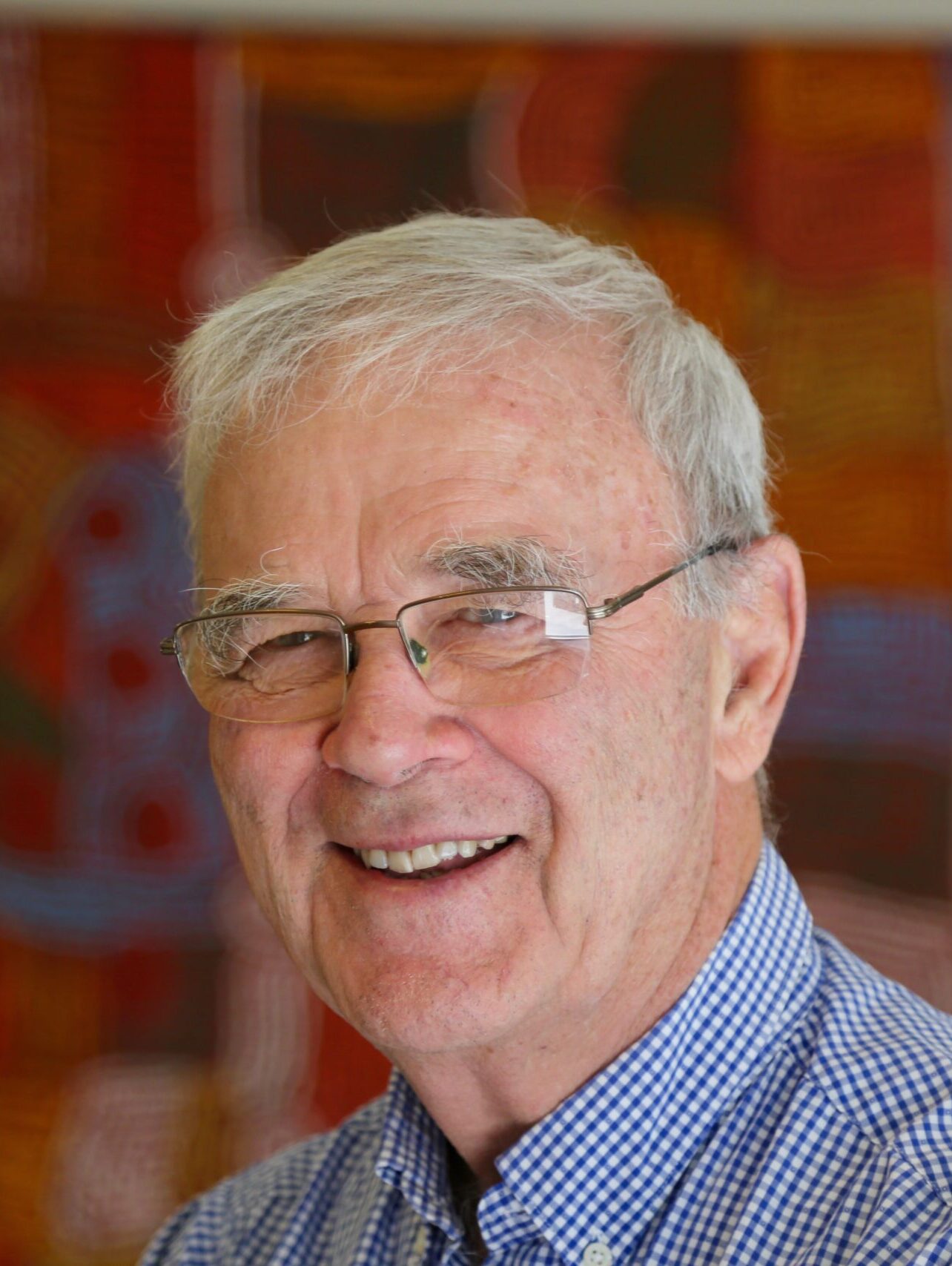 Mark Raper SJ
Mark Raper SJ spent twenty years with Jesuit Refugee Service, as Regional Director for Asia Pacific and then as International Director. Subsequently he spent another twenty years as a major superior for Australia, East Timor, Myanmar and as President of the Jesuit Conference of Asia Pacific. He currently lives in Myanmar.
[1] Fr Arrupe’s ‘Final address to Jesuits working with refugees in Thailand,’ can be found in Everybody’s Challenge: Essential Documents of Jesuit Refugee Service 1980-2000 (Rome: Jesuit Refugee Service, 2000), edited by Danielle Vella,p 33. Available online.
[2] Philip Endean, The Ignatian Spirituality of the Way, The Way, 42/1 (January 2003), pp. 7-21.
[3]Diakonia, Issue 1, November 1983
[4] Interview with Pope Francis by Fr Antonio Spadoro, accessed athttps://www.vatican.va/content/francesco/en/speeches/2013/september/documents/papa-francesco_20130921_intervista-spadaro.html
[5] Pope Francis, ‘Thinking with the Heart: The Spiritual Exercises in the Life of the Jesuit, the Church, and the World,’ Jesuit Conference of Canada and the United States, 2021 [1]
[6] Karl Rahner, ‘The Logic of Concrete Individual Knowledge in Ignatius Loyola,’ in The Dynamic Element in the Church (Freiburg: Herder and Herder, 1964), 166–167.
[7] Peter-Hans Kolvenbach S.J.,Discreta Caritas, Review of Ignatian Spirituality, No 113, 2006.
[8] Jesuit Constitutions, [217]
[9] Stremlau, John. People in Peril: Human Rights, Humanitarian Action, and Preventing Deadly Conflict (Carnegie Corporation of New York, 1998) available online.