
When the sea swallows human lives and we talk about a “pull factor”: Let us not turn fear into hatred or blame migrants
There are times when remaining silent ceases to be prudent and begins to look too much like indifference. I sincerely believe we are going through one of those times. The events unfolding around Ceuta—the images of people attempting to reach Spanish territory by sea or by swimming, the lives lost, and, above all, the narratives that immediately began to take shape around these events—should compel us to engage in a much deeper reflection than what is allowed by hasty headlines, political slogans, or viral social media posts.
I am deeply concerned that we are witnessing a process in which completely distinct legal, political, and diplomatic issues are deliberately blurred to construct a single narrative: that of migration presented as a threat, and that of migrants upon whom it seems permissible to vent our fears, our frustrations, and—with ever-less disguise—a form of social hatred that we have watched grow for far too long.
I write these words as a legal expert specializing in immigration law and human rights, but also from a much more direct and human perspective: that of knowing, supporting, and working daily with migrants living in our reception organizations, our neighborhoods, and our towns. Precisely because I know them, I find it impossible to accept the ease with which abstract categories—“avalanche,” “invasion,” “illegals,” “pull factor,” “migratory pressure”—end up replacing actual people. When we stop talking about specific human beings and focus exclusively on masses, statistics, and threats, we take the first step toward something extraordinarily dangerous: failing to recognize in those who come from abroad the same dignity that we demand for ourselves.
One of the claims being spread most aggressively is the almost automatic link between extraordinary regularization programs and the migratory movements we are witnessing. The goal is to convey a seemingly simple idea: Spain legalizes migrants, and as a result, thousands of people decide to come in hopes of immediately obtaining a residence permit. However, repeating a claim over and over does not make it legally true. Extraordinary regularization is designed for individuals who were already in Spain prior to a specific cutoff date and who, furthermore, must meet explicit legal requirements. Anyone arriving in Spain today does not, by that fact alone, acquire any right to benefit from a process intended for those who were already here. That is why it is essential to distinguish between the legitimate political debate surrounding regularization and the self-serving use of that process to explain subsequent border incidents.
One can be for or against extraordinary regularization. One can question its design, debate its economic, labor, or administrative consequences, and legitimately advocate for a different immigration model. All of this is part of a healthy democratic society. What should not be tolerated, however, is using legal confusion as a tool to fuel hostility toward migrants. Those eligible for this process did not suddenly appear when a law was passed; they were already here. They lived in our towns, worked or looked for employment, participated in our communities, were accompanied by our support organizations, and sought to build a life among us. Granting legal status to someone who meets established requirements does not mean creating a new migratory reality or issuing an open invitation to cross our borders; it means formalizing under the law a human and social reality that already existed.
It is also worth remembering that an undocumented person does not vanish simply because the legal system chooses to ignore them. They still need to work, find housing, receive healthcare, interact with others, purchase goods, and ultimately remain a tangible part of our society. The real debate should center on whether we want to keep thousands of people indefinitely in administrative invisibility—fostering labor exploitation, the underground economy, housing insecurity, and widespread abuse—or whether it is preferable to establish legal mechanisms that allow them, upon meeting certain requirements, to work legally, contribute to social security, pay taxes, and fully exercise their rights and obligations. Regularization is not a handout; it is the legal recognition of an existing reality. Presenting that decision as an open call to those outside Spain is a simplification that may be politically convenient for some, but it does not withstand serious legal analysis.
A similar confusion surrounds the Supreme Court’s jurisprudence regarding entries by sea or swimming and so-called “summary pushbacks.” Here, too, conclusions are being drawn that far exceed the true legal scope of a judicial ruling. The Supreme Court has not ruled that anyone who swims to Spain automatically gains the right to remain. What is at stake is entirely different: what procedures the administration may apply, the scope of exceptional provisions in Ceuta and Melilla, and what safeguards must be respected when someone is intercepted at sea attempting to enter Spanish territory. Confusing the right to remain with the right to have administrative actions conducted according to legally established procedures reveals a fundamental misunderstanding of the rule of law.
We can critically analyze this jurisprudence and acknowledge that our current legislation may be inadequate for addressing border realities that have evolved dramatically in recent years. If specific provisions were designed primarily for land border barriers and we now face different scenarios at sea, we must reflect on the adequacy of our regulatory framework. But if a legal gap or deficiency exists, the solution lies with the legislature and cannot simply consist of stripping away procedural safeguards. Legal procedures and safeguards are not obstacles to be discarded when inconvenient; they are precisely what separates the actions of a constitutional state governed by the rule of law from pure arbitrariness. Spain has every right to control its borders, establish entry and residency requirements, and carry out returns when legally warranted, but none of this is incompatible with recognizing that the individual subject to these procedures retains fundamental rights.
Yet, while we debate regularization, court rulings, administrative powers, diplomatic relations, and border enforcement, a far more painful reality risks being buried beneath the noise: human beings have died trying to swim to our shores. It fills me with profound sadness to see how easily these deaths are reduced to a fleeting statistic on the news, only to disappear from public discourse. They were not "migratory pressure," an "avalanche," a statistical problem, or an administrative category. They were human beings. They had names, even if we never learn them; they had ages, childhoods, parents, siblings, friends, and perhaps children of their own. Someone was waiting to hear from them. Someone was waiting for a call that never came. They entered the water believing there was a possibility of a future on the other side, and as they swam, they felt cold, exhaustion, and fear. Some could see the lights of a shore that seemed close, only to realize they would not reach it. There is something deeply disturbing about our ability to spend hours arguing over who opened a border, what a court meant, or whether a "pull factor" exists, while remaining unable to pause for even a moment to confront the basic reality that people died in the water trying to reach us.
They, too, must be part of this debate—perhaps more than anyone—because when someone dies trying to reach our shores, the first question a society claiming to be humane should ask is not limited to their immigration status, but how we have built a world where throwing oneself into the sea and swimming toward a border seems better than staying where they are. We can discuss immigration policy, Morocco, pushbacks, border control, and legislation later; but first, we must be able to look out at that sea and acknowledge that people died there. None of them deserves to disappear into an anonymous statistic, much less be used after death to justify rejecting those who survived. No one should use the dead to stoke fear of the living, nor use those who drowned seeking a shore to justify hatred toward those who managed to reach it.
What transpired also demands a rigorous analysis of Morocco’s role and the circumstances surrounding certain border movements. If migrants are being exploited as tools for political or diplomatic pressure, accountability must be demanded through proper channels. But there is a moral and legal distinction we must never forget: it is one thing to exploit people, and quite another to be the person being exploited. If vulnerable human beings are converted into tools of political strategy, we cannot exploit them a second time by turning them into material for fear and hostility. We cannot hold the victims of a strategy responsible for the strategy itself; we cannot confuse the Moroccan government with Moroccan citizens, nor Africa with irregular migration, nor irregular migration with crime, nor poverty with danger. That chain of associations is precisely where racism, xenophobia, and aporophobia take root.
This is perhaps my greatest concern right now: that this discourse does not remain confined to parliaments, the media, or social networks, but trickles down into our towns, neighborhoods, workplaces, and reception centers. Those of us who work directly with migrants know the impact of a shifting social gaze. We know people who until yesterday were simply neighbors, coworkers, or friends, and who may now begin to feel watched with suspicion because of their origin, accent, or skin color. We do not deal merely with statistics or administrative files; we know names, stories, struggles, and aspirations. We know the young man desperately seeking his first employment contract, the person learning Spanish, the one waiting months for a decision from the Immigration Office, the one waking up early for work, the one sending part of their modest earnings to family, the one struggling to rent a room, and the one simply hoping to secure documentation to stop living in constant fear.
That is why it is essential to understand that racism does not necessarily begin with physical violence or an explicit insult. It begins much earlier: with a look, a suspicion, a generalization, a comment allowed to pass without challenge, or attributing negative traits to an individual based on stereotypes projected onto an entire group. It begins when our neighbor ceases to be our neighbor and becomes simply "the immigrant"; when skin color prompts caution, when an accent breeds distrust, or when poverty becomes synonymous with danger. When that perspective becomes normalized, those of us who believe in peaceful coexistence have a responsibility to step in before prejudice turns into discrimination, and discrimination turns into hatred.
Public officials must also realize that words spoken from a political platform do not remain contained there. They spill out onto the streets, enter local cafes, circulate through messaging groups, are reshared thousands of times on social media, reach workplaces, and ultimately impact real people. One can criticize a specific immigration policy as harshly as necessary, demand stronger border controls, disagree fundamentally with a regularization process, or hold a government accountable. All of this falls within political freedom and democratic debate. What we cannot normalize is transforming a group of people into a threat, because convincing a society to stop seeing individuals and start seeing enemies is an extraordinarily dangerous step.
As a legal expert, I believe deeply in the law, but for that very reason, I refuse to view it solely as a mechanism to erect borders and expel people. The law also limits power, establishes procedures, protects vulnerable individuals, prevents arbitrary action, and reminds us that behind every administrative file is a human being. We can defend our borders while upholding human rights; we can control immigration while demanding legal safeguards; we can execute a return when legally warranted while preserving the dignity of the individual being returned; we can hold Morocco accountable while defending Moroccan citizens living peacefully in our communities; and we can disagree with an extraordinary regularization without turning that disagreement into xenophobia. There is no conflict between maintaining a state with borders and upholding the rule of law. What is truly incompatible with democracy is believing that to protect the former, we must abandon the latter.
Those of us working in reception and support organizations bear a special responsibility at this moment. We cannot accompany migrants for months or years, help them integrate into our communities, and then remain silent when suspicion takes root against them. We cannot speak of integration when conditions are favorable and fall silent when rejection grows. We have a professional and legal responsibility, but above all, a human obligation. Against those who deliberately conflate extraordinary regularization, Supreme Court rulings, Morocco, and border crises, we must offer clarity; against legal misinformation, the law; against those seeking to turn a border crisis into a crisis of social cohesion, community; and against those who make migrants the target of their fears, an unequivocal defense of human dignity.
To the migrants among us, we must also say something they may deeply need to hear right now: you are not alone. You are our neighbors, our coworkers, the people with whom we share streets, towns, projects, and hopes. Your lives cannot become the price paid for a political, diplomatic, or border crisis you did not cause. Borders belong to states, rulings belong to courts, laws belong to legal systems, and political decisions belong to governments—but dignity belongs to every human being. That dignity carries no nationality, requires no passport, depends on no visa, and does not vanish because a person lacks administrative authorization to be in a given territory.
We need to recover a perspective that seems lost amid the noise. In the face of manipulation, we need rigorous information; in the face of arbitrariness, the rule of law; in the face of racism, dignity; in the face of xenophobia, coexistence; in the face of aporophobia, social justice; and in the face of those who want us to view thousands of human beings solely as a threat, we must reclaim the words we should never have abandoned: person, rights, dignity, reception, and humanity. While we argue over borders, human beings are in the water; while we argue over legalization, people are trying to build lives among us; while we argue over court rulings, families are waiting for news; and while some insist on teaching us to fear those from abroad, we must work even harder not to lose what makes us human.
I want to conclude not by speaking of immigrants as an abstract category, but by speaking of people: those who arrived years ago and are now part of our communities; those in our reception centers trying to rebuild their lives; those who work, pay taxes, study, and dream; those still waiting for an administrative decision to look to the future with a little less uncertainty; those trying to reach us; and especially those who entered the sea and never reached the other shore. For their sake, too, we are obligated to speak out—so their deaths do not disappear into mere statistics, their memory is not weaponized against those who survived, and one day, when we look back at this time when fear threatened to turn into hatred, we can say that we did not remain indifferent.
They are not an invasion, they are not a "pull factor," and they are not a collective threat. They are people. Some have lived among us for years; others have just arrived; and some died trying. If, after understanding this, we are still capable of looking away, then perhaps the real problem was never on the other side of the border.
Samuel Huesca Triano -Legal expert specializing in Immigration Law, Human Rights, Criminal Law, Penitentiary Law, and Sentence Enforcement.
Original text in Spanish. English translation.
Cover Image Credits: An immigrant who crossed into Spain from Morocco prays on a beach in the Spanish enclave of Ceuta, on August 2, 2026. | Photo: AP/Bernat Armangue | Published by Chicago Tribune by Associated Press Spanish on August 2, 2026.
Related Posts:
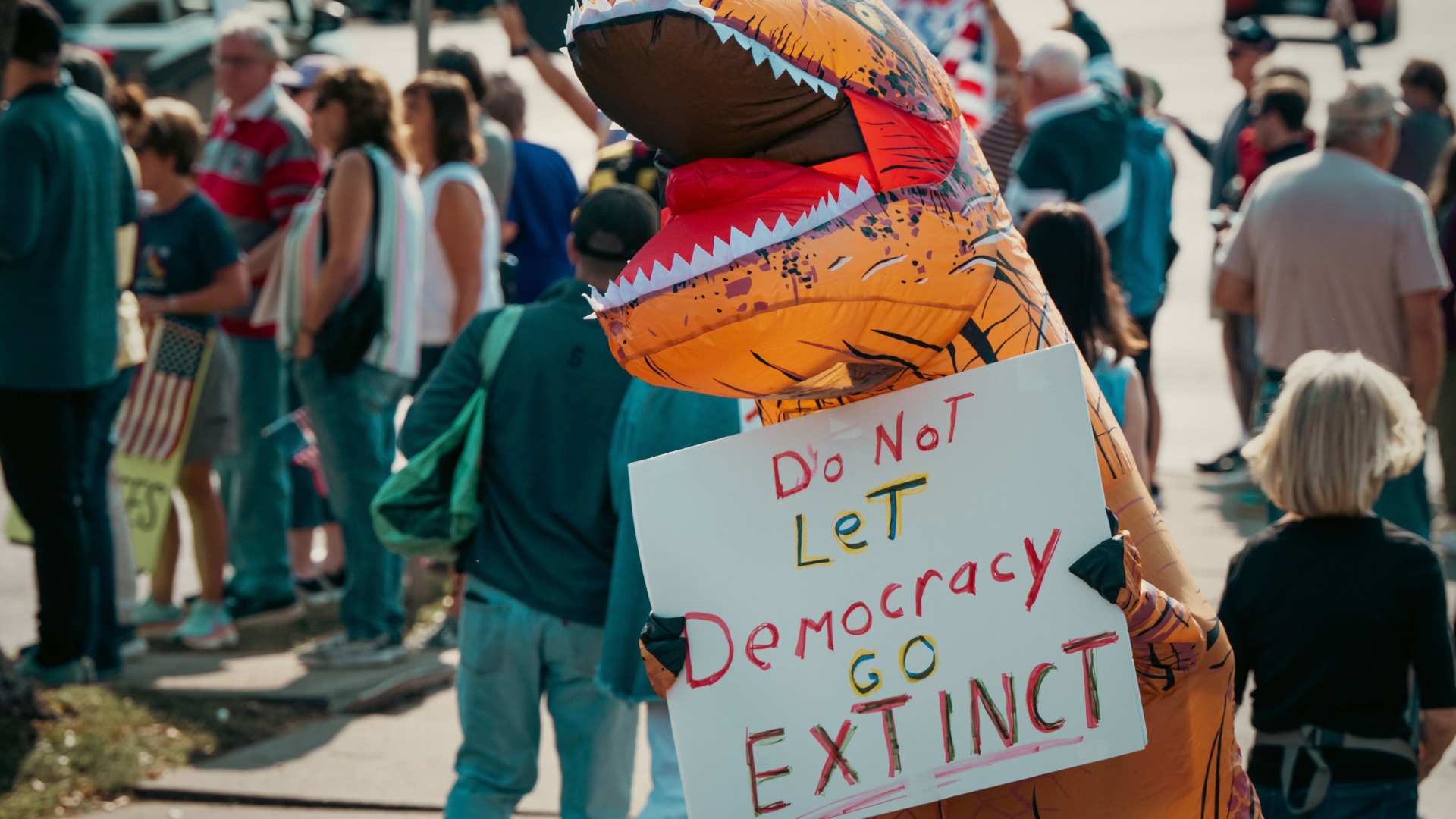
Democracy, which has historically proven most effective in meeting these criteria, cannot be taken for granted. In our AI era, citizens should press for more than multiparty elections and the protection of basic freedoms; that institutional core is not enough. We must carefully regulate and channel powerful technologies with the capacity to divide us from one another and short-circuit social and political participation. That means maintaining spaces in civil society where human contact and social friendship can flourish without the mediation of machines, beginning with the educational systems through which all citizens pass. It means fighting deepfakes and disinformation in the public sphere, so that citizens still operate in a world of facts and evidence and political representation has a strong basis.
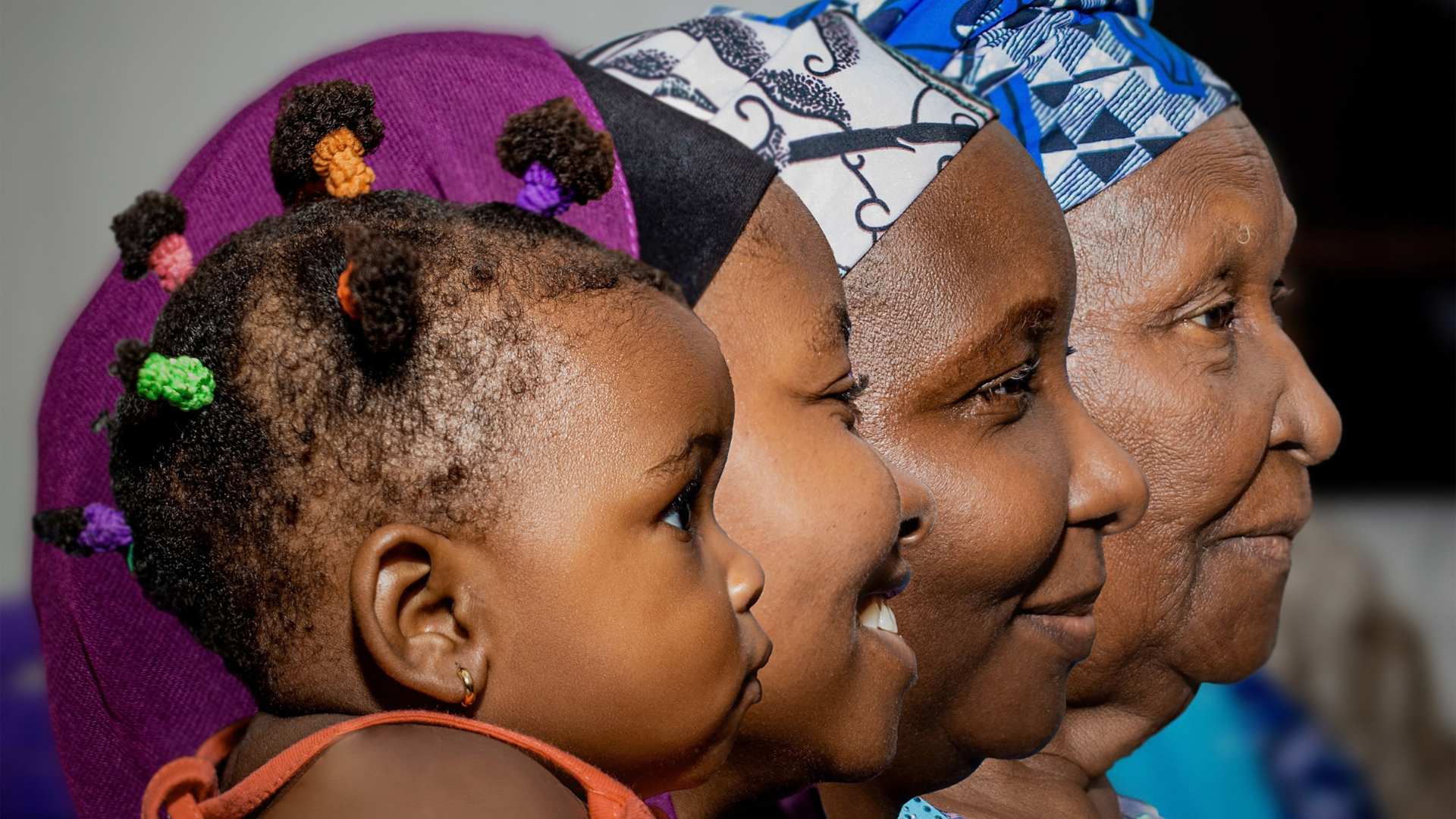
Artificial intelligence (AI) is increasingly entering public life in Ghana, including through digital systems used for identification, verification and service delivery. The ethical question is therefore not simply what AI can do, but what happens to people when digital systems become gateways through which citizenship, mobility or access to services are recognised. In northern Ghana, especially in border communities, this is a concrete question. I was privilege to visit Pusiga community in November 2025 with a Jesuit friend of my mine who is originally from the community. Thus, the topic for this article resonates very well with me.
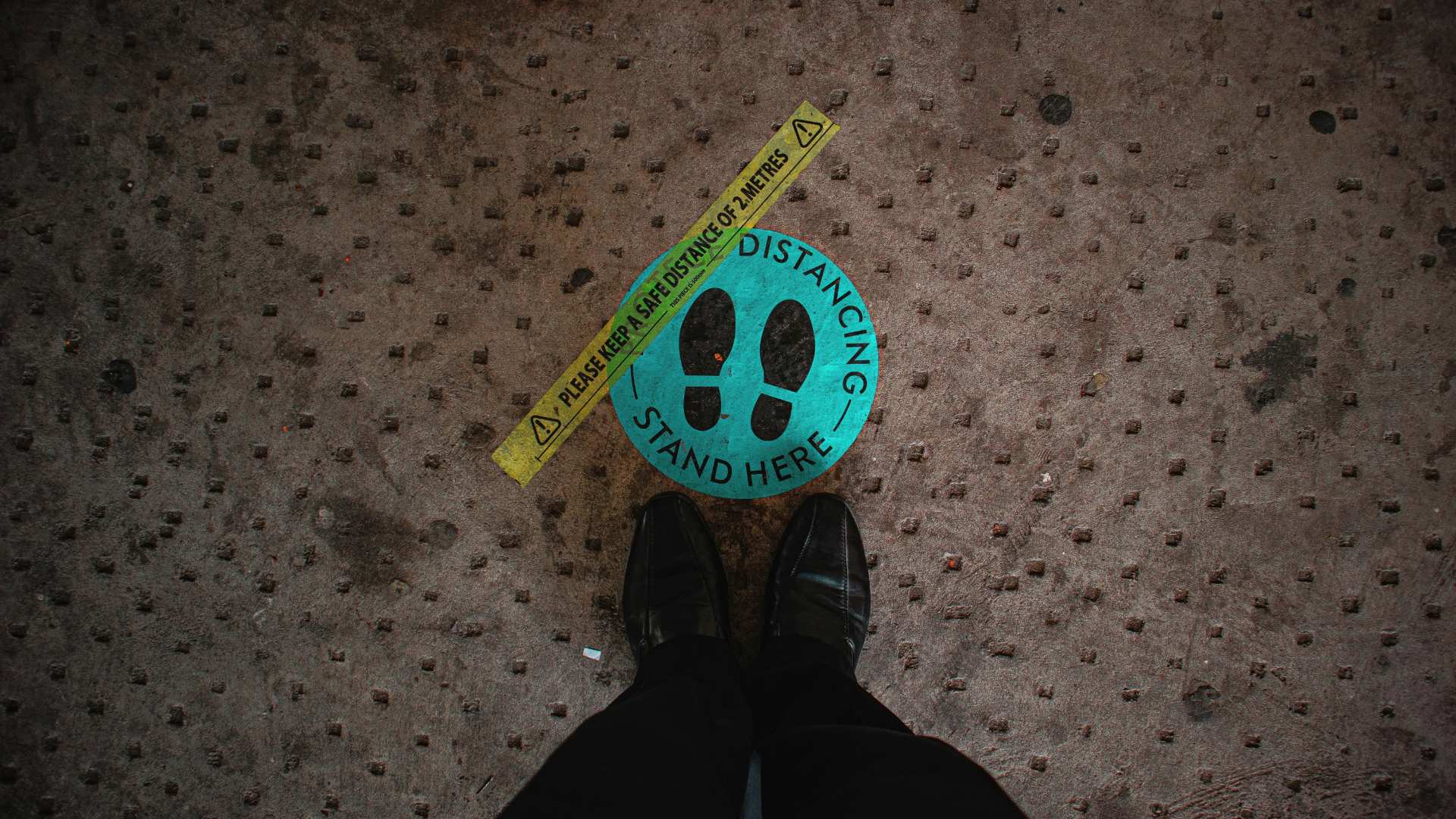
The article ‘Pandemic and Authoritarianism’, by Germán Rosa, SJ, was written in the midst of the COVID-19 crisis, but its insights extend beyond that context. The pandemic appears to reveal and accelerate political trends that were already present: the concentration of power, the weakening of democratic checks and balances, and the acceptance of extraordinary restrictions in the name of collective security. Rosa’s main concern is that fear may lead citizens to silently surrender their freedoms and rights, and that measures which were initially intended to be temporary become normalized and endure. Furthermore, in societies riven by inequality, control is never distributed neutrally: it falls most heavily on the impoverished, marginalized groups, migrants, dissidents and those who defend rights and territories.
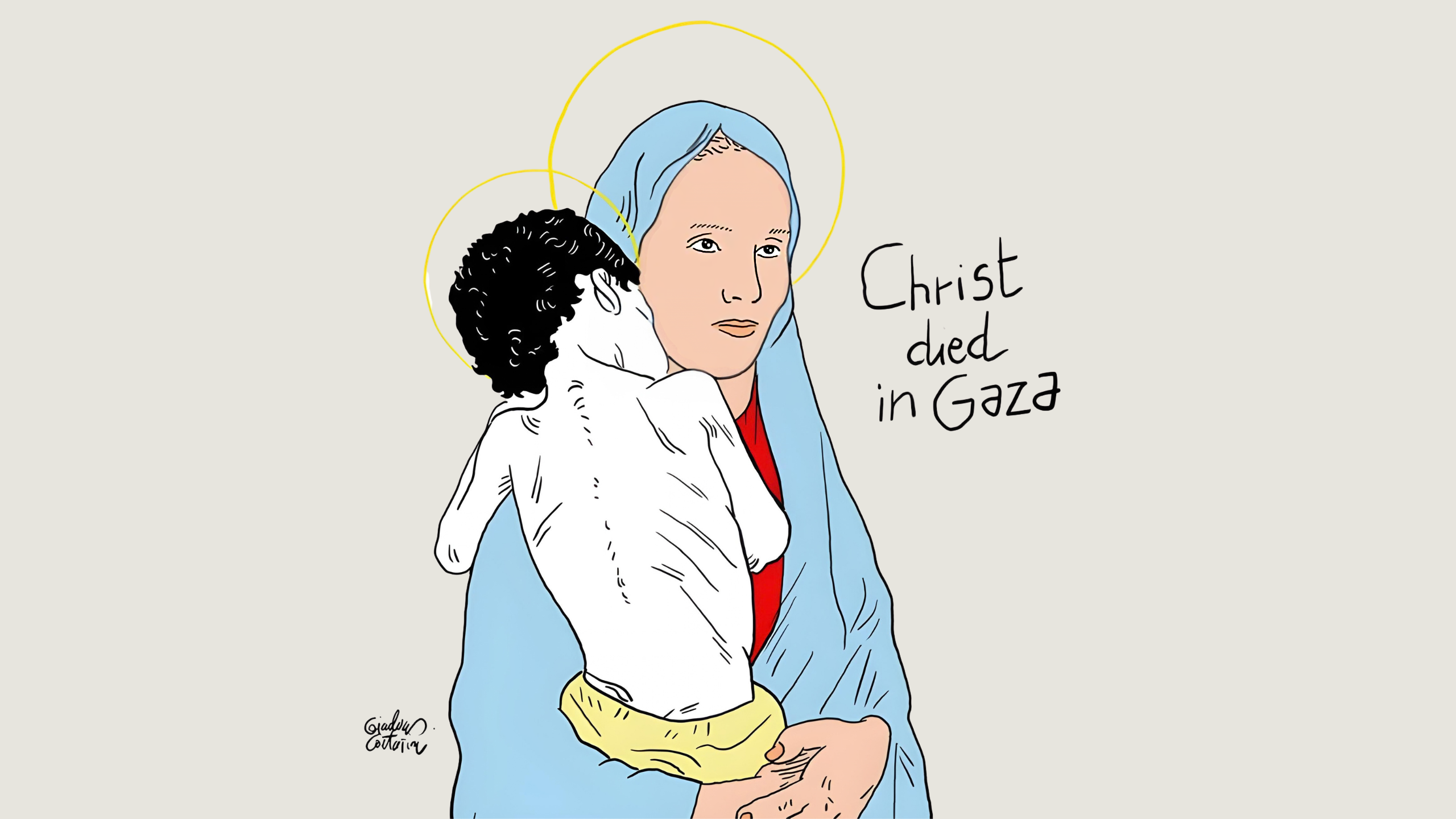
Speaking of dead children is uncomfortable. Yet it can also be healing. As I listened to the stories shared that day, I found myself returning to memories I may at times shy away from remembering. Iremember finding my sister’slifeless body in bed one Saturday morning. Ihad cometo carry her out with me to watch cartoons.As I listened tothe story of Hind Rajab, a 5-year-old girl who had been trapped inside a car attacked by Israeli forces,the memory of a little boy reaching out to touch his sister came back. The young girlhadmanaged to call the Red Crescent for help but hours later she and the paramedics who had come toassisther were all found dead. The chilling story reminded me of the shocking cold that struck my hand as I gently touched my sister’s arm in a futile attempt to wake her up.

Who Are the Victims and Those at Risk of Becoming Victims? When it comes to mining, particular attention must be paid to those who are most vulnerable: Indigenous communities whose livelihoods depend on their land, forests, rivers, and water sources; small-scale farmers; fishers; poor families; women, children, and older people; as well as communities with the least bargaining power in legal, economic, informational, and political matters. They may become victims when land loses its social function, when water sources are polluted or disappear, when the environment is damaged, when livelihoods are disrupted, or when their social and cultural life is transformed without their genuine consent.
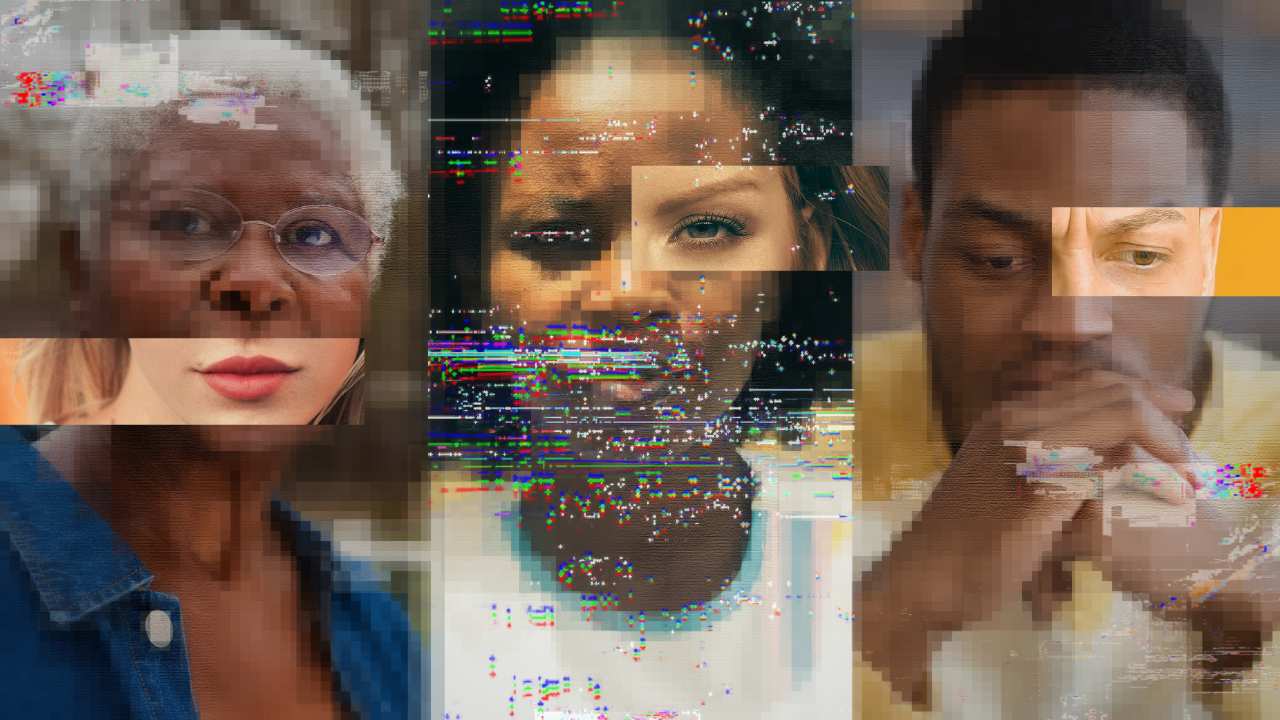
In the affluent community where I live, I walk down the street wearing a t-shirt of the elite Jesuit institution I once attended. It’s as if I presumptuously assume that the t-shirt will alleviate the prospect of being seen by surveilling gazes. Yet, I am instantaneously reminded as car doors lock when I walk beside them, and as purses clutch when I pass by, that my body is rendered as a site of suspicion. I am reminded that my Blackness precedes my existence. I am reminded that my darkened body occludes the presumption of innocence. I am reminded that my dark skin has eviscerated my humanity and has turned me into an object of fear.