ARTIFICIAL INTELLIGENCE AND AUTHORITARIANISM: a perspective in the wake of the pandemic
The article ‘Pandemic and Authoritarianism’, by Germán Rosa, SJ, was written in the midst of the COVID-19 crisis, but its insights extend beyond that context. The pandemic appears to reveal and accelerate political trends that were already present: the concentration of power, the weakening of democratic checks and balances, and the acceptance of extraordinary restrictions in the name of collective security. Rosa’s main concern is that fear may lead citizens to silently surrender their freedoms and rights, and that measures which were initially intended to be temporary become normalized and endure. Furthermore, in societies riven by inequality, control is never distributed neutrally: it falls most heavily on the impoverished, marginalized groups, migrants, dissidents and those who defend rights and territories.
In light of current developments in artificial intelligence and the expansion of digital technologies, the article raises troubling questions about the use of personal data, surveillance systems, artificial intelligence, facial recognition and algorithmic mechanisms of social classification. Technologies created to protect health, prevent threats, or ensure security can also become instruments of monitoring, discrimination, and control, particularly when they operate without transparency, legal limits, or public oversight. The crucial issue is not merely what these technologies can do, but who designs them, who controls them, whose interests they serve and to whom they are applied.
Upholding human dignity in the digital age therefore requires that security must not be used to justify authoritarianism or totalitarianism (of any kind), nor to normalize constant surveillance that restricts creativity and personal and collective freedom. All technological innovations must be subordinated to freedom, equality, democratic participation and strict respect for all fundamental rights.
Pandemic and Authoritarianism
In the current context (of the coronavirus or Covid-19 pandemic), we are confronted with different authoritarian political tendencies that pose a threat to democracy. We are also witnessing a global democratic crisis, and there is a need for the participation and leadership of new social actors, who represent sectors of society made vulnerable by Covid-19, to propose a roadmap to accompany these sectors in the post Covid–19 world. We will analyse how authoritarianism is occurring in the context of the pandemic and the challenges involved in constituting democratic supranational spaces or institutions in our globalised world.
The Leviathan metaphor and authoritarianism
The health crisis has unleashed the ‘Leviathan’ again. This is the title of the classic work by Thomas Hobbes in which he portrays his thoughts and political philosophical reflections. The metaphor of the Leviathan, or sea monster, is taken from the Bible and recreated by Thomas Hobbes in his moral political philosophy to represent the power of the state.[1] The Leviathan is a symbol for a great political force that unifies all things and brings order by way of its absolute power, which cannot be divided, destroyed or disobeyed.[2]
The state only comes into being when a social contract is drawn up and a commonwealth is formed, giving all the rights and powers to the ‘Sovereign King’. In fact, Hobbes thinks that people in their natural condition (before government is formed) are driven by self-interest and the survival instinct. When resources are scarce and everyone wants the same things, people live in an environment of war where ‘everyone is against everyone else’ (bellum omnium contra omnes) and life is ‘nasty, brutish and short’. To escape from this situation and live in safety, people form a commonwealth surrendering their rights and powers to the sovereign who, with their absolute power, can ensure order and punish all those who violate the law.
If the state is the authority to which citizens give up their rights in Hobbes's conception, the power of the state can be as absolute and unlimited as the right that individuals have given it to ensure ‘their security’.
Although our contemporary political situation differs significantly from the situations envisioned by Hobbes, we are seeing once again the dynamic that he expresses so well in his philosophy: people are willing to give up their rights and powers to strong authoritarian politicians in exchange for the promise of peace, security and economic protection.
Therefore, we return to Hobbes' Leviathan metaphor to explore the new Leviathans that are emerging in this health crisis and the manner in which they seriously affect our political and social realities.
The Leviathan metaphor helps us illustrate authoritarianism in the context of the Covid-19 pandemic. There are many different sides to the ‘Leviathan’ in the current pandemic crisis: one presents as a ‘Health Leviathan’ that appears to be a return to the ‘Social State’ or the ‘Welfare State’; Another side to the Leviathan is embodied in the state of emergency, which manifests in the following ways: greater social restrictions as seen in different countries in the form of the violation of the rights to freedom of movement, the right of assembly and the militarization of territories. Furthermore, in countries where an Asian-style society of digital surveillance does not exist, what we find is the expansion of a less sophisticated surveillance model, carried out by the various security forces in the name of the war on coronavirus, which can impact the most vulnerable sectors to an even greater extent. In a figurative way, the Leviathan presents us with the monstrosity of political power when used in an authoritarian way.[3] But as we will see, there are other aspects that demonstrate the authoritarianism of the Leviathan.
Authoritarianism in the pandemic health crisis
Clearly, in this health crisis we are seeing some of the same tendencies that Hobbes analysed.
First, in times when the general population experiences scarcity of resources and feels threatened, self-interest and aggressive behaviours spread easily which pit people against one another and lead to insecurity and instability. This tendency can also be identified in the context of widespread violence and continuous economic, political and military confrontation. Unfortunately, man becomes a wolf to his fellow man (homo homini lupus). We see the same in our current system, in which we are often overwhelmed by the individualistic and utilitarian competition of the market economy and neoliberal globalisation, and in the political confrontations and the struggle for power between the great global protagonists. For these reasons, Thomas Hobbes’ political reflections seem very illustrative.
Second, given this reality, the general population is easily manipulated, and to escape their insecurity, people are willing to hand over their freedoms, rights and powers to authoritarian leaders and regimes in exchange for the promise of security.
The Covid-19 pandemic has made evident the authoritarian tendencies of some political leaders who govern states, and the tendency for democracy to become a ‘particracy’ where political parties, rather than the people, are the primary basis of rule. Both of these situations are abhorrent.[4] In some authoritarian governments we can observe how the governing bodies and leaders of political parties, in order to maintain the positions they have achieved, enshrine a system of alliances and coalitions to hold onto the political balance of power, preventing significant change from occurring and the emergence of new social issues in the political sphere. The abuse of power impacts and erodes human rights and turns democracy into a power game where the most authoritarian prevails. Let us now analyse some modes or forms of authoritarianism during the Covid-19 pandemic.
a) One first mode is the abuse of power by governing bodies and the various state authorities in the application of measures that put health protection in conflict with the other rights of the citizen.
The authoritarian tendencies of some governments in the context of the pandemic has favoured the enactment of a State of Emergency restricting the exercise of fundamental rights. The political Leviathan or State of Emergency has in certain circumstances been used to persecute political opponents, without providing means for the freedom of expression and thought of these political groups. In the worst case, these individuals and groups are repressed by way of legal, policing or military coercion. This creates a climate of insecurity that guarantees neither the physical nor the psychological integrity of citizens.
b) On other occasions, the policies of the ‘Health State’ have turned into elaborate, cronyist, electoral campaigns, to capture the votes of citizens and achieve desired electoral results for the powers that be, while gaining control of government for their own party.
If the logic of the health Leviathan or ‘Health State’ has become a way of doing politics, we realize that on many occasions it reinforces inequity in health services, because not all citizens have access to the same treatments, nor to equitable health protection. But, in reality, the inequality in globalisation is structural in nature, since the uneven distribution of world income has worsened abysmally. Let us not forget that poverty and inequity are determining factors for democratic instability.
c) Another mode is the denial of the existence of Covid-19 by the political, economic and financial elites in order to prioritize productivity and financial activities and to activate channels of commerce in the middle of a pandemic, thereby avoiding any delay or obstacles to economic growth and financial accumulation.In this way, capital is seen as more important than the health of the general population. Thus emerges the mode of the economic-financial Leviathan that is imposed without limitations.
d) There is another form of authoritarianism that manifests itself in the total ineffectiveness and paralysis of political leaders and governments. They ignore the reality, the impact of the pandemic on the general population and its consequences and, in this case, the governing powers do nothing to deal with the health crisis or support the organization of civil society to prevent and contain the spread of Covid19. This type of quiescent and unresponsive Leviathan seeks to dismantle and demobilize all political opposition and to impose itself in an underhand way.
These are some visible forms of authoritarianism that violate the rights of citizens in different ways. The danger is that in the face of escalating government measures to restrict assembly, public meetings and debates, and mass demonstrations, little by little civil society becomes immobilized and organized opposition becomes paralyzed in the task of upholding the respect for citizens' rights. Furthermore, in more developed countries highly sophisticated systems of artificial intelligence are used for political purposes to locate and identify people infected with coronavirus, but also to exercise territorial control and to ensure that the general population acquiesces and is prevented from defending its own rights, which are being violated.
Authoritarianism of any sort leads to a situation of ungovernability, and a growing social awareness is emerging that government authorities and institutions must be at the service of citizens. In reality, the vast majority of people and communities who yearn to build democratic societies have no desire for state control, authoritarian governments, or particracies. For these reasons, governments need to consult and dialogue taking into account the expectations and hopes of their citizens, by creating procedures that lead to citizen participation on national issues. In fact, the vast majority increasingly demands transparent explanations of how power is being exercised and questions the relationship that governing powers have with their constituents.
The UN underlines that the pandemic is a global problem that has multiple impacts: “The COVID-19 pandemic is more than a health crisis; it is an economic crisis, a humanitarian crisis, a security crisis, and a human rights crisis. It has highlighted fragilities within and among nations. Coming out of this crisis will require a whole-of-society, whole-of-government and whole-of-the-world approach driven by compassion and solidarity”.[5]
Faced with these expressions of authoritarianism, the concern for politics and the imperative for civil society as regards democracy is the following: how can we guarantee health and food security along with the other rights of the citizen.
Globalisation, the crisis of the state and the need for supranational institutions
Faced with this reality, we realize that guaranteeing the rights of citizens depends on their being fully recognized in a country’s political constitution and the rule of law that stems from it, as well as on the state’s institutional workings and its different branches of power. Respect for the rights of citizens cannot be built on ineffective government and ineffective state institutions. Obviously, this reality raises the concern to create supranational structures of governance that guarantee the comprehensive security of citizens. It is certainly true that there is an urgent need to create democratic international spaces that respond to the great challenges of the 21st Century; however, we must take into account two obstacles that have to be overcome.
1. Globalisation has curtailed nation states and caused a loss of their sovereignty, assigning them a role as a police force to guarantee and benefit the global market. Consequently, nation states do not have the power to take corrective measures to tackle the great problems that arise from the dynamics of the market and big capital, which operate without restrictions vis-à-vis the general public.
It must be remembered that the various liberal tendencies are united in considering the state as a necessary evil, although its powers should be limited and should not be extended beyond what is necessary.
In a context in which nation states are ceding ground to international markets and global trade, in which the inequality, poverty and social exclusion inherent in globalisation has increased, there is an urgent need to establish authentic social welfare states. This challenge becomes evident in the context of the Covid-19 pandemic, because the health protection and broader security of citizens depends on policies adopted to confront the health crisis, economic recession and the socioeconomic consequences for the vast majority of the population, who are impoverished and excluded from the benefits of globalisation.
States are weak and lack legitimacy which becomes an obstacle because the same weaknesses and limitations are carried over when constituting and participating in potential supranational spaces.
2. Today there is a crisis among global and regional institutions in a time when a new world order is coming into being, and there is no sign that this process will come to completion in the short term. It is likely that we will see the new multilateral global order in about twenty or thirty years with new international actors and we hope that this order will be a plural one, but for now, global institutions are at an impasse. We would like multilateralism to be reinforced by a truly democratic culture from citizens and states.
If it is true that supranational bodies are necessary to strengthen democracy and guarantee human rights, the danger of authoritarianism casts a shadow over this project in the absence of a global democratic culture that is devised for the recognition de facto and de jure of citizens and groups without power. Without this democratic culture, supranational structures can suffer from the same woes as the debilitated, authoritarian democracies of the current states in question.
Authoritarianism is a political problem that has been spreading in our times and in many cases it comes entwined with populism and other accompanying problems that harm human rights, among which we can mention: ethno-nationalism, discrimination against certain groups, hate speech, xenophobia, attacks and forced return of refugees and asylum seekers, mistreatment of migrants, sexual and gender-based violence, etc.
In quantitative terms, the challenge that arises is how to constitute a supranational institution or space with a democratic culture in which the world’s 167 countries are represented, without ignoring the fact that 54 of these are governed by authoritarian regimes, 54 by flawed democracies, 22 have full democracies and 37 countries have hybrid regimes.[6] As we can see, there is a prevalence of countries with substantial political problems and democratic deficiencies. The panorama is a complex one and constituting supranational institutions will not be easy in practical terms. This partly explains why the main global institutions such as the UN, the World Trade Organization, the World Health Organization, etc., are currently in crisis and being called into question. This is also true for other regional organizations such as the Organization of American States, the European Union, etc.
However, we cannot ignore that we are standing at the crossroads of relaunching into a new era: either we continue with the great pre-pandemic global economic, financial and political trends, or we are reborn into a new political and economic democracy without authoritarianism in the post-coronavirus era.
We can discard all the great lessons so painfully learned from this pandemic, or we can be reborn into a new democracy of solidarity and fraternity with those who have always been excluded from the benefits of the economic race during this historical period.
We are experiencing the rediscovery of the meaning of politics and the importance of the welfare state and the universal right to health in the face of healthcare crises. If we abandon coronavirus pandemic clinical health services to the market, most likely 80% of the global population will have no access to the cure and treatments for this plague. And the remaining 20% will always be exposed to contagion.
We are increasingly feeling a sense of belonging to the human community and the importance of a holistic and ecological approach to security in the face of the vulnerability and hardships facing communities. Health care must be holistic. It brings joy to hear how the evil of this pandemic has done so much good when it comes to protecting our common home. The air has been purified and pollution levels have decreased due to the economic slowdown, as can be seen from satellite photographs of planet earth. It would be an extraordinary experience if politics really became a vehicle to carry out justice and achieve the common good that we so greatly need. Hopefully, all these reflections on authoritarianism, populism and the role of politics in times of the coronavirus will help us to recreate politics on the terms of the most vulnerable in society and those who always suffer the disastrous consequences of these scourges.
Original Spanish
TranslationNils Sundermann
[1] Thomas Hobbes in his political philosophy refers to the mythological figure of the Leviathan which is a sea monster that appears in the book of Job (Ch. 3: 40 and 41), Isaiah (Ch. 27:1) and in Psalms (Ch. 104:26; 74:14). In the Sacred Scriptures, the Leviathan is a dangerous sea creature that creates chaos, evil, intimidates and produces terror in human beings.
[2] Hobbes thought that the word ‘Leviathan’ came from the Hebrew ‘lavah’, which means ‘to couple, connect or unite’, and ‘thannin’, which means ‘dragon’ (because it was thought that it had scales that could not be pierced or divided).
[3] https://www.nuso.org/articulo/reflexiones-para-un-mundo-post-coronavirus/
[4] Pintacuda, E. (1994). Breve curso de política. Bilbao, Spain: Sal Terrae, p. 139ff.
[5] https://www.un.org/es/coronavirus/UN-response
[6] Cf. Democracy Index2019 from The Economist.
Author
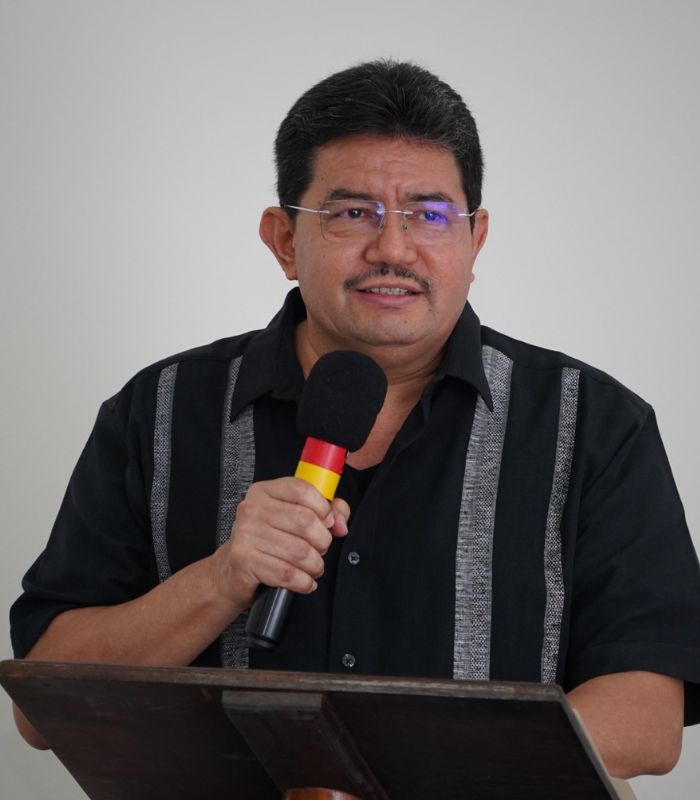
German Rosa, S.J., a Jesuit of the Central American Province. He is currently Director of Radio Progreso and the Society of Jesus’ Team for Reflection, Research and Communication in the municipality of El Progreso, Department of Yoro, Honduras, Central America. He is dedicated to reflection, research, and analyzing reality. He supports communities in the defense of the common good and their territories and collaborates with the Society of Jesus’ radio emissions: ‘In Mission’, ‘Apostolic Voices’, on Radio Progreso. He also provides pastoral support to communities in El Progreso, Yoro.
Cover image credits: Aerial view of a person wearing formal shoes standing on a social distancing marker. Photo: Nothing Ahead (Joseph). Source: Pexels, published under a free-use licence on 4 July 2020.
Related Posts:
Democracy, which has historically proven most effective in meeting these criteria, cannot be taken for granted. In our AI era, citizens should press for more than multiparty elections and the protection of basic freedoms; that institutional core is not enough. We must carefully regulate and channel powerful technologies with the capacity to divide us from one another and short-circuit social and political participation. That means maintaining spaces in civil society where human contact and social friendship can flourish without the mediation of machines, beginning with the educational systems through which all citizens pass. It means fighting deepfakes and disinformation in the public sphere, so that citizens still operate in a world of facts and evidence and political representation has a strong basis.
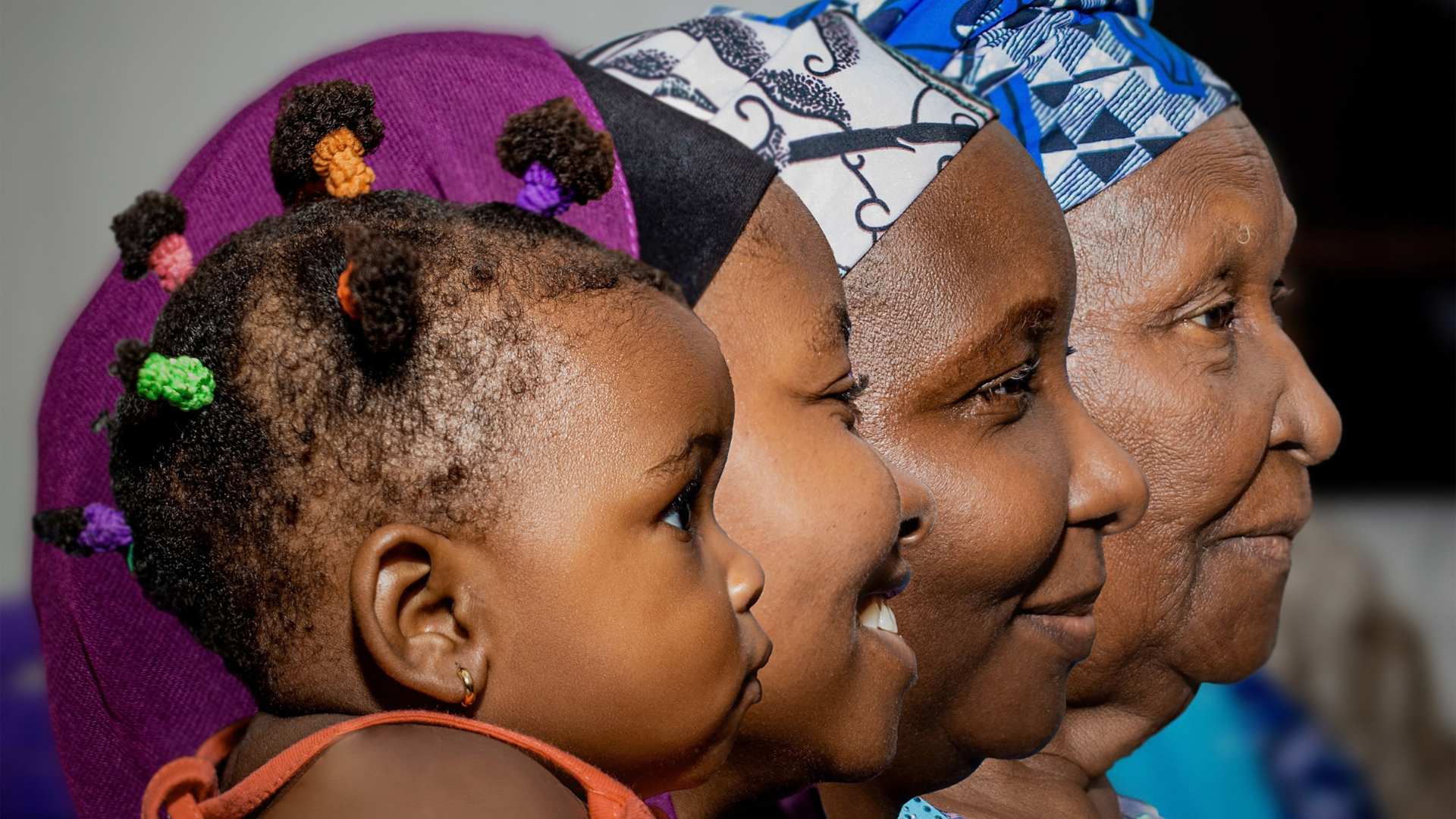
Artificial intelligence (AI) is increasingly entering public life in Ghana, including through digital systems used for identification, verification and service delivery. The ethical question is therefore not simply what AI can do, but what happens to people when digital systems become gateways through which citizenship, mobility or access to services are recognised. In northern Ghana, especially in border communities, this is a concrete question. I was privilege to visit Pusiga community in November 2025 with a Jesuit friend of my mine who is originally from the community. Thus, the topic for this article resonates very well with me.
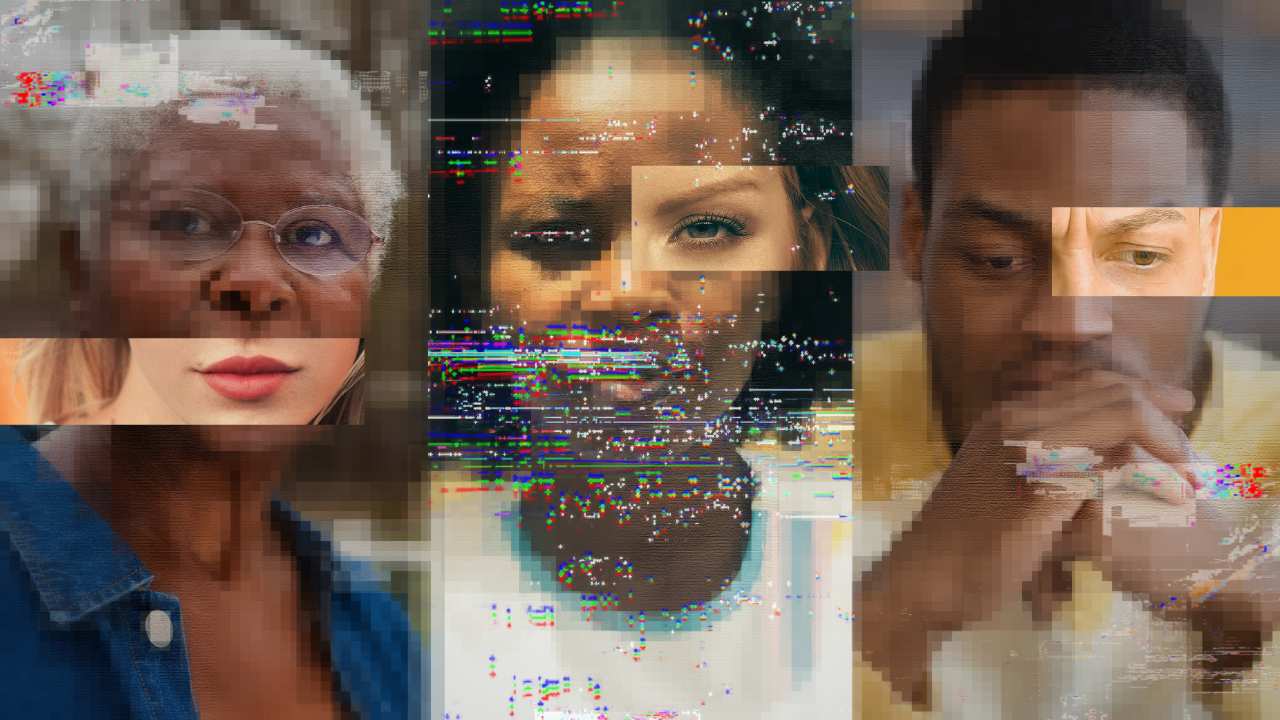
In the affluent community where I live, I walk down the street wearing a t-shirt of the elite Jesuit institution I once attended. It’s as if I presumptuously assume that the t-shirt will alleviate the prospect of being seen by surveilling gazes. Yet, I am instantaneously reminded as car doors lock when I walk beside them, and as purses clutch when I pass by, that my body is rendered as a site of suspicion. I am reminded that my Blackness precedes my existence. I am reminded that my darkened body occludes the presumption of innocence. I am reminded that my dark skin has eviscerated my humanity and has turned me into an object of fear.

When Omar came upon the place in a neighborhood on the outskirts of town, he saw a white rosary hanging over the door and felt a sense of relief. He had been told it was a shelter run by nuns. He had been sleeping poorly for several days and walking in very difficult conditions. His feet were injured, his shoes were torn, and his clothes—which had been wet and had dried on his body over the past two weeks—were terrible. The smell was unbearable. His wife and two young children had been taken in three days earlier at another location, where they could regain their strength. He, being a man, was not allowed to stay in the same space; that was the safety policy they had explained to him.
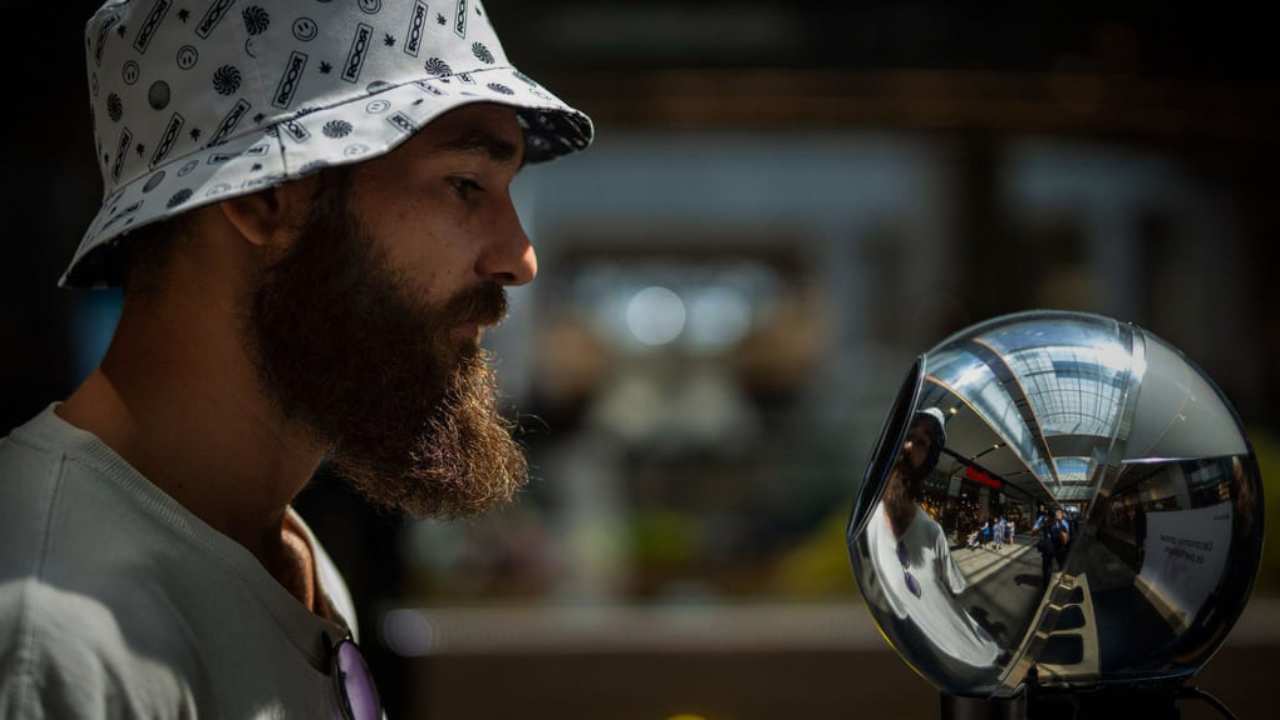
Every political community arises, to some extent, from a promise of protection. But that promise cannot be understood in a narrow or reductionist way. Protection does not mean only defending against danger, containing threats, or neutralizing risks. It also means upholding the conditions that make a truly human life possible: belonging, recognition, education, work, health, participation, relationships, and rights. A society does not protect only when it prevents someone from being attacked; it also protects when it prevents someone from being abandoned, rendered invisible, or excluded from the community to which they belong.

Artificial intelligence makes Matthew Carnes’s proposal to move towards an economy of solidarity and reconciliation, grounded in the dignity of every person and the common good, especially urgent. Faced with a technological transformation that renders precarious work invisible, perpetuates discrimination, and threatens to concentrate the benefits of increased productivity, the text invites us to ask not only how much value innovation creates, but who shares in that value, who is excluded, and what conditions enable human flourishing. Lifelong learning, social protection, and the participation of those displaced by these changes emerge as essential conditions if artificial intelligence is to serve decent work rather than an economy without workers.