
Ndụbụisi, life is first: machine intelligence, the web of being and the heavens
Between 2018 and 2021, the government of Bangladesh sent Myanmar the names of at least 830,000 Rohingya refugees, along with the photographs and thumbprints the UN refugee agency had taken when registering them for aid. Human Rights Watch, which documented the transfer, found that the agency had skipped the full data impact assessment required by its own policies. 23 of the 24 refugees it interviewed said no one had told them their details could reach the state they had fled. UNHCR disputes that account.
In August 2023, thousands of Kenyans queued in Nairobi to have their irises scanned by Worldcoin, a project co-founded by OpenAI’s Sam Altman, in exchange for tokens worth about 7,000 shillings. The interior ministry suspended the project “until relevant public agencies certify the absence of any risks to the general public.”
In 2018, I went to a camp for displaced people in Mubi, Adamawa State, in north-eastern Nigeria. We brought food, blankets, and medicine. We registered each person, recorded each household, distributed what we had, and wrote our report. When I returned some months later, people who had once introduced themselves by their trade and family now identified themselves as beneficiaries.
We used paper and spreadsheets, and those of us who kept the records meant well. But a system that knows and recognizes people only as data records will, if we let it, decide about them as data records and may ultimately be permitted to kill them as data records. If a person is only a record that can be represented digitally, it would be justified, given that a record can be sorted, shared or deleted without wrong to anyone. Hence, the question beneath this whole piece remains what is a person,and why should this not happen? Who may hold authority over a human life? For me, a person is a journey walked within a web of relationships, which no profile drawn from a body can represent, and authority over a life belongs to the One who gave it. No human being has that authority, so no one can give it to a machine or delegate it. I test this position against Igbo relational thought and Catholic teaching, read side by side. I write as a young African Jesuit who wants these technologies for my continent and fears what they do to privacy and surveillance, to authority over life, and perhaps to the heavens.

Photo by George Prentzas on Unsplash.
Data, person and digital dehumanization
Picture a woman at a registration table in a camp, pressing her thumb to a glass plate, looking into a lens, and turning her face toward a camera. In seconds, she has handed a machine her body, now reduced to data. By machine intelligence, I mean systems that learn patterns from vast amounts of data to classify, predict, or decide. Humanitarian agencies increasingly record displaced people this way, and the woman, who needs the food beyond the table, can rarely refuse.
One influential account of what she has lost comes from John Locke, who wrote in 1690 that “every man has a property in his own person,” and C. B. Macpherson later presented what grew from such claims as “possessive individualism.” On that view, her data is an extension of her property; its misuse is considered theft; and consent, ownership, and control are introduced. However, what she lost includes her place with, in, and among others.
My own tradition gives me words, and from it I have drawn a framework I call Ijeluwa, from the Igbo ‘ije’: journey, and ‘ụwa’:existence: the path each person is given to walk through the world. A person is made by relationships with the living community, the ancestors, those not yet born, the land, and God, whom the Igbo call Chukwu. Igbo distinguishes mmadụ (a human being) from onye (a person in the full sense), the one who becomes by walking those relationships. The Nigerian philosopher Ifeanyi Menkiti argued that in African thought, personhood is something one grows into through the community.
Hence, that woman at the table is unique twice over. To the system, she is unique by her profile, a set of data points taken from her. To her people, she is known by her journey: the web of relationships that is hers, including whose daughter she is, whose mother, which village holds her ancestors, etc. As I see it, the system can make the profile only by leaving the journey out. It records her thumbprint and leaves out, among other things, her mother’s name, her lineage, and her place among the living and the dead.
From data-record to target selection
In Magnifica Humanitas, Pope Leo XIV warns that machine intelligence in war ends by “reducing victims to data.” The machine profiling that registers a person for food can also be used to select a person as a target. A small drone circling a road, with no one steering it, can have such a profile as its target. A drone like this is an autonomous weapon system. Once activated, it selects and attacks targets by itself, matching what its sensors detect to a programmed target profile. No human being decides, at the moment of the strike, that this particular person will die or is the right target. The case most often cited as the first use of such a weapon against people, reported by UN experts, was in Africa, in Libya in 2020.
Pope Leo writes, “Moral judgment cannot be reduced to calculation, for it involves conscience, personal responsibility and the recognition of the other as a person. Therefore, it is not permissible to entrust lethal or otherwise irreversible decisions to artificial systems” (no. 198). For my own people, that limit belonged to the land. Among the Igbo, the killing of a kinsman was nsọ ala, an abomination against Ala, the earth. In Chinua Achebe’s book: Things Fall Apart, when Okonkwo’s gun accidentally kills a boy, the death still offends the earth, and Okonkwo must leave the land for seven years. Even an unintended death had to be answered for by Okonkwo and by the whole community. As I understand it, life is never a private possession. It belongs to a web that holds the living, the dead and the unborn, and reaches down into the land and up to Chukwu, the source of life.
Okonkwo could be sent into exile. Can a machine be exiled? Can it repent or be reconciled? A mother who asks who killed her son deserves an answer, and if a machine made the decision, no one is left to answer, nor to give it. The Church teaches that human life “remains forever in a special relationship with the Creator who is its sole end,” and that “God alone is the Lord of life from its beginning until its end” (Catechism of the Catholic Church 2258). John Paul II added that life is entrusted to us, and we must account for it (Evangelium Vitae 52). Authority over life was never ours, so we have no authority to give it to a machine. Christof Heyns, who, as UN Special Rapporteur, brought these weapons before the Human Rights Council in 2013, put the same point in legal terms, following the philosopher Peter Asaro: one may not delegate a power one does not have. Where the Church has allowed lethal force at all, in legitimate defense, it has treated it as a grave duty carried by those responsible for the lives of others (Catechism 2265), and it now judges the death penalty inadmissible because it attacks the inviolability and dignity of the person (Catechism 2267). We are asked to be responsible for one another. A machine cannot be responsible for anyone, and that would be true even of a machine that never erred. Machines fail, they misfire, and they can be hacked or seized. And once a machine is permitted to decide over one life, no principle confines it to the next, because the reasons given for the first case, speed and efficiency, apply just as well to the next. Many Igbo parents name a child Ndụbụisi, which means life is first. Is life first in our decisions about giving machines authority over human life?
When God asks Cain where his brother is, Cain replies: “Am I my brother’s keeper?” (Genesis 4:9). In Igbo tradition we say, onye aghala nwanne ya: let no one abandon their brother. An army that leaves the killing to an autonomous weapon has abandoned the person it kills, who is still its kin.
Few states, and fewer African ones, can build these systems, and I fear Libya will not be the last African testing ground. Armed groups that already contest governments from the Sahel to the eastern Congo will try to buy or build them, and states that struggle to govern now could lose control altogether. Yet West African governments have already begun to draw a line. In April 2024 the member states of the Economic Community of West African States met in Freetown and called for the urgent negotiation of a legally binding instrument on autonomous weapons. Their communiqué also says that these technologies, if equitably developed and shared, could improve human lives, and warns that without equity they may deepen inequality and encourage digital dehumanization.
Being as relation, God as love
I return here to Ijeluwa, the framework I introduced earlier. Its name joins two Igbo words, ije, journey, and ụwa, world, and it names the journey each person walks through the world within a web of relationships. The Kenyan philosopher John Mbiti wrote, “I am, because we are; and since we are, therefore I am.” He was describing what a person is. Ijeluwatakes the claim further, from ‘persons’ to everything that exists, holding that relation comes first in the order of being. Magnifica Humanitas comes to the same place from another direction when it says that “the use of force, violence and weapons reflects a relational poverty” (no. 192).
In Ijeluwa the source of all that exists is Otu, an Igbo word for oneness, which I describe as perfect relationality: a fullness where every relation is complete and every distinction held in unity, yet nothing is lost or erased. Everything flows from this fullness, as love spills beyond itself, and participates in it. The Belgian missionary Placide Tempels called this participation vital force. Stones, rivers, animals, human beings, and ancestors all participate, each in its own mode. A village will not defile its stream, because the stream shares in the life of the village. A child carries an ancestor’s name, and the ancestor stays among the living.
Scripture says that God is love (1 John 4:8), and reflection on the Trinity led Thomas Aquinas to describe the divine persons as subsisting relations (Summa Theologiae I, q. 29, a. 4). At the deepest level of reality, in the Christian confession as in the African intuition, there is communion. The two traditions differ, and I believe they meet here. Together they give ethics a better basis than possessive individualism, because both begin where the woman’s life begins, in her relationships.
I have called machine intelligence an emerging relation: something made by people that enters into relationships with persons without being a person. It is more than a thing, because it changes the web we live in. It is not a person, because it does not walk the journey (Ijeluwa) from birth through community toward God. I leave aside whether it is conscious. I ask what it does to the relationships that make us persons. I also ask whether the woman at the table walks away still known by her family and her village, or known only by her thumbprint.
In the Principle and Foundation of the Spiritual Exercises, Saint Ignatius writes that we are created to praise, reverence, and serve God, and other things are created to help us toward that end, to be used as far as they help and let go as far as they hinder, tantum quantum (Spiritual Exercises 23). In the Contemplation to Attain Love, Ignatius asks us to see God dwelling and laboring in all creatures and says that love consists in mutual sharing of what each has (230 to 237). I can imagine a world with machine intelligence as a web of right relationships, where everything, including what we have made, serves God. We lose that world if we give these systems authority over the lives of the people they serve.
What I want from these machines
I want these technologies for Africa. In the rural schools where our foundation’s volunteers teach, a patient tutor that speaks a girl’s own language could change what she becomes. A system that reads a state budget line by line could tell a village how much money was set aside for its clinic, and how much of it reached the clinic. Tools like these would add to the web of relationships. I hope Africans will be among those who build and share them.
No one should accept the transfer of authority over force and over life to machines, and their use by the powerful to hold the weak in place. I see three tasks for the Church in Africa. First, it can support the West African governments when they press their case at the Review Conference of the Convention on Certain Conventional Weapons in Geneva in November 2026. Parishes, schools and individual Christians can tell their own governments that they support this position. Second, Catholic and Jesuit schools and universities can teach young Africans how these systems work and how to question them. Third, parishes, schools, Jesuit communities and civic groups can read together what already exists, the Freetown communiqué and the briefing on Africa and autonomous weapons that Stop Killer Robots published in English, French and Portuguese in February 2026, and decide what to do where they live.

Stars in Zimbabwe. Photo by Erik Adair on Unsplash.
The heavens belong to the Lord
My third fear concerns the heavens. In June 2025 Mark Zuckerberg set up Meta Superintelligence Labs and told his staff that developing superintelligence was coming into sight. SpaceX says its goal is to enable people to live on other planets. On a clear night in Adamawa, the sky looks as if it belongs to no one. In law, that is still true. The Outer Space Treaty of 1967 declares that outer space, including the Moon, “is not subject to national appropriation by claim of sovereignty, by means of use or occupation, or by any other means.” The United States in 2015 and Luxembourg in 2017 have since passed laws allowing private companies to own the resources they take from space.
Pope Leo opens Magnifica Humanitas by writing that humanity faces “a pivotal choice: either to construct a new Tower of Babel or to build the city in which God and humanity dwell together” (no. 1). As the Psalm says, “The heavens belong to the Lord, but he has given the earth to the children of Adam” (Psalm 115:16). If a machine more intelligent than we are learns the habits of possessive individualism, I fear it would claim the Moon and the planets as property, just as we already claim land and data. In Igbo thought, the land belongs to the community as one of its members. The ancestors are buried in it, and the living owe it care. If stones and streams share in being, as Ijeluwa holds, so do the moon and the planets, and I think we owe them the same care.
The decisions are being made now, in laboratories and treaty rooms, by people who, as far as I can see, seldom ask what a person is, and almost never ask the woman at the table. The Church has something to say to those people, and it should say it before they make the decisions. It can tell them that being is relation, that life is first, and that authority over life belongs to God.
I still think of the people in Mubi who stopped saying their trades and the names of their families. Whatever intelligence we build, however great, I would ask if it helps people like them say those names again. I would ask those who build it to remember what Igbo parents say when they name a child Ndụbụisi: life is first.
Sources
- Achebe, Chinua. Things Fall Apart. London: Heinemann, 1958.
- Aquinas, Thomas. Summa Theologiae I, q. 29, a. 4.
- Catechism of the Catholic Church, nos. 2258, 2265 and 2267.
- ECOWAS Member States. Freetown Communiqué, Regional Conference on Autonomous Weapons Systems, Freetown, Sierra Leone, April 2024.
- Heyns, Christof. “Autonomous Weapons in Armed Conflict and the Right to a Dignified Life: An African Perspective.” South African Journal on Human Rights 33, no. 1 (2017): 46-71.
- Human Rights Watch. “UN Shared Rohingya Data Without Informed Consent.” 15 June 2021.
- Ignatius of Loyola. Spiritual Exercises, nos. 23 and 230 to 237.
- John Paul II. Evangelium Vitae. 1995, no. 52.
- Kenya, Ministry of Interior and National Administration. Statement suspending the activities of Worldcoin, 2 August 2023.
- Leo XIV. Magnifica Humanitas. 2026, nos. 1, 192 and 198.
- Locke, John. Second Treatise of Government. 1690, § 27.
- Luxembourg. Law of 20 July 2017 on the Exploration and Use of Space Resources.
- Macpherson, C. B. The Political Theory of Possessive Individualism: Hobbes to Locke. Oxford: Clarendon Press, 1962.
- Mbiti, John S. African Religions and Philosophy. London: Heinemann, 1969.
- Menkiti, Ifeanyi A. “Person and Community in African Traditional Thought.” In African Philosophy: An Introduction, edited by Richard A. Wright, 171-181. Lanham, MD: University Press of America, 1984.
- Meta Platforms. Internal memo from Mark Zuckerberg announcing Meta Superintelligence Labs, 30 June 2025, as reported by Bloomberg and Fortune.
- SpaceX. Company mission statement, spacex.com.
- Stop Killer Robots (Elizabeth Minor and Ishmael Bhila). Africa and the Governance of Autonomous Weapons Systems. February 2026.
- Tempels, Placide. Bantu Philosophy. Paris: Présence Africaine, 1959.
- Treaty on Principles Governing the Activities of States in the Exploration and Use of Outer Space, including the Moon and Other Celestial Bodies, 1967. Article II.
- United Nations Security Council. Final Report of the Panel of Experts on Libya, S/2021/229, 8 March 2021.
- United States. Commercial Space Launch Competitiveness Act, Public Law 114-90, 2015.
Author
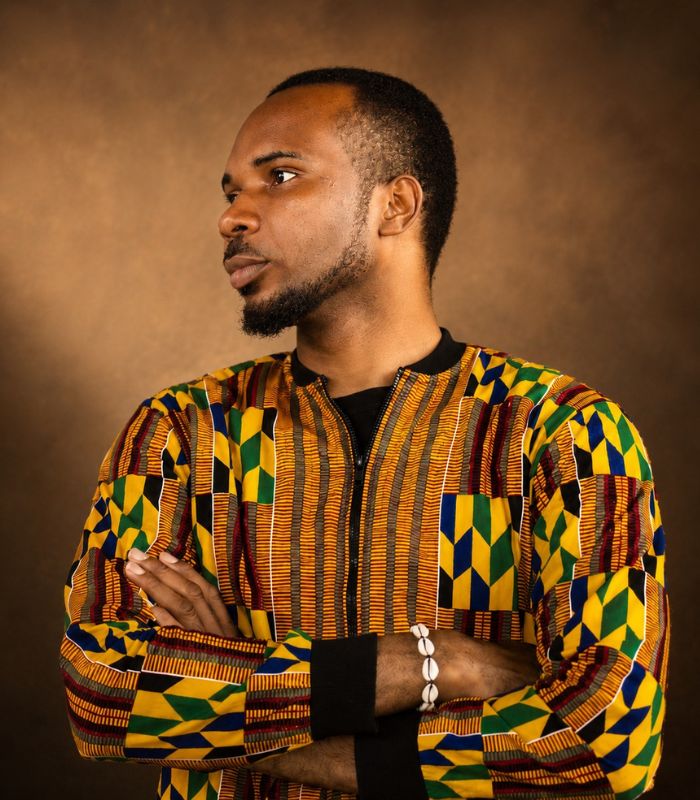
Eberechukwu Owuamanam SJ is a Jesuit scholastic of the North-West Africa Province, in regency at Arrupe Jesuit College, Abbi, Nigeria. A master's degree candidate in philosophy from Arrupe Jesuit University, Harare, he developed Ijeluwa, an African relational ontology; he also holds a bachelor's degree in international relations education from Imo State University. With eight years of humanitarian experience in West and Central Africa, he started the Jed Child Trust Foundation in 2017. In 2026, he was invited to present at Fordham University's Ignatian AI conference, and he spoke on an ICRC panel on autonomous weapons.
Cover image credits: Silhouette of a camera drone flying against a sunset sky. Photo: Sorasak (@boontohhgraphy). Source: Unsplash, published under the free-to-use Unsplash License on 15 March 2017 (UTC).
Related Posts:
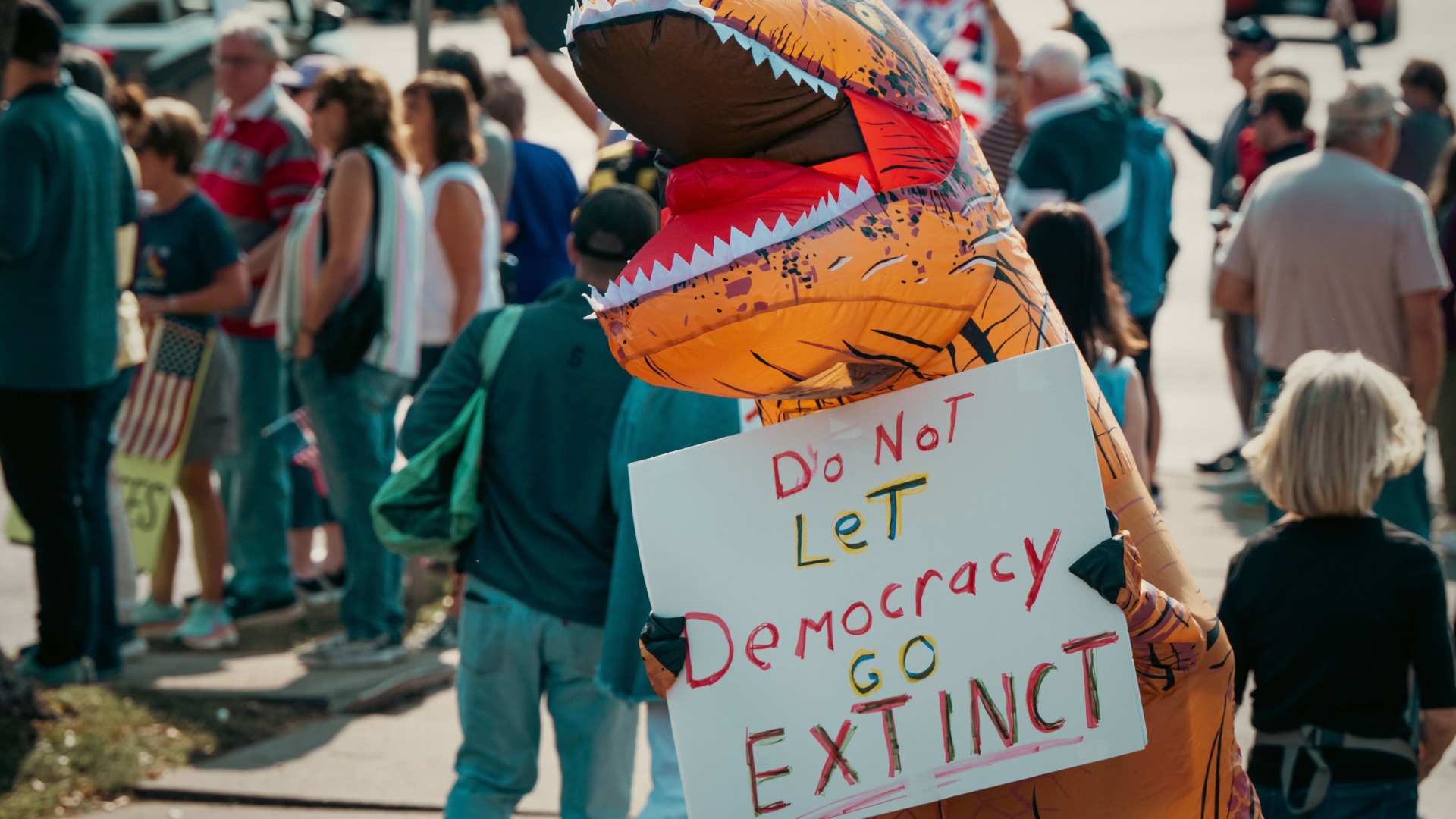
Democracy, which has historically proven most effective in meeting these criteria, cannot be taken for granted. In our AI era, citizens should press for more than multiparty elections and the protection of basic freedoms; that institutional core is not enough. We must carefully regulate and channel powerful technologies with the capacity to divide us from one another and short-circuit social and political participation. That means maintaining spaces in civil society where human contact and social friendship can flourish without the mediation of machines, beginning with the educational systems through which all citizens pass. It means fighting deepfakes and disinformation in the public sphere, so that citizens still operate in a world of facts and evidence and political representation has a strong basis.
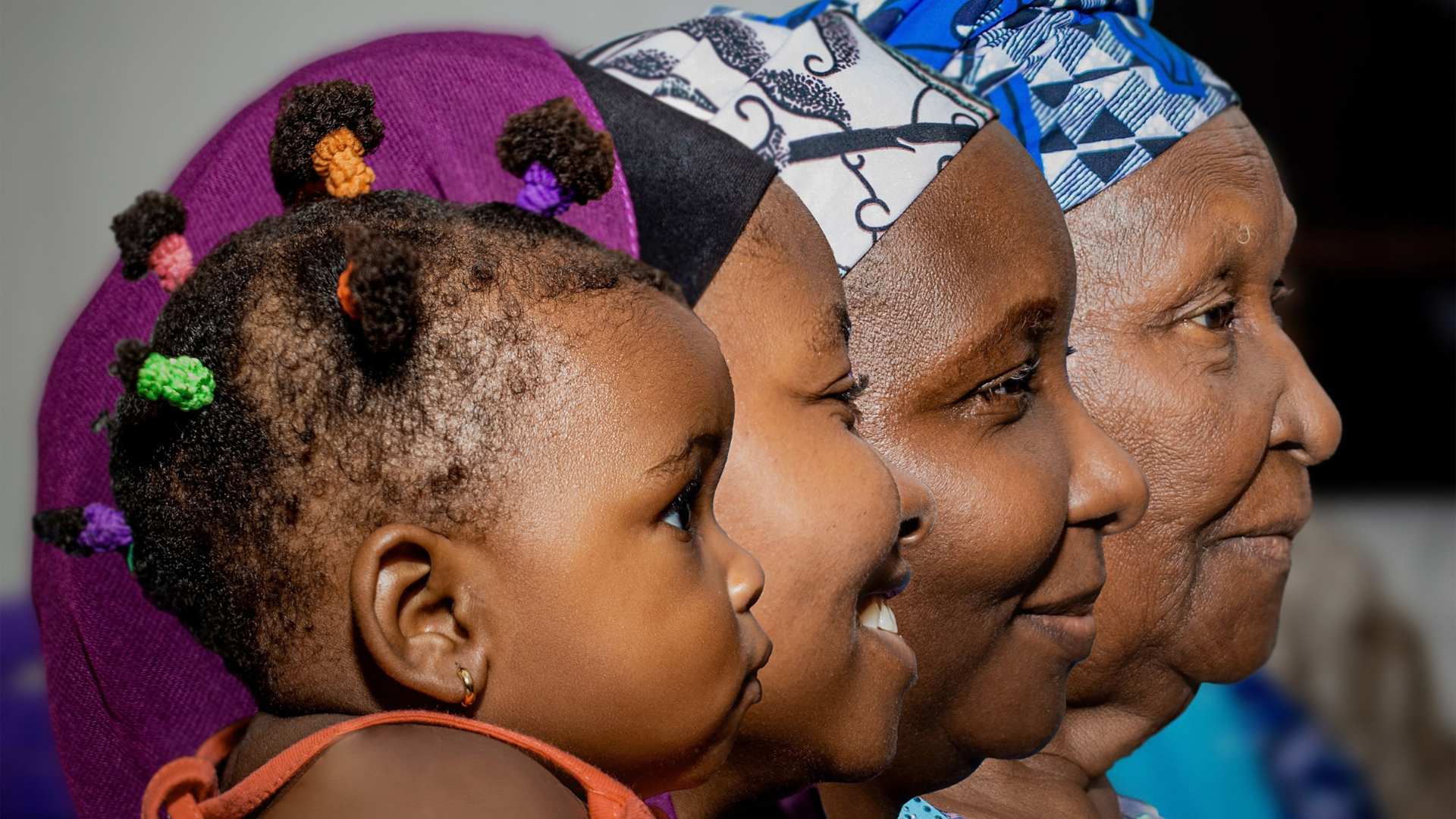
Artificial intelligence (AI) is increasingly entering public life in Ghana, including through digital systems used for identification, verification and service delivery. The ethical question is therefore not simply what AI can do, but what happens to people when digital systems become gateways through which citizenship, mobility or access to services are recognised. In northern Ghana, especially in border communities, this is a concrete question. I was privilege to visit Pusiga community in November 2025 with a Jesuit friend of my mine who is originally from the community. Thus, the topic for this article resonates very well with me.
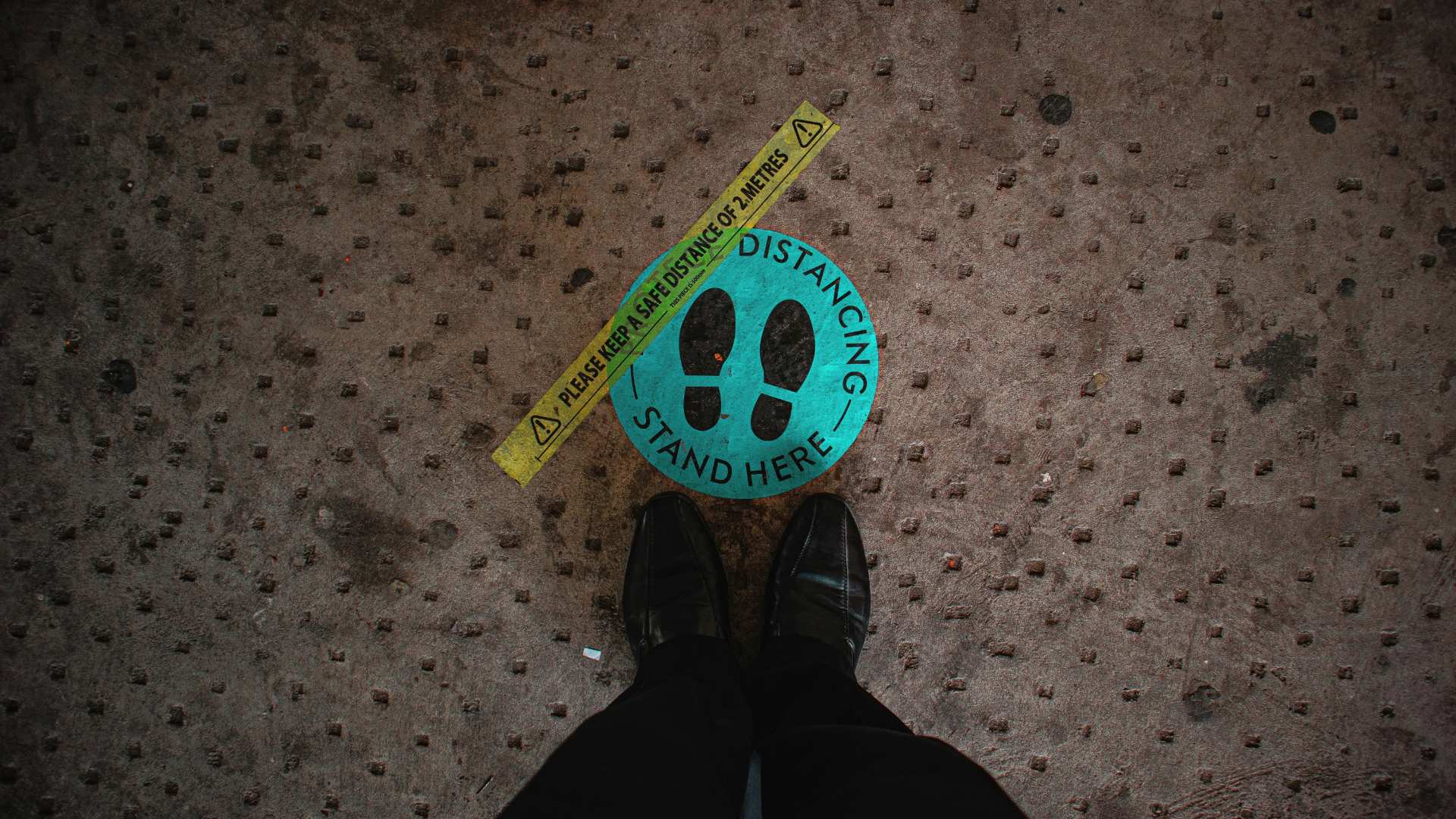
The article ‘Pandemic and Authoritarianism’, by Germán Rosa, SJ, was written in the midst of the COVID-19 crisis, but its insights extend beyond that context. The pandemic appears to reveal and accelerate political trends that were already present: the concentration of power, the weakening of democratic checks and balances, and the acceptance of extraordinary restrictions in the name of collective security. Rosa’s main concern is that fear may lead citizens to silently surrender their freedoms and rights, and that measures which were initially intended to be temporary become normalized and endure. Furthermore, in societies riven by inequality, control is never distributed neutrally: it falls most heavily on the impoverished, marginalized groups, migrants, dissidents and those who defend rights and territories.
In the affluent community where I live, I walk down the street wearing a t-shirt of the elite Jesuit institution I once attended. It’s as if I presumptuously assume that the t-shirt will alleviate the prospect of being seen by surveilling gazes. Yet, I am instantaneously reminded as car doors lock when I walk beside them, and as purses clutch when I pass by, that my body is rendered as a site of suspicion. I am reminded that my Blackness precedes my existence. I am reminded that my darkened body occludes the presumption of innocence. I am reminded that my dark skin has eviscerated my humanity and has turned me into an object of fear.

When Omar came upon the place in a neighborhood on the outskirts of town, he saw a white rosary hanging over the door and felt a sense of relief. He had been told it was a shelter run by nuns. He had been sleeping poorly for several days and walking in very difficult conditions. His feet were injured, his shoes were torn, and his clothes—which had been wet and had dried on his body over the past two weeks—were terrible. The smell was unbearable. His wife and two young children had been taken in three days earlier at another location, where they could regain their strength. He, being a man, was not allowed to stay in the same space; that was the safety policy they had explained to him.
Every political community arises, to some extent, from a promise of protection. But that promise cannot be understood in a narrow or reductionist way. Protection does not mean only defending against danger, containing threats, or neutralizing risks. It also means upholding the conditions that make a truly human life possible: belonging, recognition, education, work, health, participation, relationships, and rights. A society does not protect only when it prevents someone from being attacked; it also protects when it prevents someone from being abandoned, rendered invisible, or excluded from the community to which they belong.