
When Laughter Can No Longer Be Silenced
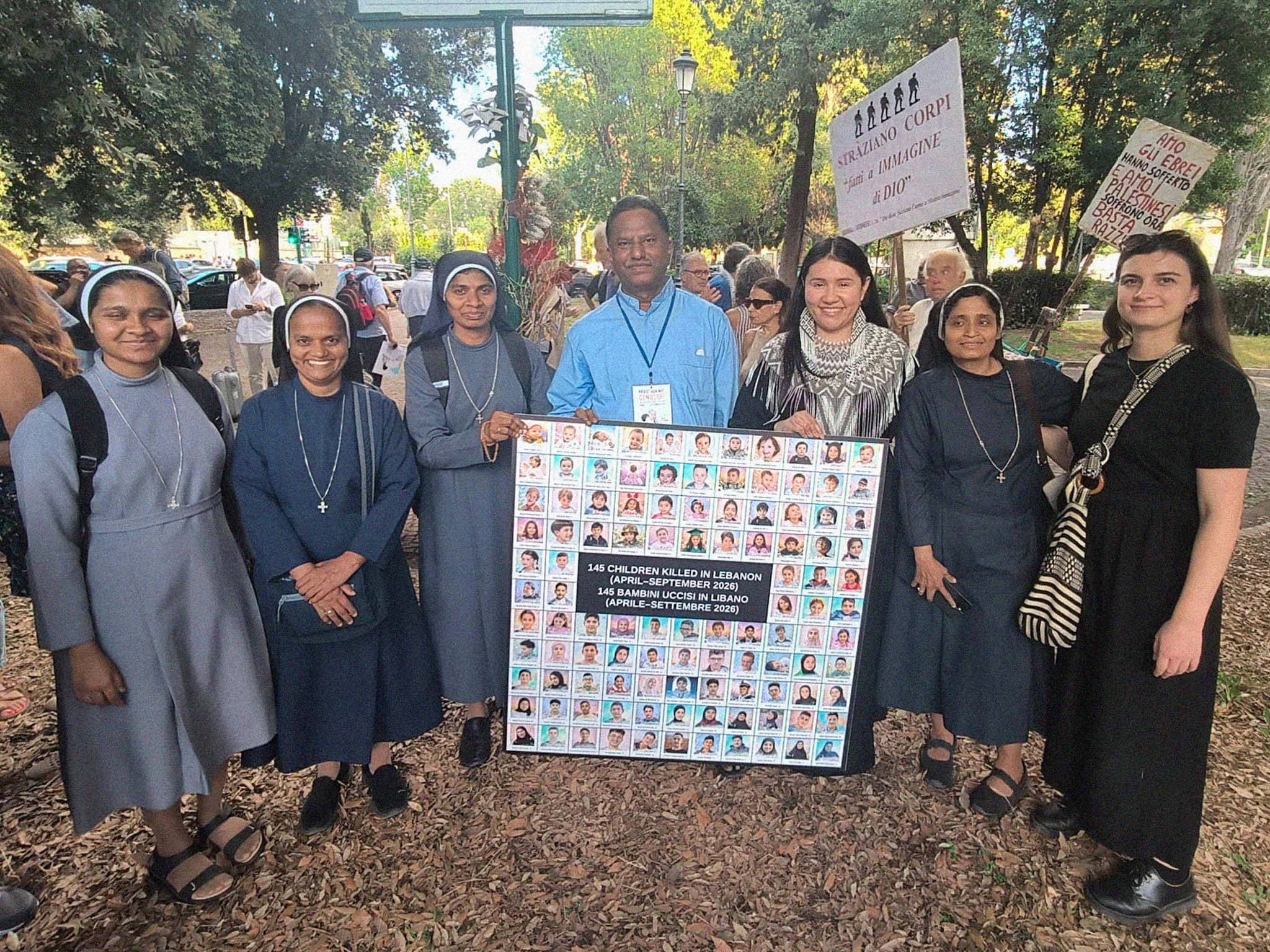
Today, I joined more than 100 priests from around the world who are part of the “Priests Against Genocide” network to pray for peace and justice and to raise awareness of the need to resolve the conflict in Palestine with dialogue and diplomacy. Some of the priests had made a pilgrimage to personally experience the realities of life in the Holy Land. They encouraged us to "come and see." We gathered in the Divine Mercy church for a prayer service and then marched outside carrying a shroud upon which we had written the names of the more than 300 Palestinian and Lebanese children who had been killed after the ceasefire. Stepping outside of the comfort of the church, I joined in singing songs of peace and asking God to be my strength to have the courage to live without fear.
Yet, during the march, I declined an invitation to be interviewed. Afterwards, I was asked if I would be willing to write a reflection of my experience of the day. Despite my prayer to be free of fears of being misunderstood, I found myself reluctant. As one of my former history professors once told me, history is not my forte. I'm hesitant to meddle into politics because I’m woefully ignorant of much of the context that leads to longstanding conflicts.
During the morning presentations, there was a video that spoke about how uncomfortable it is to talk about dead children. It is most unpleasant to speak about dead children. Many prefer that we talk about anything other than dead children. And yet, we were gathered to give voice to the hundreds of children who had been killed. As stories were shared, one particular story drew me into remembering my own sister, Ginger (whom I affectionately called ‘Honeybun’). She died when she was six years old of a rare disease that was never diagnosed. Because of her illness, Honeybun never developed the ability to speak. She could laugh when she was happy and would cry when she was sad. One of the things that made her happy was when I would do impromptu puppet shows for her by putting a pair of socks over my hands. I deeply enjoyed making her laugh.
As I marched and prayed, I carried a wooden heart made from the trees in the Holy Land. Carrying the heart reminded me of Honeybun’s Raggedy Ann doll. One detail etched itself into my young mind. On the doll was a heart with the words "I love you". I longed to show my sister how much I loved her. As I walked, she bore witness to her little brother, who after 50 years of living, continues to carry her name and memories with him. Such memories continue to fill my heart with immense tenderness and love.
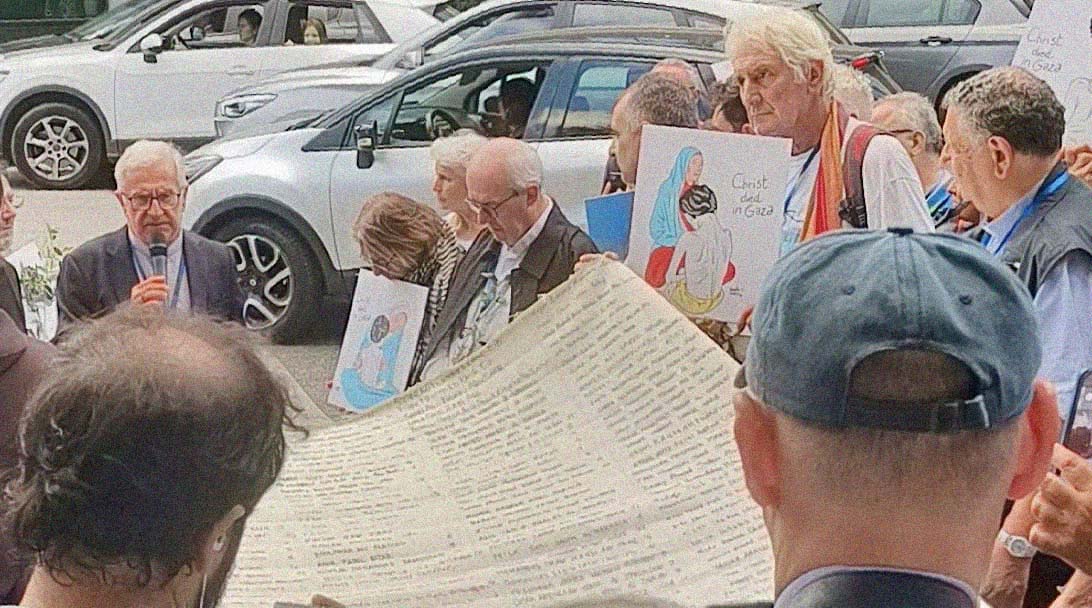
Speaking of dead children is uncomfortable. Yet it can also be healing. As I listened to the stories shared that day, I found myself returning to memories I may at times shy away from remembering. I remember finding my sister’s lifeless body in bed one Saturday morning. I had come to carry her out with me to watch cartoons. As I listened to the story of Hind Rajab, a 5-year-old girl who had been trapped inside a car attacked by Israeli forces, the memory of a little boy reaching out to touch his sister came back. The young girl had managed to call the Red Crescent for help but hours later she and the paramedics who had come toassisther were all found dead. The chilling story reminded me of the shocking cold that struck my hand as I gently touched my sister’s arm in a futile attempt to wake her up.
Deep within me, I am uncomfortable talking about dead children. I am uncomfortable with the suffering being inflicted upon so many people, especially upon the children. And yet, while marching, I find myself continuing to sing and ask for the grace to be moved beyond my discomfort and fears. Each child whose name was written on the shroud had their laughter silenced by violence. The world will never be able to hear the joyful sounds of their songs. Fr. Greg Boyle, the Jesuit who has ministered to gang members in Los Angeles, wrote a book titled "Tattoos of the Heart". Greg Boyle writes about "tattoos of the heart," the marks that relationships leave upon us. Today, the names of these children have been written upon my own heart.
Love moves me to risk criticism and misunderstanding by speaking about the children whose lives have been cut short by violence. I proudly walk with my brother priests, accompanied by several religious sisters and friends who joined me in marching, praying, and carrying the names of these children in our hearts. I hope that our prayers will bring about a change of heart that will be able to end the violence that deprives us of the ability to hear the laughter that has been stolen from us. I wonder, if we really want to stop talking about dead children, then we ought to consider taking action to disarm and stop killing children and their loved ones. In the hope of preventing the silencing of these children’s laughter, we carried their names and stood in front of one of the leading arms manufacturers in Europe. Weapons do not bring peace.
Participating in the march helped me to rediscover myself as a little boy. The boy who stands at his sister’s bedside and tries to wake her up. The boy who longs to see her smile and to hear her laugh. This little boy continues to mourn. Yet he also longs for a world filled with laughter. Prayer did not remove my discomfort. I am still reluctant to share. Yet the support of so many helped me to rediscover the power of a child’s laugh that cannot be silenced by violence. I see my sister smiling. As I choose not to be silent, I hear the silence disappear and can once again hear my sister laugh. Her name, her story, and her incredible impact upon me live in my heart. I pray that the children whose names we carried may joyfully join with my sister in having their names and stories remembered. Such laughter is one of the most effective ways of bringing peace into our hearts and into the world.
Cover image credits: The drawing is inspired by a real image of a Palestinian mother mourning her deceased son, Mohammed Zakaria. Credit: Priests Against Genocide
Related Posts:
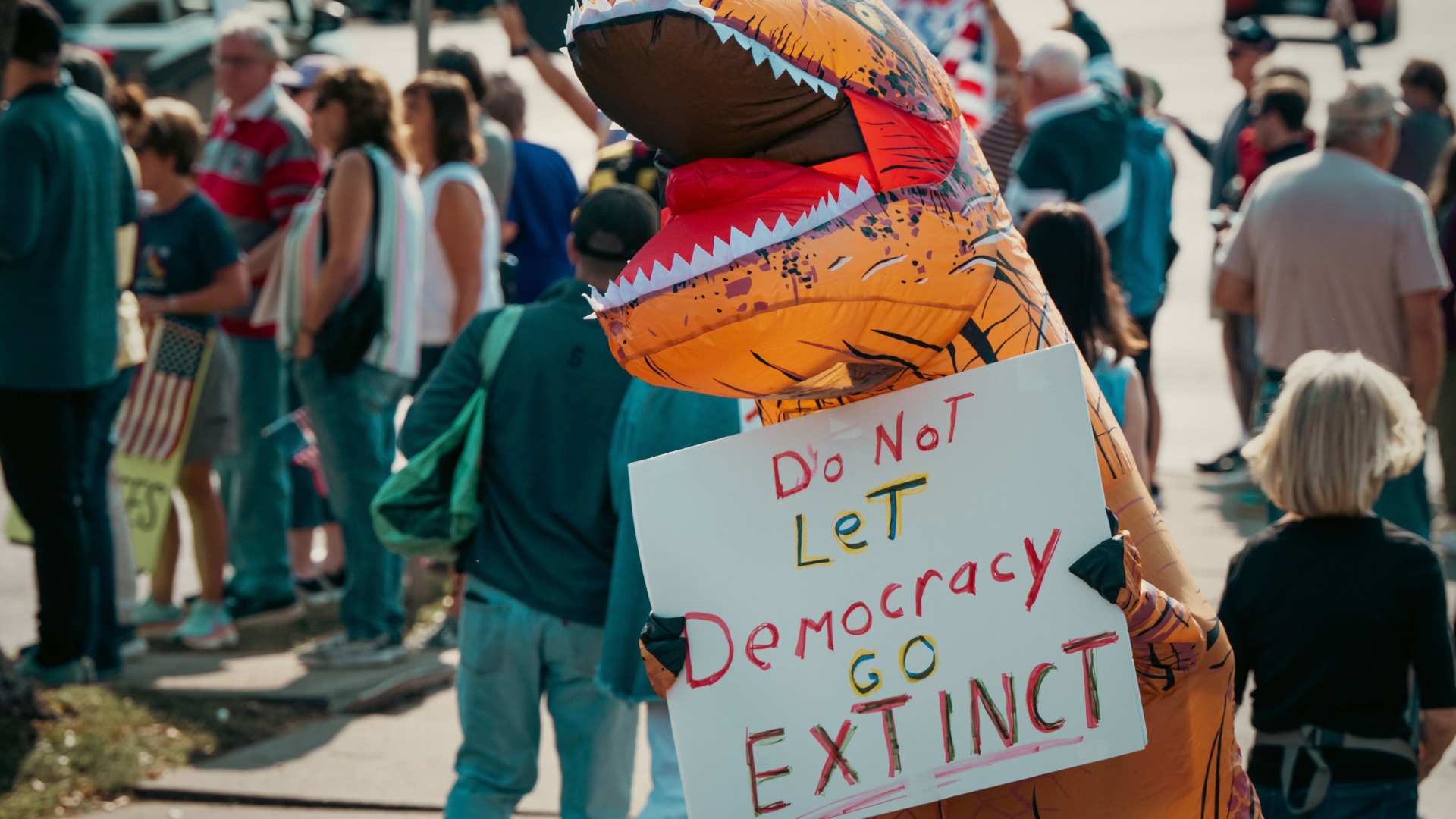
Democracy, which has historically proven most effective in meeting these criteria, cannot be taken for granted. In our AI era, citizens should press for more than multiparty elections and the protection of basic freedoms; that institutional core is not enough. We must carefully regulate and channel powerful technologies with the capacity to divide us from one another and short-circuit social and political participation. That means maintaining spaces in civil society where human contact and social friendship can flourish without the mediation of machines, beginning with the educational systems through which all citizens pass. It means fighting deepfakes and disinformation in the public sphere, so that citizens still operate in a world of facts and evidence and political representation has a strong basis.
Artificial intelligence (AI) is increasingly entering public life in Ghana, including through digital systems used for identification, verification and service delivery. The ethical question is therefore not simply what AI can do, but what happens to people when digital systems become gateways through which citizenship, mobility or access to services are recognised. In northern Ghana, especially in border communities, this is a concrete question. I was privilege to visit Pusiga community in November 2025 with a Jesuit friend of my mine who is originally from the community. Thus, the topic for this article resonates very well with me.
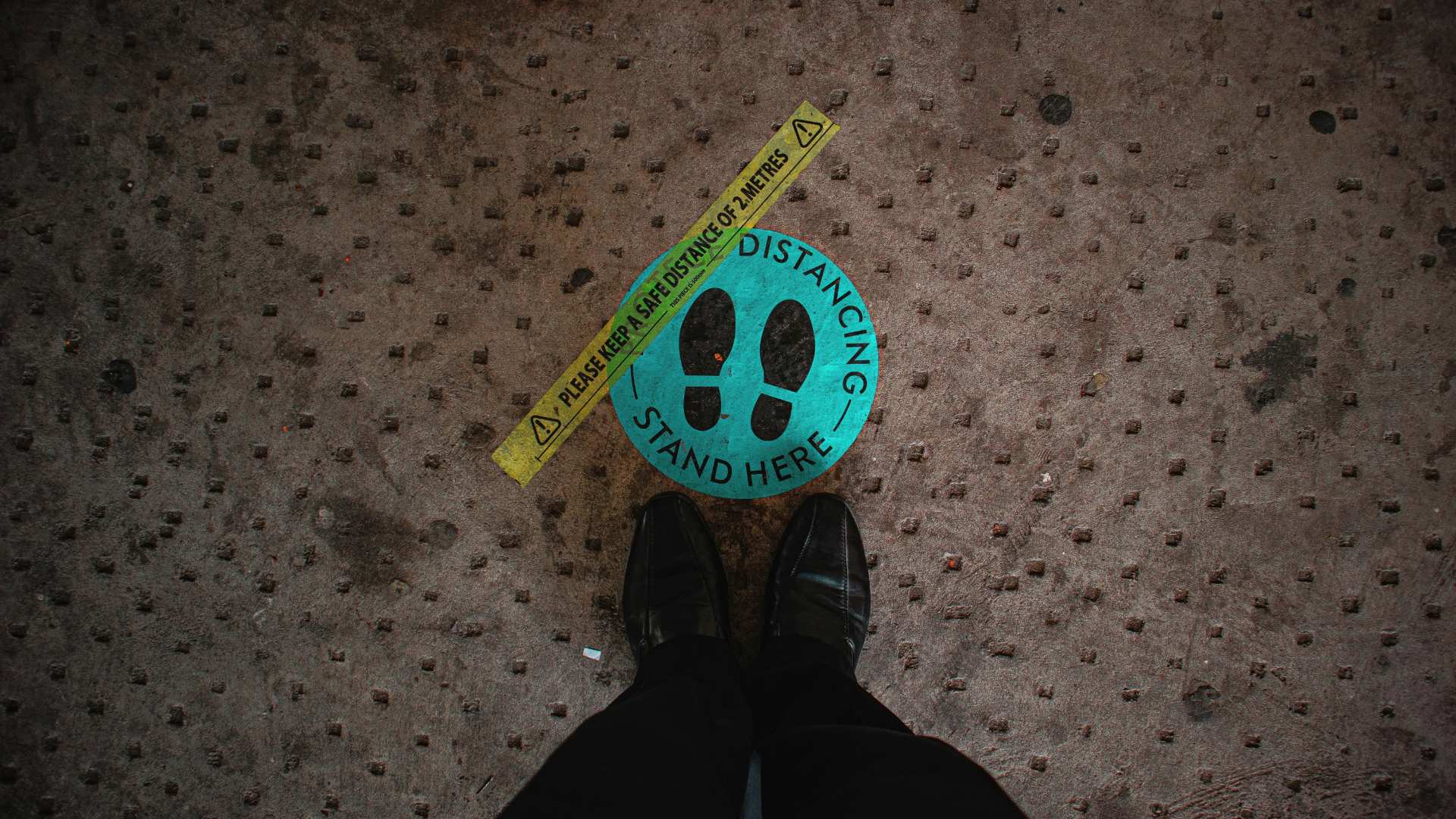
The article ‘Pandemic and Authoritarianism’, by Germán Rosa, SJ, was written in the midst of the COVID-19 crisis, but its insights extend beyond that context. The pandemic appears to reveal and accelerate political trends that were already present: the concentration of power, the weakening of democratic checks and balances, and the acceptance of extraordinary restrictions in the name of collective security. Rosa’s main concern is that fear may lead citizens to silently surrender their freedoms and rights, and that measures which were initially intended to be temporary become normalized and endure. Furthermore, in societies riven by inequality, control is never distributed neutrally: it falls most heavily on the impoverished, marginalized groups, migrants, dissidents and those who defend rights and territories.
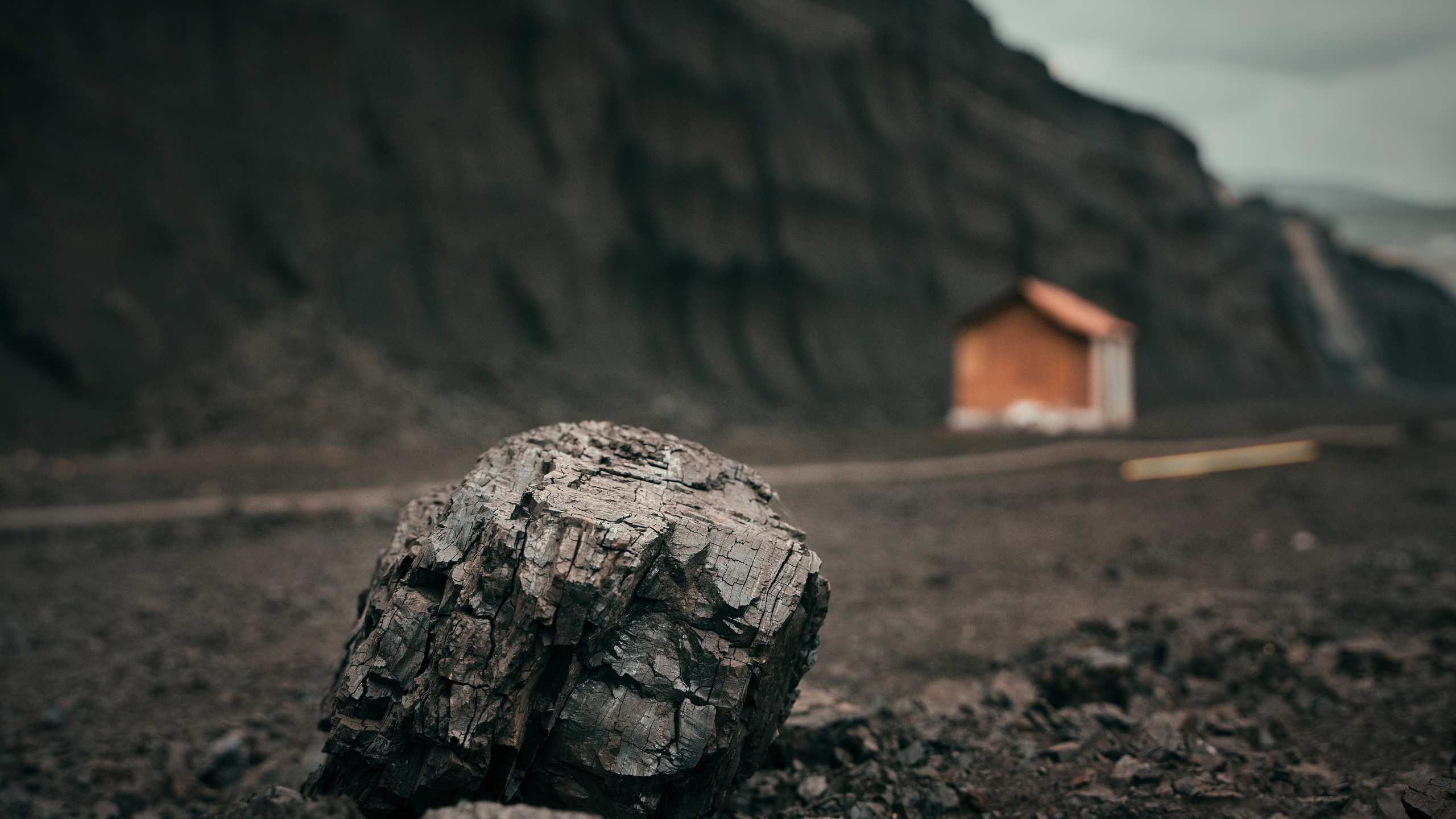
Who Are the Victims and Those at Risk of Becoming Victims? When it comes to mining, particular attention must be paid to those who are most vulnerable: Indigenous communities whose livelihoods depend on their land, forests, rivers, and water sources; small-scale farmers; fishers; poor families; women, children, and older people; as well as communities with the least bargaining power in legal, economic, informational, and political matters. They may become victims when land loses its social function, when water sources are polluted or disappear, when the environment is damaged, when livelihoods are disrupted, or when their social and cultural life is transformed without their genuine consent.
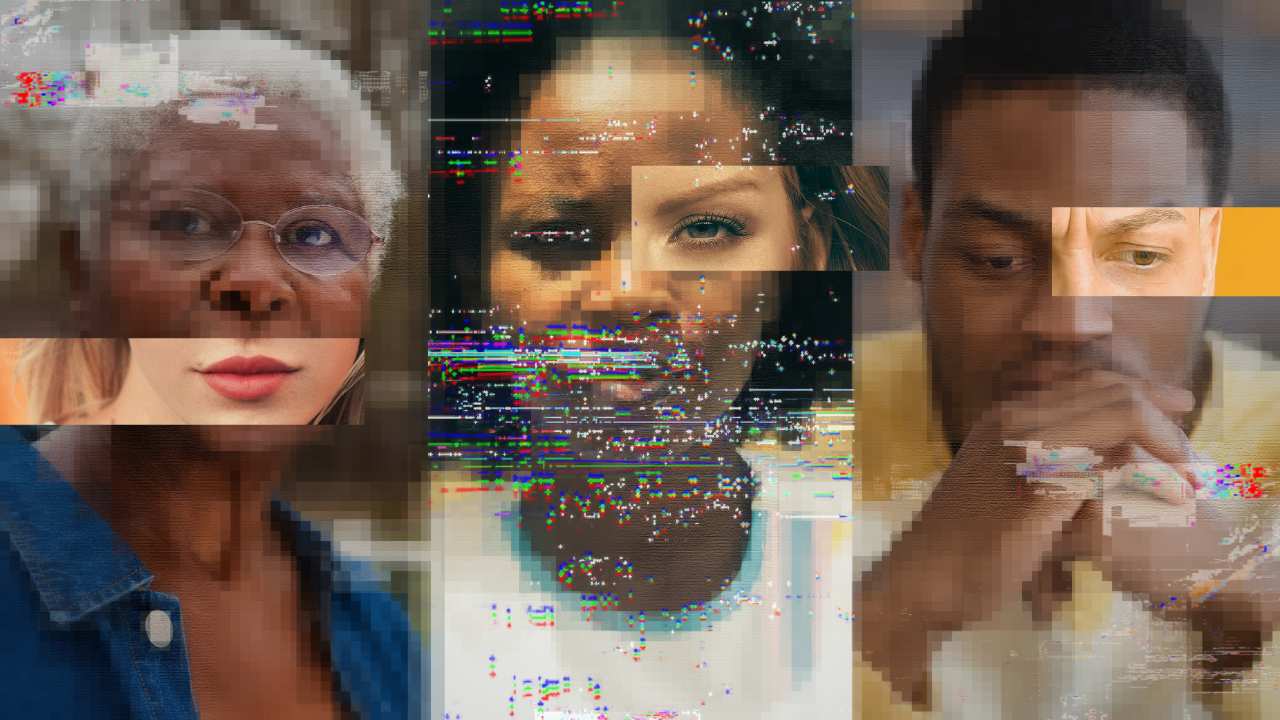
In the affluent community where I live, I walk down the street wearing a t-shirt of the elite Jesuit institution I once attended. It’s as if I presumptuously assume that the t-shirt will alleviate the prospect of being seen by surveilling gazes. Yet, I am instantaneously reminded as car doors lock when I walk beside them, and as purses clutch when I pass by, that my body is rendered as a site of suspicion. I am reminded that my Blackness precedes my existence. I am reminded that my darkened body occludes the presumption of innocence. I am reminded that my dark skin has eviscerated my humanity and has turned me into an object of fear.

When Omar came upon the place in a neighborhood on the outskirts of town, he saw a white rosary hanging over the door and felt a sense of relief. He had been told it was a shelter run by nuns. He had been sleeping poorly for several days and walking in very difficult conditions. His feet were injured, his shoes were torn, and his clothes—which had been wet and had dried on his body over the past two weeks—were terrible. The smell was unbearable. His wife and two young children had been taken in three days earlier at another location, where they could regain their strength. He, being a man, was not allowed to stay in the same space; that was the safety policy they had explained to him.