
The 32nd General Congregation
Abstract
This article by Fr. Juan Ochagavía (CHL), one of the few remaining Jesuits who directly participated in preparing, celebrating, and developing four General Congregations (GCs) from the 31st to the 34th, recounts the historical context, theological tensions, and ecclesial challenges surrounding GC32. He emphasizes the influence of Fr. Pedro Arrupe and the unique role of Latin America, the post-conciliar Church, global injustices, and Sacred Scriptures in shaping the deliberations. The article also discusses the issue of grades among Jesuits, as well as the Vatican’s concerns. He concludes by highlighting the long-term impact of GC32, especially Decree 4, which “goes to the roots of today’s problems.”
GC 32 - Background
GC 32 had an outstanding debt that needed to be settled. During the Second Vatican Council, GC 31 sought to incorporate and adopt the conciliar ideas and changes, both in their overall spirit and in relation to specific themes and areas. It was a Herculean task, but it failed to establish a hierarchy of priorities that would provide unity and apostolic direction to the Society. GC 32 was convened with that purpose in mind.
The world was experiencing extreme injustice, marginalization, and violence. There were dramatic situations of poverty, injustice, and violence. With the emergence of post-conciliar theological and philosophical currents that sought to break away from Eurocentric hegemony, drawing on conceptual tools from the social and political sciences, Latin America acquired a special role in the ecclesiastical and Jesuit panorama. On the other hand, secularism, fueled by colossal injustices and a growing religious indifference, was driving many away from faith in God. Pope Paul VI had already entrusted the Society with the mission of combating atheism. It was necessary to convoke a General Congregation to address this thorny issue.
In the years preceding the Second Vatican Council, Father General Janssens promoted the social apostolate by establishing the Centers for Research and Social Action (CIAS) and by assigning many Jesuits to specialize in and work with lay people in the pursuit of a just social order. The CIAS's development, especially its publications, was a powerful instrument for forming a social conscience. For his part, Father Pedro Arrupe, who had first-hand experience of poverty and injustice, was a decisive promoter of commitment to the poor from the beginning of his term as Father General. His firm decision to accompany and serve the "boat people" (refugees fleeing the Vietnam War) was a clear manifestation of his social sensitivity, from which the Jesuit Refugee Service (JRS) was born.
In 1968, Pope Paul VI had already stated in his encyclical Populorum Progressio that "development is the new name for peace," and this concern was reflected in the Synod of Bishops held in 1971, just prior to the convocation of the 32nd General Congregation. In the document from the Synod, accepted and completely approved by Pope Paul VI, the cry of the poor and those suffering violence was the point of departure. There was talk of poverty and injustice, wealth to be shared, and the need for all people, "especially the poor, the oppressed and the afflicted," to collaborate with God to liberate the world from sin (n. 41).
All these circumstances, meetings, and earlier documents prepared the fruit of GC 32. However, it is essential to say that the radical option for faith and justice as the meaning and principal direction of the Society’s mission since GC 32 has, above all, a biblical foundation in both the Old and New Testaments. The prophets unanimously condemn injustices and abuses against the poor and the weak; preferential love for the little ones and the oppressed is a constant of the Old Testament faith and an evident reality in the perfect image of the Father: Jesus Christ. His activity can be summarized in two points: Messiah docensand Messiah sanans, which correspond to the pairing of faith and justice. Jesus teaches the way of the Beatitudes of the Kingdom and heals sickness, hunger, violence, sin, meaninglessness, wars, and death.
These motives guided GC 32 to work for the service of faith and the promotion of justice.
the need for all people, "especially the poor, the oppressed and the afflicted," to collaborate with God to liberate the world from sin.

How do I remember Father Arrupe?
I arrived in Rome a few days before GC 31 (in 1965) and was in my room reading documents. Suddenly, someone knocked on the door, and Arrupe entered: "I've come to chat with you for a while about the Society and Vatican II," he said. He jumped onto the bed in a single leap and began speaking while seated in a Japanese position. His kindness, simplicity, and love for the Society struck me.
When he was elected [Superior General], the question he asked Navarrete, seated next to him and a friend, became famous: "Navarrete, what should I do?" The answer was blunt: "Obey, Pedro. It will be your last time."
During GC 31 and GC 32, Fr. Arrupe inspired many with his friendliness, Jesuit spirit, courage to face new challenges, and respect for those who thought differently from him.
The Ignatian [Spiritual] Exercises, which he knew very well, sustained his spiritual strength. His first great impulse for renewal within the Society was to promote the Spiritual Exercises everywhere. To this end, he delegated responsibility to Father Luis González, who reinforced the centers of Saint Beuno and Guelph, among others. He wrote inspiring letters about the world’s challenges and the Society's mission, as well as the guidance of the Holy Spirit, the importance of placing trust solely in Christ, on poverty, discernment, social action, and fidelity to the Pope, among other topics. These were profound and extensive letters; true encyclicals.
Arrupe radiated joy even in the darkest hours. At the atomic bomb site in Hiroshima, he did everything he could to help the wounded. He saw Jesus Christ in everything; for him, Jesus was everything.
He had a special affection for young Jesuits, of whom he found many in India and East Asia.
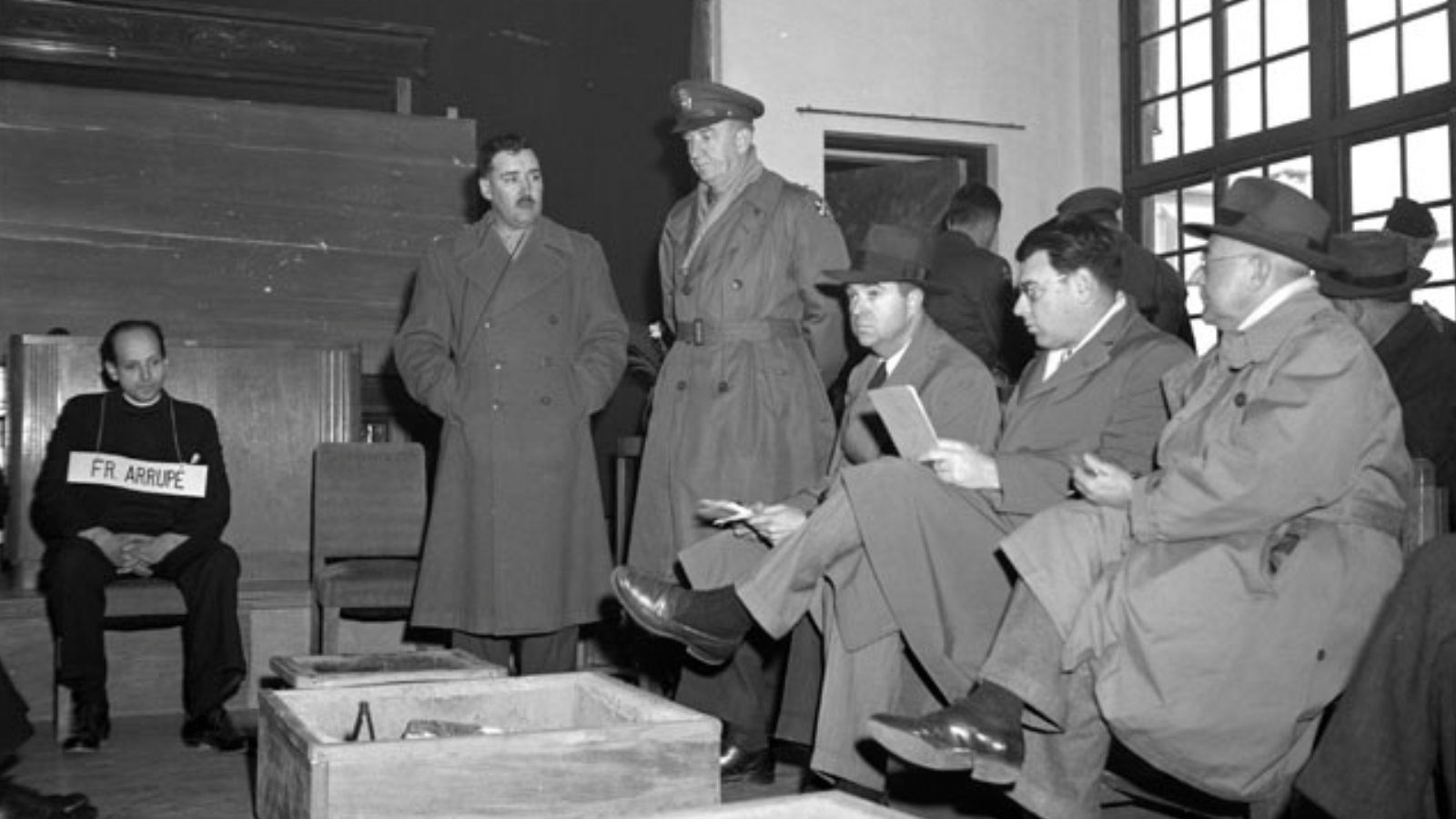
Pedro Arrupe in Japan after the atom bomb in Hiroshima, 1945.
I remember well a meeting of Provincials we had in Colombia. At that time, dictatorships dominated the landscape in Latin America. Arrupe listened to us talk about the state of our provinces. Suddenly, he interrupted and said, "Can't you talk about anything other than politics?" It was a lesson for all of us.
Arrupe also had his faults. He was incapable of refusing requests made to him. He had difficulty following up. However, he stood out for his generosity, making himself available and serving others. Due to his great enthusiasm, he sometimes understood things in his own way, without grasping the nuances of others, which would cost him dearly in GC 32 when he failed to understand the political language of the Vatican. This was the downside of his complete frankness and transparency. He was always generous to the point of treating his critics with special affection.
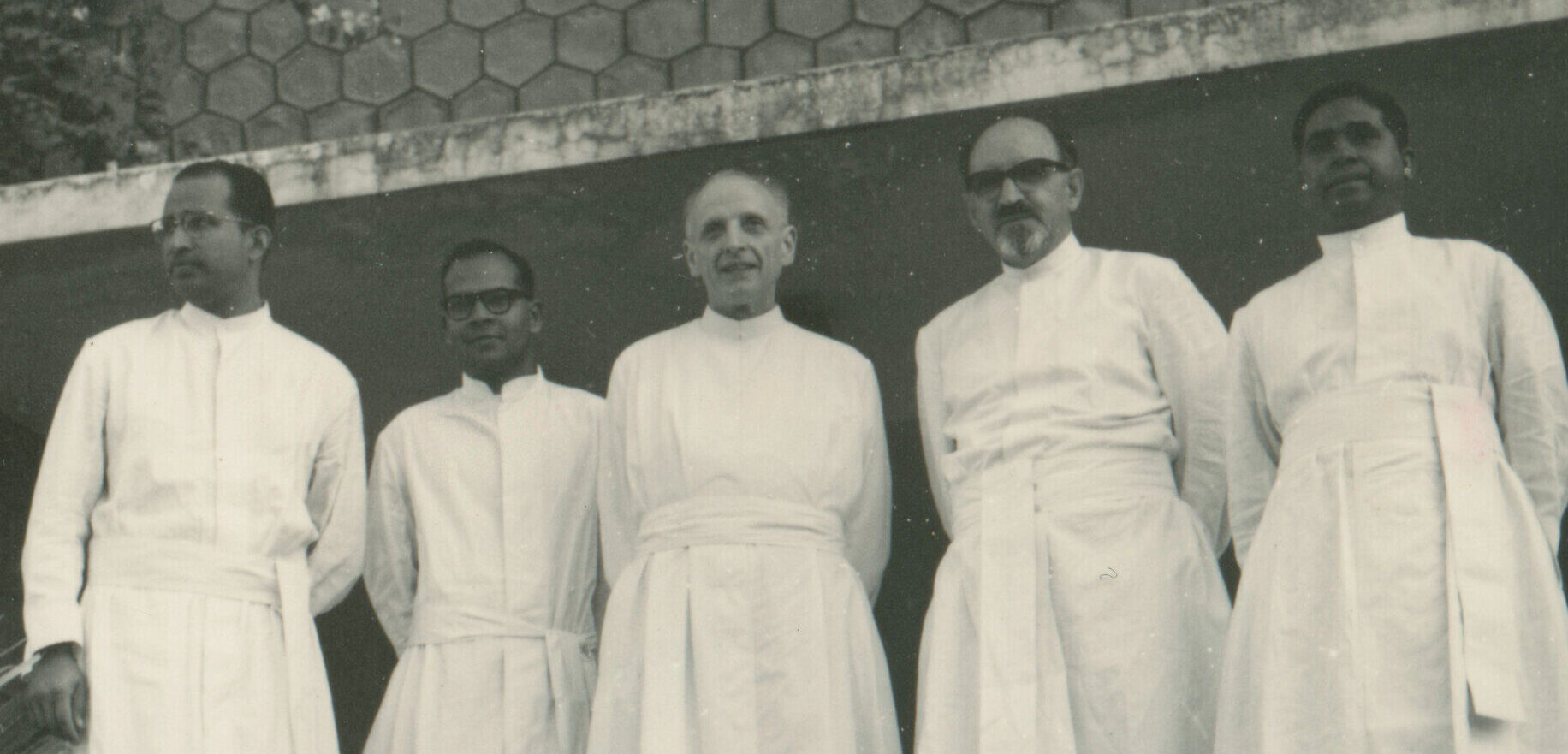
Fr General Pedro Arrupe visit to Pune in India in 1967.Digitised in June 2019. The originals are in the archives of the Foundation Jesuits worldwide, Switzerland.
Arrupe in the crisis of the grades
As I said at the beginning, the times of GC 32 were turbulent and challenging. The political atmosphere was tense. The post-conciliar Church entered a period of pessimism, negative criticism, and backward movement. Christian-Marxist currents were emerging everywhere, and critics of Humanae Vitaewere challenging the papal magisterium. Catholics accused each other of being either conservative or liberal.
The question of making all Jesuits equal—clergy and lay brothers—with the same grade as those who had professed four vows was a very pressing concern. In many Provinces, hesitating to do so was considered politically incorrect, with the Second Vatican Council being cited as an argument. On the other hand, advocates of maintaining the distinction of grades viewed it as going against the Formula of the Institute; it would be like opening the door to transforming the Society into a secular institute.
In November 1974, when I was at the General Curia in a group responsible for selecting postulants for GC 32, Fr. Arrupe came to visit us on St. Cecilia's Day. He had just spoken with Pope Paul VI and was very satisfied. They had discussed the issues of poverty and grades, both of which were reserved to the discretion of the Holy See. Fr. Arrupe told us that the Pope told him the GC could feel free to deal with them. For this reason, Fr. Arrupe and those assembled could not understand the letter of Cardinal Villot at the beginning of the General Congregation, in which he [Villot] spoke of "the serious difficulties that would prevent the necessary approval by the Holy See". The members present then began to ask questions: Was it categorical? Would it be possible to represent the Pope? This was discussed, and the majority decided to represent, which was done in a respectful manner. However, this led to messages being sent back and forth, misinterpreted as a display of defiance. Father Dezza himself said in the hall that it was a question of Vatican language, and that the language of the Holy See had not been understood. Finally, through a letter from Cardinal Villot, Paul VI settled the discussion by forbidding [the grades] to be changed or discussed further. Many of the congregants were frustrated, and not a few thought of leaving the Congregation and returning to their Provinces.
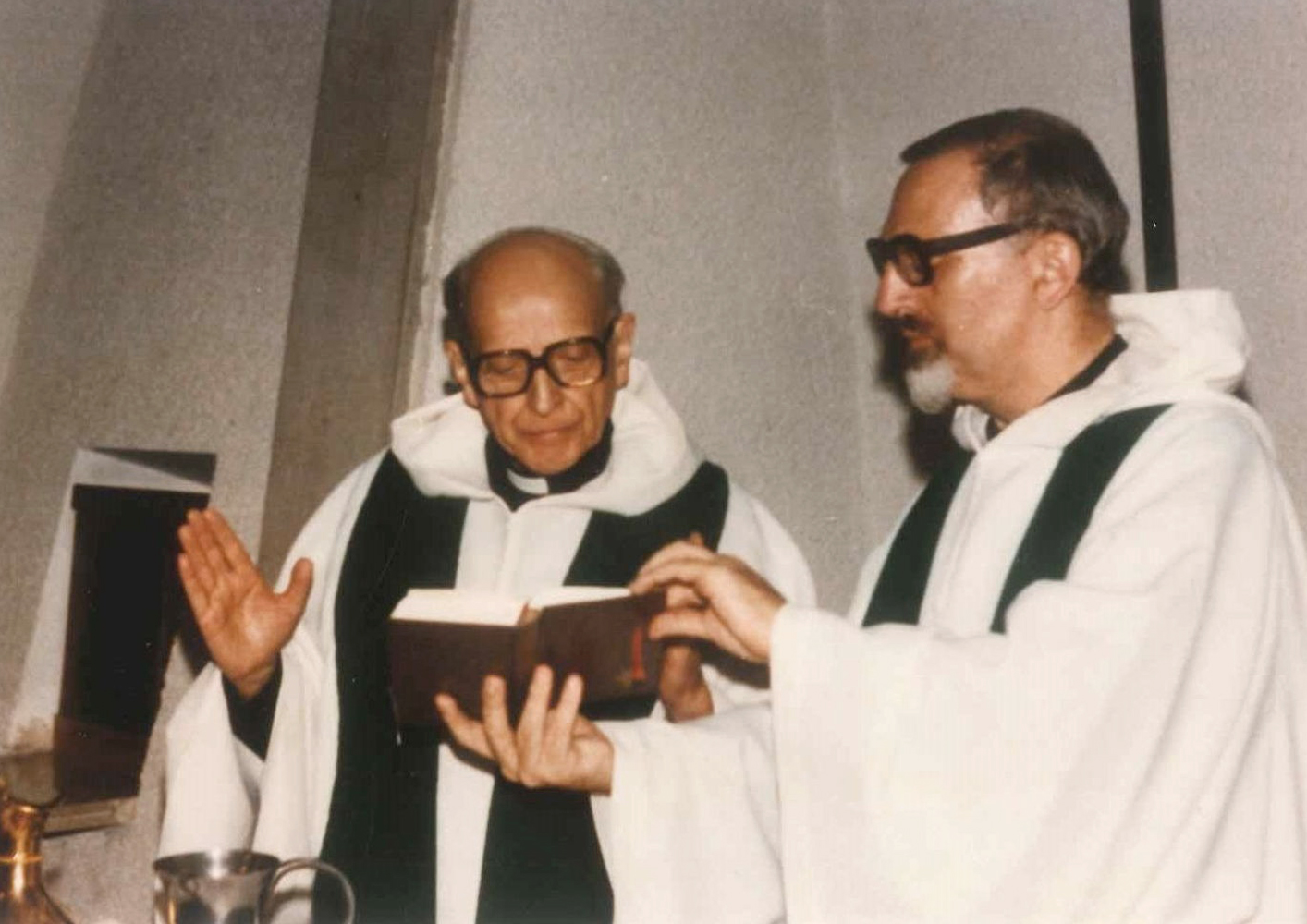
What was the central point of the Pope's remarks? The central point was to affirm that the Society is a religious, priestly, apostolic, and an order linked to the Roman Pontiff by a special vow. These four notes intertwine with one another to form an inseparable whole. Given the success of the secular institutes in those years, there was a genuine concern that the Society would gradually adopt some of their characteristics. The Pope viewed this as a distortion of the Institute's central idea. However, that was not what the Congregation Fathers desired or proposed; it was more a matter of equality: "All men are created equal.” This respects the fundamental dignity of the human person, but it does not govern the order of charisms, as St. Paul says. And religious life is a charism. Pope Paul VI made other observations about the relationship between faith and justice, fidelity to the Magisterium, the formation of our members, poverty, and the Provincial Congregation, but the underlying observations had to do with the four characteristic notes of the Institute of the Society.
What did the Congregation do to satisfy the observations of the Holy See? Very simple: Decree 4, on Faith and Justice, was amended, and the amendments were submitted to a vote. It was a veritable shower of pious texts, mostly taken from Scripture, which were approved by the majority. Sometimes, it was a strange exercise and even a bit of fun. I remember that long afterward, during an informal meeting, Father Kolvenbach commented that he had not found these changes necessary because the text was not unbalanced. The Congregation, sometimes with sorrow and sometimes with deep satisfaction, approved the amended texts, which were then presented to the Pope, who ultimately approved them.
A less bellicose social justice, centered on Jesus Christ and the mystery of the Holy Spirit, who guides hearts and the Church, would be closer to the biblical concept of justice (dikaiosynē tou Theou) and would probably bear more fruit.
GC 32 and its influence today on the Society and the laity
I want to begin by stating that the primacy of faith was evident from the outset. The union of faith and justice is a transcendental element that permeates and animates all the missions of the Society. That is to say, it must govern and be present in all the apostolic actions of the Society of Jesus. It is not a simple ministry, as promoting just wages would imply. The General Congregation discusses various topics, including studies, art, religious vows, poverty, and material goods, but the faith that generates justice must always be present.
Decree 4 has undoubtedly changed us in many ways: we live more austerely, are a little closer to ordinary (modest) citizens, have fewer domestic helpers, participate in daily tasks, are obliged to budget, share surpluses, live among the poor, and lose wealthy friends and benefactors, among other things. However, what GC 32 proposed, especially what Decree 4 developed, goes to the root of today’s problems. It is a proposal for a Christ-centered spirituality, promoting solidarity within the Church and the Society, fostering apostolic effectiveness, upholding order and professionalism in the use of goods, and striking a genuinely creative balance between faith and justice.
The Holy Spirit, a fine orchestra conductor, does not keep all the instruments playing the same melody all the time. There are allegros, adagios and others. The mark of good apostolic discernment is to grasp and orchestrate these changes. Are we not stuck on the same note and the same melody, which only tires us, slips through our sensibility, and no longer fits into the symphony? In Part VII of the Constitutions, St. Ignatius teaches us to ask where there is the greatest need and where we can bear the greatest fruit in these ever-changing times. Is it not time to introduce some changes or strengthen other apostolates today? To create new apostolic contingents with the help of the laity, other religious men and women, and the clergy?
Our Zeitgeist (spirit of the time) seems to resonate more with spirituality than with the struggle for justice, as understood according to the manuals of the Social Doctrine of the Church. Gaudium et Speshad already taken some steps in this direction.
A less bellicose social justice, centered on Jesus Christ and the mystery of the Holy Spirit, who guides hearts and the Church, would be closer to the biblical concept of justice (dikaiosynē tou Theou) and would probably bear more fruit. This also has some relation to vocations to the Society. Decree 4 on Faith and Justice has many elements that align with this direction, but have not been sufficiently explored so far.
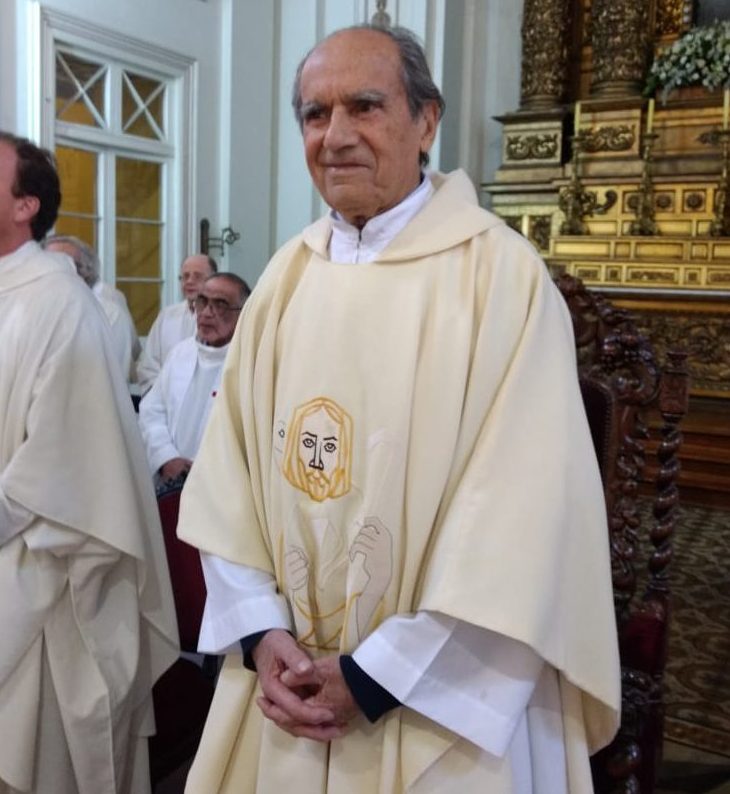
Fr. Ochagavía served as the Provincial of Chile. He was also a theology professor, a consultor for formation to Fr. General Kolvenbach, and a tertianship instructor, among many other roles.
We thank Fr. Ochagavía for this opening article in Promotio Iustitiae 138, which highlights the “good news” brought to us by GC 32 and its ongoing developments today. - SJES Team.
The 32nd General Congregation
217.00 KB