Scaling up Regenerative Agriculture: Towards a “Multilateralism from Below”
Abstract
Scaling up Regenerative Agriculture (RA) needs debt-for-climate swaps and stronger financial market regulations. Grassroots organisations and the Catholic Church, especially religious nuns, are crucial in helping small farmers transition to sustainable practices.
To try to remedy some of the problems alluded to in the first section---bearing in mind that there is no universal magic solution---scaling up Regenerative Agriculture (RA) is most probably a necessary step. In what follows, we'll work our way up to international institutions, particularly financial institutions, to understand how to overcome the obstacles to scaling up. Then we'll go back down into the field. This return trip is in line with what Pope Francis calls "multilateralism from below" in his apostolic exhortation Laudate Deum(2023), i.e. a form of international cooperation that relies on the actors of civil society rather than on political elites alone. Indeed, "the most effective solutions will not come from individual efforts alone, but above all from major political decisions on the national and international level." (Laudate Deum 69)
I. Debt swaps for Regenerative Agriculture
Obviously, to scale up RA, one needs to find funding solutions targeting small farmers. The public sector would be an obvious candidate for that purpose. As is well known, however, the amount of public debt in the Global South has reached alarming levels, significantly impacting economic stability and development efforts.The Global South is experiencing its worst debt crisis ever, with an average of 38% of government revenue absorbed by debt servicing, rising to 54% in Africa.[1] As a consequence, in Africa, the average person spends more on debt interest than on education or health care.[2]The total external public debt stock in low- and middle-income countries doubled from $1.5 trillion to over $3 trillion between 2010 and 2021, further straining their economies and making it increasingly difficult to finance innovative solutions such as agro-ecology.[3]
Consequently, there is a growing demand for a new approach to debt sustainability that prioritizes the needs of Southern countries, particularly in light of the climate crisis. Civil society organizations are advocating for the unconditional cancellation of unsustainable debts to allow these countries to invest in critical areas such as health, education, and climate resilience. Of course, in the 1990s, the Catholic Church took a strong stance, through Saint John Paul II, in favour of cancelling the public debts of Southern countries. While this is not out of the question (especially as the growing power of the China Development Bank means that the Paris Club[4] is under increasing threat of being replaced, one day, by the Beijing Club), such a solution remains eminently political and subject to the agenda of the major powers.
Therefore, debt-for-climate swaps seem to be a less ambitious but more realistic solution in the current context. They are financial transactions where a portion of a country's debt is forgiven or refinanced in exchange for the country investing in climate action or conservation priorities. These swaps address debt burdens and climate change challenges, particularly in lower-income developing countries and small island developing states. The World Bank implemented hundreds of these swaps in the early 2000s' but only at a regional level.

At the national level, the French Development Agency (AFD) set up a "Contrat de Désendettement et de Développement(CDD)" with Côte d'Ivoire as a way to convert (part of) its sovereign debt into grants for development projects. This mechanism was set up in 2012 and has already committed nearly €2.9 billion to Ivorian development. Having worked on its implementation as a Chief economist and executive director of AFD, I can witness that it is an innovative way to extend the logic of a debt-for-climate swap at the national level. More recently, South Africa has been pleading since the COP27 for a national debt-for-climate swap on which the Georgetown Environmental Justice Program has worked for a while. Still more recently, Germany offers debt-for-climate swaps of up to €150 million a year to partner countries, with examples in Kenya, Egypt, and Tunisia.[5] Ecuador recently completed a large-scale debt-for-nature swap.[6] Moreover, 58 of the developing countries most vulnerable to climate change have almost $500 billion in debt service payments due in the next four years.[7] Another group of 20 countries announced plans to suspend repayment of $685 billion in debt, in the hope of exchanging it for investment in climate projects.[8]More broadly, the potential market for debt-for-nature swaps reached over US$ 800 billion in 2023 and continues to grow.[9]
These amounts show that the total potential of debt-for-climate swaps is far greater than the amounts currently realized. What's more, current swap amounts are often considered "symbolic" in relation to total investment needs for the climate transition.[10]Indeed, one optimistic estimation of the later would be, at the world level, around $90 trillion during the next 20 years or so.[11]
The point, therefore, is to argue that debt swaps could be implemented conditionally in Southern countries investing in RA, explicitly targeting small farmers. For this funding solution, however, not to be wiped out by gigantic movements of financial capital sent in the wrong direction, one must also consider regulating financial markets on commodities.

II. Regulating financial markets on commodities
As said, the WTO cannot address the financialization of international trade of commodities since the financial sphere does not belong to its jurisdiction. This partly explains the lethargy of the Doha Round, officially launched in 2001, and whose negotiations have stalled for decades. An important step for rehabilitating such an international body would, therefore, be repatriating markets of financial derivatives over exchange rates and commodities into its jurisdiction. Here is a list of reforms that the WTO could demand. They should be implemented by financial regulators (such as the ESMA in Europe, the SEC in the US, the FSA in Japan, the SFC in Hong Kong, the MAS in Singapore, etc.), possibly under the authority, e.g., of the WTO, the United Nations or the G20.
First, given that these markets are profoundly inefficient,[12] we need to strengthen the regulation of derivatives markets. This would be in line with the Catholic social teaching of the past few years.[13] The financial regulators could impose stricter position limits on all financial players: Position limits specify clear quantitative thresholds for the maximum size of a position in a commodity derivative that persons or groups of undertakings can hold.[14] Contrary to what is sometimes proclaimed, monitoring compliance with these position limits is perfectly possible. Unfortunately, several actors have argued in the opposite direction in recent years on the grounds that position limits are detrimental to market liquidity. However, market liquidity is a catch-all concept which admits of at least 5 or 6 alternative definitions and which has not been shown to have the slightest social utility (unless you want to maintain the myth of market efficiency).[15] Secondly, we need to improve the transparency of transactions. Today, many commodity derivatives transactions are OTC (Over-the-Counter) and, therefore, not subject to any control and reporting. Instead, these transactions should be carried out on centralized markets by clearing houses (whose margin requirements must be increased to make them more resilient in the event of a crash). The European directive MiFID II (Markets in Financial Instruments Directive II) of 2018 took a positive but insufficient step in this direction by imposing a new trading platform (OTF) for commodity derivatives.[16] Note that these reforms concern all commodities (including energy and mining), not just agriculture. But the challenge of the programmed scarcity of these resources[17] means that it would also be very useful to free these markets from the danger of speculation.

Thirdly, the use of High Frequency Trading (HFT) should be limited, and eventually banned.[18] These transactions occur at millisecond (sometimes microsecond) intervals, managed by digital algorithms. These machines now handle more than 60% of commodity derivatives transactions in the US, which run the risk of speculative runaway and major crashes across the globe. Again, the only argument in favour of the spread of HFT is that it would support liquidity, which is false: as soon as prices fall, the overwhelming majority of HFT software withdraws from the market at precisely the moment when we would expect a liquidity-supporting mechanism to maintain its position to avoid inducing a crash. Insofar as the economic value of an agricultural product does not change a thousand times a second, we would lose nothing substantial by simply banning HFT on financial derivatives over these products.
Finally, a tax on financial transactions on commodities would make a lot of sense: we know that taxing transactions is an old proposal that goes back at least to James Tobin.[19] The only objection to it is, once again, that it would harm market liquidity --- an inadmissible objection for the reasons given above. Estimating the annual volume of transactions in commodity derivatives at a trillion (no doubt an underestimate), a 0.1% tax would raise between $500 million and $1 billion a year, which is consistent with other estimates.[20] This windfall could be used in an international fund analogous to the fund set up twenty years ago from the tax on airline tickets.[21] Such a fund could help finance the transition to RA.
As we will now see, however, it would not suffice to cover the cost of the bifurcation towards RA.
III. The cost of Regenerative Agriculture
How much would it cost all the world's small farmers to switch to RA? Estimating such a cost is a complex exercise, as it depends on many factors. However, we can make a rough "guesstimate" that provides a rough order of magnitude.
According to various estimates, there are around 500 million small-scale farmers worldwide. Regeneration estimates a cost of €50 to €60 per hectare per year at the outset.[22] Axéréal puts the cost at €150 to €200 per hectare.[23] Transition programs generally run over 3 to 5 years. Taking an average of €100 per hectare per year, over a 5-year period, and assuming that each small farmer owns an average of 2 hectares (an overestimate), we arrive at an overall cost of ∼ €500 billion over 5 years. In the same way, a lower bound would be ∼ 250 billion over 5 years, and an upper-bound should be ∼ €1 trillion. Of course, this estimate does not consider regional variations, variance in farm sizes, and potential economies of scale or synergies that could reduce overall costs. However, this tells us that a Tobin tax over financial transactions on commodities would not be enough to fund the bifurcation worldwide. On the other hand, as already said, the potential market for debt-swaps-for-climate is around $800 billion. This time, we're at the right order of magnitude.

IV. Back to the field
These back-of-the-envelope calculations suggest that contrary to popular belief, scaling up RA at the world level is a financially realistic project. These views, however, run the risk of overlooking an essential, on-the-ground difficulty: the need for concrete access to the world's small-scale farming families. This is the obstacle faced by most top-down projects decided in certain offices in major Western capitals, where it is very difficult to take into account the concrete reality of, say, a Cambodian peasant in Prey Nob (Cambodia). Many grassroots NGOs working today to improve agricultural techniques and support farmers can act as effective relays. However, within the Catholic Church, another complementary network could be mobilized: that of religious and, above all, missionary nuns. They know the realities on the ground, and above all, they know how to reach out to the most disadvantaged. There are over 600,000 of them in the world today, and their numbers are growing in Africa and Asia.[24] Training these nuns to help farmers begin the transition to generative agriculture is a project which was vividly discussed, notably at the World Resources Institute, the World Bank, and Georgetown University's Environmental Justice Program a few years ago. To give but a few examples of why and how this is possible, let us mention agro-ecology training for VTMMAs (Volontaires Techniques Missionnaires de Madagascar), which took place partly on the premises of local nuns, in Mahazaza for farmers from the East. Also, the Farm project in Madagascar involves agro-ecology training for rural women.[25] It could be developed for nuns, enabling them to promote training for farmers. The Kaydara farm school in Senegal offers training in agro-ecology that could also be targeted at nuns.[26] Finally, the Economy of Francesco could become a vector for transmission and training in this sense.[27]
This would illustrate that not only is the Catholic Church --- in particular religious life--- not deprived, but it can even become an essential player in the "multilateralism from below" so dear to Pope Francis.
[1] https://tinyurl.com/5n83nsw9
[2] https://tinyurl.com/zf392vs2
[3]Vasic-Lalovic, I. et al (2023) The Growing Debt Burdens of Global South Countries: Standing in the Way of Climate and Development Goals, CEPR report.
[4] The Paris Club is an informal group of creditor countries that provides financial assistance to developing countries facing payment difficulties. Its disappearance would imply a considerable loss of influence on the part of the West on the renegotiation of public debts and therefore on the evolution of the world.
[5] https://tinyurl.com/432s747f
[6] https://tinyurl.com/dwvy5adp
[7] https://tinyurl.com/3p5b67ec
[8] https://tinyurl.com/552w3j8m
[9] Sullivan, S., & Kauffman, J. (2023). Are debt-for-nature swaps scalable: Which nature, how much debt? Ambio, 52(2), 123-135, see also https://ecdpm.org/work/scale-debt-climate-swaps-infographic-three-ways
[10] Al-Mashat, R. (2023). Climate financing that puts people first. International Monetary Fund.
[11] Martin, H., & Giraud, G. (2024). Climate-induced economic damages can lead to private-debt tipping points. HAL. https://hal.archives-ouvertes.fr/hal-04224077
[12] Geanakoplos, J. & H. Polemarchakis (1986) "Existence, Regularity, and Constrained Suboptimality of Competitive Allocations When the Asset Market Is Incomplete" in Uncertainty, Information and Communication: Essays in Honor of Kenneth J. Arrow, Vol. 3 (Walter P. Heller, Ross M. Starr & David A. Starrett eds) Cambridge University Press, G. Giraud & A. Pottier (2013) "Debt-Deflation versus the Liquidity Trap: The Dilemma of Nonconventional Monetary Policy", Economic Theory , 62 (1), 383–408).
[13] Pontifical Council for Justice and Peace. (2011). Towards reforming the international financial and monetary systems in the context of global public authority and Congregation for the Doctrine of the Faith & Dicastery for Promoting Integral Human Development. (2018). Oeconomicae et pecuniariae quaestiones: Economic and financial issues.
[14] Irwin, S. H., & Sanders, D. R. (2012). "Testing the Masters Hypothesis in commodity futures markets."Energy Economics, 34(1), 256-269.
[15] Cf. Giraud, G. (2013). L'illusion financière. Éditions de l'Atelier.
[16] European Securities and Markets Authority (ESMA) (2017). Questions and Answers on MiFID II and MiFIR market structures topics.ESMA70-872942901-38.
[17] Vidal, O., et al. (2017). Global trends in metal consumption and supply: The raw material–energy nexus. Elements, 13(5), 319–324
[18] G. Giraud (2013) "La vitesse, nouveau fléau financier ?"Projet,No. 336-337, 172-181.
[19] Tobin, J. (1978). "A Proposal for International Monetary Reform." Eastern Economic Journal, 4(3-4), 153-159.
[20] Schulmeister, S., Schratzenstaller, M., & Picek, O. (2008). A General Financial Transaction Tax: Motives, Revenues, Feasibility, and Effects. Austrian Institute of Economic Research (WIFO).
[21] G. Giraud, “Les chantiers de la “taxe Chirac” ” , La Croix, 05/20/2008
[22] http://bit.ly/3Cs6Yd2
[23] https://tinyurl.com/e5c53ecu
[24] https://www.fides.org/fr/stats
[25] François, J.-B. (2014) “Empowering Women in Madagascar with the Transformative Impact of Agroecology”, La Croix International, Feb. 20 2024.
[26] https://tinyurl.com/59b3peum
1. [27]Giraud, G. (2020). The Economy of Francesco: A new economic paradigm for the future. Civilta Cattolica, 2020(4), 1-12 and Giraud, G. (2021). The role of young economists in the Economy of Francesco. Civilta Cattolica, 2021(5), 13-25.
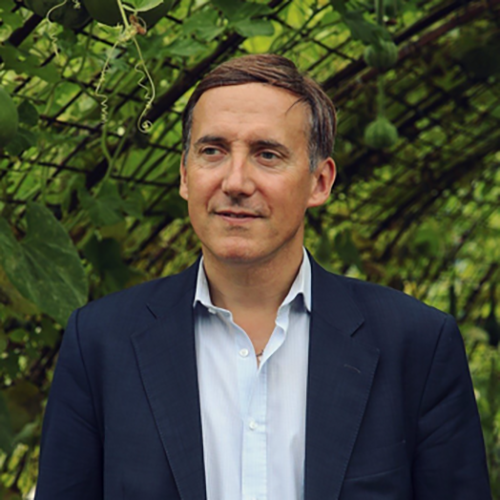 Gael Giraud SJ
Fr. Gael Giraud SJ is a French Jesuit trained in mathematics (PhD), theology (PhD), and economics. He served as chief economist and executive director of the French Development Agency before founding and directing the Environmental Justice Program at Georgetown University. He is a senior researcher at the French National Center for Scientific Research and a collaborator at the Centre Avec and the Forum Saint-Michel (Brussels).