Food insecurity, Finance, and Generative Agriculture
Abstract
The financialisation of international trade in agriculture products drives price volatility, the displacement of small farmers, and food insecurity. Speculative trading and industrial farming hinder sustainable practices. Reforms in financial systems and support for regenerative agriculture are crucial for long-term food security.
Section 1: Why finance promotes famine and hinders agro-ecology
Food insecurity and agricultural finance are closely linked; they form a complex web of interdependencies that influence the ability of populations, particularly the most disadvantaged, to access sufficient, sustainable food. This interdependence could lead to large-scale chronic famines in the years ahead. However, measures are available to us to avoid the worst, notably through financial regulation, managing agricultural resources as commons and using generative agriculture.
The essential link between food security and market finance lies in the financialisation of international trade in agricultural products. This is where we'll start. Then, we'll look at how reforms of the financial system globally, coupled with the implementation of agro-ecological programs centred around managing resources as commons, can help avoid the worst. Finally, I will suggest how original financing solutions for generative agriculture could simultaneously combat global warming, halt chronic famines and restore natural ecosystems endangered by urban expansion and agro-industry.
Appalling famines have already been caused by extreme climatic events, combined with the negligence of the (colonial) public authorities of the time: witness the devastating consequences of the series of El Niño phenomena which, in the early 1890s, ravaged Brazil, sub-Saharan Africa, India and China.1The question facing the international community today is, therefore, to find ways of ensuring this tragedy is not repeated.

I. Food insecurity and HANPP
Food insecurity remains a major global problem: according to the State of Food Security and Nutrition in the World report, around 733 million people faced hunger in 2023, equivalent to one in eleven people worldwide, a significant increase from the 690 million in 2019. Global hunger levels have plateaued for three consecutive years, with a notable increase in undernourishment compared to previous years.2On the other hand, the World Food Program reports that 309 million people are facing acute hunger, underlining the severity of the global food crisis.3
The causes are multiple and, alas, well-known. They include armed conflict, climate disruption, and endemic poverty, and financial crashes4. What's more, according to the Global Food Crisis Report (GFCR) 2024, 208.3 million people were expected to experience high levels of acute food insecurity in 2024.5Geographically, the African continent faces the highest levels of hunger, with around 20% of its population affected.6With between 1 and 1.5 billion additional people expected to live there over the next generation, it's hard to see how these problems of under- or malnutrition could spontaneously resolve themselves in this continent. In Asia, stable but significant challenges persist, with about 8.1% of the population facing hunger.7 In Latin America and the Caribbean, the 2023 Regional Overview of Food Security and Nutrition report indicates that approximately 6.5% of the population suffers from hunger, amounting to about 43.2 million people. The stagnation in progress, or even regression, towards achieving Sustainable Development Goal 2 (Zero Hunger) is alarming. With just a few years left until the target date of 2030, urgent action is required.
I.2. Global water demand gap
The lack of access to drinkable water is one of the key drivers of famines looming worldwide. Moreover, as 70% of fresh water used by humans worldwide is consumed for agricultural purposes, access to fresh water is a must for the development of agriculture.
By 2030, aggregate water demand is expected to increase by 40%, primarily driven by population growth, industrialisation, and agricultural needs. This increase will lead to a significant supply-demand gap if current consumption patterns and management practices continue unchanged.8At the regional level, the Middle East and North Africa are expected to face extreme water stress, with projections indicating that 100% of the population will live under conditions of high water stress by 2050.9 By 2030, China's total water consumption is projected to reach the limit of available resources, highlighting a critical supply-demand imbalance.10As for the global urban population facing water scarcity, it is projected to increase from 933 million in 2016 to between 1.693 billion and 2.373 billion by 2050. This represents a significant rise in urban areas where demand exceeds available supply.11
The projected water demand gap highlights an urgent need for improved water management strategies, investment in infrastructure, and sustainable practices across various sectors. Without significant changes, many regions will face severe water availability and quality challenges in the coming years. Many human beings can live without electricity; some of us can survive without food for a few days, but nobody can survive without water.
Figure 115 shows the probable evolution of HANPP linked to the consumption of agricultural products worldwide (called cHANPP) between 2000 and the projected figure for 2050.
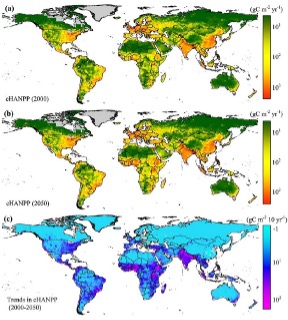
Fig. 1 HANPP linked to consumption (2000-2050)
As shown in Figure 1, South Asia, Central Africa and parts of South America will most likely experience a significant increase in consumption-related HANPP over the coming decades. On the other hand, although the human population is expected to continue to grow in Eastern China and Southern Africa over the two coming decades (and to decline later on), HANPP is likely to decrease in these regions due to foreseeable improvements in agricultural technologies used in these areas by mid-century. A decrease in HANPP is also expected in Europe, Russia and Japan, mainly due to improvements in technology. The increase in HANPP in India, North America and South America is likely to result from two key factors: human population growth and rising per capita consumption. Finally, in most African countries, the increase in HANPP will probably result not only from the explosion in human population but also from the intensification of the impact of agriculture on ecosystems due to the low level of exploitation of natural resources in these regions today.
Of course, these are forward-looking scenarios that need to be interpreted cautiously, but they nonetheless point to major trends. They suggest that the net loss of biomass caused by human appropriation could increase continuously over the coming decades, mainly due to the marked increase in the world's population and per capita consumption of forest and agricultural products. This would not be entirely offset by the foreseeable rise in potential terrestrial NPP induced by global warming (think of Alaska or Siberia, where some rather optimistic scenarios envisage the deployment of agriculture favoured by melting permafrost16). Improvements in agricultural techniques can partially mitigate the negative impacts of human appropriation of natural resources on terrestrial ecosystems, particularly in developed and developing countries. However, this improvement will be partial at best, and it would be irresponsible techno-optimism to consider that the problem of food security has already been solved thanks to technical progress. Especially since, as the debate among American economists about "secular stagnation" has shown, no one sees any technological breakthroughs on the horizon in the next two or three decades.17
As can be seen in Fig. 2,18 comparison with the annual photosynthetic biomass production map suggests that a growing discrepancy between human demand and ecosystem supply will most likely occur in densely populated regions, notably northern India, eastern China and the Wuhan region, the south-western Arabian Peninsula, the southern half of the Japanese archipelago and the island of Java1. In these regions, external supplies of agricultural products are imperative. They will remain so in the future to satisfy the needs of the local human population and support the development of ecosystems. This is where international trade in agricultural products comes into play in a way that is decisive for the survival of these regions.

Fig. 2 Annual production of biomass (in grams of carbon per annum and m
What's more, the positive net balance between the potential aggregate supply of biomass from terrestrial ecosystems and human demand for photosynthetic products could be reducedafter 2050, when the net productivity of terrestrial ecosystems is expected to decline as a result of increased ecosystem respiration induced by climate warming. In other words, today's chronic famines are essentially a problem of poor distribution of agricultural production which, in itself, would feed the whole of humanity. In all likelihood, this will continue to be the case until 2050. In the second half of this century, however, this could become less and less the case: famines could well become the consequence, not just of massively unequal distribution problems, but also of insufficient net aggregate agricultural production. It's hard to imagine what such a situation would generate in terms of international tensions and conflicts.
I. International agricultural trade and finance
In addition to the causes alluded to earlier, the financialisation of international trade in agricultural products is one of the major causes of current and future food disasters.
Market globalisation accelerated sharply in the 1980s, with the introduction of structural adjustment programs in many developing countries, further opening up their agricultural markets. The Uruguay Round (1986-1994) led to the creation of the World Trade Organization (WTO) in 1995, integrating agriculture into multilateral trade negotiations for the first time. International agricultural trade then grew significantly, from a flow of around $570 billion in 2000 to over $1,500 billion in 2019. Emerging countries such as Brazil, China and India quickly became major players in world agricultural trade. At the same time, the development of global value chains has transformed the nature of agricultural trade, with an increase in trade in processed and intermediate products. The main transformation of the global agricultural commodities market in the early 2000s, however, was its relationship with globalised financial markets.
I.1 Financial derivatives on commodities
The financialisation of the agricultural sector can be seen, first, in the explosion in the volume of transactions on commodity derivative markets, particularly in the agricultural sector. In the late 1990s, commodity trading on financial markets was marked by increased participation of institutional investors, such as pension funds and hedge funds. Since then, commodity markets, particularly agricultural commodities, have become a preferred investment ground for various financial players, with increased trading on dematerialised platforms and greater use of derivative instruments. These instruments enable financial players to speculate on the future prices of agricultural products and invest massively in land acquisitions, often to the detriment of local farmers.
The volume of transactions on the financial markets for agricultural derivatives is often greater than that on the spot market for the underlying commodities.19 On the Chicago Board of Trade, for instance, financial actors dominate, holding about 74% of the open positions in wheat futures. This highlights a much higher volume of transactions in derivatives compared to the spot market. 20More globally, it is well known that the overall volume of commodity derivatives trading far exceeds that of physical commodity trading. For example, in 2021, global commodity derivatives markets saw volumes reaching several trillion dollars, reflecting a trend where derivatives trading is often over 10 or 20 times larger than physical transactions.
Consequently, agricultural commodity prices are no longer dictated by the supply and demand of spot products but by the speculative supply and demand of derivative financial assets. This financialisation has been forcefully denounced, among others, by Pope Benedict XVI.21The WTO has never regulated it, as the financial sphere is not part of the organisation's mandate. As a result, the WTO can only watch helplessly as commodity markets evolve, the ins and outs of which are largely beyond its control.
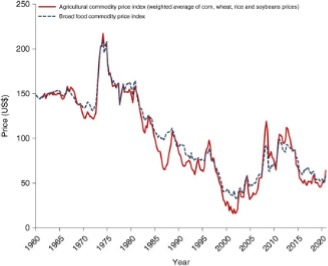
Fig. 3 Agricultural commoditu Price Index (1960-2020)
Indeed, the financialisation of the agricultural world has led to great volatility in international agricultural prices (as shown in Fig. 3), to the detriment of farmers and consumers in developing countries, who have no means of protecting themselves against the new risks caused by this volatility (whereas companies in the North have access to financial markets to find assets to protect them). In other words, financialisation has created a new risk (that of sudden, uncontrollable price variations) that the "poor" (and not the "rich") are powerless to face. Secondly, it has created new opportunities for capital accumulation by financial elites, consolidating the power and wealth of financial players within the food system. What's more, the quest for high returns for investors (often 10%/year in economies where GDP growth does not exceed 3% per year, which requires finding niches at least three times more profitable than the average) has encouraged the development of large-scale industrial agriculture to the detriment of small-scale farmers. Yet, as is well-known, it's the small farmers who feed humanity. According to the FAO, over 90% of farms are managed by an individual or a family and rely mainly on family labour. These family farms produce 70 to 80% of the world's food. "Smallholders", on the other hand, are those who work on less than 2 hectares: they are currently forced to occupy less than a quarter of the world's agricultural land, even though they produce around a third of agricultural products. Therefore, they have an average productivity of at least 33% higher than that of large farms! The majority of these small-scale farmers are women.
In many parts of the world, however, small farms are disappearing due to the financialisation of agriculture, while large farms are expanding at the expense of agricultural productivity, which is bound to decline. Unfortunately, institutions such as the World Bank have accelerated this process. In Brazil, for example, a land titling program supported by the World Bank led to the privatisation of 4 million hectares, threatening to evict 11,000 farmers in favour of international companies. The World Bank's "Maximizing Finance for Development" (MFD) approach promotes using public resources to attract private investment in the agricultural sector of developing countries. Last but not least, small farms are the most likely to implement solutions inspired by agro-ecology ---in particular, regenerative agriculture.
II.2. Obstacles to the transition to regenerative agriculture
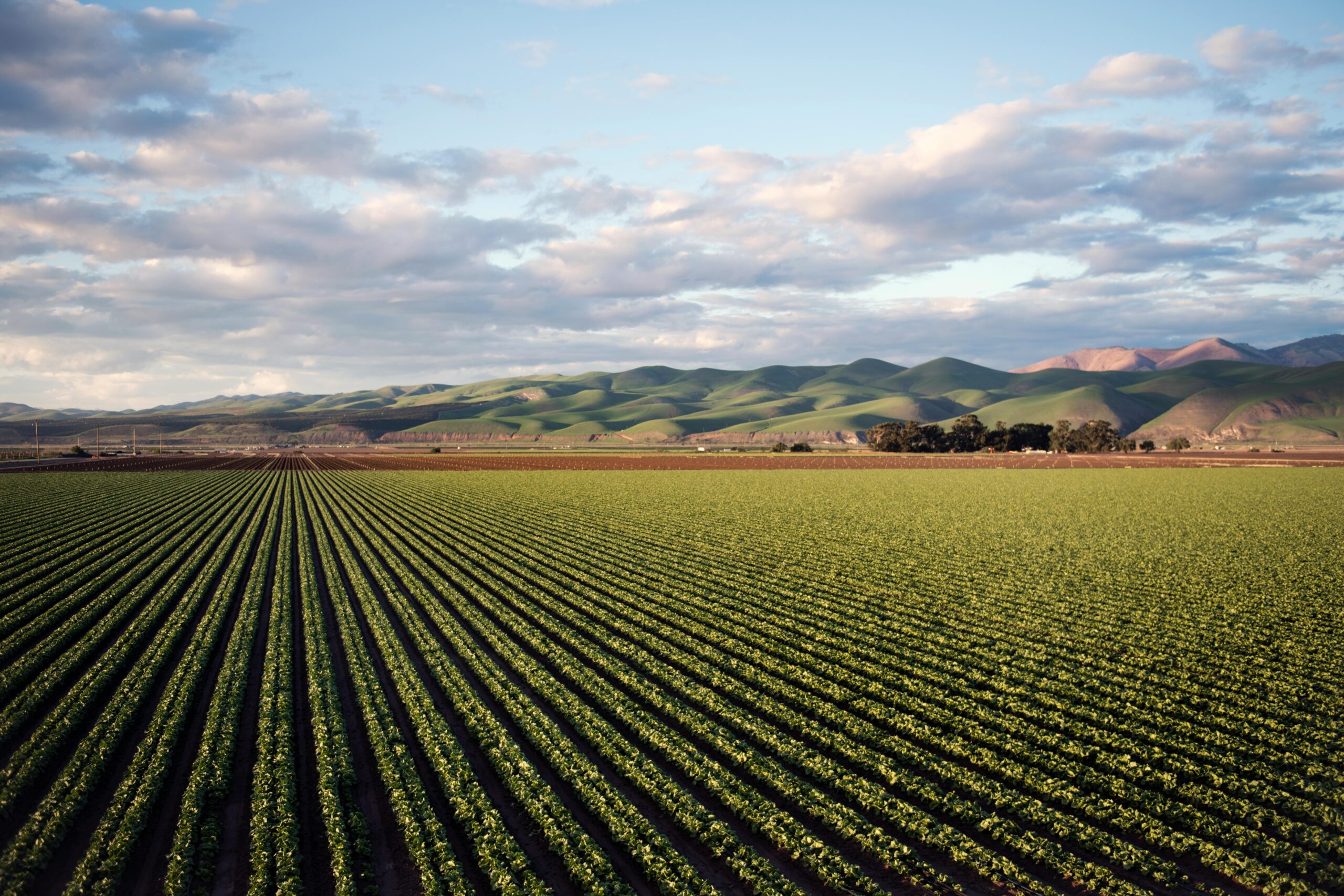
It is estimated that expanding regenerative farming practices worldwide could remove between 15 to 23 gigatons of CO2 from the atmosphere by 2050.22This represents ~ 4% to 8% of the global quantity of CO2 emitted by agriculture since the beginning of the industrial revolution and still trapped in the atmosphere today. Furthermore, some studies suggest that RA could sequester over 60 million metric tons of carbon annually in specific regions, such as California.23In the long run, RA could potentially remove between 100 to 200 gigatons of CO2 from the atmosphere by the end of the century if widely adopted -- nearly 60% of the global quantity of CO2 emitted by agriculture since the beginning of the industrial revolution and still trapped in the atmosphere today.24
The financial challenges associated with regenerative agriculture (RA), however, are manifold. Firstly, high initial investment costs make adoption difficult. Small farmers in particular often struggle to cover these transitional expenses.25What's more, yields fall during an initial adjustment period, before rising again. This temporary drop in production can last 3 to 5 years, which is financially destabilising for small-scale farmers.26 Despite higher yields and margins in the long term, this high initial cost leads many investors to neglect RA, favouring immediate returns rather than long-term investments. Consequently, there is a lack of real financing solutions to support the transition.27Of course, one may hope that markets will soon recognise the value of products from RA, but this depends upon the recognition of certification options: for the time being, there is a lack of clear standards for RA and the multiplicity of certification options create uncertainty.28
In short, the planet is about to embark on a path of biomass appropriation that will make it increasingly difficult (if not impossible) to avoid the large-scale deployment of the chronic famines we are already experiencing. RA is certainly one of the solutions for reducing agricultural emissions, sequestering carbon naturally, protecting biodiversity, empowering small-scale farmers while increasing overall agricultural productivity, and empowering women. One of the major obstacles, though not the only one, lies in financing the transition from small-scale farming to AR. It is this issue that we will examine in what follows.
1 MikeDavis(2001)LateVictorianHolocausts:ElNiñoFaminesandtheMakingoftheThirdWorld,VersoBooks,estimatesthedeath tollatbetween 30 and60 million.
2https://tinyurl.com/4spnure4
3https://www.wfp.org/global-hunger-crisis
4 https://tinyurl.com/2p9sbeaf
5 https://www.heifer.org/blog/understanding-global-hunger-and-food-insecurity.html
6 https://tinyurl.com/2p84du2b
7 https://tinyurl.com/ycxhd2r7
8 Charting Our Water Future,McKinsey report, 2009.
9 Idem.
10 https://pmc.ncbi.nlm.nih.gov/articles/PMC7932088/
11 https://www.nature.com/articles/s41467-021-25026-3
12 We're talking here "only" about biomass (measured in kg of carbon)---not biodiversity. The latter is a much more complex notion. However, it is clear that there can be no biodiversity without a minimum amount of biomass.
13 Worm,B.,etal.(2009).Rebuildingglobalfisheries.Science,325(5940),578-585.
14 Theresponsefromsomeofmyeconomistcolleaguesthatthiswillprovidetherightincentivesforfishfarming,whichwillboostGDP, issimplyirresponsible.
15 Ma,T.,Zhou,C.,&Pei,T.(2014).Simulatingandestimatingtempo-spatialpatternsinglobalhumanappropriationof net primaryproduction(HANPP):Aconsumption-basedapproach.EcologicalModelling,291, 51-59.
16Suchscenariosareoverlyoptimistic,asthemeltingpermafrost,whilefreeinguphugepotentialareasforagriculture, could also release a huge quantity of methane currently held captive as well as old, extinct pandemics(anthrax, etc.) . Global warming could then accelerate to catastrophic proportions under significant health stressesanalogoustoCOVID19.
17 Summers, L. H. (2014). U.S. economic prospects: Secular stagnation, hysteresis, and the zero lower bound.BusinessEconomics,49(2),65-73.Inparticular,AIcannotbecountedamongthefactorsofnettechnicalprogressfor humanity as a whole (even if its intelligent use enables the analysis of a large amount of data useful foragriculture), cf. Alombert, A., & Giraud, G. (2024).Le capital que je ne suispas ! Mettre l'économie et lenumériqueau servicede l'avenir.Fayard.
19 European Parliament. (2024). The role of commodity traders in shaping agricultural markets. Policy Department for Structural and Cohesion Policies.
20 https://tinyurl.com/yzfmuzkk
21 In his Address to FAO on the Occasion of the World Summit on Food Security, Nov, 16 2009.
22 https://tinyurl.com/yym8ch2e
23 Idem
24 https://tinyurl.com/5n6s9h73
25 https://tinyurl.com/yet5xmh3
26 https://tinyurl.com/n8sje5j9
27 https://tinyurl.com/yhwr6sxf
28 https://tinyurl.com/bdk8rznz
 Fr. Gael Giraud SJ
Fr. Gael Giraud SJ is a French Jesuit trained in mathematics (PhD), theology (PhD), and economics. He served as chief economist and executive director of the French Development Agency before founding and directing the Environmental Justice Program at Georgetown University. He is a senior researcher at the French National Center for Scientific Research and a collaborator at the Centre Avec and the Forum Saint-Michel (Brussels).