Beacons of Sanity
Abstract
The article, written in 1994, calls on Jesuits to become more environmentally conscious and take local, practical actions to address the global ecological crisis. It emphasises eco-spirituality rooted in solidarity with the poor and the Earth and encourages discernment and humility. Jesuits can contribute to healing the Earth through justice, interrelatedness, and conservation.
All Jesuits are aware of the global environmental crisis to some degree. Some live where air and water pollution are severe and where human and other inhabitants suffer from deteriorating conditions required to sustain life. These do not need to be told about environmental problems. Others of us are more immune due to location or type of work. However, what all Jesuits need is encouragementC to change ourselves into more environmentally sensitive individuals and to change our Society into a better instrument at this critical hour. What we do individually varies according to our physical condition and location. If able bodied, we strive to conserve resources, discourage wasteful consumer practices, and make others aware of the need to preserve our precious and fragile planet. Though not always easy we become more environmentally conscious through daily practices, periodic examens and annual retreat reflection.
The Society's collective practice is somewhat more difficult to articulate and implement. Being realists we cannot be tempted to pessimism and say the crisis is overwhelmingC thus rationalizing a fatalistic withdrawal. Nor can we be overly optimistic and expect other agencies and people to solve these problems, or trust that the Earth can heal itself. Likewise, to proclaim that a mere intellectual leap of consciousness or insight will bring about a solution may be equally naive. An authentic Jesuit eco‑spirituality must be grounded in the Earth, find its healing power beyond ourselves, and show willingness to employ every tool in our spiritual arsenal for the work ahead. Our Society's forebears were unaware that human beings could severely damage this Earth. We are damaging it. Nor did they perceive the powers to heal our wounded Earth. We can heal itC through God's grace and our willingness to work together. We beg God to empower us to touch the creative edge of Earth healing, to suffer with Jesus and the poor of the Earth, and to generate a spirit‑filled enthusiasm for all to use their talents in the task of healing our wounded Earth. In other words, our ecology must be profoundly Trinitarian.
Community Renewal
Should our eco-ministry be coloured by the gloom and doom prophets? Should we focus on new expressions of eco-spirituality that ignore or neglect our traditional social concerns? Must our local communities challenge their acquired affluence and a resultant insensitivity to the poor? Should we refocus our traditional perspective of Christ-centredness from the person of Jesus to some sort of Gaia or Earth vision? The panic of the moment tempts us to make rash decisions.
A Spirit of DiscernmentC Tackling these current ecological questions requires a discerning heart and, more, a discerning community of both the larger Society and its local communities. Our solutions need to be hope-filled, practical, implementableCnot gloom and doom forecasts. Hopeful solutions take patience, time and hard work; they do not involve finger‑pointing and are not usually as dramatic as apocalypses of decimated rain forests, ozone depletion, or global warming. They require a healthy awakening to ecological problems and Earth-healing solutions. However, we Jesuits face ridicule by those who would prefer that we not meddle in environmental affairs. We need to understand and accept that at the heart of this Earth-healing is the call for a profound change in our social order, and the road may be difficult.
Environmental Resource AssessmentsC Local communities need to simplify so as to stand as beacons of sanity and wholesomeness in a sea of excessive consumerism. We may need crash programs to bring our communities into solidarity with the world's poor and destitute. Just as individuals need a daily examen, so communities need periodic environmental resource assessments, namely, an evaluation of the community's use of interior space, extent and ornamental nature of exterior grounds, waste management and reuse of materials, energy sources and conservation, water resources and conservation, food preparation and preservation, interior environment and chemical use, transportation, wildlife protection, and community relations on environmental matters. Such assessments could be done locally, but peer pressure may hamper worthwhile analysis.[1]
Appropriate TechnologyC Repairing the Earth begins at home. We need to use resources more conservatively and to value more traditional, less sophisticated, more humane and more community-focused methods of building, using energy, growing crops, and handling waste materials. The Society can reaffirm these methods, especially in the light of the highly successful 1988 International Jesuit Convention on Appropriate Technology at Baroda, India.[2] Those at the frontiers of appropriate technology in all parts of the world need the Society's encouragement. Through our worldwide network Jesuits can muster educational research and communications resources in cooperation with others of good will.
Guidelines for Eco‑Healing
An eco‑philosophy is not first pronounced and then implemented. A lived experience with our suffering Earth comes with its imperfections and requires ever deeper reflection and application. If we are to become more environmentally aware, we need to refocus on the suffering and resurrected Jesus. This is done in several ways:
* We extend our solidarity with the poor beyond human beings to include all poor creatures of the Earth with whom we are closely related. Too often environmentalists tend to be the wealthy wanting to retain their own environment. But Jesuit concerns are broader. The poor cry out for eco-justice, that is, freedom from air pollution and contaminated food and dirty water, a safe place to live and work, and healthy surroundings in which to enjoy life. Jesuits are called to champion the cooperative role of all people working together and to emphasize the right of the poor as co‑equal partners. And this call to wider cooperation is Good News.
* Our Society must listen and learn. Ours is a male religious organization and needs to acknowledge that, in healing, women take a leading role. It is quite a challenge to listen humbly and learn from those who are better attuned to healing the EarthC namely women. Are we open to learn from women, who for whatever reason are more in tune with ecological matters? Such a learning posture may be uncomfortable for Jesuits and other male religious and church peopleC but it is part of a renewal that includes our healing in a most profound manner.
* Our Society, while global in scope, needs to realize that healing the Earth is primarily a local concern. We commonly hear of "thinking globally and acting locally" but we should consider this more deeply. While global thinking has merit, without first acting locally we will be too vague about the global concerns. Knowing the local scene and making change there helps us recognize the complexity of environmental problems and makes us realistic in cooperating with others. Through ever-growing interaction of local groups we gradually realize the profound interconnectedness of Earth‑related issues and eventually arrive at a more global awareness.
Invitation to Calvary
Jesus is our perfect ecological model. Our Christocentricity is not an embarrassment but an opportunity to proclaim the resurrection. We speak of the person of Jesus Christ, not a vague feeling that "Christ" is identified with Earth. Glorification of Gaia‑Earth should make us nervous about an eco‑spirituality that cannot distinguish good from bad spirits. For Jesuits, our actions are discerned through prayer and ever deeper communication with the Jesus who suffers in and with all the poor. Perhaps our traditional means of the Apostleship of Prayer and Sacred Heart devotion contain an ecological dimension. Why not encourage suffering believers to realize that their efforts can help bring about the advent of the New Heaven and New Earth?
Our Jesuit Ecological Gifts
The Spirit moves us forward to rediscover the tools needed to confront our materialistic age. Accepting our gifts from the Spirit is to accept the greatness of God's generosity to the Society. All spiritual gifts are needed today for a more healthy global ecology. A Jesuit spirituality can contribute to the new Eden just as much as Franciscan lifestyle and Benedictine sustainable communities do. These gifts are not exclusiveC for all are giftedC but they are unique. Some of the Jesuit gifts include:
* Discernment of spirits is desperately needed at all levels of ecological reflection. A false desire to be universal, to be all things to all men, could use much discernment. Are we able to discern with other earnest people that not all eco-spirituality or whatever is called "spiritual" is of the good spirit? New spiritualities require critical evaluation: Are they self-centred or other‑oriented? Do they have the community of all people, especially the poor, at heart? Are such spiritualities dependent on God or do they manifest human independence? Further discernment is also needed to find out how we are to effect environmental change, set priorities, and curb degradation of the Earth in an effective manner.
* The Principle and Foundation speaks of using those things necessary for our end and ridding ourselves of the superficial ones. To be conservation‑conscious consumers in a world of expansive consumer aspirations where the difference between what is necessary and what is superficial becomes blurred, practical discernment is called for. Our Society's living this rule opens the door to a more environmentally-benign use of resources, e.g., renewable energy sources such as solar energy, "organic" farming techniques, and reuse of packaging materials.
* Rules for Thinking, Judging, and Feeling with the Church go beyond reading and pondering papal writings or national episcopal pronouncements on ecology. They include a prevailing spirit of being sensitive to the poor and suffering, something not frequently found in the secular literature. The call to this sensitivity is found in our deepest Biblical and Church traditions and needs to extend beyond our kind to include all endangered and threatened species of plants and animals. The call is ever deepening and includes stewardship and responsibility for all creatures and for the Earth itself. And in our day this call embraces the demands for ongoing purification of mind and heart so that we may act wisely and forthrightly.
A Vision
As a hope‑filled Society, we are both uncertain of the immediate outcome and certain that all will work to God's glory. If this Earth has been wounded, with inner groaning it still awaits its fulfilment. The vision of the Trinity calls us to be participants in this grand enterprise, that is, to be co‑creators of this New Earth, to be united in the redeeming mystery of the suffering Christ, and to spread the ever enlivening Spirit through a vast array of gifts and talents. We proclaim the closely-allied ecological principles of the fundamental goodness and interrelatedness of all Creation (uniting with others to pronounce all created things good by not being wasteful), the conservation of all human activity (offering our sacrifices for the healing of the Earth), and the immense diversity and health of differentiation of our Spirit‑empowered world (encouraging diverse expressions of ecological healing in such forms as humour, research, stewardship, and prophetic witness).
Interrelatedness, conservation of resources, and diversity are part of the Trinitarian ecology that calls us to deeper prayer, where we find our own inner creative and God‑given powers that can allow us to go forward in working with people of good will. In our Christ-centredness we proclaim in word and deed that Jesus' blood falls on a holy land now extended to the entire planet. In our Spirit‑directed work we encourage our brothers and sisters to use a vast array of talents, gifts and experiences for healing the Earth and for proclaiming the presence of the Spirit in our midst.
[1] This author has helped perform 75 of these assessments in many parts of the United States with nearly half for religious communities of women (farms, retirement homes, retreat houses, colleges and motherhouses), but none for religious men's groupsC though we have tried.
[2] The Convention report is available in English from the Social Justice Secretariat, Rome.
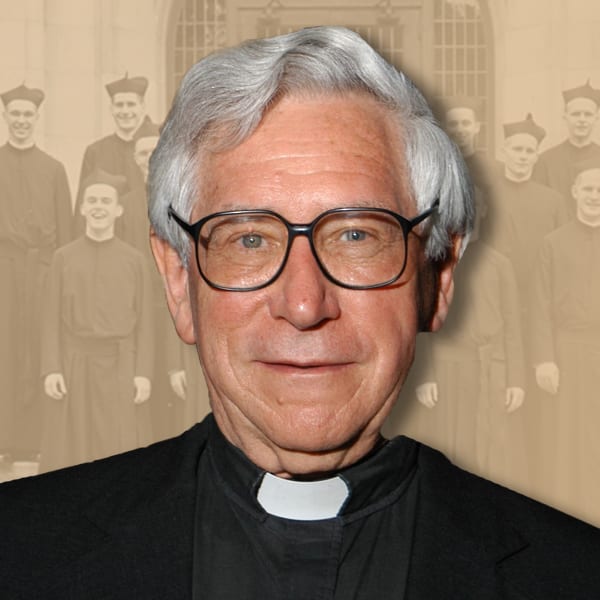 Albert Fritsch, S.J.
Albert Fritsch, S.J.
P.O. Box 423, Rt. 5
Livingston, KY 40445, U. S. A.