Climate Change, Food Insecurity, and the Marginalised of India
Abstract
This article explores the impact of climate change and food insecurity on marginalised communities in India, highlighting how natural disasters worsen their vulnerabilities. It focuses on the struggles of individuals like Virendra Manjhi and offers recommendations for improving disaster response, promoting sustainable livelihoods, and fostering ecological preservation in vulnerable regions.
"With the imposition of the Foreign Contribution Regulation Act's new rules, I lost my small job. Having lost this job as an office assistant, I could hardly take care of the family, and now we are on the verge of starvation," Virendra Manjhi bemoaned.Virendra supports a household of seven: his wife, their three children, and their ageing parents; they are almost always on the road now, seeking various means to survive. He comes from one of the most marginalised caste or community groups in India, the lowest rung of the social order. Belonging to this community, people like Virendra cannot get credit from [commercial] banks to start a livelihood and be self-employed since Virendra does not have assets to guarantee repayment.
Virendra is not the only one who has been pushed to greater vulnerability. Millions of families in India now find themselves living in these conditions. Due to the caste and class structure of India, people who belong to Virendra's caste are only 'landless agricultural labourers'. These labourers work on someone else's land, not owning any portion of the land they till. They get paid a meagre amount for hard labour and work throughout the day and year to keep the family out of starvation. Some take to raising pigs, which helps bring in some money.
COVID-19 has put families in marginalised communities at a higher risk of death. Lacking both reliable information about the virus and the resources to protect their families, many people faced immense suffering. As the lockdown dragged on, their already scarce income opportunities vanished. Many who had migrated for work were forced to walk long distances home due to travel restrictions. It is reported that COVID-19 claimed more than 4 million lives.
Reflecting on the journey of millions in India since the onset of COVID-19 restrictions reveals that they have endured a series of relentless disasters. How have all these impacted India's most marginalised? One keeps hearing that India's primary economic activity is agriculture. It is also said that over 70 per cent of India's population lives in rural areas, primarily engaged in agriculture.
India's production of food grains has been increasing every year, and it is among the top producers of several crops, such as wheat, rice, sugarcane, cotton, and legumes such as pulses. It is the highest producer of milk and the second highest producer of fruits and vegetables. In 2013, India contributed 25% to the world's pulses production, the highest for any country, 22% to global rice production and 13% to wheat production. Besides being the second-highest exporter of cotton for the past several years, it also accounted for about 25% of the total cotton produced worldwide. However, the agricultural yield (amount of a crop produced per unit of land) is lower in the case of most crops when compared to other top-producing countries such as China, Brazil and the United States (State of Agriculture in India.https://prsindia.org/policy/analytical-reports/state-agriculture-india).
Policy Research Studies (PRS) goes on to state that crucial issues affecting agricultural productivity include the decreasing size of agricultural land holdings, continued dependence on the monsoon, inadequate access to irrigation, misuse of nutrients that has led to a loss of soil fertility, uneven access to modern technology in different parts of the country, lack of access to formal agricultural credit, limited procurement of food grains by government agencies, and failure to provide remunerative prices to farmers.
Over the years, committees and experts have recommended several measures, including implementing agricultural land leasing laws, adopting micro-irrigation techniques to boost water efficiency, enhancing access to quality seeds through private-sector collaboration, and establishing a national agricultural market to enable online trading of farm products. But none of these have been followed up on; no action has occurred.
Sukhdeo Mahato, a farmer from Arwal in Bihar, North India, lamented the fact that due to lack of rain and the flash floods from the Punpun River, wheat cultivation in the area has declined substantially. Sukhdeo owns around two acres of cultivable land on which his joint family survives. When the rains were normal, he and his family would cultivate two major crops: paddy and wheat. They would also grow vegetables for household consumption and sale in the local market. He disclosed, "Production has decreased for the last 10 years. Summer vegetable cultivation also has been badly hit since there has been a steady increase in temperature every summer. Due to this, my younger brother has gone to Chennai, South India, to earn money to take care of the family's needs. While he is away, I take care of his family. Since ours is a joint family, I am also expected to care for his children. If not, the entire family would suffer a lot".

Notably, the government of India's economic survey (2018) estimated an annual loss of US$ 9-10 billion, that is, 700 crore Indian rupees, due to the adverse effects of climate change… Scientific studies have warned that the Indian sub-continent and other continents are highly vulnerable to climate change issues. Some of these changes involve floods, droughts, storms, hail storms, cyclones, heat waves, etc. (Climate Change and Indian Agriculture: Impacts, Coping Strategies, Programmes and Policy. Indian Council of Agricultural Research. Govt. of India: New Delhi. 2019).
Bihar is India's most flood-prone State, with 76% of the population in North Bihar (northern India) living under the recurring threat of flood devastation. The rainfall was intense in four months, from June to September. Floods are recurring disasters that annually destroy thousands of human lives, livestock and assets worth millions [of Indian Rupees]. On average, the flood in Bihar affects 15 lakh hectares of land, around 1.5 million hectares of land, and 76 lahks, 7.6 million of the population. The damage caused by flooding is worth about a hundred crore (1000 million) Indian rupees every year. In Bihar, the Kosi River region's floods are among the most disastrous. Hence, the Kosi River has been called "The River of Sorrow". (Raj Rajeev. Impact of Floods on the People of Kosi Region. Journal of Emerging Technologies and Innovative Research (JETIR). Volume 7, Issue 3. March, 2020).
The flood of 2008 was exceptionally devastating. The flood ruined 285,798 houses; standing crops of paddy, vegetables, fruits and pulses were smashed; 993 villages were displaced; at least 340,000 hectares of cropped area were damaged; over 33 lakh (3.3 million) persons were affected; 530 people perished; 10,844 livestock lost. In addition to these hard facts, there were indirect impacts. Lack of food led to malnutrition and starvation, crop patterns changed, cultivable areas shifted, settlements of villages changed, people became orphans, widows, etc.
The government of India declared a "state of national calamity". The Bihar government then initiated the 'Kosi Reconstruction and Rehabilitation Programme' (KRRP), covering 30,000 affected families. Under the KRRP, 14,808.95 crore Indian rupees (US$2,116 Million) was allotted to provide livelihoods, construct community facilities like elevated community halls and water sources, reconstruct the houses of those displaced by the severe flood, rebuild educational institutions, panchayat Bhawan or local governance offices, etc.
How does climate change affect food security, particularly for marginalised communities in India? Mahendra Yadav, a social worker associated with Kosi Nav Nirman Manch (Kosi Rehabilitation Forum), observed, "The 2008 Kosi flood deposited large amounts of sand and silt on agricultural land affecting millions of people in Nepal and India; Nepal from where this [Kosi] river originates and flows to India's Ganges River and finally joins the sea". Quoting some of the studies, Mr Yadav asserted that over 700 hectares of fertile land were made uncultivable because of the inundation, which left sand and silt sediments.
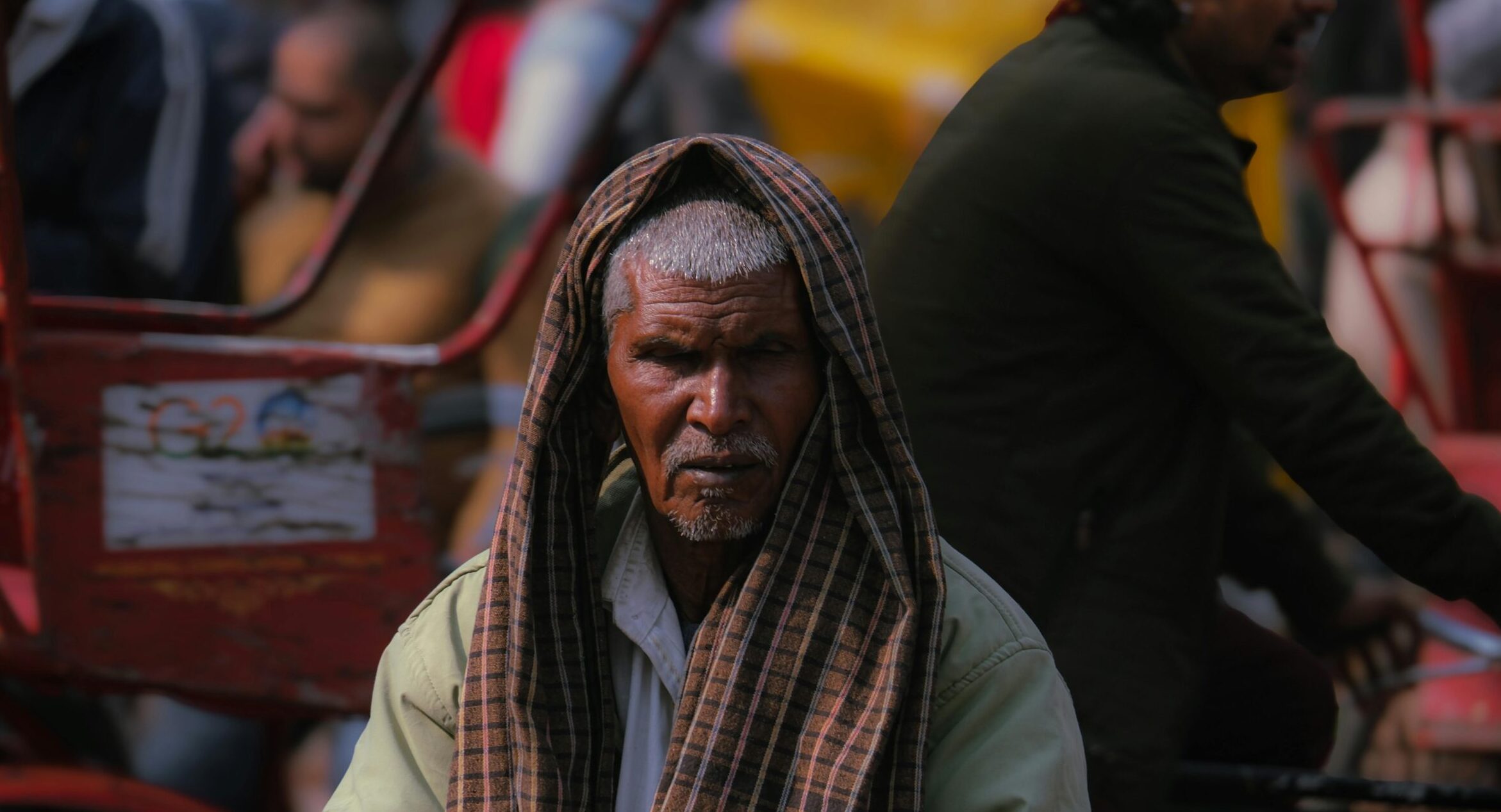
He expressed regret that the hardest-hit villages remain as barren as deserts even a decade after the flood. The shift from fertile to barren land, caused by Kosi's flood sediments, has compelled people to migrate for survival.
Ranjeev Kumar, another social worker involved in the relief operations, said, "People [were] rushing to board any vehicle—from cycles to rickshaws to carts—to escape to safer places. The top priority of people was to escape by leaving everything behind, including their homes, cattle, and possessions, at the mercy of God."
Various studies examining the causes of migration in India have identified natural and human-induced causes. The natural causes of migration include floods, droughts, earthquakes, tsunamis, landslides, unseasonal rains, melting of glaciers, global warming, climate change, etc. The human-induced causes of migration may be displacement due to so-called developmental projects, conflicts like riots, communal or caste-based tensions and conflicts, wars, ethnic clashes, land acquisitions, land degradation, deforestation, industrialisation, urbanisation, etc. However, it is a fact that distressed migration is due to poverty and unemployment. Those with alternative livelihood options manage to escape poverty and food insecurity. But the marginalised who survive on meagre resources are pushed to the brim of food insecurity, leading to malnutrition and starvation.
Devastating floods in Bihar or north India are a significant migration factor. Here, both human and natural factors play a vital role. For instance, there has to be a tripartite agreement between the governments of Nepal, India, and Bihar to regulate the Kosi River. Those in power have not paid attention to this demand by the people and the region's civil society. The common masses are victims of the ruling elite's apathy.
Despite millions of Indian Rupees allocated for the post-2008 flood rehabilitation, most funds were spent on infrastructure instead of helping people rebuild their lives. Moreover, in the interest of infrastructure development, massive bridges and flyovers were constructed in the area without adequately considering water resources and ways. There was a strong political will not to remedy the situation but to allow things to deteriorate, leading to further disasters and devastation.
Natural factors contribute to the floods in the Kosi region of Bihar, India. Countries comprising the Kosi Basin—Nepal, India, and China—feature consistently on lists of the most climate-vulnerable nations in the world due to drought and flood risks. Results from studies show a high likelihood of stronger monsoons, which will increase the impacts and risks for monsoon-related disasters, such as landslides and floods. Therefore, disaster risk reduction and management, especially related to floods, should be a priority for the governments of Nepal, India, and China. However, most planning in the Kosi Basin is still done at the individual project level without considering the impact on the basin scale. (From the Mountains to the Plains: Impact of Climate Change on Water Resources in the Kosi River Basin. International Water Management Institute: Colombo, Sri Lanka. 2019.).
Based on various studies and reports, the following are ten selected recommendations to address the effects of climate change and food insecurity on marginalised populations in India.
1) Concerning any disaster, rescue, relief, and rehabilitation are the three strategies of the National Disaster Management Act, 2011 of the government of India. These are critical to alleviating the suffering of the affected. Hence, relief must be inclusive; rescue must be gender and discrimination-sensitive; rehabilitation should take a holistic approach, supporting the return of a good quality of life and sustainable livelihoods for disaster survivors.
2) Infrastructure development in flood-prone areas should consider human and nature-related issues and construct common or familiar places for rescue, relief and rehabilitation [efforts]. If there is large-scale corruption in infrastructure development, there will be unending problems in the future.
3) Searching and setting up large-scale alternative employment in flood-prone areas has become one of the significant demands of the people so that they can still earn a living even during a flood.
4) Large-scale skill training among youth to enhance their employability according to the local context is necessary. These skills are needed to increase employability should they migrate. Both push-and-pull factors should be kept in mind when providing skills training.
5) With skill development, youth should have enough employment opportunities. Otherwise, they will get demoralised after the training. The Bihar government should decisively promote micro, small, and medium enterprises (MSME) in rural Bihar. This will create employment and generate income for the rural poor, contributing to nation-building.
6) Build women's organisations through thrift and credit facilities to enhance their leadership. Formal and informal organisations ensure women's rightful place and role, leading to lasting change as they address various life issues.
7) Incidentally, the Bihar and Kosi regions face flood and drought alternatively or simultaneously. Large-scale afforestation and embankments or dams along the riverbanks are needed to contain intense flooding. Micro-irrigation projects would address drought.
8) Emergency preparedness helps address the emerging issues of climate change and its impact on people, especially the marginalised. According tothe Indian Meteorological Department (IMD Annual Report, 2021), between 1970 and 2021, India experienced 573 disasters related to extreme weather, climate, and water events, resulting in the loss of 138,377 lives. Loss of property and infrastructure is even more immense. Hence, it is vital to make the citizens conscious of impending danger, prepare them to face these consequences, and reduce the negative impacts of climate change.
9)Promoting better health and education among all citizens, especially the marginalised sector, is the need of the hour. Educational reform, land reform, economic reform, etc., must be implemented to ensure overall and integral growth of all, especially the marginalised.
10) Ecological preservation, climate change and environmental protection must become integral to education at all levels. This is not to be done only in terms of environmental protection on an individual level but from a social perspective. Information passing, consciousness creation, and collective action for environmental protection and preservation must become a way of life, not [merely] an activity.
All religions point to Nature, not just the human race, as the integral creation of God. Islam believes that the earth is the sacred creation of Allah. Islam instructs its followers, "If a Muslim plants a tree or sows seeds, and then a bird, or a person, or an animal eats from it, it is regarded as a charitable gift for him". (Sahih al-Bukhari, Book 41, Hadith 5682).
Dr Karan Singh, an advocate of interfaith dialogue representing Hinduism in the Assisi Declaration on Nature in 1986 in Assisi, communicated a vision of ecological interconnectedness of all life and the divine as per Hinduism. He stated, "Nature is permeated by a reverence for life and an awareness that the great forces of Nature, the earth, the sky, the air, the water and fire as well as various orders of life including plants and trees, forests and animals are all bound to each other within the great rhythms of Nature. The divine is not exterior to creation but expresses itself through natural phenomena" (http://www.arcworld.org/downloads/THE%20ASSISI%20DECLARATIONS.pdf).
His Highness, the Dalai Lama, speaking about the present ecological crisis and the need to go back to the interconnectedness of all beings, said, "The natural environment sustains the life of all beings universally. Whether we like it or not, every being on this planet is a part of Nature. And this is particularly important when we face global issues like climate change and environmental degradation." (Sofia Stril-Rever. H.H. the Dalai Lama XIV: My Appeal to the World. Tibet House. 2015).
The Global Environmental Forum, in its Global Ministerial Environmental Forum held in Nairobi in 2001, reflected on religious views on the environment. In this forum, the Sikh representative stated, "Sikhism teaches that all forms in the universe exist under God's command and that, having brought a life form into being, God will protect it. The teachings of Sikhism are based on a premise of life liberated from conspicuous consumption" (https://iefworld.org/unepgc21.htm).
From these sociocultural and religious principles, we are invited to move towards individual and collective practices that save the creation, the human race, and the universe according to the plan of God, our Creator.
 Prakash Louis, SJ
Director – Xavier Institute of Social Research
Coordinator – Bihar Migrant Hub
Xavier Institute of Social Research
Digha-Ashiana Road
Patna, Bihar, India.