Betting on Agroecology as a Way of Agricultural Production and Establishing Social Relations
Abstract
This article, “Betting on Agroecology as a Way of Agricultural Production and Establishing Social Relations” is a collaborative piece of three professors from the Universidad Pontificia Comillas’s School of Agricultural Engineering. They have been directly engaged in agricultural education and production for several decades then shifted from promoting the “technocratic or industrial paradigm” of agriculture to agroecology. Promotio Iustitiae asked how they have become so impassioned about agroecology. Their experience of fruitful collaboration between the University and Valladolid City residents was a turning point. Here is their reply:
“The choice for agroecology in the whole of INEA (School of Agricultural Engineering) was intuitive at the beginning. At the end of the 1990s and the beginning of the 21st century, the growing societal concern was on sustainable agriculture and the reduction of [negative] impacts on the environment. It was our school farm’s organic vegetable gardens developed with, and for, Valladolid City’s 430 elderly residents that launched us into concrete actions: we transformed the school’s curriculum and the way we cultivated our farm and we joined social and consumer initiatives (organic production cooperative, the Ana Leal House of Ecology and Welcome, etc.). All of this we did with the full collaboration of teachers and teams… Sometimes conversion is a process and in our case, we continue to move forward steadfastly.”
Agriculture in Europe at the beginning of the 21st Century
European agriculture, as we know it today, was defined during the post-World War II period. Since the 1960s, while rural areas were being abandoned by a population increasingly attracted to industrialization, the primary objective has been to ensure food supply to a growing urban population. This led to the Common Agricultural Policy (CAP); included among the CAP’s objectives is to encourage farmers, through direct aid, to remain on their farmland and continue doing agriculture.
The first CAP concurred with the “Green Revolution” which achieved a notable increase in productivity using intensive inputs—seeds, fertilisers, herbicides and pesticides. Production was fortified however, its environmental effects were overlooked.
The CAP is a system of income transfer and subsidies to ensure income for farmers. Initially, these subsidies were solely linked to production (area devoted to crops, average yields, etc.). Other aspects, however, have been incorporated over time, such as rural development (alternative economic activities to farming). It most recently added requirements concerning environmental conditions (soil conservation and protection, agricultural land maintenance or, measures to prevent the deterioration of habitats).
The current debate within the European agricultural sector is whether to submit to the “yoke” of subsidies or enter the “market myth”. The market does not sufficiently reward products because it discounts the value of subsidies. In the case of the UK, this idea of market freedom was one of the arguments used for Brexit, for leaving the EU and abandoning the CAP. Despite this decision, the truth is that the UK continues to apply a system of subsidies to farmers.
As millions of farmers worldwide know, living off the markets is hugely unstable and, in the long term, keeps most farmers at subsistence levels. Oftentimes, in these countries, a separate agriculture is generated—an export-oriented agriculture that requires intensive cultivation of highly polluting crops by exploited labour but generates minimal profit for the local population. The US and Europe heavily subsidise their agriculture because they are aware of the aggressiveness of markets towards farmers. The CAP can be strongly criticised, but it is a fact that it has undergone numerous modifications and has generated unprecedented income stability for farmers.
The protection of European farmers also has an important impact on agricultural production in third countries. While the EU is the world's largest exporter of agri-food products, it is also the world's second-largest importer of these products (229 billion in exports compared to 171 billion in imports). The EU controls, through tariffs and taxes, the importation of products from third countries. Therefore, we can speak of a protectionist regime, which puts European agriculture ahead of other countries.[1]
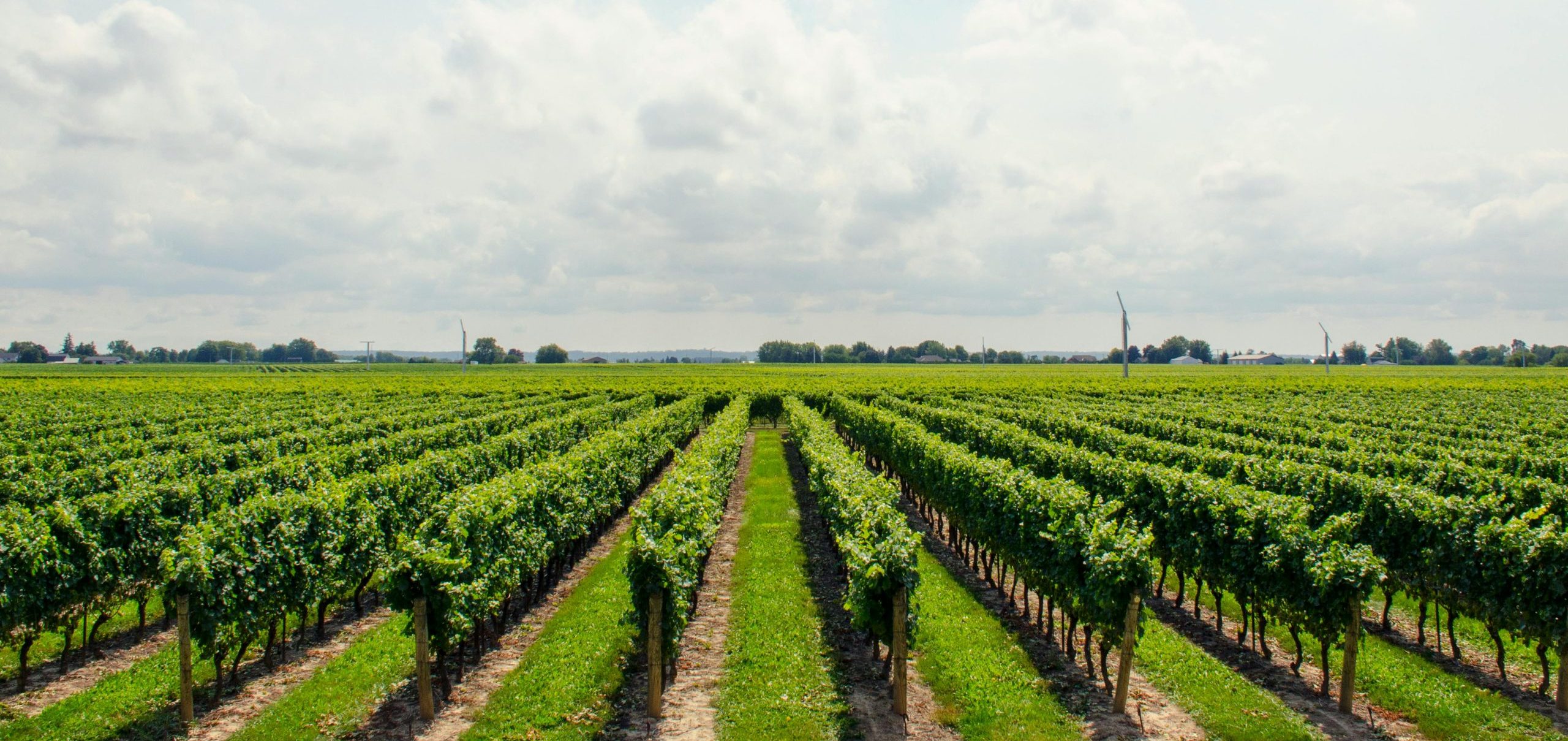
Environmental conditionality [or cross-compliance] together with bureaucracy have become one of the most controversial issues surrounding the current CAP. Farmers feel that their efforts to preserve the environment are not sufficiently rewarded making them less competitive with agriculture in non-member countries. Their anti-environmentalist approaches, however, are observed to have profound ideological bias. It is necessary to bear in mind that 1) the agricultural sector is responsible for more than 70% of the global environmental damage to the planet, 2) this sector is precisely the one most affected by climate change and its consequences, and 3) it relies heavily on immigrant labour. Thus, the same leaders who encourage farmers' protests, paradoxically, have climate change denialist agendas in their programmes and advocate for the expulsion of migrant workers, encouraging xenophobia[2].
The development of intensive agriculture in Spain is undoubtedly a process linked to the arrival of immigrants, a solution to the loss of family members’s contribution to their farms’ labour and the disaffection of Spanish citizens concerning countryside waged work since production under competitive conditions has led farm owners to reduce labour costs and to seek cheap labour[3].
Between 2000 and 2021, the number of foreign-born workers in the Spanish agricultural sector increased from 50,000 to 250,000. If there is one thing that defines this group as a whole, it is their unjustifiable working and wage conditions, especially for those who do not have the documentation to reside and work in Spain. These are often forced to live in extremely precarious socio-economic and health conditions in shantytowns close to workplaces, for example in the strawberry-growing area of Huelva, the greenhouses of Almeria, or the fruit-growing areas of Lleida[4].
Comprehensive reform is urgently needed to address both the direct work conditions of migrants employed in agriculture and the structural factors perpetuating their vulnerability[5]. The implementation of policies and practices promoting decent work, respect for human rights, and social integration is crucial to ensure a sustainable and ethical agriculture sector in Spain[6].
Agroecology
Approaching agriculture from the perspective of Integral Ecology could enable us to reformulate the vision currently driving agricultural activity and attain a breakthrough in resolving its contradictions. Integral Ecology advocates for global development in agro-ecological approaches, essentially linking them to social justice, and envisioning them as a way to approach Integral Ecology. We could either conceive agriculture and socio-environmental justice as an inseparable whole or think of agriculture and the countryside as just another cog in the wheel of the technocratic paradigm which aspires to subjugate and control modern societies, in all their spheres, through technology.
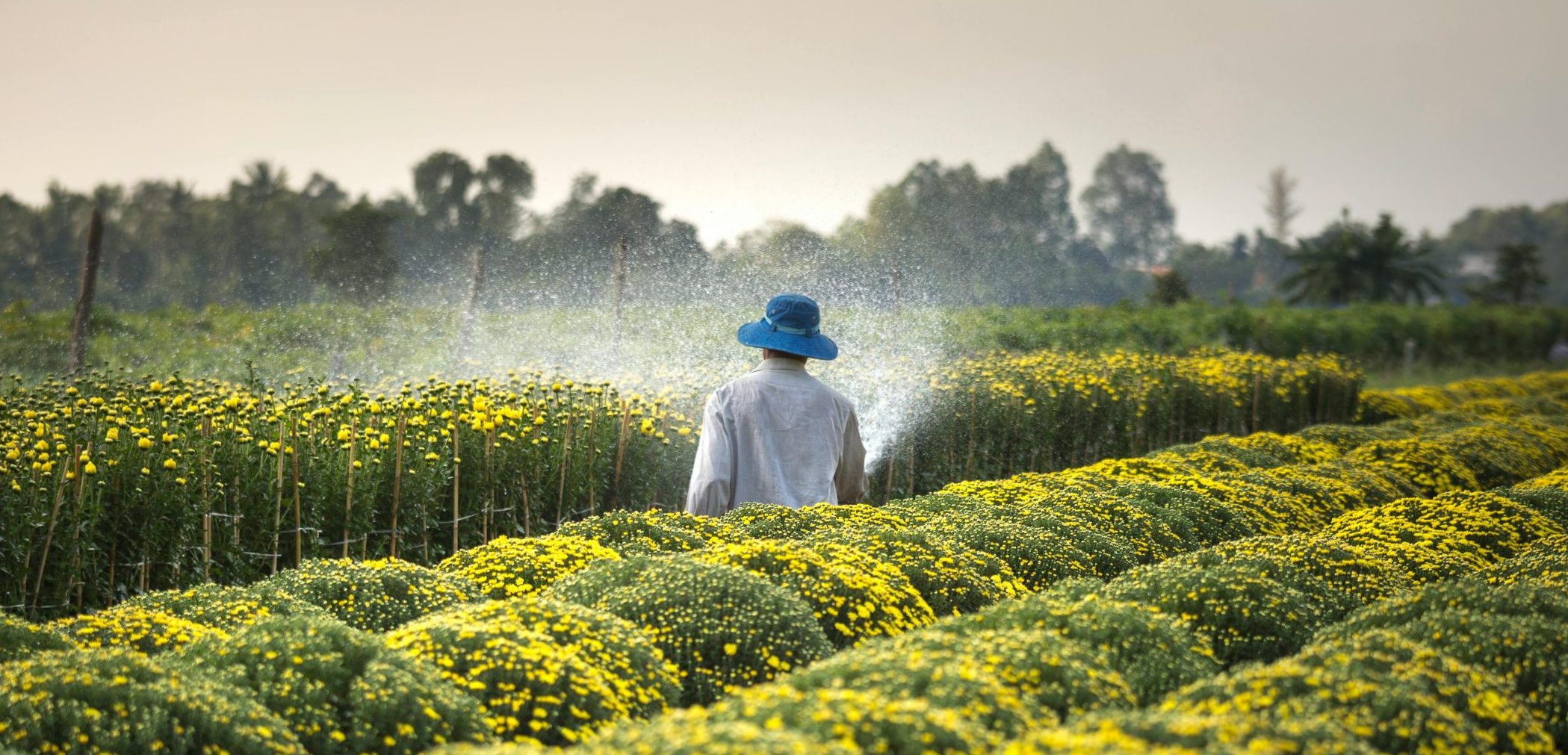
Agroecology is not compatible with the current production system; largely because agroecology is not merely an agricultural technique, but a way of life, a production system based on sustainability criteria, encompassing much more than agricultural practices and focusing on both caring for the land and the people. This makes agroecology, from the outset, incompatible with the capitalist system. Agroecology is a horizon that orients agrarian practice to the concept of Integral Ecology and its struggle against the technocratic paradigm. Agroecology is a challenge to the conventional agrarian system and the food industry as well. At the same time, it is a plea for proximity, austerity, simplicity of life and solidarity. Agroecology is a vector of profound social transformation towards a more just and sustainable society.
Vandana Shiva argues that the technocratic paradigm, which she defines as the industrial paradigm, considers the world as a machine at its service, nature as inert matter, and human beings as an entity independent from nature. For the technocratic paradigm, both nature and human beings are mere agents of a production system called to produce more and more[7]. In Vandana Shiva's view, the industrial paradigm is opposed to the ecological paradigm of agriculture which is based on life and its interconnections with the land and small farmers, and especially, women. Under this paradigm, people would become co-creators and co-producers alongside Mother Earth. In this paradigm, for Shiva, knowledge is not possessed [for dominion]; it is exercised and developed through agricultural activity where we all participate in the fabric of life. In agroecological farming, the cycles of nature are intensified and diversified to produce more and better food, using fewer resources. In addition, discarded plants serve as food for farm animals and the soil[8].
Vandana Shiva pits the Law of Exploitation against the Law of Return, which posits that nothing is wasted and everything is recycled. Her vision focuses above all on small-scale producers, many of whom use the criteria of traditional agriculture (the kind of agriculture which, despite the technocratic hype, feeds 70% of humanity)[9], and whose ecological food systems are satisfied, primarily at the local level, where they grow what they can, export what is left over, and import what they cannot produce locally. In the medium term, however, our agricultural environment does not only appear to be unsustainable ecologically, socially or economically but, it will also devour itself eventually because it no longer directs food towards human nutrition but, to a very large extent, towards animal fodder or industrial use[10]. Nevertheless, a different concept of agriculture, on a human scale, should inspire a different kind of consumption.
Agroecology is thus proposed as an agricultural, environmental and ethical alternative, as a horizon that is truly committed to the great transition.[11] It is crucial to take steps that respect the major socio-environmental values of agriculture: knowing how to produce and to do so in an increasingly efficient and sustainable way—caring for and shaping the landscape in a balanced way, and supporting the countryside. At the same time, this means protecting farmers and defending them from the abuses of big business; it will also involve taking care of them, paying them justly for their products, and finally, maintaining that farm workers expect fair working conditions.
INEA's Transition to Agroecology: From Intuition to Conversion
The INEA School of Agricultural Engineering (Valladolid, Spain) was established in the 1960s. It was the height of the “efficient agriculture” boom which used large amounts of inputs but, was unconcerned about environmental impacts, to produce huge quantities that consumers could afford. Producers and consumers were the weakest pieces of the chain; strength was found in the processors and marketers who provided the “value-added” and thus, obtained substantial margins by paying low prices and selling large quantities.
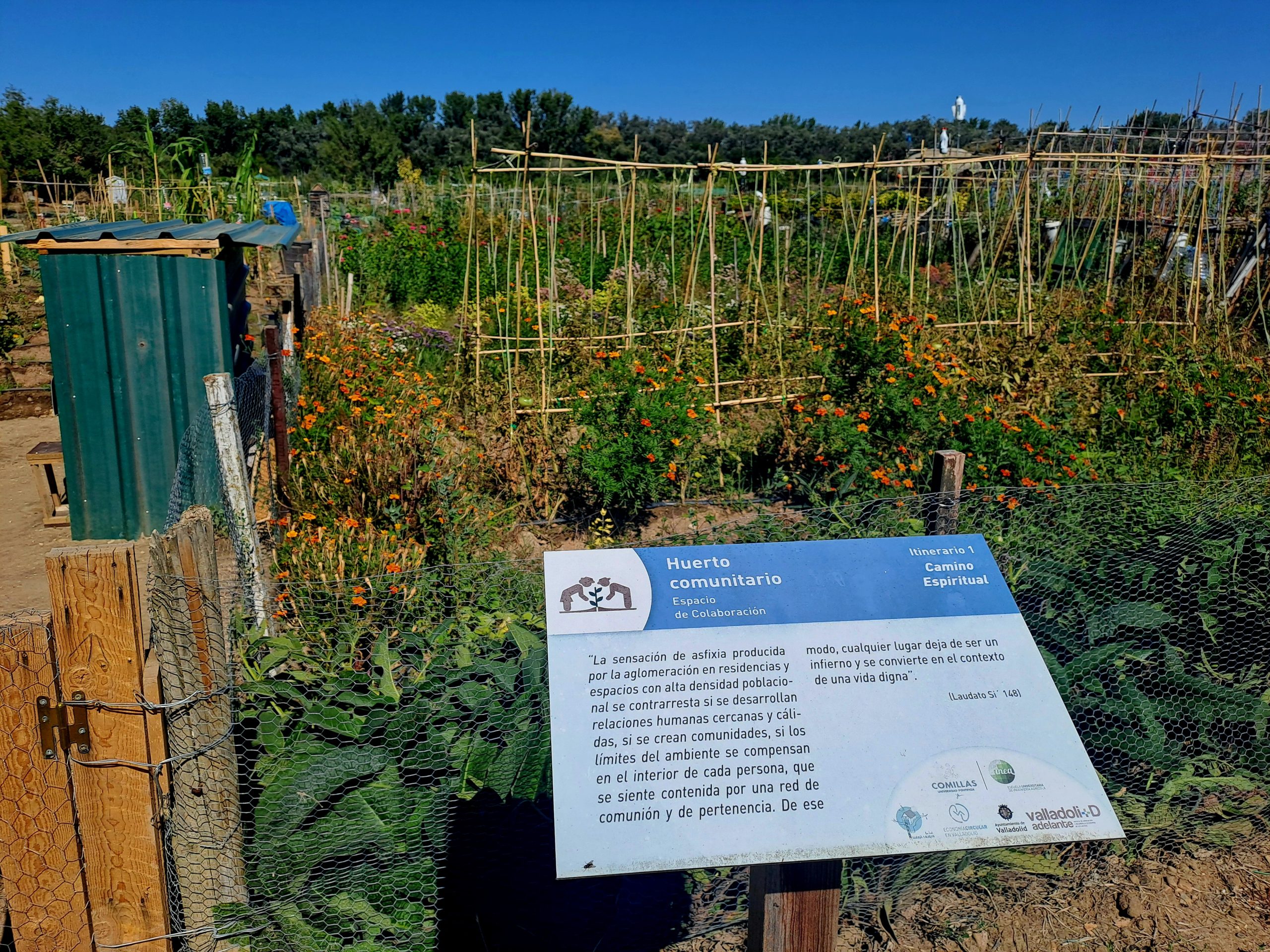
Our School of Agricultural Engineering remained in this paradigm until 2005 and, as so often happens, it was a collateral initiative that led us to focus on the Agroecology paradigm, not only in terms of production but also in terms of social and environmental relationships. It was an agreement with the Valladolid City Council to promote organic vegetable gardening for the city’s retired people on our school's farm that led us towards transformation. From intuition, we moved on to the conversion of our activity, even incorporating this perspective [Agroecology] in our curricula, research projects and participation in networks and social groups.
This approach has implications for soil management, water management and crop diversification; also in the integration of alternative value chains and business models that maintain locally adapted practices and offer other market alternatives to both farmers and consumers. The production of organic products has grown enormously throughout the EU and these are now accessible in supermarkets and usual shops. Opting for Agroecology does not merely mean a chosen mode of production it is rather a conviction for environmental sustainability and social justice, as we have already seen so far.
The first transformation [at INEA] was physical and affected the biodiversity of a 30-hectare farm. The Pisuerga River irrigates plenty of riverbank vegetation for about a kilometre. The farm has extensive crops and trees, home to hundreds of species that coexist in the same space: some terrestrial, such as roe deer, badgers, foxes, snakes, snails, mice, and rabbits, etc.; others are aerial, such as pigeons, birds of prey, ducks, storks, jays, blackbirds, sparrows, goldfinches, etc.; and others aquatic, such as catfish, crab, carp, pickerel, etc. In addition, the land has been well-tended for twenty years providing the soil an extraordinary abundance of invertebrates and microbiological life.
More than 60 products can be counted in our organic agricultural production. There are many types of fruit trees such as apple, cherry, plum, pistachio, almond, hazelnut, walnut, pear, raspberry, blackberry, currant, strawberry, acerola, quince, and peach. Present, too, are various garden crops such as tomato, pepper, cucumber, courgette, pumpkin, aubergine, potato, lettuce, chard, kale, cabbage and cabbage of all kinds, melon, watermelon, etc., as well as extensively irrigated crops, such as leguminous plants and cereals. We also breed Castilian black hens and produce eggs of this native breed.
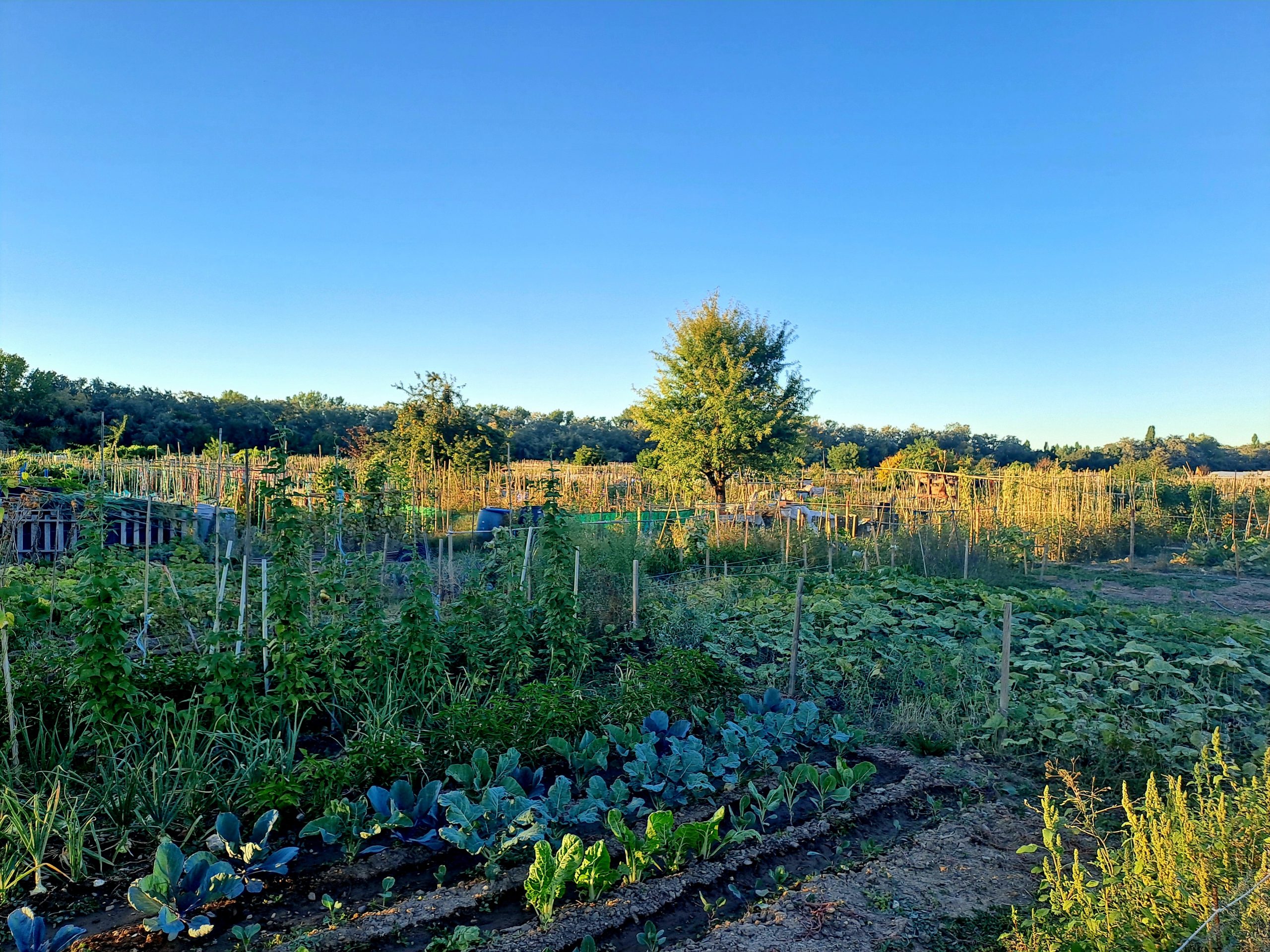
As we have a project of 430 organic vegetable gardens, social interaction is very important. Visitors come to buy our farm products especially since they are produced not only by elderly people who enjoy nature and gardening but also by persons with disabilities, immigrants, employees, teachers and students. It is a real social ecosystem that operates more intensely each day.
This triad of natural, cultivated, and human biodiversity makes the INEA Farm a unique environment with an enormous power for raising awareness concerning the paradigm shift that society needs.
All this transformation animates our spirituality; and of the many who come to know about this conversion. It is a spirituality which, as Pope Francis often mentions, gives primacy to time over space. So, we try to generate change processes: processes of individual and group transformation. We aim to promote unforced processes, adapt to natural cycles, respect [natural] rhythms, and seek balance, harmony, and solidarity. This dynamic which we recognise in nature, we try to apply when facilitating retreats, spiritual exercises, and various meetings: to provide the right rhythm for personal encounters with God.
[1] https://agriculture.ec.europa.eu/system/files/2023-01/agricultural-outlook-2021-report_en_0.pdf
[2] A. Pedreño y P. Riquelme, “El trabajo asalariado agrícola en los territorios rurales españoles. Retos y oportunidades.”, en Mediterráneo económico Nº. 35, 2022
[3]Muñoz Rico, A., “Trabajo digno también para los campesinos extranjeros”https://elpais.com/planeta-futuro/3500-millones/2022-04-25/trabajo-digno-tambien-para-los-campesinos-extranjeros.html
[4] Véase Pedreño y Riquelme, pp. 268 y 274.
[5] Véasehttps://www.tierra.org/wp-content/uploads/2022/03/Alimentos-industriales_trabajo-precario.pdf .
[6]https://www.ccoo.cat/pdf_documents/Recerca%20AGREE%20complert%20versi%C3%B3_22_05_15.pdf
[7] Shiva, Vandana, Cosecha robada: el secuestro del suministro mundial de alimentos; Ediciones Paidós. (2003).
[8]Shiva, Vandana, ¿Quién alimenta realmente al mundo?, Capitán Swing, Madrid.(2017) pp. 27-41.
[9]FAO.The State of Food and Agriculture 2023.https://openknowledge.fao.org/items/ca815d26-c876-4d54-9e90-f34432442bf2
[10] G. Monbiot, “Can we feed ourselves without devouring the planet?”https://www.ted.com/talks/george_monbiot_can_we_feed_ourselves_without_devouring_the_planet?language=es .Del mismo autor, Regénesis. Alimentar al mundo sin devorar al planeta, Capitán Swing, Madrid.(2023) pp. 92-94.
[11]Campus de la Transition. Manuel de la Grande Transition,2020.https://campus-transition.org/wp-content/uploads/2021/01/Intro_Sommaire_manuel_grande_transition.pdf
Félix Revilla SJ, Director and Profesor at the INEA School of Agricultural and Agro-Environmental Engineering, and member of the Ana Leal Ecology Working Group--Area of Engineering, Universidad Pontificia Comillas,Valladolid, Spain.
Pedro Piedras, Profesor at the School of Agricultural and Agro-Environmental Engineering, and member of the Ana Leal Ecology Working Group--Area of Economics, Universidad Pontificia Comillas,Valladolid, Spain.
José Ignacio García SJ, Director of Cristianisme i Justicia (Barcelona), and Ex-profesor at INEA, member of the Ana Leal Ecology Working Group, Universidad Pontificia Comillas,Valladolid, Spain.
Disclaimer
The views, thoughts, and opinions expressed in the article belong solely to the author(s). They do not purport to reflect the opinion or views of the Secretariat.