
Collaboration: The Jesuit Way of Proceeding
Abstract
Cedric Prakash SJ (GUJ) affirms that collaboration is central to the Jesuit approach, from St Ignatius and Vatican II to the General Congregations and the magisterium of Pope Francis. Building on this tradition, he provides a critical analysis of the genuine obstacles to authentic collaboration, particularly clericalism, patriarchy and the concentration of power, paying specific attention to the Indian context. He denounces superficial forms of collaboration, emphasising the urgent need for relationships based on co-responsibility, subsidiarity and communal discernment. He highlights that, today, collaboration is an indispensable requirement for justice, human rights, peace and care for creation.
‘Collaboration’ is a sine qua non to our Jesuit way of proceeding! Right from the time St. Ignatius founded our least Society, he was convinced that the companions of Jesus had to work with others if we genuinely wanted to make a difference in the world. He showed the way by reaching out to every possible segment of society during his time; the first Companions and successive generations of Jesuits lived this ‘collaborative’ dimension of mission in ways they understood best.
Vatican II (1962-65), was a springtime of the Church, when Pope John XXIII literally threw open the doors and windows of the Church to make it a more collaborative and laity-focussed one, attuned to the signs of the times. This Ecumenical Council allowed a fresh breath of the Holy Spirit to blow into the Church. ‘Gaudium et Spes’, the Pastoral Constitution on the Church in the Modern World, is a clear indicator of the concerted efforts to modernise the Church (aggiornamento). Pope Paul VI, the successor of Pope John XXIII, did his best to implement the directives of Vatican II.
In keeping with the letter and spirit of Vatican II, the Society of Jesus, with Fr. Pedro Arrupe, of beloved memory, at the helm, immersed itself totally in the joys and struggles of the women and men of the times. In 1974-75, General Congregation 32 with its path breaking decrees set the trend for Jesuits to redefine themselves in the context of a fast changing world. Decree 4 ‘Our Mission Today: The Service of Faith and the Promotion of Justice,’ became the new ‘Magna Carta’. The mission of the Jesuits became amply clear; the Jesuits also emphatically stated (from GC32 right up to GC36) that for the realisation of this mission the Society must collaborate with all people of goodwill to address the crucial struggles of our times.
GC 35 reiterated that collaboration is at the heart of our Jesuit Missionand called for renewal by the members of the Society of Jesus of “our commitment to apostolic collaboration and to a profound sharing of labour of the life of the Church and the transformation of the world.”It emphasised, “In his day, St. Ignatius gave shelter to the homeless of Rome, cared for prostitutes, and established homes for orphans. He sought collaborators and with them established organizations and networks to continue these and many other forms of service. To respond today to the pressing needs of our complex and fragile world, many hands are surely needed. Collaboration in mission is the way we respond to this situation: it expresses our true identity as members of the Church, the complementarity of our diverse calls to holiness, our mutual responsibility for the mission of Christ, our desire to join people of good will in the service of the human family, and the coming of the Kingdom of God. It is a grace given to us in this moment, one consistent with our Jesuit way of proceeding.” (D.6 #30)
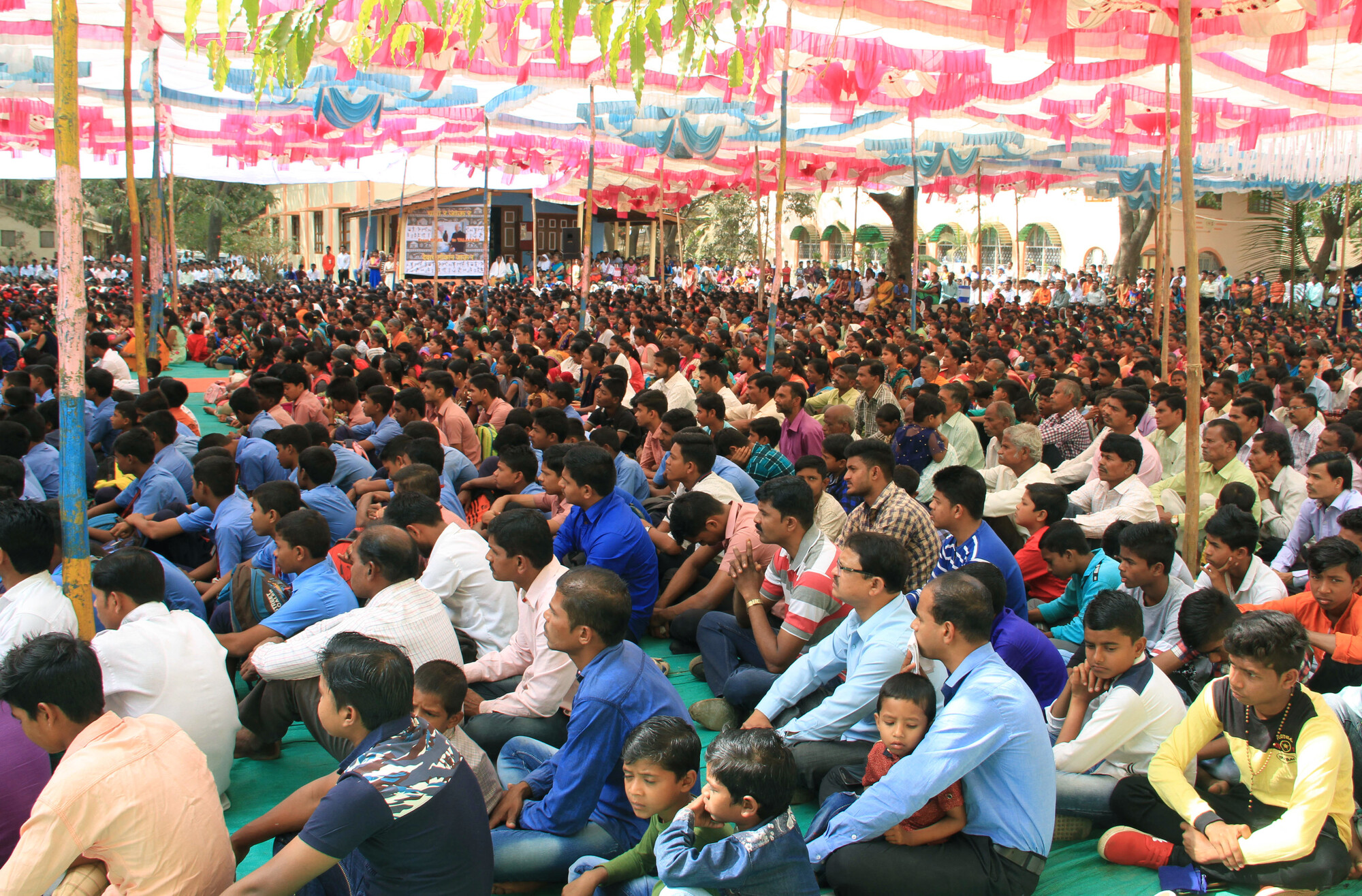
With the arrival of Pope Francis, the first Jesuit Pope, the mainstreaming of the vision and the mission of Vatican II gained a new impetus. Pope Francis’ Encyclicals, Apostolic Exhortations, his homilies and speeches focussed mainly on a new way of being Church. He challenged everyone across the board to become more authentic, caring and peaceful humans. It was certainly a tall order in a world that continues to become more fragmented and brutalised. For three years 2021- 24, Pope Francis did his best to initiate a Synodal Journey in the Church. The process focused on three key words ‘communion’, ‘participation’ and ‘mission’; of these, communion and participation are the pillars of collaboration and truly indispensable for mission. The Synodal documents (both the Synthesis Report and the Final Document) highlight the need and importance for collaboration, at every level, in order to make the Synodal process more meaningful and sustainable. Something easier said than done.
The significance of Collaboration is found in the Synthesis Report, which states, “In its broadest sense, synodality can be understood as Christians walking in communion with Christ toward the Kingdom along with the whole of humanity. Its orientation is towards mission, and its practice involves gathering in assembly at each level of ecclesial life. It involves reciprocal listening, dialogue, community discernment, and creation of consensus as an expression that renders Christ present in the Holy Spirit, each taking decisions in accordance with their responsibilities.”Pope Francis certainly had a vision to make the Church today a more people-focussed one, with greater collaboration and participation at every level.
There are however several concerns which need to be addressed before Pope Francis’ prophetic vision becomes a reality in a Church which needs to ‘let go!’. One needs to look at the Church in India first: clericalism and patriarchy are both strongly rooted. Subsidiarity hardly exists with tremendous power concentrated with Bishops /parish priests /Clergy and Religious who are Principals/Directors of Institutions. Ideally the reforms initiated by Pope Francis demand an enhanced role for laity (particularly women), a more collegial working and above all, the synodal process of communion, participation and mission to be actualised at every level.
The reality of course is very different. Parish councils often consists of ‘yes-men/women’ and are sometimes condemned to doing cosmetic, servile work and posing for photo-ops. There is very little dialogue, discernment and decision-making processes which are participative. Some ‘laity’ literally demand a slice of the cake, wanting the use of Church premises as personal fiefdom. There are exceptions of course, but these are rarities. The laity continues to conveniently fit and often succumb to a mould of ‘pray, pay and obey.’ The Synodal Process which was completed, a couple of years ago, in most dioceses, was relegated to a series of meetings and spiritual events, meant to produce reports for the records. Not much effort seems to have been made in truly empowering the laity and to provide them with the prophetic courage they need to respond to critical issues facing the church and the country.
A senior Catholic teacher with an outstanding and long years of teaching experience in a prestigious Jesuit school was appointed by the management as the Principal of the same school. It was a significant move in terms of lay collaboration. However, right from the beginning, roles and responsibilities of the Principal and also that of the Jesuits involved in the school, were not clearly defined. Some felt threatened and were not comfortable in allowing the Lady Principal to take independent decisions – even if these decisions were after due consultation with other lay staff of the school. Lay collaboration necessitates respecting the integrity, competency and professionalism of the lay person concerned. Once a lay person is given authority, clerics should not treat that person as a puppet, doormat or clearing house. This, in no way negates the importance and need of consultation, transparency and accountability at all levels.
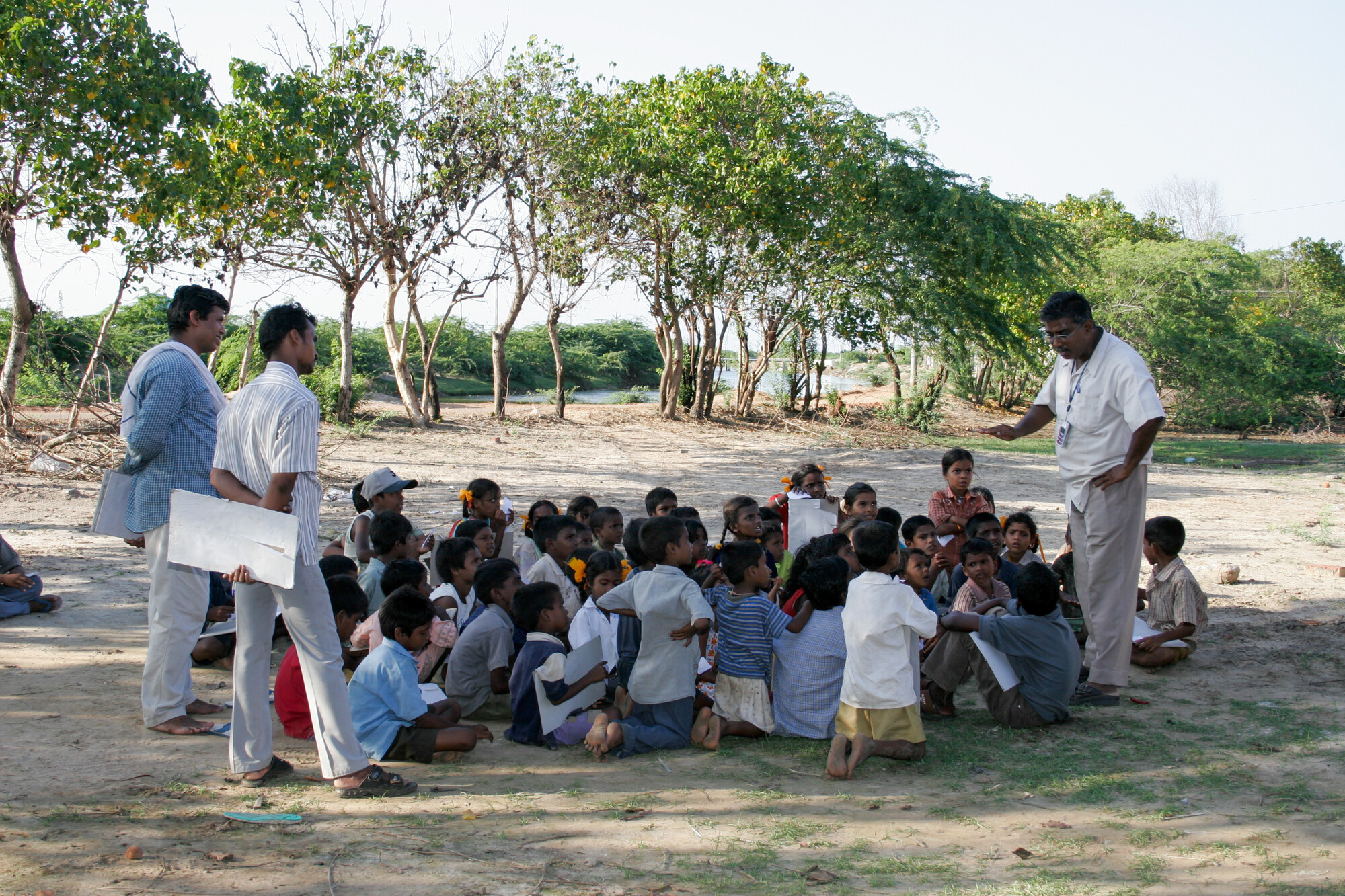
There is no dearth of documents, all with directives which clearly outline the significance, the structures and the processes which are essential for greater collaboration both at the level of the Church and the Society. There are also other words and concepts which are used inter-changeably with ‘collaboration’, these include ‘partnership’, ‘cooperation’, ‘teamwork’, ‘walking together’. All of which are inconsequential if we do not live collaboration in every aspect of our lives. Sadly, collaboration is often relegated to tokenism: a mere cosmetic activity needed perhaps to make a point in a ‘report’ – which fails to underscore the factuality of things. Some of us feel threatened and insecure when another collaborator is in the seat of power and has a decision-making role. But it is important that we, as Jesuits, get down into a spiritual depth and realise the accompanying role we should be playing.
There are excellent examples of Jesuits collaborating with others at a Universal level on important issues. The Jesuit Refugee Service(JRS) is an outstanding example. The point however is, how does one understand and do ‘collaboration’ in an Indian context? The reality here certainly throws up a whole range of challenges; these include:
Collaborating with each other as Jesuits
It is not easy to do so! The experience of several is that we Jesuits tend to work in ‘silos’ – in a very exclusive manner. Many of us forget the fact that a Jesuit is sent on a mission by one’s community. The mission of a Jesuit (be it ministry/apostolate/ other activity) belongs to the community. In that sense the Jesuit is accountable to one’s community and the community is responsible for his mission. Some Jesuits become ‘touch-me-nots’ – they don’t like anyone ‘interfering’ (even if it is a genuine concern or interest) in their work! One will never be able to collaborate with outsiders if we are unable to first collaborate amongst ourselves. St Paul reminds us that all of us are endowed with different gifts, and we are all called to complement each other, to make our mission more relevant and impactful today! We need to do so through a continued process of fraternal dialogue and Ignatian discernment. We must challenge each other to get out of our comfort zones; to listen and to respond to the cries of the poor and the cries of creation. A must for all of us Jesuits!
Collaborating with women religious
This is specific. Women religious are perhaps our first collaborators in mission. There are excellent examples of how Jesuits and Sisters of religious congregations work together. These must be applauded and examples of collaborative initiatives need to be propagated. Sadly, all is not smooth sailing! Some Jesuits treat religious women as second-class citizens and inferior to them. Jesuit arrogance is amplified when sisters are the subjects of their rant and rave. One often witnesses such behaviour particularly if a Jesuit is a Parish Priest or the Director/Principal of an institution where the sister is employed. She is treated as an employee rather than a collaborator in the mission. Working with religious women is a great opportunity for meaningful collaboration. Jesuits in these positions have a responsibility to treat sisters with dignity and equity; to dialogue with them, discern together, before any major decision is taken that could affect them.
Collaborating with diversity
India is diverse; her wealth lies in her pluralism. In addition to Hinduism (the majority religion), there are several other religions, including Islam, Christianity, Sikhism, Jainism, and Buddhism, as well as a range of folk/indigenous religions. India is a multicultural society where customs and traditions, food and dress, languages, and behavioural patterns differ tremendously. Collaborating here would mean accepting and appreciating the differences and working together to address critical issues that affect the poor, the marginalised, and disadvantaged sections of Indian society.
Collaborating with civil society
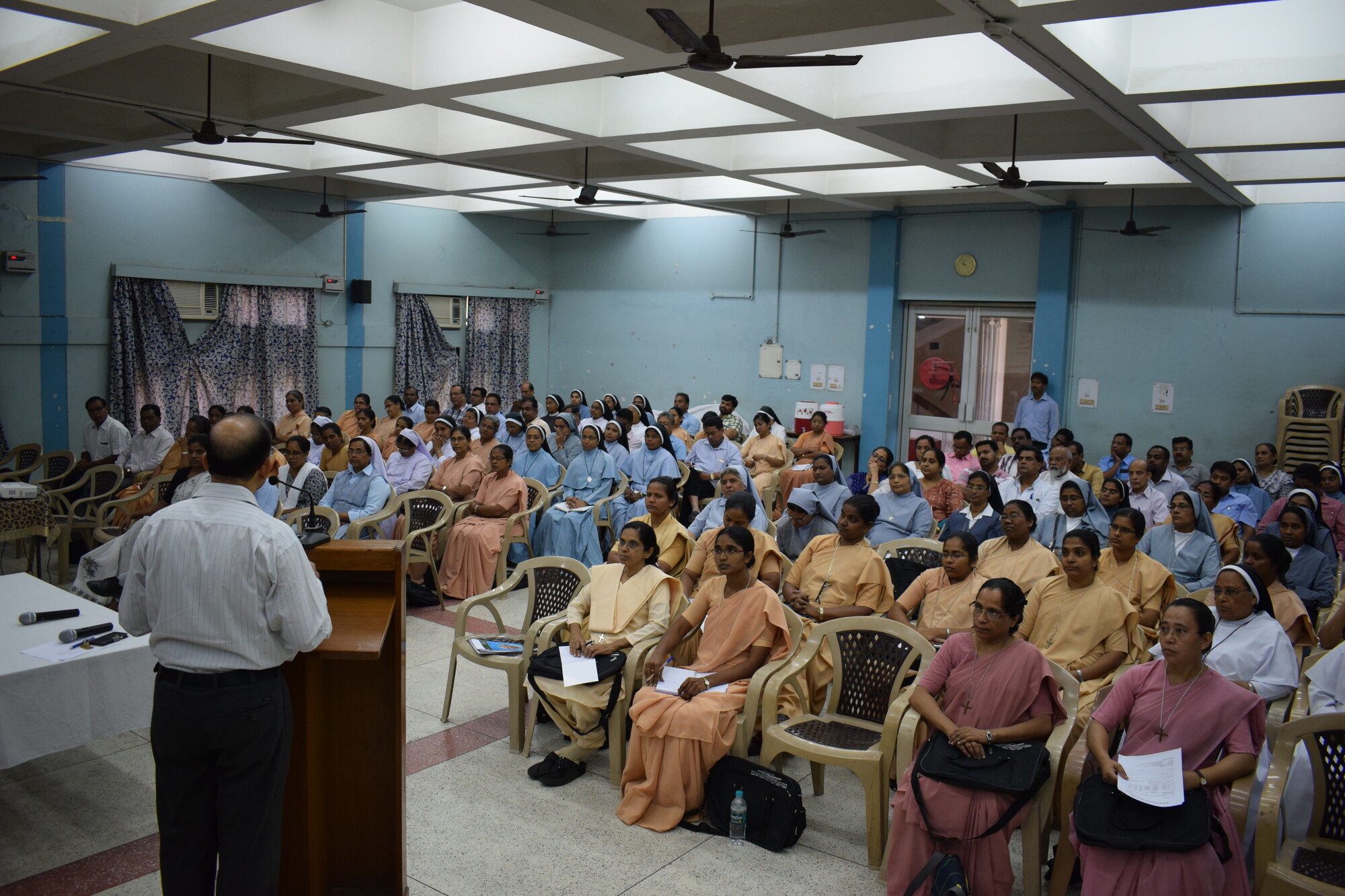
In an Indian situation, this is absolutely necessary. As Jesuits and even as Christians, we cannot and should not work alone. The tendency is to be exclusive. We need to collaborate and network with civil society, both individuals and groups. Some of us have been very engaged with national groups such as the People’s Union for Civil Liberties (PUCL), the National Alliance of Peoples Movements (NAPM), Citizens for Justice and Peace (CJP), and the All India Movement for Democracy (AIM). Besides, there are several collaborative actions taking place at the grassroots with local groups. The late Fr. Stan Swamy was an example of how a Jesuit could collaborate with other groups to highlight the plight of Adivasis (indigenous people). There is, however, much more to be done. Our alumni should be among our greatest collaborators; unfortunately, with a few notable exceptions, most are afraid to take a stand against what is happening to minorities or to the country at large. Our Alumni Associations need to be asked in the words of Fr. Pedro Arrupe, “have we Jesuits educated you to be men and women for others?” We need to participate in civil programmes and their activities. Jesuit educators could work in a Government school (or a school that is not our own) or in another independent institution. We often expect ‘them’ to come and work with us; they get the opportunity not because of the collaboration mandate, but simply because we have a shortage of Jesuits and need someone to fill the spot. Jesuit institutions in India have plenty of space and facilities. One practical aspect of collaboration is to make this space and facilities freely available to civil society groups for their programmes
Collaborating for Human Rights, Justice, Reconciliation and Peace
India is currently in a mess! We seem to be failing on all fronts, particularly in human rights and justice. Minorities (particularly Christians and Muslims) are targeted and attacked. In a pluralistic country, what one eats and the way one dresses, what one sees, and even what one reads is questioned. The fundamental rights of speech and expression, to preach, practise and propagate one’s faith, the right to life and livelihood are not only denied but used effectively to incarcerate one. Human rights defenders and journalists are languishing in jail. Environmental degradation is rampant: from the wanton destruction of trees to the unabated use of fossil fuels. At the receiving end are the poor and vulnerable, the excluded and the exploited, the minorities and the marginalised, the Adivasis and the Dalits, women and children, the LGBTQIA+ community and refugees, the migrant workers and casual labourers, the small farmers and the slum-dwellers, and all other disadvantaged sections of society. Collaborating with others, being visible and vocal, is the only way forward.
On 26 May 2022, Fr. Arturo Sosa, our Superior General in a letter to the Whole Society entitled ‘Global Ignatian Advocacy Network (GIAN): A Pathway to deepen Collaboration’ wrote, “For some time now, the Society of Jesus has felt the need to adapt its governance structures to the new realities of the world. In today’s globalised context, we are confronted with the need to act as a universal body with a global mission, capable of integrating the diversity and uniqueness of the contexts, cultures, times and peoples in which we live and work. Collaboration and networking offer richness, solidarity and a challenging opportunity for our engagement in today’s complex and changing socio-economic, political and religious situations. The urgency of discerning together the appropriate apostolic structures to achieve the ambitious apostolic goals we have set for ourselves is therefore clear”.
Collaboration is the need of the hour! It is about collegiality and subsidiarity; about trusting the other, about sharing responsibility. About accompanying, about walking together …about a journey. Do we have the prophetic courage to run the gauntlet?

Fr. Cedric Prakash SJ (GUJ) is an internationally renowned human rights, reconciliation & peace activist & writer.