The PURPAN School of Engineering, Lamothe Campus: Towards a Model for Agroecological, Energy, and Food Transitions
1. Introduction
The Purpan School of Engineering (PURPAN),an Ignatian institution founded in 1919 by farmers and Jesuit educators isa member of the Institut National Polytechnique (INP) of the University of Toulouse (France). Today, PURPAN is one of France's leading higher educational institutions in agriculture and agronomy. It has a legally recognised public service mission in the fields of formation, research, international cooperation and technology transfer. PURPAN is a "school for the industries of the future" training students in various fields, including the life sciences, agriculture, agri-food, and the environment. It has a student population of nearly 1,700 students (15% of whom come from farming backgrounds) and awards two state-recognised diplomas: Engineering (Master's degree) and Agriculture (Bachelor's degree). 100% of PURPAN students undergo a study-abroad experience for at least a term (Internship, University Study Period or International Solidarity Mission). Also, PURPAN trains students of the University of Toulouse's doctoral degree programme in its laboratories and research platforms. PURPAN's five teaching and research departments provide broad, multi-disciplinary education: Plant Sciences and Agronomy, Animal Sciences and Breeding Systems, Food and Nutrition Sciences, Environmental and Digital Sciences, and Human, Economic and Social Sciences.
Nearly 6,500 alumni work in more than 60 countries worldwide. They are engaged in more than 300 professions in various sectors: sales and marketing, agri-food, technical and professional bodies, banking and insurance, IT, logistics and distribution, production, teaching, research, etc.
From the outset, PURPAN has based its mission and pedagogy on the world of agriculture, the agri-food industry, and associated services, as well as its proximity to technical, economic, and social realities. This commitment is reflected in PURPAN's strong partnerships with companies, students' hands-on work experience through educational activities, and direct connection to agricultural production through its school-operated farm. The farm offers students and teachers full immersion in daily production activities as well as in technical, economic, and environmental management practices.
Building on its longstanding commitment and strategic support for transformative changes in agriculture and the agri-food industry in France and worldwide, PURPAN has established a second campus on its farm site. In addition to its historic Toulouse campus, located in the heart of the city, the Lamothe Campus of the PURPAN School of Engineeringis developing a unique initiative in a peri-urban environment (the second ring of the Toulouse suburbs in the Muret canton) based on four major themes:
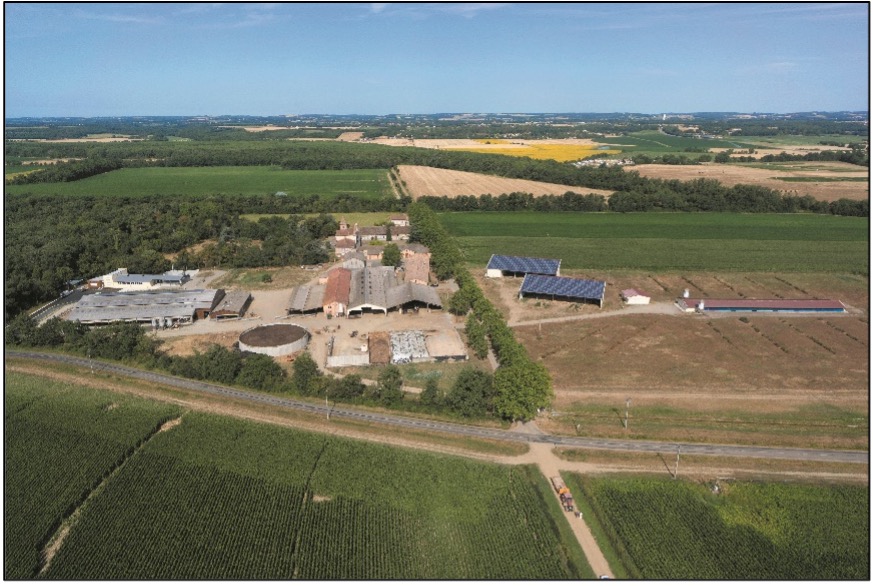
Vue aérienne partielle du Campus – Copyright Airimage
- Agricultural Production and Processingon a 230-hectare estate (and 20 woodlands) using a mixed-farming scheme following sustainable agriculture principles embodying agroecological and energy transitions. The estate has various crops (wheat, maise, rapeseed, sunflower, soya, alfalfa, fodder crops, etc.), a poultry farm, and a herd of 120 dairy cows producing 1.2 million litres of milk annually.
- Intensive pedagogical activities serve students from the PURPAN Engineering School and other establishments, particularly the Toulouse National Veterinary School.
- Research and Development (Four of PURPAN's eight research platforms are in the Lamothe Campus; the issues addressed pertain to the agroecological dynamics of cropping systems (agronomy, physiology, and plant improvement platforms), nutrition, health and well-being of livestock ('Living Lab' fordairy cows and poultry), energy autonomy workshop (atelier méthanisation-carbone-énergie), and the assessment and conservation of biodiversity in agroforestry environments (biodiversity observatory).
- Outreach and Communications to all audiences: professionals, [university] students, high school pupils and, above all, citizens of urban areas (particularly, the metropolitan areas of Toulouse and Muret, which have over a million inhabitants).
PURPAN aims to make its Lamothe Campus a model for agroecological, energy, and food transitions through these four focus areas.
2. Context and strategic objectives
Ten years ago, on the eve of the European Union's New Common Agricultural Policy (CAP) 2014/2020[1], we wrote the following:
"The CAP, often accused of all sorts of evils and which, according to many producers, weighs so heavily on their shoulders with its red tape, is not just a necessary evil. Let's not forget the past… The regulations introduced by the CAP primarily ensured food security for people throughout Europe at a time when hunger and malnutrition were still rife on our continent. These regulations then guaranteed producers a certain income level, albeit not always sufficient or in ways that could appear unequal. The most delicate turning point has yet to come. We need to produce clean, healthy, and good food in a viable way without driving up prices... So that we don't lose in the context of globalisation and international markets. Let's be reasonably optimistic once again. New forms of agriculture are being developed and invented: low-input itineraries, short circuits, management of energy flows and biodiversity on a farm scale... The best we can hope for is that the political and regulatory support is commensurate with this life-saving diversity and that every stone can be used in building the edifice".
It is interesting to note that this trajectory sketch and the underlying expectations it represents remain relevant today. Of course, situations have changed in ten years, and the CAP and national directives have 'greened' (or attempted to 'green') European agriculture. However, genuine agroecological transitions in production systems are still experimental, and the diversity of models complicates the process, which is not always voluntary. The aftermath of COVID-19 is the current context; food supply difficulties have impacted humanity and the global economy, local distribution channels have emerged, and there is a renewed awareness of the farmers' importance and essential role in feeding the public. The war in Ukraine has profoundly destabilised agricultural markets, particularly for cereals and oilseeds, and has made many countries, including European ones, realise the fragility of their food sovereignty. Our farming systems must embrace this new paradigm to be reasonably sustainable: preserving production facilities and nature, remaining efficient to contribute to food sovereignty, and generating a fair income from one's labour.
At its Lamothe Campus, PURPAN is striving to create an exemplar for showcasing agro-ecological transformations in the global context. This endeavour focuses on advancing sustainable practices and multi-performance production models. It should, therefore, be considered "a transition in itself or rather, an accelerator of transitions (ecological, environmental, energy and societal) and in no way as synonymous with degrowth[2] ". The originality of the approach lies in integrating the four areas in which the Campus operates.Given the close relationship between production activities and research and development, the latter's results are promptly integrated into on-farm practices. The impact of these results, whether positive or negative, is then systematically assessed. Demonstrations are held in real-time, both at an educational level and in terms of outreach to professionals and the general public.
Finally, the agroecological transition actions implemented on the Lamothe Campus are only committed if they are:
i. Based on innovation, particularly the contribution of new technologies (digital, robotics, artificial intelligence);
ii. Capable of being developed in any type of production model for the benefit of all types of agriculture;
iii. Aiming to make the most of the factors contributing to increased sustainability (ecological benefits, generation of added value, sociological and societal acceptance).
3. Illustrations of the dynamic underway
The first historical field of research concerns the medium- to long-term management of cropping systems on theagronomic experimental platform. This system, consisting of two blocks of 15 instrumented experimental meso-plots, allows detailed agronomic and environmental monitoring, mainly quantitative and qualitative water management.
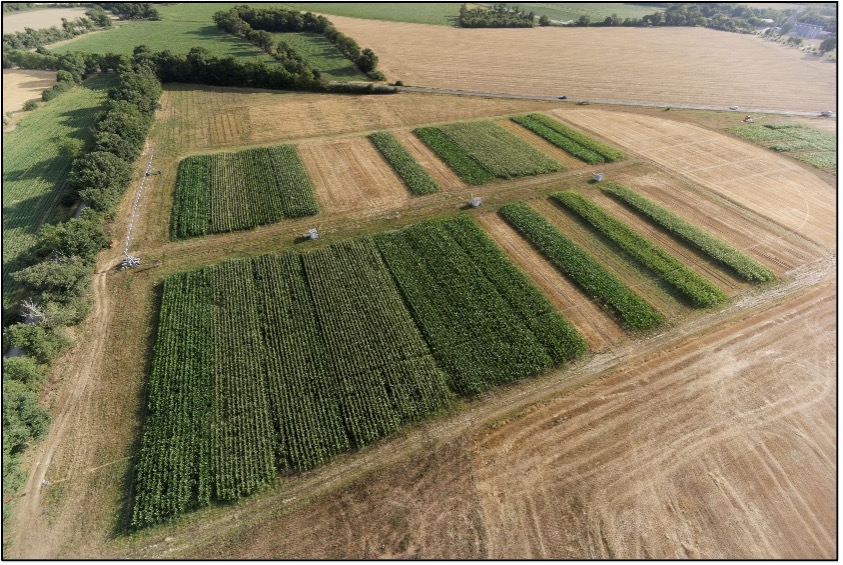
Plateforme agronomique – Copyright Airimage
It aims to test innovative cropping systems that contribute to the agroecological transition based on input savings (pesticides, water, energy), crop diversification, and innovative tillage and precision farming techniques. Some of the systems under study are modified or removed from time to time. At the same time, other [systems] are added based on a participatory design involving researchers, development engineers, and innovative farmers (including production managers at Lamothe). As synthesised in Simon Giuliano's doctoral thesis[3] , the work focuses on three themes:
- Multi-criteria evaluation of low-input cropping systems, including maise;
- The study of integrated weed management on the evolution of plant (flora) dynamics in maise-growing systems;
- The impact of cropping systems and weed control practices on water quality.
This ongoing experiment offers a wealth of information that can be rapidly transferred directly to extension bodies, producers, and students. Innovations in the farm's production systems facilitate direct and near-daily knowledge transfer. In practical terms, the transfers [of technology] have resulted in the establishment of permanent soil cover, which has enabled the herd to become self-sufficient in fodder due to the production of new fodder during the winter season (an example of ecological progress and greater efficiency in the fodder system), and to the modulation of pesticide and fertiliser inputs thanks to technologies that combine maps of plot potential and GPS to regulate doses according to the position of the tractor.
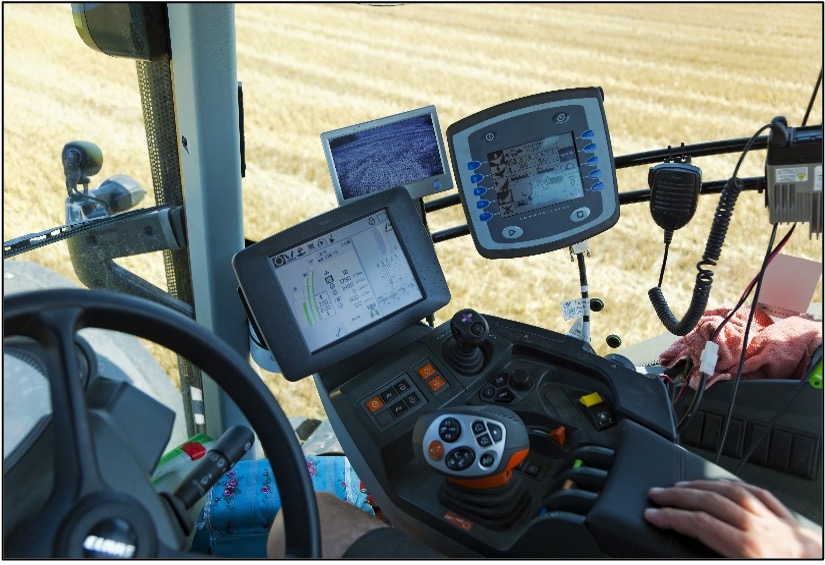
Guidage GPS et modulation – Copyright Adobe Stock
Innovative mechanical weeding techniques (rotary harrow) and 'Strip-Till' (preparation and fertilisation of a sowing strip just a few centimetres wide) are also part of these [technology] transfers.
Besides developing a forage system that optimises the herd's diet through diversification, the cattle farm is becoming a showcase for improved work efficiency thanks to robotisation: a forage harvester robot and a milking robot.
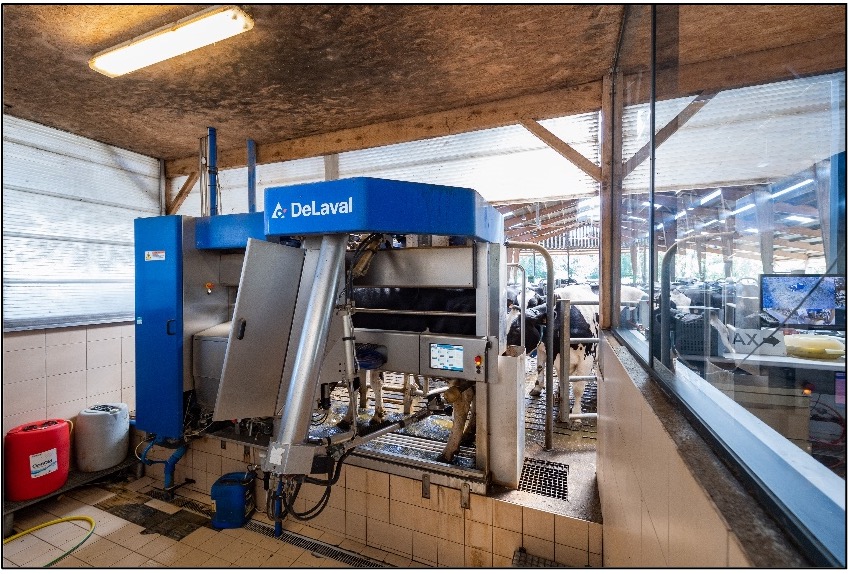
Robot de traite – Copyright Guillaume Oliver
Animal waste is used to produce electrical energy using a micro-methaniser, a research and development project creation, part of which focused on the use of digestate as a geolocalised fertiliser by the "Strip-Till"on maise crops, with improved carbon capture[4] . Other energy production is provided by the photovoltaic panels in several farm buildings; in the short term, the total energy production will be almost ten times greater than the total consumption of the entire Lamothe Campus site.
A final example of the transition process underway is the ongoing work to restore biodiversity in agroforestry environments. These activities can be directly promoted to professionals and the general public and are carried out under the auspices of the 'Agroforestry Biodiversity and the Environment' Chair. The performance indicators measure quantitative and qualitative changes in the floristic and faunistic diagnostics. The main actions undertaken are:
- The planting and restoration of hedges by students as part of their educational exercise (1,500 metres planted with "local plants" over 2 years);
- Digging ponds, rehabilitating wetlands, and creating a "soft bank" on the edge of an irrigation water reserve
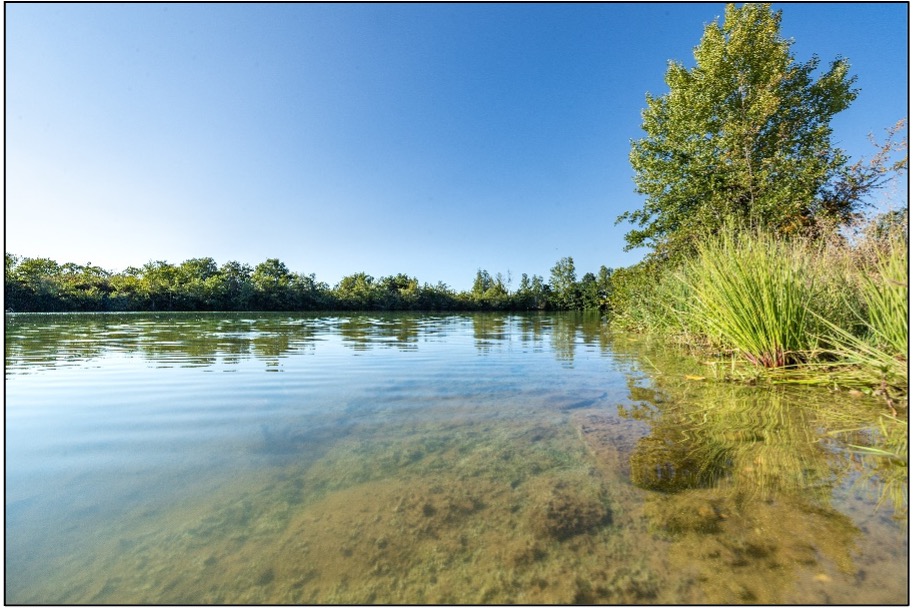
Berge douce sur la réserve d’eau – Copyright Guillaume Oliver
- The protection of 10 hectares of old and mature woodland left to evolve freely for the benefit of biodiversity;
- Identification of notable trees and creation of an ecological trail to identify species and habitats;
- The creation of different types of agro-silvopastoral pastures for the farm's livestock, with a view to their comparative study.
4. New challenges and globalisation
The momentum is there, but many challenges remain. We need to adopt a continuous improvement approach to the ecosystem being built on the Lamothe Campus. In addition to the projects already underway, several other areas need to be addressed as part of the demonstration process: to accelerate the testing and fine-tuning of innovative solutions proposed by companies, particularly start-ups,to make progress in the agro-ecological transition; a comparative study of the energy and carbon balance of agroforestry and agri-photovoltaic techniques (combining agricultural production and energy from solar panels on the same plot of land); the development of an action plan aimed at making the dairy herd completely self-sufficient in terms of feed (energy and proteins); the creation of added value in production (milk in particular) for local marketing, and target groups with poor access to healthy, high-quality food (disadvantaged neighbourhoods in the Toulouse and Muret conurbations); etc.
We also need to share our approach internationally and learn from our partners' experiences. At the same time, we must ensure that the know-how we have acquired is passed on to less affluent countries than Europe, which also face the twin challenges of agroecological, energy and food transitions and food sovereignty/security. These countries often suffer from the double handicap of unambitious agricultural policies and limited access to resources needed to meet these challenges: advanced geolocalisation and precision farming technologies, access to mechanisation and genetic progress (particularly seeds), support for young entrepreneurs, etc.
This is the case in the Republic of Côte d'Ivoire, where PURPAN supports the projects of the Centre de Recherche et d'Action pour la Paix (CERAP/Jesuit University), which works to create virtuous models of training and research adapted to local needs (farmers and businesses). Here's what Hyacinthe Loua, SJ, Director of CERAP and university President, has to say about it: "When they arrived in Côte d'Ivoire in 1962, the founding fathers of the Jesuit mission had a single prophetic vision for their mission in a critical socio-political context. They aimed to make "agriculture the engine of economic growth in Africa". For them, from that time onwards, agriculture would be the "cornerstone" of inclusive growth. So they set up the Institut Africain pour le Développement Économique et Social (INADES) to provide agricultural and agro-pastoral training for rural communities as well as development and political economy courses for the Ivorian leaders. Today, CERAP is committed to opening an Agrobachelor programme, a double degree in "Bachelor of Science and Engineering", specialising in "Sustainable Agriculture and Agri-food Sectors", in partnership with the PURPAN School of Engineering - Toulouse-France. This commitment is in keeping with the vision of the first Jesuit missionaries to Côte d'Ivoire".
Building partnerships and knowledge sharing strengthen our commitment!
Acknowledgements:
Robin BEGHIN, Hervé BRUSTEL, Simon GIULIANO, Gervais WALLOIS, Pierre PRIM, Valentin DEREMETZ, Mylène GORCE, Jean-Jacques PLAUZOLLES, Michaël CAZENEUVE, Hélène MARTIN, Jean-Philippe DALPOZZO, Claire SARFATI, Martin PLA, Guillaume LAVALADE, Hyacinthe LOUA S.J.
[1] : Daydé Jean. Index of agricultural prices and standards 2014/2015: foreword. Lavoisier Tec et Doc E. 2014, p. VII.
[2] Vial Anne-Claire. What role will agroecology and genetics play in tomorrow's agriculture?Le Sélectionneur Français, 2023, (73), p. 3-4.
[3] Giuliano Simon. Multicriteria assessment of maize-based cropping systems alternative to continuous maize cropping with low impact on the environment.Agricultural sciences. Institut National Polytechnique de Toulouse - INPT, PhD Thesis, 2023.
[4] Beghin Robin. Study of the consequences of anaerobic digestion of maize on its amending characteristics: fate of organic matter, carbon storage, microbial life, adsorption capacity and structural stability of the surface horizon of cultivated Luvisols. Agricultural sciences. Institut National Polytechnique de Toulouse - INPT; 059872098, PhD thesis, 2020.
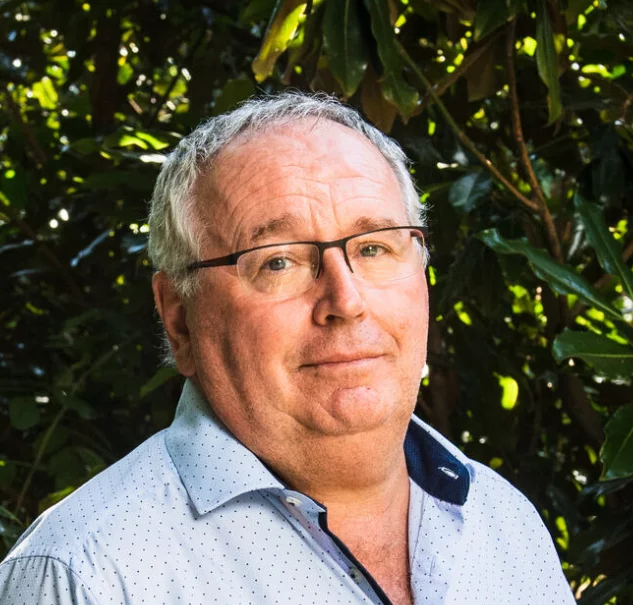
Jean DAYDÉ, Director, PURPAN School of Engineering Lamothe Campus

Related Posts:

In Magnifica Humanitas, Pope Leo XIV warns that machine intelligence in war ends by “reducing victims to data.” The machine profiling that registers a person for food can also be used to select a person as a target. A small drone circling a road, with no one steering it, can have such a profile as its target. A drone like this is an autonomous weapon system. Once activated, it selects and attacks targets by itself, matching what its sensors detect to a programmed target profile. No human being decides, at the moment of the strike, that this particular person will die or is the right target. The case most often cited as the first use of such a weapon against people, reported by UN experts, was in Africa, in Libya in 2020.
Democracy, which has historically proven most effective in meeting these criteria, cannot be taken for granted. In our AI era, citizens should press for more than multiparty elections and the protection of basic freedoms; that institutional core is not enough. We must carefully regulate and channel powerful technologies with the capacity to divide us from one another and short-circuit social and political participation. That means maintaining spaces in civil society where human contact and social friendship can flourish without the mediation of machines, beginning with the educational systems through which all citizens pass. It means fighting deepfakes and disinformation in the public sphere, so that citizens still operate in a world of facts and evidence and political representation has a strong basis.
Artificial intelligence (AI) is increasingly entering public life in Ghana, including through digital systems used for identification, verification and service delivery. The ethical question is therefore not simply what AI can do, but what happens to people when digital systems become gateways through which citizenship, mobility or access to services are recognised. In northern Ghana, especially in border communities, this is a concrete question. I was privilege to visit Pusiga community in November 2025 with a Jesuit friend of my mine who is originally from the community. Thus, the topic for this article resonates very well with me.
The article ‘Pandemic and Authoritarianism’, by Germán Rosa, SJ, was written in the midst of the COVID-19 crisis, but its insights extend beyond that context. The pandemic appears to reveal and accelerate political trends that were already present: the concentration of power, the weakening of democratic checks and balances, and the acceptance of extraordinary restrictions in the name of collective security. Rosa’s main concern is that fear may lead citizens to silently surrender their freedoms and rights, and that measures which were initially intended to be temporary become normalized and endure. Furthermore, in societies riven by inequality, control is never distributed neutrally: it falls most heavily on the impoverished, marginalized groups, migrants, dissidents and those who defend rights and territories.

Speaking of dead children is uncomfortable. Yet it can also be healing. As I listened to the stories shared that day, I found myself returning to memories I may at times shy away from remembering. Iremember finding my sister’slifeless body in bed one Saturday morning. Ihad cometo carry her out with me to watch cartoons.As I listened tothe story of Hind Rajab, a 5-year-old girl who had been trapped inside a car attacked by Israeli forces,the memory of a little boy reaching out to touch his sister came back. The young girlhadmanaged to call the Red Crescent for help but hours later she and the paramedics who had come toassisther were all found dead. The chilling story reminded me of the shocking cold that struck my hand as I gently touched my sister’s arm in a futile attempt to wake her up.

Who Are the Victims and Those at Risk of Becoming Victims? When it comes to mining, particular attention must be paid to those who are most vulnerable: Indigenous communities whose livelihoods depend on their land, forests, rivers, and water sources; small-scale farmers; fishers; poor families; women, children, and older people; as well as communities with the least bargaining power in legal, economic, informational, and political matters. They may become victims when land loses its social function, when water sources are polluted or disappear, when the environment is damaged, when livelihoods are disrupted, or when their social and cultural life is transformed without their genuine consent.


