Harnessing the Power, Cultivating the Future for Women
Abstract
International Women's Day is an annual celebration to acknowledge women’s social, political, economical and cultural achievements. It is a global initiative that also addresses many issues affecting women all around the world. On 8th March 2022, this year’s celebration promotes the theme of “Gender Equality Today for a Sustainable Tomorrow.” This theme carries a lot of hope and optimism for a just and inclusive world for all gender types. However, when we look at multi-dimensional problems related to gender inequality that happen worldwide, we might question our self: is that vision attainable?
International Women's Day is an annual celebration to acknowledge women’s social, political, economical and cultural achievements. It is a global initiative that also addresses many issues affecting women all around the world. On 8th March 2022, this year’s celebration promotes the theme of “Gender Equality Today for a Sustainable Tomorrow.” This theme carries a lot of hope and optimism for a just and inclusive world for all gender types. However, when we look at multi-dimensional problems related to gender inequality that happen worldwide, we might question our self: is that vision attainable? According to the Global Gender Gap Report 2021 released by the World Economic Forum, Covid 19 pandemic has affected women more than men in many aspects of life. As a result, the gap has widened, from 99.5 years (2019) to 135.6 years. This means, all of us who live in this lifetime, including our children and probably our grandchildren, will not get to witness nor experience the world that we envision today. So how do we sustain that faith? How do we know that what we choose to do today will contribute to that future?
As two young women, both are social workers or volunteers at Jesuit social ministries projects in Indonesia and Asia Pacific, we try to reflect on those questions through this article. To enrich our discernment, we also seek wisdom from a female senior social worker who has been involved in Realino - Social Service Unit, one of social apostolates of the Jesuit Indonesia Province, for the past 30 years.
Her name is Sulasmi. She joined the Realino in 1986 as a volunteer for a scholarship program. She was involved in many activities, but mostly home visits to select scholarship beneficiaries from the low income families. “I don’t keep count on how many families I have visited, but mostly I remember their stories,” she told us. “To me, direct encounters with the people we serve is really important. We get to understand deeper layers of the problem when we talk to and hear them, when we see how they live and how they interact. And that’s how you know if the solution (scholarship) suits them. You will not be able to “learn” it if it’s only based on report papers.”
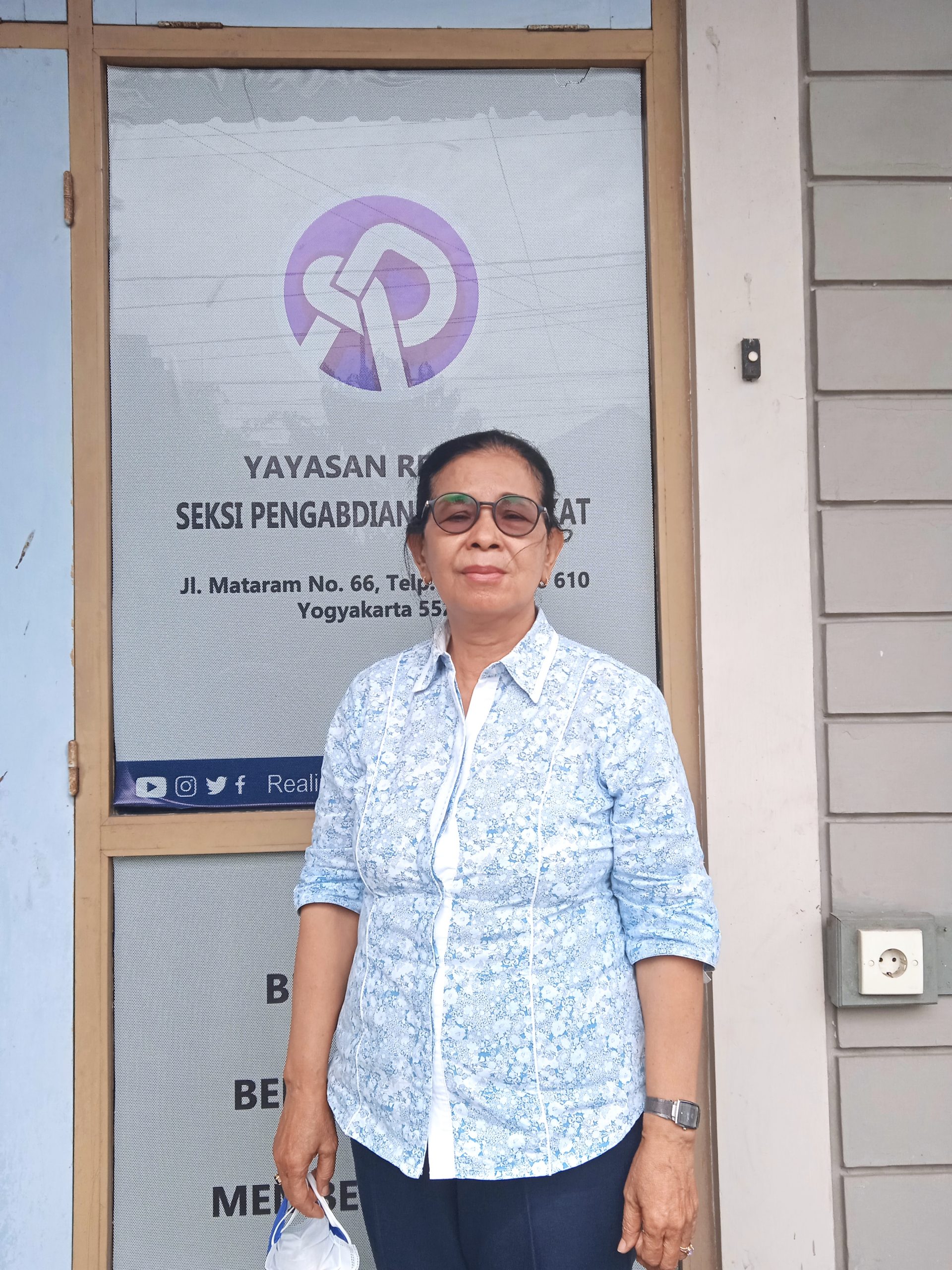
Sulasmi, now 64 years old, is now in charge as the administration coordinator at Realino. When we asked her about her role description, she said that she’s responsible for managing the communal kitchen, scholarship administration, direct aid initiatives, communicating with the schools where the scholarship holders study and anything related to permit clearance with the social service, government authorities and other stakeholders. Administrative roles are mostly considered “dry” and monotonous. In many places, it is assumed as a “woman’s role” and prone to gender biases. But for Sulasmi, it’s a matter of how she does it, rather than what she does. “All through the years, when I think about it, I didn’t think much about how the outcome would be. If I can do it, then I’ll do it.” We believe, it is her consistency and sincerity that create spaces and understanding for exploring her roles beyond the walls of gender stereotyping. She has experienced changes of leadership in Realino with most of the staff being male. But the amount of trust and acknowledgement for her credibility remains.
In Indonesia, becoming a social worker is rarely a first choice of career for anyone. It's a common knowledge that the job hardly pays the bills. So we were curious to know what keeps her stay for the last 3 decades. “I guess, I have always been given the space, the opportunity to grow here, both as individual and spiritually. I feel the appreciation and the trust given to take part in significant decision makings, especially when it involved the people served, has given me a sense of fulfillment. And for that, I feel ‘rich’ already”. she said. The role has also allowed her to meet figures or individuals who inspire her in many ways. One of them is Mrs Yati, a former head of student dormitory. When Sulasmi was a volunteer, she witnessed how Mrs Yati nurtured and took care of the students as if they were her own children. Although she is now retired, Ms Yati is still in close contact with her former students. Sulasmi often heard how the children testified about Ms Yati and her roles in their life. “I think when we put our heart to what we do, that makes all the differences. That’s how you make real changes, by touching the heart of the people around you. By making them feel loved and valuable.”
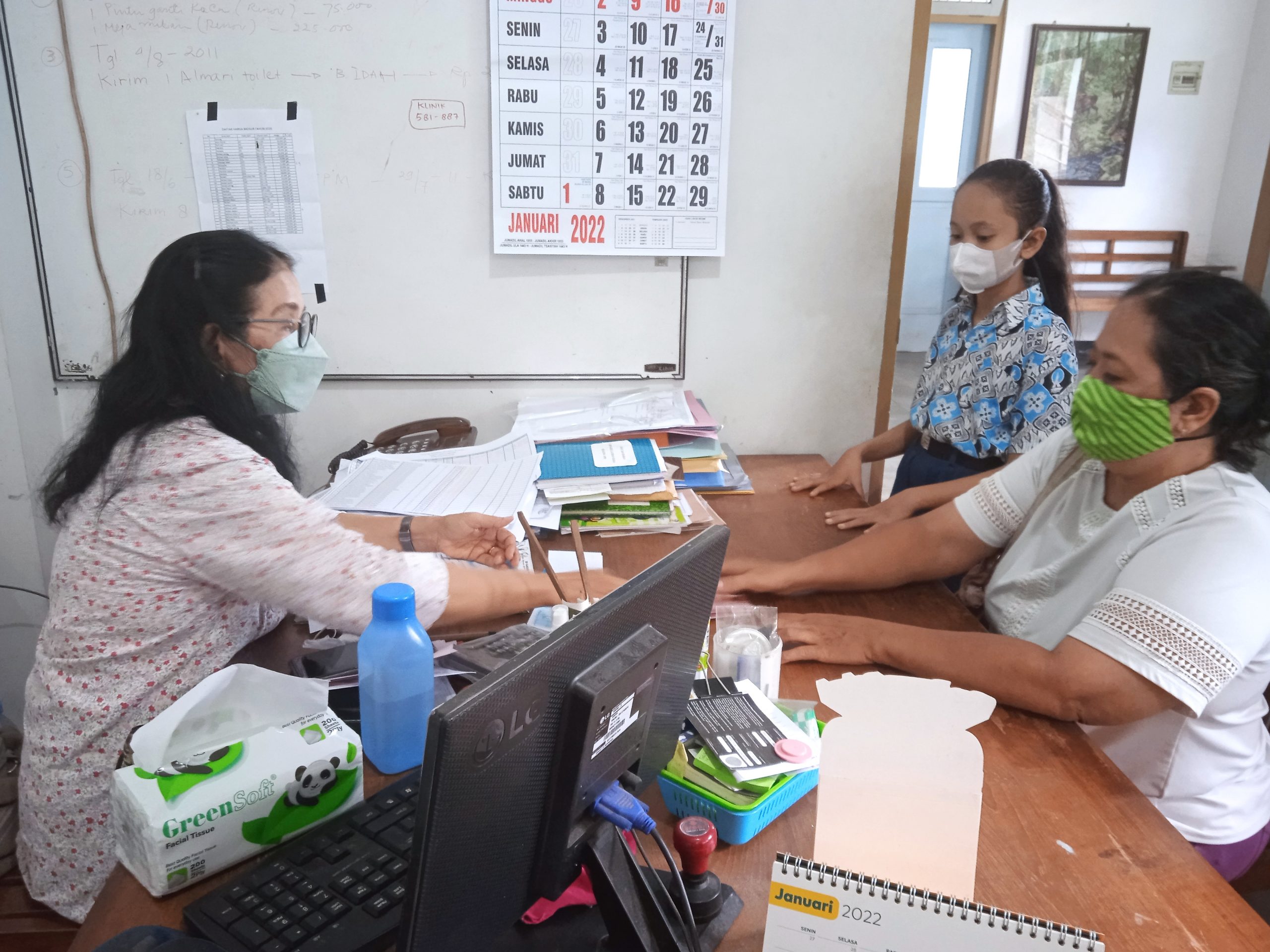
She admitted of course there are downsides of these roles. Burnout, opposing arguments, manipulated by the beneficiaries, adapting with new technologies and so on. But, to her, the attempts to see the human behind those blurry layers of complexity have directed her action and decision. She told us, recently, she found common issues among the people who propose for assistance. “It is the widows who were abandoned by their husbands, for economic reasons, for domestic violence, criminality and other reasons. But despite what happened to them, they still have hope for their children. They fight for providing better education. Some of them even said to me: it’s ok if it’s only a partial scholarship, I will manage to pay the rest. That makes me think, if they don’t give up for their family, then I should do more and continue to help those in need.”
So returning to the question: how do we find relevance in our role as part time social workers, to contribute to a just and gender equal future, especially for women? Maybe there will be no definitive or static answer to that. But from what we reflected, the only way to solve a problem is by involving those who affected the most from the problem. For us, it is always enriching to hear from women’s perspective and how the solution or the outcome comes from it. How they harness their own power despite all the limitations of their situation. And we hope more and more people, despite their gender background, are willing to do this wholeheartedly. There is always an aspect of nurturing to reflect on. That is to cultivate, to plant and to fertilize the seed of hope, just like what the widow did for her children no matter how difficult the “soil” is. And we think that’s how tomorrow is sustained. That we believe women, our future sisters, will benefit from the fruit of the plant that we sow today.
Disclaimer
The views, thoughts, and opinions expressed in the article belong solely to the author(s). They do not purport to reflect the opinion or views of the Secretariat.