Community Gardens: Integral Ecology in Practice
Abstract
This article advocates for Christian communities to embrace community gardens as a reflection of integral ecology. Drawing on projects in the Irish Jesuit Province, it highlights the benefits of food production, environmental sustainability, and community-building, all rooted in the theological reflection on the Genesis account of Eden.
Introduction
There is a sustained growth in interest in community gardens and allotment gardening across the globe.[2] In this paper, we propose that Christian communities should welcome and encourage -- and even experiment with -- this trend. We establish a theological basis for ecclesial community gardens by reflecting on the account of Eden in Genesis 2. We then describe the growing phenomenon before suggesting, by reference to community garden projects established in the Irish Jesuit Province, that while they offer tangible benefits around food production and environmental mitigation, other intrinsic goods around conviviality and community warrant our attention. They can be expressions of integral ecology in practice. They do not achieve dramatic measurable results, but they can serve as a witness to the flourishing that comes from pursuing both environmental and social justice.
Grounding the Garden in the Bible
To think of the place of gardens in the Scriptures makes us think of Eden, the primal garden. Our reflections on this biblical text focus on the prominent dogmatic themes of the Fall and the promise of redemption. We can become so familiar with a text that we miss some of what it says to us. When we go beyond the huge overarching themes, closer to the ground of the text, in the details, we find a fertile place to plant our anthropology.
The second Creation account begins in Genesis 2 with a space waiting to be crafted into a place. God makes Eden from the ground and, like a potter, crafts humans from the same substance. The play on words here is commonly recognised -- the ground isאדמה ('adama), from which we get the human's name: Adam. And where does God put Adam? In a world that, as the acclaimed American writer Marilynne Robinson puts it, "is suited to human enjoyment."[4]Robinson aptly observes, "The beauty of the trees is noted before the fact that they yield food."[3] The garden has a goodness independent of its commercial benefit, contribution to national calorific intake, or increase in commodity markets.
The human that YHWH has created cannot be understood on their own. They are only completed when they are placed into a relationship with other creatures, first with the many other species at home in the garden and then within a community of human beings through their partner's creation: he and she, Adam and Eve. It is the human who is placed within this web of life, this thick ecology of creatures and plants and beauty, that is charged to till and to keep (Gen 2:15).[5]
The American scholar Alison Acker Gruseke interprets this text through the lens of Ivan Ilich's concept of conviviality. For Acker Gruseke, the relational nature of human beings extends to communities with non-human creatures and the wider environment. Contemporary ecology has shown us that a "network of conviviality exists even within the soil itself."[6] If we only consider the functions of the subterranean threads that blossom above ground as mushrooms, we see that there is much more going on in the ground than we could have ever dreamed of.[7] However, the ancient biblical text pointed us to the significance of the earth's dust long before we started collecting soil samples. As Acker Gruseke puts it, "Moistened soil is the material from which God forms humans and animals" (Genesis 2:7-8, 19).[8] If Illich saw conviviality as one of the modes through which we "invest the world with meaning",[9] then "the joint roles of environment and work", which we find in the Edenic task of tilling and keeping, is paradigmatic for human thriving.[10]
The Community Garden Movement
Tilling and keeping, at its most basic understanding, is unquestioningly related, to some degree, to food and its production. While the harvest of the garden is not the first thing that the Scriptural account mentions, food remains its most obvious good. It is a fundamental necessity of life. Every single part of the [food] process extraordinarily influences our health, communities, and common home. What we eat, how it is produced, what we throw away, and how we prepare and eat our food have outsized impacts beyond calorie intake.
Food production is where this relationship starts. The increasingly industrialised food production means that this aspect of the relationship is absent for many -- divorcing us from the knowledge and awareness of the effort required to grow and tend the seeds of our food system. There is little conviviality in the factory farm! The [industrialised] agricultural production system,
while responsible for the vast majority of the food we consume, is also responsible for the enormous amounts of water and air pollution, biodiversity loss, and habitat change.
Changing this dynamic requires not only top-down regulation to protect the water, and initiatives to support farmers in protecting biodiversity, but also grassroots projects that facilitate the blossoming of the relationship between people and how their food is produced. While community gardens and allotments are not new, there is a renewed appreciation of their potential in rejuvenating our relationship with food and, on another level, their potential in facilitating human thriving in a world where connection to the natural environment is increasingly constrained.
Sometimes used interchangeably, community gardens and allotments have some distinct characteristics. Allotments are plots of land that individuals or families work on, while in a community garden, cultivating the garden and harvesting are [communally] shared. Many garden initiatives have elements of both, with shared space and effort sitting comfortably alongside privately managed plots.
In its simplest terms, community gardens and allotments offer space for people who wish to grow their own food. They are becoming increasingly common in Ireland, with grants available[11] to facilitate community groups that want to establish a project. Their potential, however, goes well beyond that. These spaces are a hub not only for growing food but also for cultivating community and environmental care. They are spaces where people meet and share knowledge, news and stories. They are spaces where biodiversity can flourish. They are essential "third spaces" which foster a connection to biodiversity, food, and our neighbours. In this way, they are spaces which can prompt an ecological conversion, which Pope Francis asserts is necessary to care for our common home: "The ecological conversion needed to bring about lasting change is also a community conversion."[12]
Form Informs Function
Form and function are intrinsically linked. How a plant looks and feels determines how it functions within an ecosystem. In the same way, how you plan, design, and what you include in your community garden influences the possibilities of that space. Every community and allotment garden is unique.[13] The available space, the proximity to other amenities, the existing community, and the desire of the community to use the space in specific ways all contribute to the uniqueness and the possibilities that each site offers. Accessible facilities can be features included in the project, including wheelchair-accessible planters, communal space to promote connection, and growing space for experimentation and teaching. Designing within these confinements allows the maximal contribution of everyone in the community. Dedicating space for biodiversity, either through planting native and pollinator-friendly plants or even establishing a pond, enables the garden to become a place where one can learn about ecosystem functioning, offers a retreat away from the busy noise of modern life, and teaches us to appreciate the wonders of the natural world. Fostering this relationship of awe with the natural world, and not only valuing ecosystems in their ability to provide us food, is an integral part of our experience as humans in ecosystems with other creatures.
Considering our opening deliberations, we might even say these are Edenicconcerns. This conviviality is on display in Laudato Si':
"If we approach nature and the environment without this openness to awe and wonder, if we no longer speak the language of fraternity and beauty in our relationship with the world, our attitude will be that of masters, consumers, ruthless exploiters, unable to set limits on their immediate needs. By contrast, if we feel intimately united with all that exists, then sobriety and care will well up spontaneously."
We also know that where people meet, possibilities emerge.[14] While the main function is usually the growing of food, these communal spaces can evolve and adapt to changing community needs and emerge as spaces of education, places for parents to bond with their children, spaces to combat mental health issues, and ecological hubs for communities to care for our common home.[15]
In Laudato Si', Pope Francis alerts us to just these possibilities:
"Around these community actions, relationships develop or are recovered, and a new social fabric emerges. Thus, a community can break out of the indifference induced by consumerism. These actions cultivate a shared identity with a story which can be remembered and handed on. In this way, the world and the quality of life of the poorest are cared for with a sense of solidarity, making us aware that we live in a common home God entrusted to us. When they express self-giving love, these community actions can also become intense spiritual experiences."
The garden's form as a cultivated space on a human scale maps onto its effect: a space where the human community can be cultivated.
Digging into Our Community Gardens
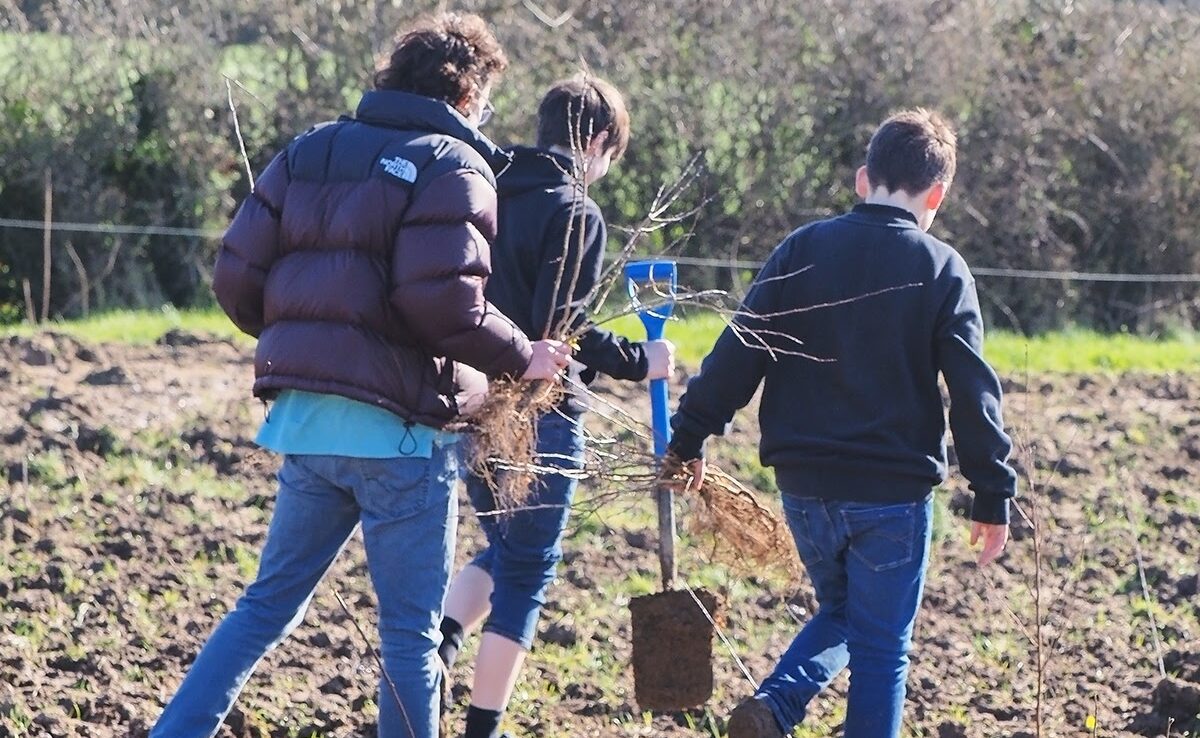
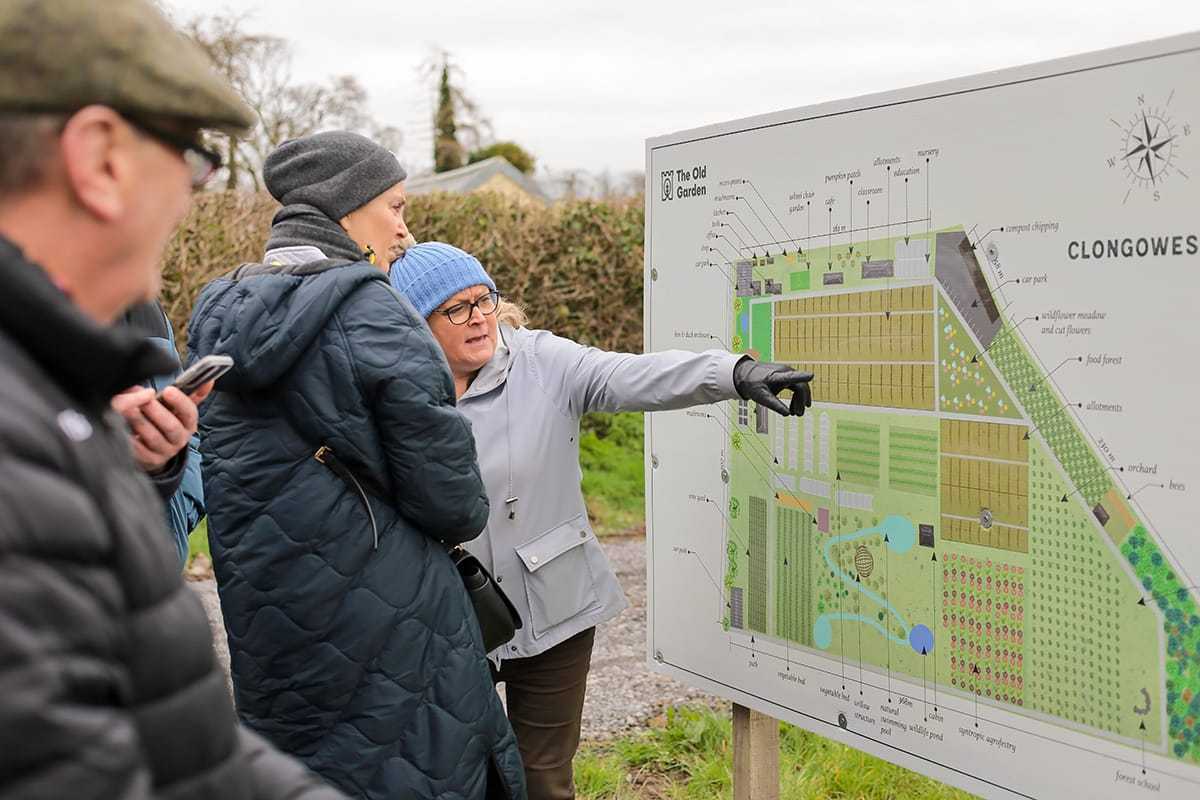
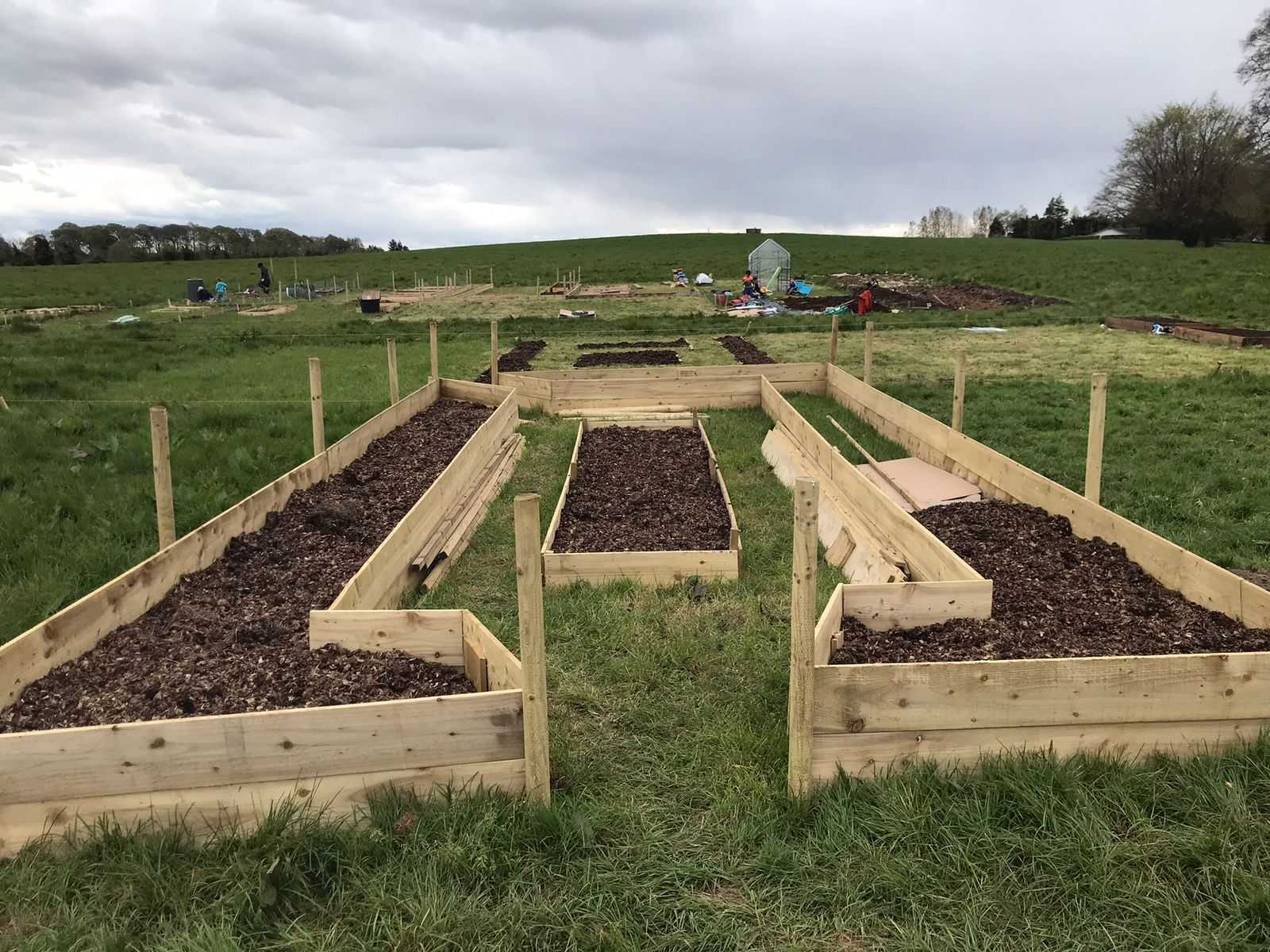
The Old Garden[16] is a new project beside the grounds of the Jesuit school, Clongowes Wood College. It has been established and will be maintained by The Blessed John Sullivan Community Gardens and Farm. The 7.5-acre site is a field but offers an incredible opportunity to cultivate something special. The local community is pulling together, driving this project, and making it a reality. Since the ground has been broken on-site, on the weekend of St. Patrick's Day, 2024, nearly 2,500 native trees have been planted to create woodland. In years to come, this will be a haven for biodiversity. Over 60 people have secured a plot in this new venture, and many others have expressed interest in the project. This new community grouping will consist of people from the area surrounding the school, including local refugee families.
This is an exciting time in the new project. Keen gardeners have the opportunity to create something beautiful from a blank slate. Relationships will be forged as neighbours work together and try new ways of cultivating food. Knowledge and resources will be shared. Students insulated from the mechanics of the food production system will learn the effort and skill it takes to feed communities. Biodiversity will also be allowed to flourish where the land was only managed for grazing before.
While this project is new, and the results have not yet manifested, the commitment to this project from the community group, the school, and the wider Jesuit Province is long-term. Fostering relationships and creating a thriving community ecosystem takes time -- the environmental benefits of a community garden are largely realised in the years after initiation.[17]
Different opportunities and outcomes are possible depending on the scale and site of the project. The Old Garden is a relatively large site in a relatively affluent area. On the other hand, the St. Francis Xavier Garden is located on Gardiner Street, in a region of Dublin known for its deep social deprivation, the North-East Inner City. Poverty and all kinds of intersecting social marginalisations occur together commonly here. Access to green space in this part of the city is scarce.
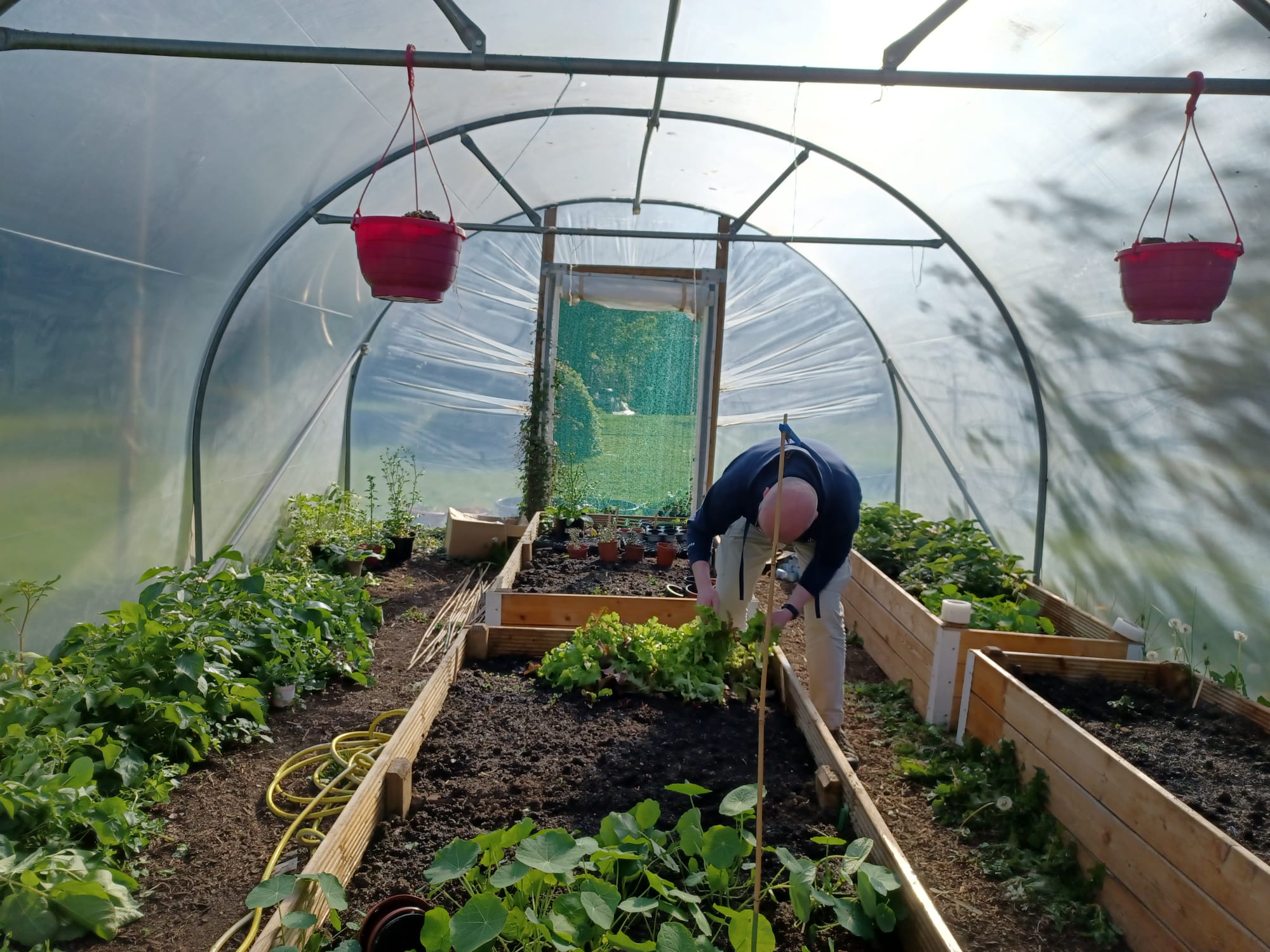
In this context, the walled garden, part of the Jesuit community on Gardiner Street, is of immense significance. It is a much smaller space: under 0.5 of an acre. It had always been the private garden of the community. However, during the exceptional times of the COVID-19 pandemic, the garden gained a new lease of life as a playground for the students of an adjacent Jesuit primary school.[18] This welcome change allowed children, primarily residents in the inner-city, to have access and play in a green space surrounded by trees. Conviviality is the word to summarise this. The impact was immediately noticed by the teachers who spoke of students' behaviour improving after break times. Once the enjoyment this garden could offer these children was realised, plans progressed to formalise it as the threat of COVID-19 retreated. A polytunnel was installed where students were allowed to grow and wonder at the transformation of a seed into a plant. Members of the parish were invited to work in the garden weekly to "keep and till" the garden for food cultivation and biodiversity. The time spent getting our hands dirty digging the earth and encouraging plants to grow is time spent cultivating our wonder at the beauty of creation. The intersecting interests of social justice, environmental care, and spiritual growth represent a real-world enactment of integral ecology.
Conclusion: Cultivating Convivial Space
These are small initiatives in the grand scheme of our transition to an ecologically sustainable way of living. Even the most ambitious commitment to such gardens would do very little to dent our global carbon emissions, and while each project would become a haven of life, the sum total would look small in the context of a mass extinction. However, just as community gardens are not primarily beneficial because of the harvest they yield, they are worthy of Christian attention because they mitigate the effects of our environmental crisis.[19]
They can be expressions of the common good in action. They cultivate community, and they encourage public health and well-being. They can be sites of pedagogy (for practical skills or spiritual formation), have positive environmental impacts, and, at the end of the season, yield a crop![20] But fundamentally, they warrant our attention because they bear witness to this profound theological truth: human beings were not made to compete and to strive; humans are not ultimately valued because of what they produce or consume; and they are not [meant to be] alienated individuals or even a solitary species. As the Scriptures testify, the human being is a person in relationship with their Creator, themselves, other humans, and the whole created environment.[21] The garden is a convivial space where we can discover what we were made to be. We are in an age of climate collapse and biodiversity breakdown. We are seeing technologised anxieties increase. We can think of few things more fruitful than for Christians to do than to set aside some space and to begin to "till and to keep" (Genesis 2:15) together. Community gardens can be a convivial space to put integral ecology into practice.
This chapter is an expansion of an earlier work: Ciara Murphy, “Community Gardens - More than Just Food,” Jesuit Centre for Faith and Justice, March 15, 2024,https://www.jcfj.ie/2024/03/15/community-gardens-more-than-just-food/.
[1] Dominik Bieri et al., “Increasing Demand for Urban Community Gardening before, during and after the COVID-19 Pandemic,” Urban Forestry & Urban Greening 92, no. 128206 (2024): 1–11.
[2] Marilynne Robinson, Reading Genesis (New York, NY: Farrar, Straus, and Grioux, 2024), 39.
[3] Ibid.
[4] Alison Acker Gruseke, “Convivial Gardens: Genesis 2-3 in Agrarian and Space-Critical Perspective,” Interpretation: A Journal of Bible and Theology 77, no. 1 (2023): 27.
[5] Kevin Hargaden, Theological Ethics in a Neoliberal Age, Theopolitical Visions (Eugene, OR: Cascade, 2018), 177-178.
[6] Gruseke, 27
[7] Ivan Illich, Tools for Conviviality (London: Boyars, 2009), 21.
[8] Gruseke, 24.
[9] Dublin City Council, “Community Climate Action Fund,” Dublin City Council.Access on 05/04/2024https://www.dublincity.ie/residential/environment/environmental-awareness/community-climate-action-fund
[10] Laudato Si’, §219.
[11] Community Gardens Ireland, “What Is a Community Garden?,” Community Gardens Ireland, March 29, 2024,https://cgireland.org/what-is-a-community-garden/.
[12] Laudato Si’, §11.
[13] Community Gardens Ireland, “Creating Environmental Synergies With Community Gardens,” Community Gardens Ireland, March 29, 2024,https://cgireland.org/synergies-in-community-gardening/.
[14] Karin Bacon and Elizabeth Cox, “Reaping the Rewards of an Inner-City Garden,” Working Notes 36, no. 91 (September 2022): 31–39.
[15] Laudato Si’, §232
[16] Community Garden Ecosystem Initiative, “The Old Garden Kildare,” The Old Garden, March 15, 2024,https://www.theoldgarden.ie.
[17] Jason K. Hawes et al., “Comparing the Carbon Footprints of Urban and Conventional Agriculture,” Nature Cities 1, no. 2 (February 2024): 164–73.
[18] A comprehensive history and description of the collaboration between the school and Jesuit community can be found in Bacon and Cox, “Reaping the Rewards of an Inner-City Garden.”
[19] Benjamin Goldstein, Jason Hawes, and Joshua Newell, “Urban Agriculture Isn’t as Climate-Friendly as It Seems, but These Best Practices Can Transform Gardens and City Farms,” The Conversation, January 22, 2024,http://theconversation.com/urban-agriculture-isnt-as-climate-friendly-as-it-seems-but-these-best-practices-can-transform-gardens-and-city-farms-221537.
[20] This list is partially inspired by: Anita Kwartnik-Pruc and Gabriela Droj, “The Role of Allotments and Community Gardens and the Challenges Facing Their Development in Urban Environments—A Literature Review,” Land 12, no. 2 (February 2023): 325.
[21] “When we speak of the ‘environment’, what we really mean is a relationship existing between nature and the society which lives in it.” Laudato Si’, §139.
About the authors
 Kevin Hargaden
Kevin Hargaden is a Social Theologian and became Director of the Jesuit Centre for Faith and Justice in 2020. He holds degrees in Computer Science, Sociology, and Theology and completed his PhD. in Theological Ethics at the University of Aberdeen under the supervision of Brian Brock and Stanley Hauerwas.
 Ciara Murphy
Ciara Murphy is an Environmental Policy Advocate works in Jesuit Centre for Faith and Justice. She works on influencing policy change at a national level as well as focusing on community-based local initiatives. She holds a BSc. in Environmental Biology and a PhD. in Environmental Microbiology which have equipped her with a broad knowledge on environmental and biodiversity issues.