
Arrupe’s Legacy Shapes Our History
Abstract
Fr. Federico Lombardi, SJ reflects on the profound impact of Fr. Pedro Arrupe’s leadership on the Society of Jesus. He highlights Arrupe’s spiritual depth, commitment to justice, and prophetic responses to global challenges. From missions among workers and refugees to confronting violence and corruption, Arrupe’s legacy continues to shape Jesuit identity and mission.
Orignal - Italian
174.10 KB
For those who joined the Society of Jesus between the late 1950s and early 1960s, Jean-Baptiste Janssens, then the Father General, was a highly respected figure, and his documents were studied carefully; however, it can also be said that he was somewhat distant and growing frail with age.
Fr. Pedro Arrupe entered our lives as a vibrant and inspiring figure, bringing his contagious enthusiasm and missionary spirit. He came from Japan, which was for most of us the other side of the world—the land of Saint Francis Xavier. He witnessed the atomic bombing [of Hiroshima], an event still relatively recent for us. We experienced the Second Vatican Council with significant engagement, embracing its strong push for renewal within the Church. Arrupe, who was elected General during the Council, became its interpreter and our inspired, courageous leader within the Society of Jesus. He delivered powerful speeches and sent many letters on current and debated topics related to apostolic and religious life. He also traveled extensively to allow us to see and hear him directly. In short, we had a leader guiding us in our mission in the modern world and sharing a deep spiritual foundation rooted in the Ignatian tradition. I was also fortunate to make my final vows in his hands, in the Chapel of La Civiltà Cattolica in Rome, where I was working at the time. I still remember his homily, in which—since I had studied mathematics—he enthusiastically encouraged me to dedicate myself to the dialogue between faith and modern scientific culture.
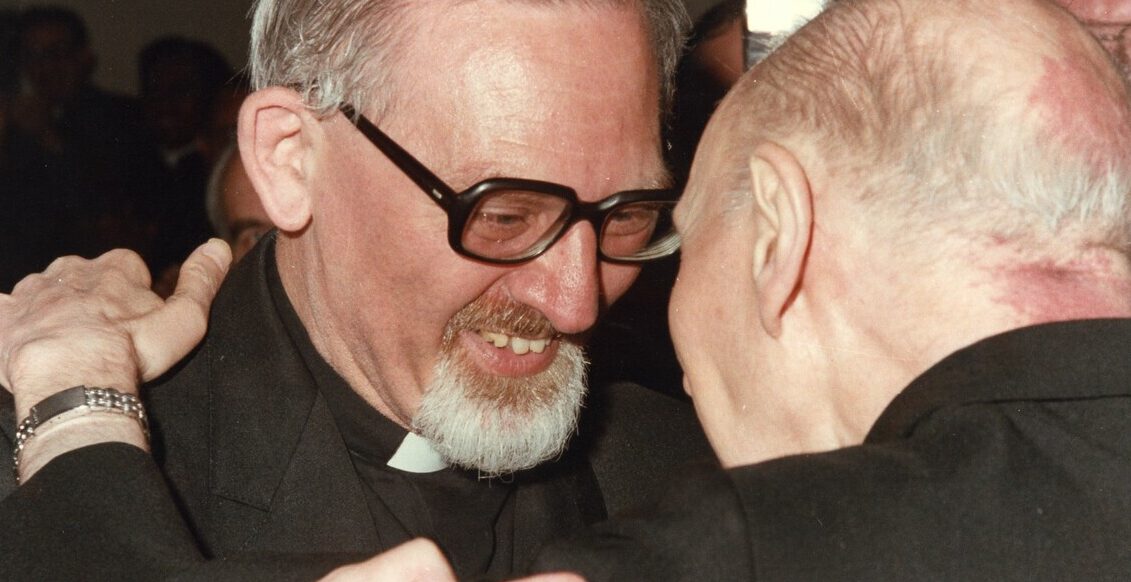
A few years later, shortly after his resignation due to illness and Fr. Kolvenbach’s election in 1984, I was appointed provincial of the Italian Province, which resulted from the merger of five previous provinces and was then the largest in the Society. I have very fond memories of those years, and I am grateful to remember them. Fr. Arrupe, although ill, was lively in the infirmary of the Curia, and we felt his spiritual and inspiring presence. The times we could visit him were always powerful experiences, even when we were simply silent. Many of the initiatives and operational guidelines from that time were inspired or guided by him and by the 32nd General Congregation, which – as we well know – had been central to his governance of the Society. I can only recall a few of them.
During the 1970s, several Italian Jesuits dedicated themselves to engaging with the working-class community, working in factories or residing in working-class neighborhoods. Some small communities were established specifically for this mission, including those in Parma (Emilia), Pomigliano d’Arco (near Naples), Marina di Melilli (near Syracuse), and Follonica (Tuscany). The experience of the French Workers’ Mission inspired this commitment, addressing an urgent and deeply felt need in Italy and many other countries to find new ways of evangelization and to bridge the gap between the Church and social communities. I would not say that the origin of this apostolic effort was the 32nd Congregation. Still, indeed, the Congregation, with its Decree 4, understood the situation well and urged the Society to respond to these needs with determination. For this reason, the “worker and popular mission” of the Jesuits in Italy—unlike other church situations marked by strong tensions—progressed smoothly, always maintaining a positive relationship between the Jesuits working there and the Society’s leaders. The “worker Jesuits” and those living with them always felt inspired and fully supported by the Society’s leadership and by Fr. Arrupe. Their experience, although limited in numbers, continually involved thoughtful reflection on the social and political context, as well as friendship and dialogue with Jesuits engaged in cultural activities. It also included a deep sharing of spiritual and pastoral experiences, and constructive church relationships with non-Jesuit religious and priests working in similar settings. It is only right to recall a significant speech by Fr. Arrupe, prompted by a meeting with them, and communicated to the entire Society (10 February 1980).
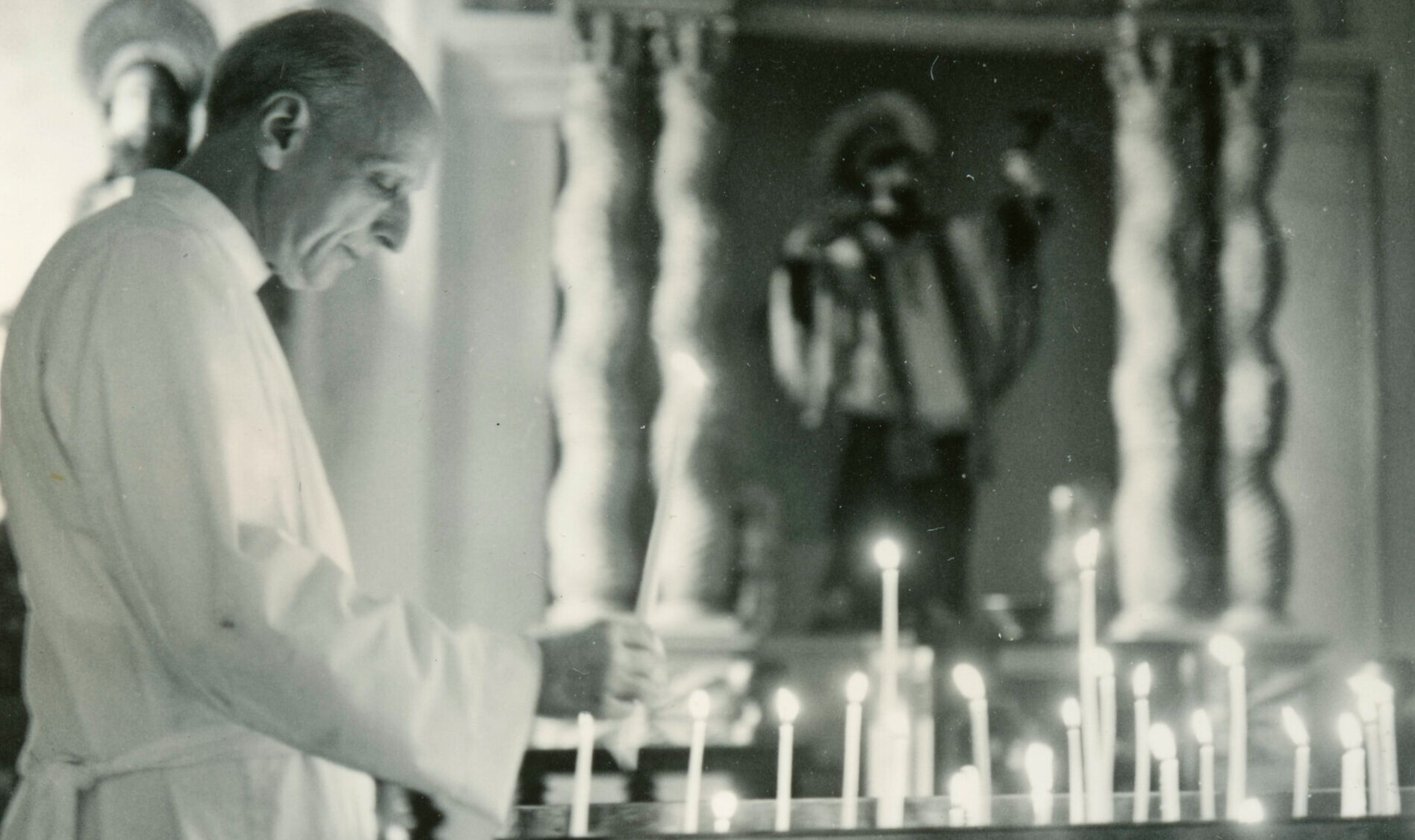
This capacity for spiritual and cultural reflection enabled us to continue engaging in the same spirit even as the social situation evolved and the factory and the “working-class conditions” lost their “centrality.” Over time, without pause, other forms of engagement also became significant for the Jesuits, such as those with refugees, migrants, and various situations of marginalization and social hardship, including drug addiction.
It was during this period that Father Arrupe’s call for commitment to refugees was issued. This was concretely realized in the heart of Rome. In the early 1980s, many Ethiopian refugees fled to Italy to escape Colonel Mengistu’s oppressive regime and wandered through the city without support or guidance. The Christian Life Communities of Rome initially responded by welcoming them into a building owned by the Society behind the Church of the Gesù, on Via degli Astalli. This effort led to the creation of the “Centro Astalli,” which remains the leading refugee assistance center provided by the Italian Jesuits in partnership with JRS. The Centro Astalli has steadily grown for over 40 years, staying true to Arrupe’s teachings to “serve, accompany, defend.” Jesuits and their collaborators actively participate and engage with authorities in public and political debates on the rights of refugees and migrants. Over time, different sections of the Astalli Center were established in various Italian cities. Refugee populations have constantly shifted in response to political, economic, and environmental crises. They have come from Ethiopia, Eritrea, and Somalia, as well as from the Balkans, Liberia, Angola, Sudan, Kurdistan, Congo, Syria, other Middle Eastern countries, Palestine, and Ukraine. Anyone who believes these are temporary problems is entirely mistaken. Arrupe's prophetic insight remains highly relevant today, as it addresses one of the most pressing issues in today's global disorder. Pope Francis personally visited the Astalli Center in 2013, during the early months of his papacy. As we know, migrants have been a defining aspect of his mission: he, too, was inspired by Arrupe and has often visited the Church of the Gesù to pray at Arrupe’s tomb.

Since the 1950s, Italian Jesuits have shown a strong dedication to engaging in the country’s social and political debates. They did this through their magazines, such as La Civiltà Cattolica, and social studies centers, notably two: one in Milan with the magazine Aggiornamenti Sociali and another in Palermo. During the 1970s and 1980s, Italians believed that Catholics—and Italians in general—needed to renew their moral and political commitment, which had weakened over time. This commitment had been very strong in the early decades after World War II. As a result, they aimed to promote "political education" using methods suited to the needs of the period. Sicily, in particular, with its Mafia presence and the destructive power of corruption and violence—marked by many murders, such as in 1980 when P. Mattarella, the Region’s President and brother of the current President of the Republic, was killed—deserved special attention. Consequently, the idea of a “School of Political Formation” was developed in Palermo, entrusted to Father Bartolomeo Sorge, who was then concluding his long and influential tenure as editor of La Civiltà Cattolica and was highly respected among Italian church and political circles. This was 1984. Father Sorge immediately proposed dedicating the new school to Father Arrupe. Named “Centro Arrupe,” the initiative quickly gained recognition and made a significant impact, inspiring similar efforts across Italy and strengthening bold renewal initiatives in Palermo, known as the “Palermo Spring.” Due to the frequent mafia murders at the time, our Center and Father Sorge, in particular, were under constant police protection, day and night. Sorge had to move constantly under escort, driven by police cars with sirens. This was a time of open and courageous dedication, which also faced criticism and opposition. Still, it stood as a powerful public statement of the Jesuits' willingness to confront the Mafia and corruption directly.
The fact that they risked their lives for their commitment to faith and justice was, and still is, a rare occurrence for Jesuits in Italy. However, since the 32nd Congregation and under Arrupe’s leadership, we have recognized this as a situation that the Society’s apostolic body must address. For many of our confreres, this is their reality—giving their lives for faith and justice through violent death has happened and continues to happen. In a sense, this is the seal, the proof of the Society’s authentic service to the Lord Jesus. Fr. Arrupe wrote about it in an unforgettable letter on March 3, 1977, right after the assassination of Fr. Rutilio Grande, who was the fifth Jesuit killed in just a few months, after Burnier in Brazil and three others in Rhodesia. Arrupe described these martyrs as eloquent witnesses to the Society’s direction established by GC 32, emphasizing service of faith and promotion of justice: “If we walk in the footsteps of Christ, persecution cannot be lacking.” Many others have followed and are following this path. I remember Fr. André Masse, whom I met during meetings of Jesuits involved with European cultural magazines, when he was a young director of Études, and who one evening shared his desire to go to Lebanon, where he was killed in 1987. I also think of Fr. Ellacuría, known at GC 33, who was killed in the UCA massacre in 1989, from which Fr. Jon Sobrino, my former theology companion, narrowly escaped by chance. We are companions of martyrs, and as believers, we cannot help but feel grateful and proud. When the UCA massacre happened, I was Provincial, and I remember with deep emotion the wave of sincere participation and the many invitations to celebrations and prayer meetings in spiritual solidarity, which we received in many Italian cities where our communities are located, even in the cathedrals.
Arrupe was a saint, and the Society hopes the Church will recognize this. He guided us to the most advanced frontiers of the mission, constantly reminding us until the end of his life that we must be “rooted and founded in charity.”
Original in Italian
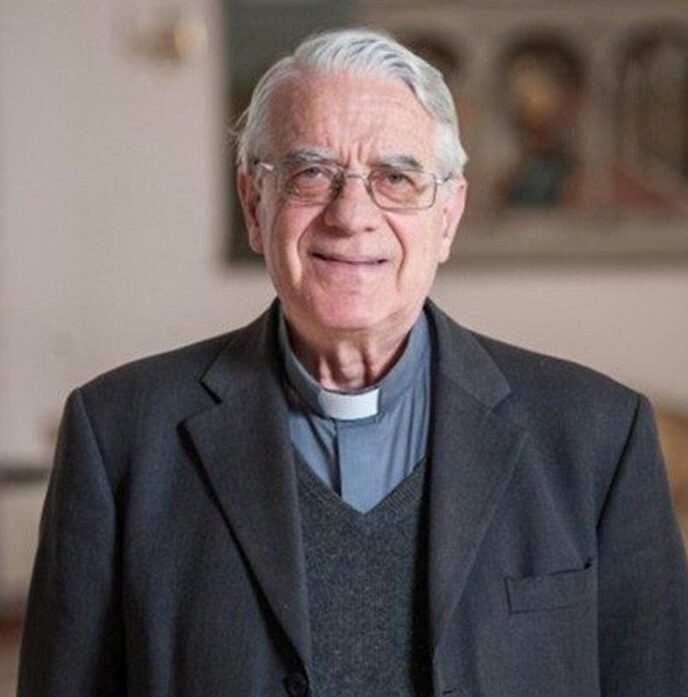 Federico Lombardi, SJ