Communitas ad Dispersionem: In Mission and for the Mission
Abstract
The Society of Jesus proclaims itself as ‘one apostolic body’, united in mission and service to a faith that does justice. Yet fifty years after communitas ad dispersionem became part of its official language, Jesuits worldwide struggle to embody this vision. The Four Universal Apostolic Preferences, meant to guide and renew Jesuit mission globally, have often been met with limited understanding and growing frustration among younger members, who find them abstract and difficult to apply in practice. These random thoughts are entirely my own, based on my experience. I realise that many of the thoughts and ideas have been addressed by many before now.
One apostolic body – priestly, religious, and united by a special vow to the Roman Pontiff at the service of a faith that does justice
The Society of Jesus describes itself as “one apostolic body” — priestly, religious, and bound by a special vow to the Roman Pontiff — “at the service of a faith that does justice.” We repeat these words with conviction. We print them in our documents. We nod solemnly when they are read aloud. But do we genuinely live by them? Fifty years after the phrase communitas ad dispersionem (D2, n.17-18, CG32) entered our official vocabulary, can we honestly say we have embraced its meaning, let alone embodied it? Or has it become just another pious slogan — an elegant relic of past decrees — while the reality of our life drifts further from the bold vision of Ignatius and his first companions?
Encounter with Jesuits in Formation
I hold a privileged and fascinating place in the Society of Jesus. My work puts me in touch with middle-aged Jesuits from around the world—men nearing their final vows, ready to dedicate themselves to our mission. I am consistently impressed by their caliber and enthusiasm. However, alongside my admiration, I also hear a broad range of candid opinions—sometimes uncomfortably honest—about the Society and the experiences of younger members trying to serve the Missio Dei in an increasingly complex and divided world.
When I first saw the title of this article, my heart sank. It felt like a string of earnest but lifeless phrases lifted straight from a General Congregation decree – the kind of Jesuit language we all nod at, as if in full agreement, before going back to business as usual. The phrase itself is more than fifty years old. During that time, four General Congregations have paid tribute to it. But have we truly examined it? Have we honestly tried to put it into practice in a Society of Jesus whose numbers are shrinking, and internal unity is under pressure?
Returning to the Sources
The world, the Church, and the Society of Jesus have undergone transformation since the Second Vatican Council. We are encouraged in Perfectae Caritatis to return to our sources while remaining fully committed to serving the Church and the world. But have we truly re-imagined “mission” and “community in dispersion," as Ignatius and the original companions envisioned? Most of them left Rome to work in distant places but found creative ways to stay connected. They were not afraid to adapt the mission or approach (for example, entering the education sector). Are we as flexible and disciplined as they were?
Every religious institute, over time, becomes institutionalized. Structures become rigid. Charisms fade. Unless actively challenged, this process suppresses the original spirit. We Jesuits are not immune, and I see little evidence that we have successfully fought back. We know we have too many institutional commitments and are afraid to let go of them.
Apostolate, Community, and Formation
The vitality of our mission directly depends on our understanding of apostolate and community. These are not abstract ideas; they are embodied in real men—their formation, character, and the conditions under which they live and work. This requires that candidates for the Society of Jesus be carefully selected and suited for community and mission. We have excellent criteria for choosing such men in our Constitutions and documents. Still, we can easily be misled by falling vocations and the desire to meet our current commitments, instead of having the foresight to determine which apostolates are most valuable to the Church and which ones we should relinquish for the greater good of the Society and the Church.
Culture and the Society of Jesus
The Society of Jesus’s life and apostolic style are shaped, for better or worse, by the social environments in which we operate. Our congregation started in a Eurocentric world and has grown into a worldwide organization, made up of men from diverse and varied cultures. This rich element has been present since the times of the co-founders of the Society, who came from different and often opposing cultures.
The challenge for modern Jesuits is to realize that when we join the Society of Jesus, we freely and consciously adopt a new culture — that of the Society — which supersedes our native culture in everything we do. So, whether we serve among the desperately poor or in affluent communities, our primary culture and values are those of the Society of Jesus. Naturally, we are tempted to be more influenced by the societies we come from or live in than to influence them. In the environments where we dwell, which are often wealthy, and even in middle-class and poorer areas, we tend to live slightly better than the people we serve, a fact we can easily explain if questioned.
The risk of becoming too embedded in the dominant culture is that we may lose sight of our community life and mission. In previous years, the mission was always seen as more important than the community; it was given priority, so less effort was directed toward the community compared to the mission. Our community should mirror that of the early Fathers, who drew strength and inspiration from one another no matter where they were in the world. Their bond as followers of Jesus supported and energized their apostolic work.
The Universal Apostolic Preferences (UAPs)
In 2019, the Society of Jesus, attempting to respond to the needs of the times has formally committed itself to the Four Universal Apostolic Preferences (UAPs), which call us to:
· Show the way to God through the Spiritual Exercises and discernment,
· Walk with the poor, the outcasts of the world, those whose dignity has been violated, in a mission of reconciliation and justice,
· Accompany young people in the creation of a hope-filled future,
· Collaborate in the care of our Common Home.
These preferences, meant to guide apostolic renewal worldwide, have sometimes unfortunately been misunderstood. Many Jesuits, especially younger ones, feel exhausted by hearing these preferences without clear ways to implement them. For some, the UAPs may seem like vague ideals disconnected from everyday mission and community life. This gap between goals and actions leads to frustration and can cause disengagement.
Generational Differences and Vatican II
Generational differences within the Society of Jesus are significant and require more thorough consideration than in the past. We now identify distinct generations: Baby Boomers, known for post-war prosperity, a strong work ethic, and leading major social and cultural changes; Generation X, which adapted to economic shifts and personal computers; Millennials, who grew up with the internet and globalization; and Generation Z, the first truly digital-native generation, growing up with smartphones and social media. These men are now part of the Society of Jesus or will be soon.
How will they implement the Second Vatican Council? They will do so differently from previous generations. We know that the Council will take decades to be fully realized. Many inspiring parts of the Council need to be interpreted for the modern world. The Constitutions on Liturgy, the Church, and Revelation, not to mention Gaudium et Spes, present a unique challenge to the Society of Jesus today and for years to come. Meanwhile, we must recognize and address the fact that modern generations are looking back with some blame and seeking a clearer identity and purpose in both the Church and the Society of Jesus.

Since the first companions decided to stay together under one elected superior, the Society of Jesus has struggled to strike a balance between community life and its mission. This tension is natural. What is less acceptable is our lack of awareness of the cultural and ideological forces now shaping our shared life.
Over the past fifty years, two influential social concepts have entered the Society of Jesus. Both ideas might be justifiable elsewhere, but neither promotes the unity of the Society of Jesus in mission or community.
1. The first insidious idea is that the individual has a “right” to have his needs met above the needs of the community, combined with the belief that we are an egalitarian organization. However, when we join the Society of Jesus, we become part of a universal body where our individual needs are subordinate to the common good of the community and the apostolate.
2. The second sinister concept is that our governance should be somewhat democratic. We know that consultation is broader in the Society of Jesus than it used to be, but our only truly democratic gathering is the Congregation of Procurators. Unfortunately, the “democratic” mindset has spread to community life, where members now believe they should be consulted on every decision of the superior. This weakens our form of governance, undermines the community, and disrupts effective apostolic work.
These ideas may originate from the Enlightenment and its development in the global North. As the global South influences the Society of Jesus more and new generations assume leadership roles, these values could weaken.
Consultation and Governance Challenges
The level of consultation has become excessive. For instance, when choosing a new Provincial for a province, the Fr. General’s regional assistant travels there, meets with as many Jesuits as possible, and an “extended consult” takes place. All communities are asked to share ideas for the next Provincial — often leading to an unrealistic wish list. Besides wasting time, money, and energy — not to mention the ecological cost — this process disregards the fact that we already have mechanisms for selecting a Major Superior: the annual letters to the General, those from the departing Provincial and his consultors, and the advice of the Regional Assistant. These should suffice for the General, with his counsellor’s help, to make a straightforward decision. We do not elect our superiors. Has the Society of Jesus lost faith in the system derived from the scattered companions of the early Society?
From the beginning, our structures were created to help us understand God's will, both personally and communally. The hierarchical system of authority – starting from the General Congregation and flowing down through Fr. General to Provincials and local superiors – aims to serve this purpose. However, over the years, we have changed these structures by adding layers, such as “Conference Presidents,” “Vice-Superiors,” and “Delegates of Superiors.” The result is a form of governance slowed down by consultation fatigue and endless processes, as if no mission can move forward until everyone has been consulted on everything.
The Role of the Provincial and Local Superior
The truth is clear: we are trying to govern a global apostolic body using methods from another era, when the Provincial was solely responsible for the province, its members, and its apostolates. Today, that approach is impossible because of the complexity of our societies. It’s not that we lack managerial or corporate experience; many governance experts are within the Society of Jesus and among our collaborators. The current General has been open to new proposals, but few have been offered.
A key dysfunction is the tendency of Provincials to act as if their province were an independent entity they alone are responsible for. Micromanagement is common. Subsidiarity is rarely understood or practiced. The Provincial’s primary responsibility — cura apostolica — is not to micromanage details but to know his people well through the account of conscience, to understand their strengths and weaknesses, and to assign them where they can serve best. This is the Provincial’s cura personalis. This is not control; it is stewardship of the mission.
The cura personalis primarily belongs to the local superior. His responsibility is to ensure that each Jesuit has what he needs—materially, spiritually, and communally—to fulfill the mission assigned by the Provincial. The tendency of Provincials to interfere in the daily operations of communities and apostolates has weakened the authority of the local superior. His role is not minor; it is his main responsibility. Yet many local superiors either misunderstand this or see governance as a distraction from their “real” apostolic work. Few realize that their governance takes precedence over any other task, because without strong local leadership, our mission suffers.
The Need for Structural Reform
We need to reform our governance with new and effective structures. If we see the office of Provincial as a problem in modern-day governance, we must have the courage to change it. A General Congregation must lead this effort — but since it is mainly made up of Provincials (and future provincials), reforming the structures they are deeply invested in seems unlikely. It appears we need to rethink how the General Congregation functions and practices.
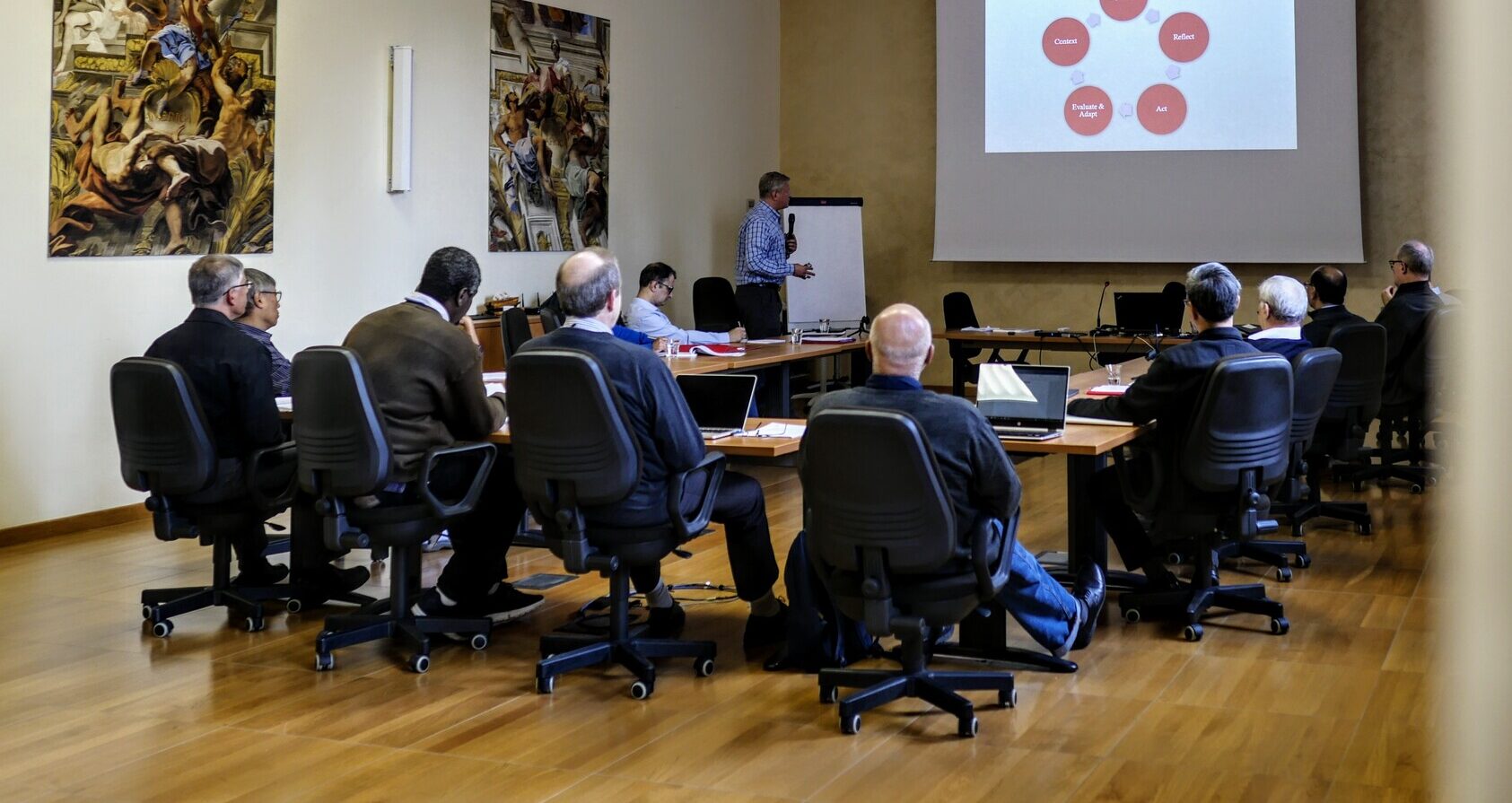
Inequalities and Provincialism
Our disparities in lifestyle and resources — including financial assets and personnel — need to be addressed. The global North currently possesses financial resources, while the global South has personnel. In theory, removing regional boundaries and sharing finances through the central government of the Society could lead to a more equal distribution of resources for the Mission of Christ.
Yet resistance remains strong. We have too long identified ourselves as “a Jesuit of a province” rather than “a Jesuit of the universal Society.” This psychological identity limits our sense of community and our apostolic availability. It is time to spread novices across different novitiates and internationalize our theologates and philosophates. Isn't it time we radically reduce the number of formation houses? Men joining the Society of Jesus should understand that they are joining a universal body, not just a provincial one.
It is said that as small communities grew within the Society of Jesus, Fr. Arrupe joked that perhaps the Society of the future would rediscover the mystique of the larger community.

Facing Hard Truths
If “communities in dispersion” are to be apostolically effective, we must face these realities honestly. Pious language and citations from the General Congregation won't be enough. We need to re-examine our structures, regain the discipline and flexibility of the early Society of Jesus, and resist the creeping individualism and managerial drift that weaken our unity. Otherwise, “one apostolic body” won’t be a true lived experience but just a phrase we politely acknowledge and dismiss.
Living communitas ad dispersionem means choosing a way of life that sometimes frustrates our personal ambitions, limits our preferences, and demands obedience for the sake of a greater good. Without that costly loyalty, our promises become empty, and our mission becomes a loosely connected set of private efforts.
The Future of the Society of Jesus
The question isn't whether the Society of Jesus has a future — it does. The real question is whether that future will live up to our origins and calling. If we keep hiding behind pious words while avoiding necessary structural and spiritual changes, then the phrase “one apostolic body” will be remembered as a rhetorical flourish of a complacent era.
We must recognize the unfortunate tendency to produce endless articles, discussions, and interpretations of our documents and decrees without following through on what they call us to do. But if we take it seriously — if we dare to rethink governance, rediscover disciplined community, and recommit ourselves to a mission that genuinely unites us — then the words of our decrees may once again become reality, as they did in the restless, determined lives of our first companions.
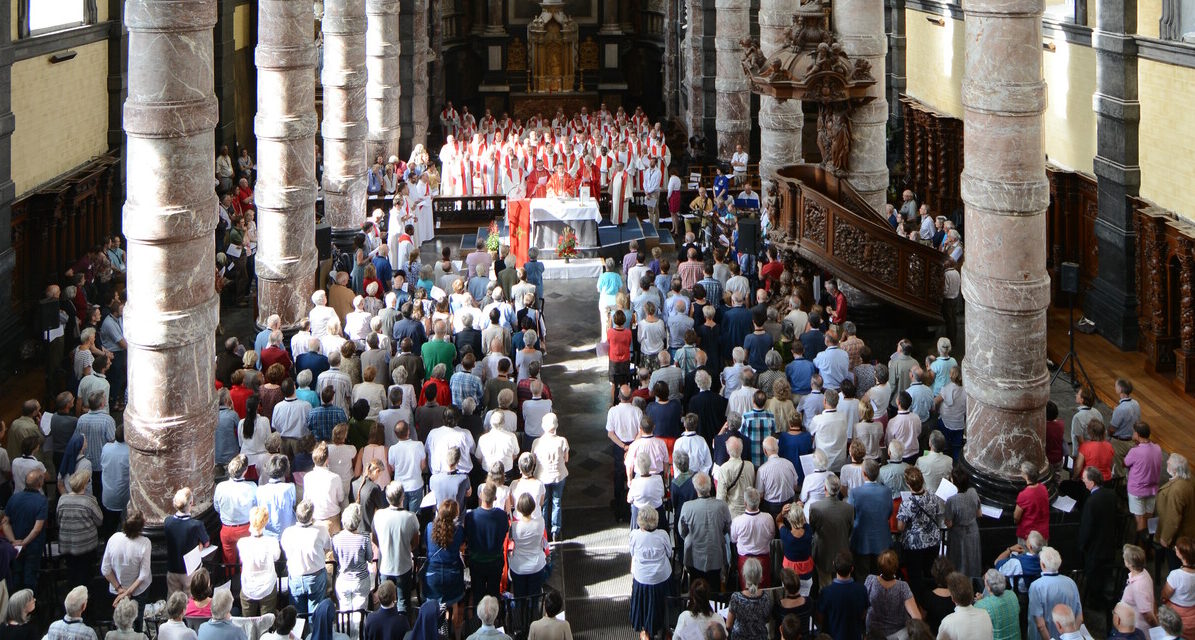
Formation, Governance, and Spirituality in Need of Renewal
We don't need more meetings, conferences, or consultations if we want to implement the changes the Society of Jesus requires. GC 36 calls for radical reformation through conversion. Courageous leaders who can embody what Ignatius and the early Fathers envisioned when they founded the Society of Jesus.
Formation requires revision and transformation. It is unacceptable to continue training priests as the Church currently does. We must take the lead. Pastores dabo vobis outlines the requirements. The four areas of academic, spiritual, human, and pastoral formation need updating, and training in social and political sciences should be included. Each stage of formation, especially tertianship, calls for new adaptations. Novices should gain experience of the broader society. We must substantially reduce the number and scope of our formation houses.
Governance requires a complete overhaul to ensure Provincials are required to delegate responsibility to capable Jesuits. A much clearer understanding of cura apostolica and cura personalis is essential. A new governance system that reflects the universality of the Society is crucial.
Spirituality needs renewal throughout the Society of Jesus. In some settings, the Spiritual Exercises are shared; in others, the individual-directed retreat is seen as the only way to experience the Exercises. We must find new and diverse ways to stay true to our charism while addressing the needs of the Church and those we serve. We need fresh, creative approaches to integrate our efforts. Additionally, our personal prayer lives should be adapted to different stages of our lives.
Final note. The Danger of Endless Words
Is this article destined to be added to the pile of documents that some (but by no means all) read and then place on a dusty shelf in the community library? Are we using the right methods when we publish reflections in traditional print or on social media?
We need to find ways to modernize and implement the extensive ideas and concepts in the Constitutions, Decrees of the General Congregations, and guidelines for the Society of Jesus as a community serving the Church of Christ in the modern world.
 Micheal Lewis SJ