International Course on Environment and Corruption Launches
To understand and address the impacts of socio-environmental corruption in Latin America and the Caribbean, AUSJAL and the CPAL Social Centers Network have launched the extension course 'Environment and Corruption'. In the following article, Luiz Felipe Lacerda (OLMA) shares the structure of this successful educational initiative and the international research that underpins it. Through weekly online sessions accredited by the Catholic University of Pernambuco (UNICAP), this initiative has brought together more than 630 participants from the region until June 24, 2026, establishing itself as a key tool for the defence of local territories.
All the details below:
International Course on Environment and Corruption Launches in Latin America and the Caribbean
On May 27, 2026, the extension course “Environment and Corruption” officially commenced. This academic initiative is part of an international research project aimed at understanding the impacts of socio-environmental corruption in Latin America and the Caribbean. Driven by a network of universities and social centers linked to the Society of Jesus, the course aims to promote critical reflection, knowledge exchange, and the strengthening of community capacities to address this issue.
The proposal is part of a broader research project supported by AUSJAL, which, in coordination with the CPAL Social Centers Network, seeks to develop concrete strategies for social awareness, public mobilization, and the strengthening of citizen participation. In this regard, the course represents a key training tool for advancing the construction of mechanisms that enable communities to build resilience, oversight, and social control against the impacts of corruption in their territories.
During this first phase of the project, the development of a theoretical-analytical matrix based on four main thematic pillars is proposed: integral ecology and socio-environmental justice; forced migration; territorial development and defense of territories; and participatory democracy and ecological citizenship. These pillars structure both the course content and the research lines that will subsequently guide the application of surveys and the development of case studies in different contexts across the region.
The course, conducted virtually through the Microsoft Teams platform, features weekly sessions scheduled every Wednesday between May 27 and June 24, 2026. Each session addresses one of the proposed thematic pillars, including an inaugural lecture and a final integration panel.
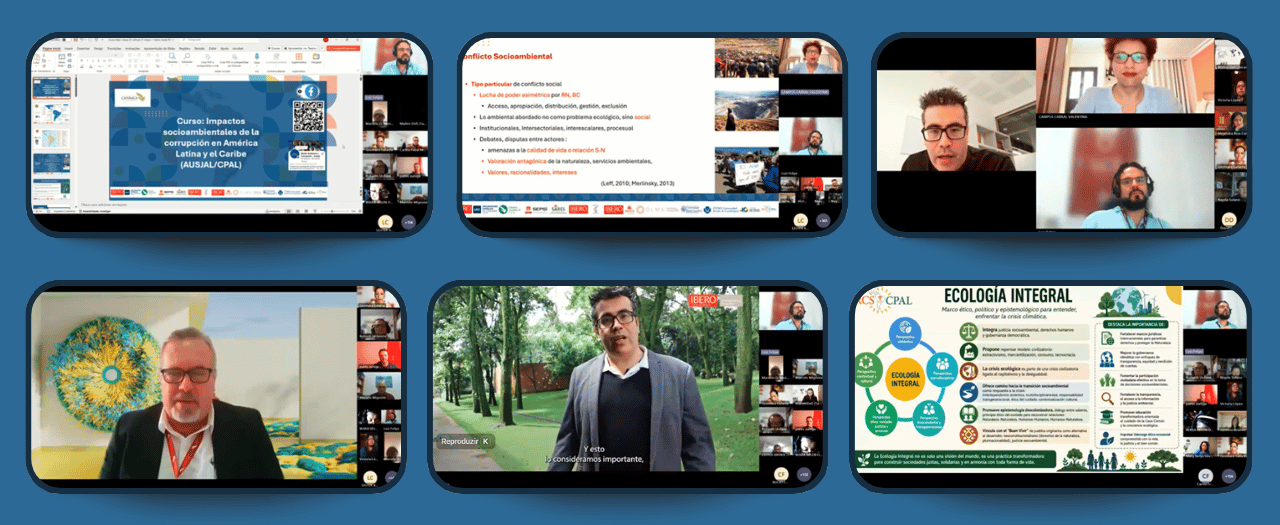
The call for applications exceeded initial expectations, reaching more than 630 registered participants from various countries in Latin America and the Caribbean. More than 170 people participated live in the first session, highlighted by the institutional opening with welcoming remarks from the rector of the Catholic University of Pernambuco (UNICAP)—the institution that certifies the course through the Humanitas Institute and the Laudato Si’ Chair. The diverse group of participants includes social center leaders, academics, students, and members of civil society interested in the subject.
As part of the project's methodology, the course also plays a strategic role in validating research hypotheses. In a second stage, a survey-type instrument will be administered to the social centers of the Society of Jesus in the region, aiming to assess the incidence of socio-environmental corruption in their working environments. Subsequently, case studies will be developed to build participatory prevention and monitoring mechanisms.
The initiative aligns with the strategic priorities of AUSJAL and CPAL, particularly regarding socio-environmental justice, sustainable development, and the defense of territories. Furthermore, it responds to the global call to care for our Common Home, promoted by the Church within the context of the Season of Creation, and seeks to contribute to the formation of an ecological citizenship committed to social transformation.
With this proposal, the organizing institutions reaffirm their commitment to generating applied knowledge and building collective responses to the socio-environmental challenges facing the region. The course is thus projected as a key space for coordination between academia, civil society, and communities, aimed at strengthening practices that contribute to the defense of life, territories, and justice.
To learn more:
Related Posts:

In Magnifica Humanitas, Pope Leo XIV warns that machine intelligence in war ends by “reducing victims to data.” The machine profiling that registers a person for food can also be used to select a person as a target. A small drone circling a road, with no one steering it, can have such a profile as its target. A drone like this is an autonomous weapon system. Once activated, it selects and attacks targets by itself, matching what its sensors detect to a programmed target profile. No human being decides, at the moment of the strike, that this particular person will die or is the right target. The case most often cited as the first use of such a weapon against people, reported by UN experts, was in Africa, in Libya in 2020.
Democracy, which has historically proven most effective in meeting these criteria, cannot be taken for granted. In our AI era, citizens should press for more than multiparty elections and the protection of basic freedoms; that institutional core is not enough. We must carefully regulate and channel powerful technologies with the capacity to divide us from one another and short-circuit social and political participation. That means maintaining spaces in civil society where human contact and social friendship can flourish without the mediation of machines, beginning with the educational systems through which all citizens pass. It means fighting deepfakes and disinformation in the public sphere, so that citizens still operate in a world of facts and evidence and political representation has a strong basis.
Artificial intelligence (AI) is increasingly entering public life in Ghana, including through digital systems used for identification, verification and service delivery. The ethical question is therefore not simply what AI can do, but what happens to people when digital systems become gateways through which citizenship, mobility or access to services are recognised. In northern Ghana, especially in border communities, this is a concrete question. I was privilege to visit Pusiga community in November 2025 with a Jesuit friend of my mine who is originally from the community. Thus, the topic for this article resonates very well with me.
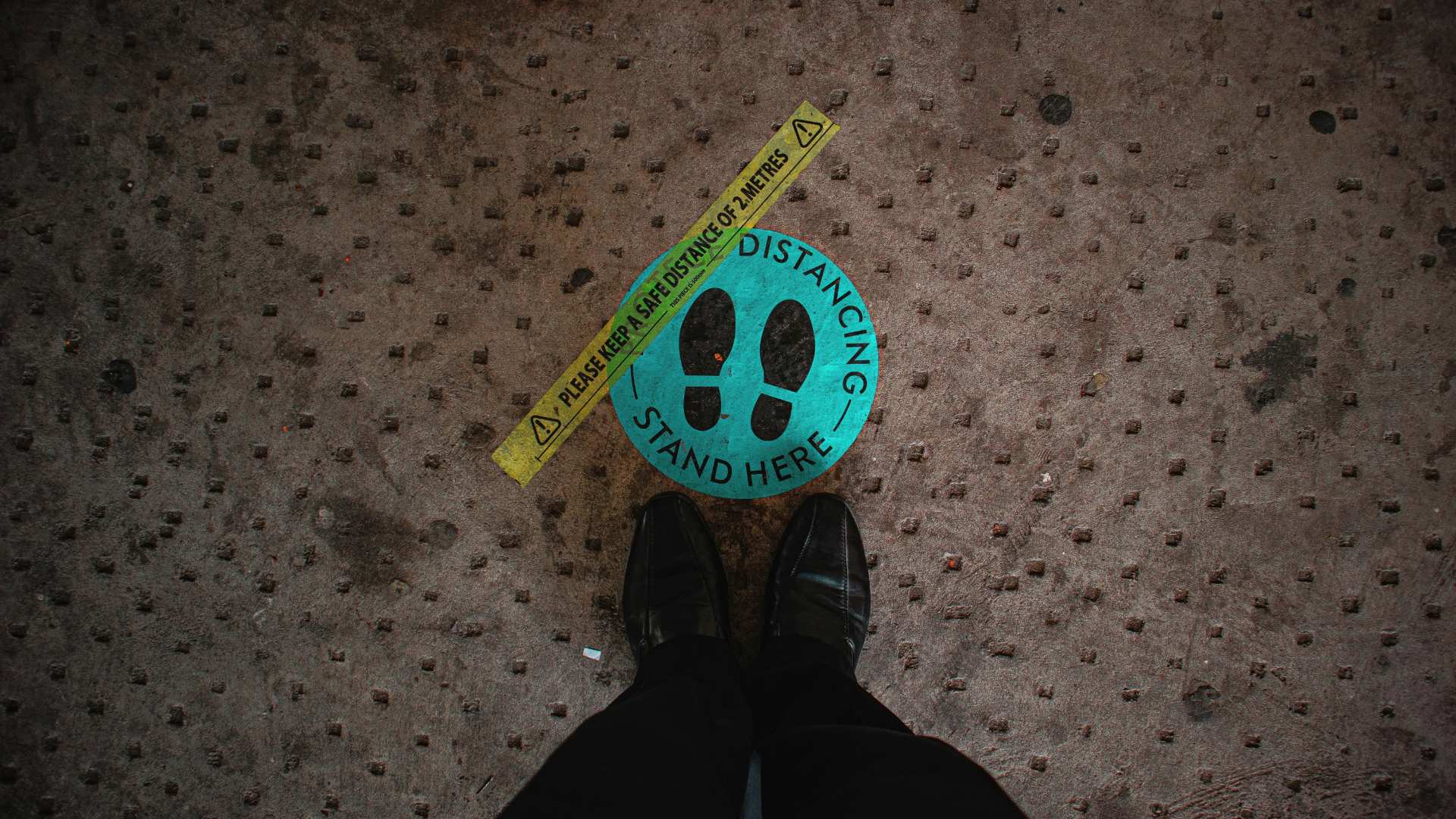
The article ‘Pandemic and Authoritarianism’, by Germán Rosa, SJ, was written in the midst of the COVID-19 crisis, but its insights extend beyond that context. The pandemic appears to reveal and accelerate political trends that were already present: the concentration of power, the weakening of democratic checks and balances, and the acceptance of extraordinary restrictions in the name of collective security. Rosa’s main concern is that fear may lead citizens to silently surrender their freedoms and rights, and that measures which were initially intended to be temporary become normalized and endure. Furthermore, in societies riven by inequality, control is never distributed neutrally: it falls most heavily on the impoverished, marginalized groups, migrants, dissidents and those who defend rights and territories.
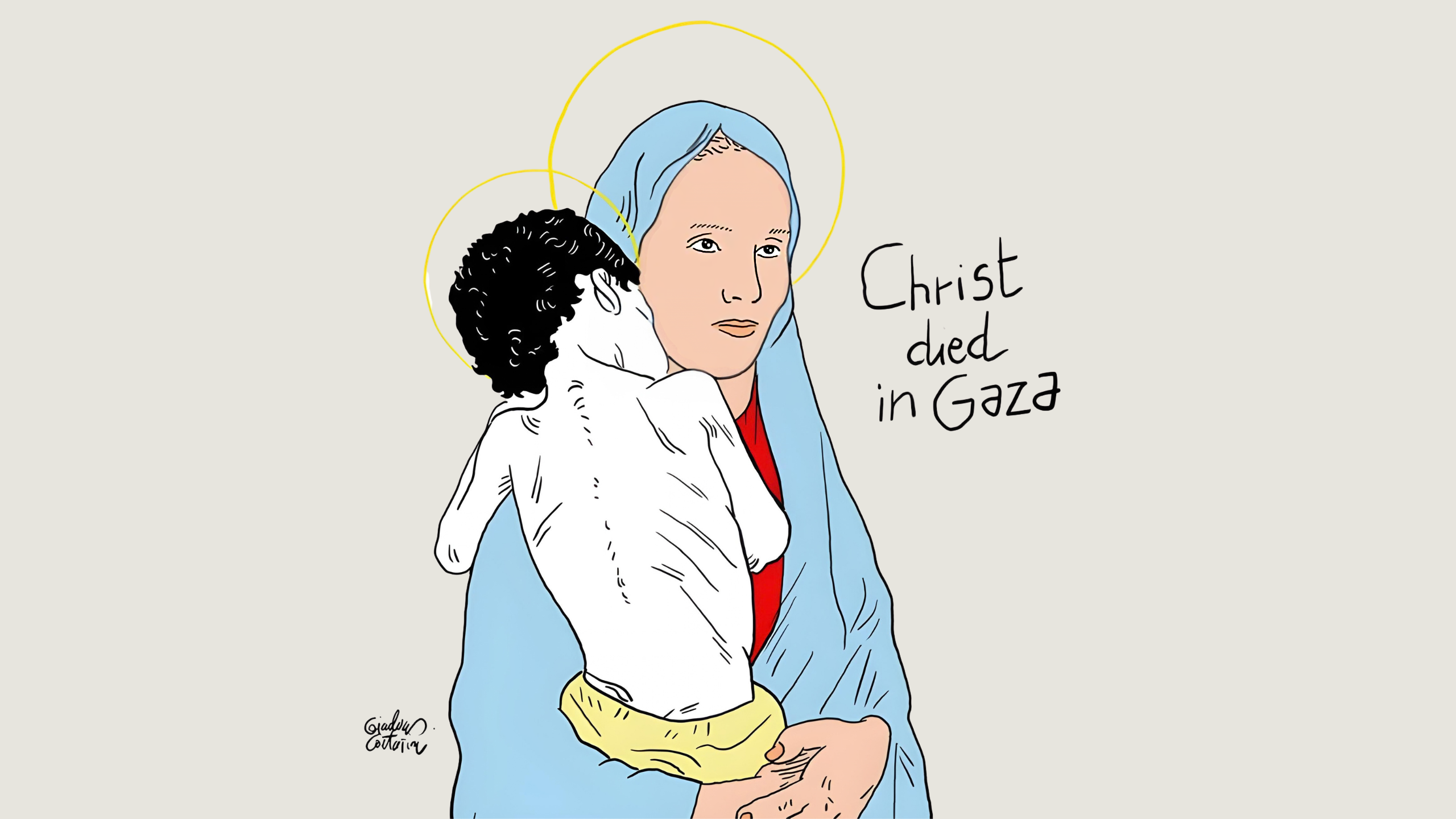
Speaking of dead children is uncomfortable. Yet it can also be healing. As I listened to the stories shared that day, I found myself returning to memories I may at times shy away from remembering. Iremember finding my sister’slifeless body in bed one Saturday morning. Ihad cometo carry her out with me to watch cartoons.As I listened tothe story of Hind Rajab, a 5-year-old girl who had been trapped inside a car attacked by Israeli forces,the memory of a little boy reaching out to touch his sister came back. The young girlhadmanaged to call the Red Crescent for help but hours later she and the paramedics who had come toassisther were all found dead. The chilling story reminded me of the shocking cold that struck my hand as I gently touched my sister’s arm in a futile attempt to wake her up.

Who Are the Victims and Those at Risk of Becoming Victims? When it comes to mining, particular attention must be paid to those who are most vulnerable: Indigenous communities whose livelihoods depend on their land, forests, rivers, and water sources; small-scale farmers; fishers; poor families; women, children, and older people; as well as communities with the least bargaining power in legal, economic, informational, and political matters. They may become victims when land loses its social function, when water sources are polluted or disappear, when the environment is damaged, when livelihoods are disrupted, or when their social and cultural life is transformed without their genuine consent.