Africa – Mining coast to people and the environment in Africa – The Congo crisis
The vast mineral resource endowment of the Democratic Republic of Congo (DRC), at a glance, projects the country's potential to achieve shared prosperity and economic growth.
With that abundance in the mineral endowment, the country considers extractives a significant driver of its economic growth, with copper and cobalt accounting for 80 % of its export. However, the focus on revenues from the extractive industry to finance government operations and provision of essential services has not yielded much for the country as corruption has taken centre stage. It is compounded by the DRC's narrow tax revenue base, leading to only a tiny proportion of taxes and royalties going to the government coffers.
Geopolitically, DRC is surrounded by equally politically unstable countries such as the Central African Republic, Rwanda, and Sudan. Having politically unstable countries as neighbours for a country riddled with conflicts, DRC faces a precarious situation in managing its borders. With cross-border raids, spill-overs from ethnic insurgencies, and fights among local rivals, the insecurity situation in the country has gone wayward, leaving residents to seek protection from warlords and rebels. After several decades of war, 2003 ought to have been a significant year for the country. Still, even after the end of the Congo wars, the post-conflict DRC has remained significantly volatile with endemic conflicts within the country's Great Lakes Region.
Mining accounts for nearly 25% of DRC's GDP. The World Bank reports that DRC holds half of the world's cobalt reserves, but despite massive mineral deposits, the socioeconomic situation in the country remains low. For instance, according to the World Bank report, as of 2020, the poverty level stood at 73%, 27 million people remain food insecure, and conflicts have displaced over 5.2 million. A major cause of this deteriorating socioeconomic condition has been attributed to weak governance. Weak governance implies that conflict and violence, and pervasive go unabated. Multinational corporations have also exploited weak governance structures to extract unsustainably and exploit human labour. Existing extraction models and weak governance of extractive resources are not only a recluse of DRC; other African mining industries also fall short. Further, the development challenges also result in the country's weak human capital.
The DRC Congo's tropical forest ecosystem is vital to residents' livelihood. About 67% of the country lies in forests. But the provisioning services from the forest ecosystem appears as a curse to the people. Studies have unearthed a complex relationship between conflict and forest conservation. Some direct impacts include road building, defoliation, and unsustainable use of forest resources.
In contrast, indirect effects include reduced economic activity, reduced forest cover loss, and changes in discount rates for forest resources. Given the hope put on the extractive industry to support economic growth and development of the country, the weakness that has characterised the mining sector has its spillover effects, negatively affecting the forest ecosystem that supports the majority of poor and indigenous forest communities in the country. Mining is also often associated with environmental degradation and ecosystem disruption, which carries negative social impacts and uncertainties. That affects the quality of life for the immediate community in the mining region and the entire region, further exacerbated by the rising influence of global climate change. Most African societies are not climate resilient, and mining countries are particularly vulnerable due to ongoing environmental degradation.
Besides the protracted conflicts and environmental degradation, mining has established a migratory rush pattern, where low-income families rush to the mining areas in search of work. Worse, those who migrate to the mining sites end up undertaking small-scale artisanal mining using harmful extraction methods that threaten the miners' health. Further, these mining sites have become a threat to the human development of children due to the rampant use of child labour in the areas. One of the driving factors to children's engagement in the mines is high levels of poverty, where children also participate in income generation for their families.
Jesuit Justice and Ecology Network Africa (JENA) has been driving the agenda on Rethinking Africa's Development with a focus on making mining work for Africa. In 2022, JENA engaged in various regional and international dialogues with its partners and those in the policy space in a meeting in Lubumbashi, DRC, and Spain. Key among the discussions included the need to strengthen governance structures and inclusion in technology-rich mineral countries like DRC to utilise its natural resources to benefit its people. In addition, there is a need to demand justice in models used for extraction as the traditional colonial models are neither inclusive nor sustainable and perpetuate a lot of human rights and environmental abuse while neglecting their duty to local communities within the mining areas. Public participation coupled with transparent partnership can create room for inclusive measures that reduce gaps leading to conflict and violence.
Further, adopting the World Bank's proposal, among other solutions for developing alternative livelihood programs that can absorb the excess artisanal workforce, is very critical. Much needs to be done for the artisanal workforce to improve the enforcement of labour, health, safety, and environmental standards. Through public-private partnerships, specialised mines inspection units can be established that also tracks the transport and commercialisation of mineral deposits produced by the artisans. Several solutions, such as corporate social responsibility through public-private collaboration have been proposed to resolve the protracted crisis in the mines. The plank of the proposal rests in the argument that even after the 2002 peace agreement in the mines had been struck, the mining environment is still fragile, necessitating the actors to work towards achieving coherent social and economic strategies to benefit the population. Given the vast social and environmental issues at stake, effective implementation of programs targeting the local communities is a function of coordination and collaboration between the government and private institutions to enhance the government's capacity for the regulatory and monitoring role. Given DRC's weak governance and limited ability to enforce mining regulations, the importance of pushing the private actors to active roles engenders corporate self-regulation. Although corporate self-regulation is an individual corporate initiative, promoting public-private partnerships seeks to ensure uniformity and standard operational guidelines among the actors for achieving a common social and developmental agenda.
Source : jesuits.africa

Related Posts:

The Justice in Mining network has advanced efforts to protect communities affected by mining. Key achievements include stronger collaboration among 22 Jesuit institutions, documenting crucial case studies and advocating for corporate accountability as demand for critical minerals grows.
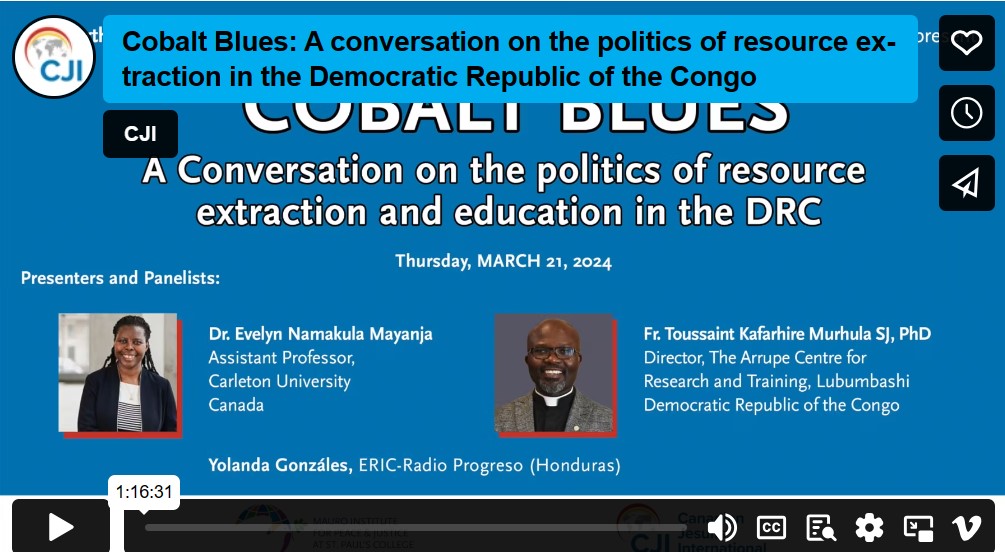
Resource persons at the "Cobalt Blue" webinar organised by the Canadian Jesuit International stressed the root causes of mining misery: the legacy of colonialism, racism, unchecked consumerism, and a greedy global economic-political system that overlooks ethical and environmental concerns are among the main reasons for the untold suffering caused by mining and the extraction of natural resources in the Democratic Republic of the Congo (DRC).
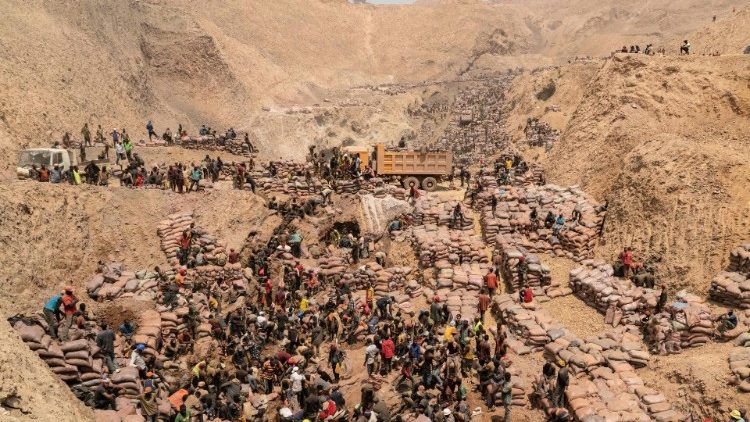
"Conflicts in Africa in the Context of the Exploitation of Natural and Mining Resources" was the theme of a seminar in Accra, Ghana. Participants in the seminar convened by the Symposium of the Episcopal Conference of Africa and Madagascar (SECAM) called for the end of the ruthless depletion of natural resources by multinational corporations and foreign powers.
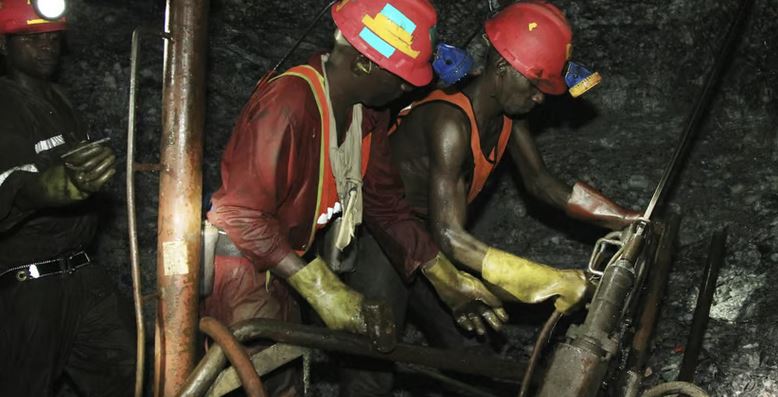
A Catholic leader in South Africa, a country where mineral wealth long has been an economic mainstay, says that today the Church in his country often encounters “the suffering face of Christ in sick mine workers.”

Latin America – Statement of the Jesuits on the Caribbean Border on the Extractivist Model of Mining
Statement published by the Jesuits on the border between the Dominican Republic and Haiti in which they warn of the risks posed to the local populations and their livelihoods by an extractive mining project.

The coordinator of the Brazilian network of Churches and Mines, a Comboni religious missionary, talks about the second edition of their initiative in September: the Earth is not an infinite reservoir of resources to be taken without limits.