Justice In Mining – Progress Report 2019-2023
The development of the Justice in Mining’s Global Strategic Plan 2019-2023 has been marked by a series of events external to the Justice in Mining network. 2019 was a busy year in the ecclesial environment, with several international meetings on mining (the Mining and the Common Good Day organized by the Dicastery for Integral Human Development and the JPIC Seminar on Mining) where we were able to establish contacts with other related networks such as Churches and Mining and CIDSE. This momentum was halted by COVID-19 in 2020. However, the pandemic also prompted one of the network's first public statements in solidarity with mining-affected communities2. These communities are under increasing pressure, as the pace of mineral extraction is increasing due to energy transition plans. Paradoxically, the fight against climate change will boost the demand for these critical minerals and, foreseeably, greater conflict for those living in the areas of extraction. Hence the need to continue networking on this issue in the years to come.
The evaluation of the SGP 2019-2023 shows a positive balance of the network's performance in this period, although it is true that some of the difficulties identified in 2018 persist. The four crosscutting strategies identified in this planning are broken down intothirteen strategic objectives, of which we have fully or partially met eleven(Table 1). All these years we have been able to count on a global core group, with representation from the six Jesuit Conferences, and their commitment has been fundamental in reaching more organizations. In this sense, the main achievements to celebrate have to do with the efforts made to weave the network "from below", to know better where (and in what way) we are present in each Jesuit Conference and to weave alliances "outwards" with other similar networks that can help us to have more impact.
In this mapping process we identified 22 Jesuit institutions globally that have worked or are working on projects related to mining, of which 12 are social centers in the Global South, 5 are NGOs in the Global North and 5 are research institutes associated with Jesuit universities. With the help of core group members, we documented a selection of cases to better understand the diversity of existing practices and experiences (from accompaniment of affected communities, to advocacy campaigns, ethical investment initiatives, etc.). The result of these efforts was published inPromotio IustitiaeIssue 135, entitledMining: bonanza or ruin?The holding of a face-to-face meeting of the network (Loyola, September 2022) to share information has also been fundamental to strengthen links between network members and establish alliances with other church networks specialized in accompanying communities affected by mining and defending their rights, such as Churches and Mining and CIDSE.
All of this is cause for celebration. It represents a breakthrough in relation to the first of the challenges identified in 2018. In these five years we have improved mutual knowledge and sense of belonging to the network, strengthening a culture of collaboration between Jesuit institutions addressing mining issues in diverse contexts. However, despite having identified successful references of collaboration and advocacy among organizations that are part of our network,the difficulty of achieving a global advocacy strategy is still present. Here it is worth rethinking what we mean by "global" and whether this term is well suited to the realities covered by this network. Mining conflicts are very localized geographically and politically and taking demands beyond the territory only makes sense on the basis of a systemic analysis of responsibilities. Where transnational companies are involved, it makes sense to "globalize" the protest and to demand effective corporate accountability, to demand more demanding laws for supply chains and to facilitate access to justice for victims. Where artisanal mining is promoted illegally, endangering the Common House, working on awareness raising, training and the search for alternative livelihoods at the local level requires a greater effort. A global advocacy strategy that addresses such different and complex problems on different continents would require a capacity for analysis and response that we have not been able to develop with the limited resources at our disposal.
Therefore, until now, the Justice in Mining network has functioned more as a"community of practice"in which we share lessons learned, experiences and common challenges, than as an advocacy network with the capacity to deploy its own agenda at different levels. This space for dialogue has allowed us to identify windows of “political opportunity”, such as the negotiation of corporate due diligence laws on human rights and sustainability in Europe and Canada, which allow us to coordinate joint advocacy actions. It has also served to identify elements of common interest, such as concern for the impact of energy transitions, the Rights of Nature or the role of financial institutions in mining. These are all elements that can give continuity to our network and can even nurture collaboration with other GIAN thematic networks, such as Ecojesuit. But for this to be possible it will be necessary to identify common objectives aligned with the excluded communities we serve, raise the necessary resources and secure political backing for the initiatives that emerge.
Guillermo Otano
Justice in Mining Network’s coordinator
Download the PDF for complete report.
Progress Report JiM 2019-2023
3.05 MB
Related Posts:
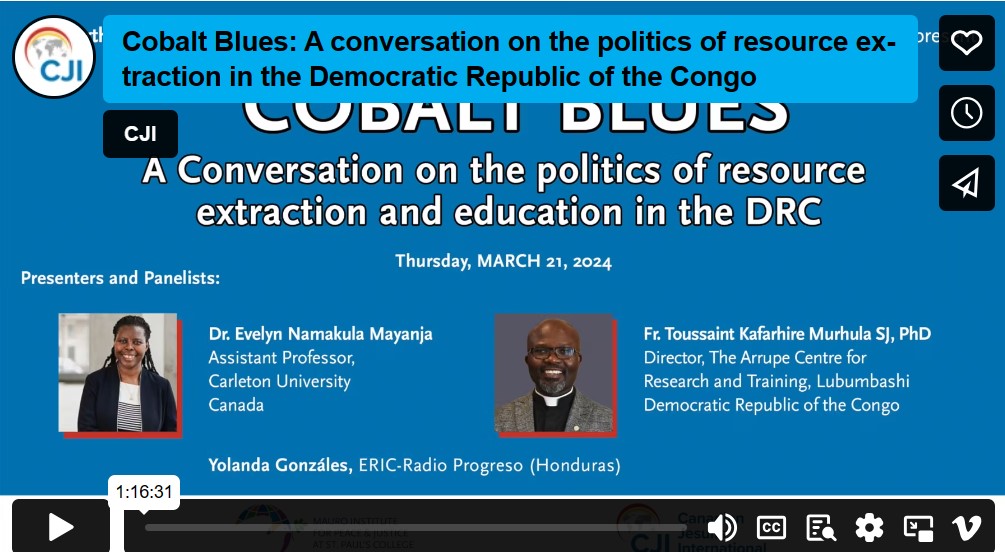
Resource persons at the "Cobalt Blue" webinar organised by the Canadian Jesuit International stressed the root causes of mining misery: the legacy of colonialism, racism, unchecked consumerism, and a greedy global economic-political system that overlooks ethical and environmental concerns are among the main reasons for the untold suffering caused by mining and the extraction of natural resources in the Democratic Republic of the Congo (DRC).
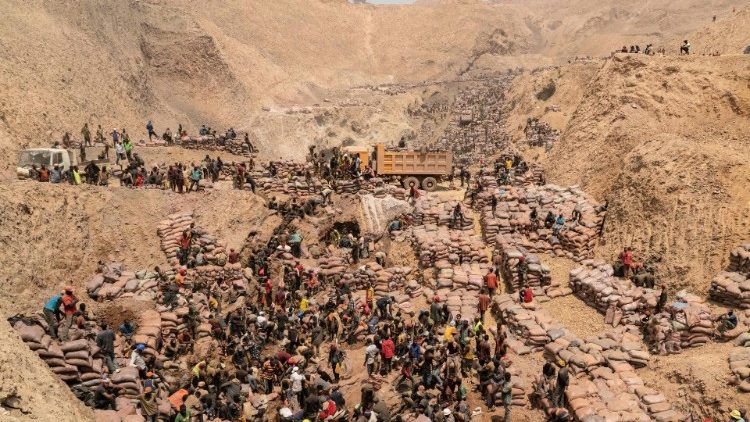
"Conflicts in Africa in the Context of the Exploitation of Natural and Mining Resources" was the theme of a seminar in Accra, Ghana. Participants in the seminar convened by the Symposium of the Episcopal Conference of Africa and Madagascar (SECAM) called for the end of the ruthless depletion of natural resources by multinational corporations and foreign powers.
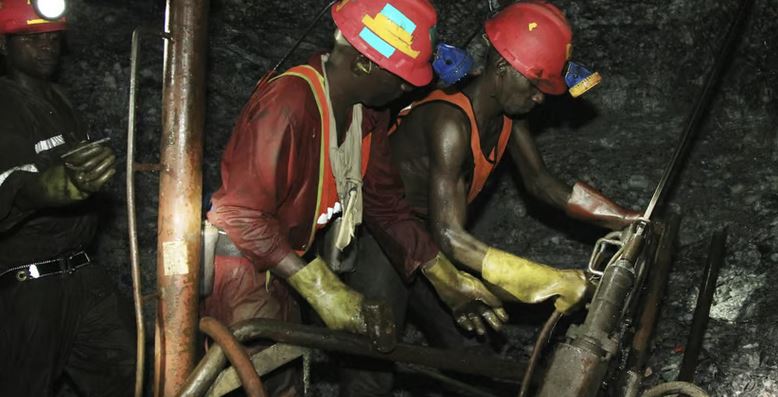
A Catholic leader in South Africa, a country where mineral wealth long has been an economic mainstay, says that today the Church in his country often encounters “the suffering face of Christ in sick mine workers.”
Latin America – Statement of the Jesuits on the Caribbean Border on the Extractivist Model of Mining
Statement published by the Jesuits on the border between the Dominican Republic and Haiti in which they warn of the risks posed to the local populations and their livelihoods by an extractive mining project.

The coordinator of the Brazilian network of Churches and Mines, a Comboni religious missionary, talks about the second edition of their initiative in September: the Earth is not an infinite reservoir of resources to be taken without limits.

The Secretariat has published its 135th issue of Promotio Iustitiae on the theme: Mineral Mining: Boon or Bane?