
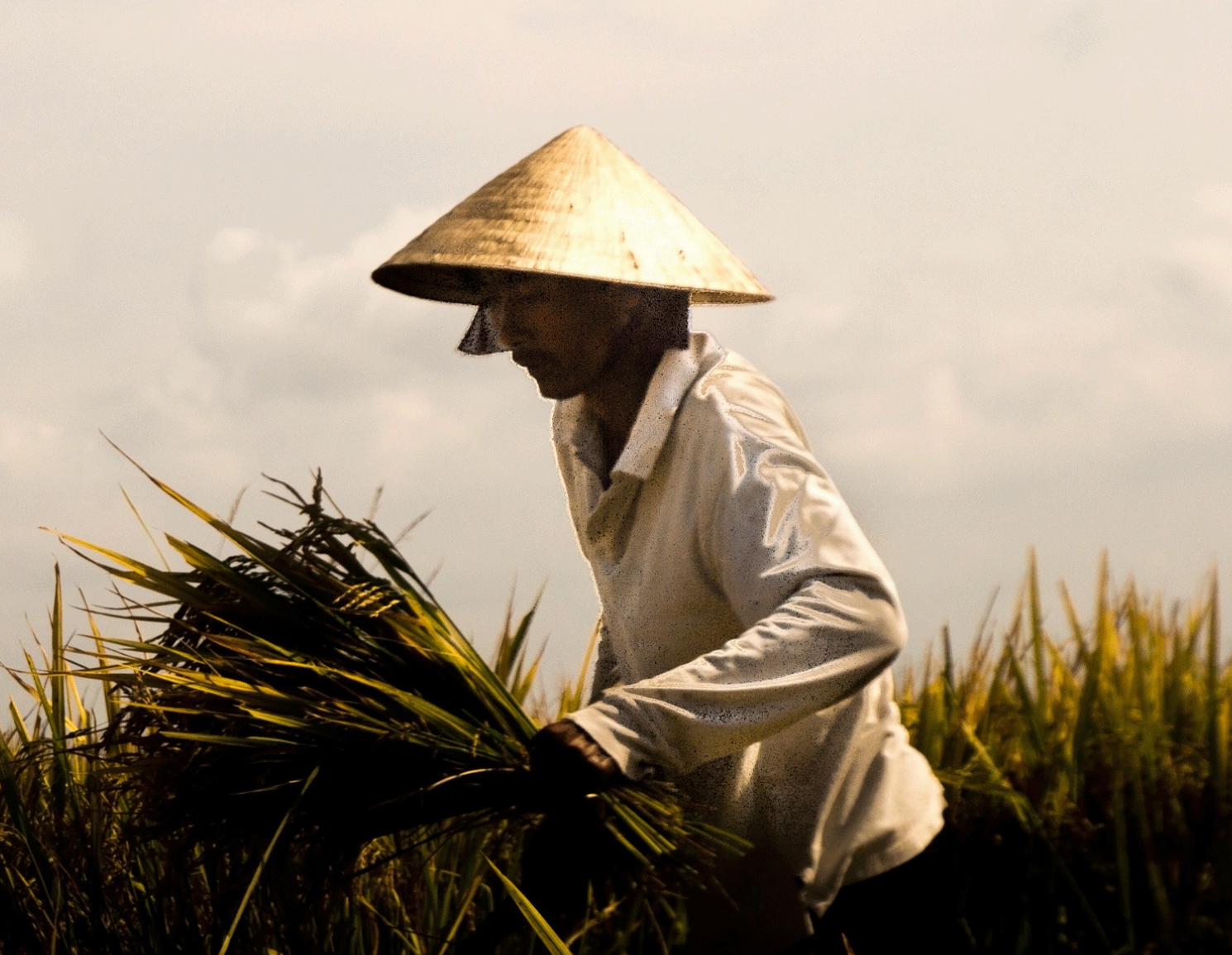
This article offers an overview of various agricultural approaches including Sustainable Agriculture, Conservation Agriculture, Climate-smart Agriculture, and Agroecology, among others. By classifying these concepts, it sets the stage for understanding their role in promoting ecological resilience. The article also highlights key lessons from field experiences at the Jesuit-operated Kasisi Agriculture and Training Center in Zambia, in partnership with the Seed and Knowledge Initiative.
Read MoreWe publish this article written by Brother Paul Desmarais, founder of KASIS Agroecological Training Center (Zambia), for Promotio Iustitiae No 79 in 2003. Already in 2003, he was aware that social justice had to include environmental justice and, most especially, concern for the rights of rural women. Caring for the people of the countryside and the planet was the same thing. He embraced organic farming with determination; it was his life's mission. She anticipated what, years later, Pope Francis proclaimed in Laudato Si and the Society of Jesus accepted as the fourth Apostolic Preference. In this article, his words about the danger of GMOs and the threats to the environment and people are still relevant today.
Read More
Agricultural production systems in place before the first Green Revolution were described as traditional systems. The environmental, economic, social, and cultural destruction caused by the Green Revolution subsequently led, in the 1970s, to the search for alternatives to mitigate damages. The recovery of traditional agricultural knowledge and practices guided and framed this undertaking. The dialogue between interdisciplinary teams of NGOs and certain academics contributed to the recovery and exceptionally, support from departments or state agencies in the agricultural sector of a few countries.
Read MoreThe ecological crisis also challenges our faith and reconciliation with Creation has been a central theme of the Jesuit mission since the 35th General Congregation, but how can we make this happen? Ignatian spirituality provides the foundation for response to ecological questions not only in a contemplative manner but also through practical actions in our lives and works.
Read More
The unavoidable consequence of our daily activities, human waste, has emerged as a critical environmental concern.
Read MoreMy connections with the rural world have revealed to me the richness of ancestral wisdom and the risk of losing it. There is a rich and unquestionable knowledge that those who came before us have built on over the centuries.
Read MoreOn the afternoon of 13 December, a day after COP28 was due to end, the Parties came together to officially close COP28.
Read MoreThe response to these crises needs to be in the form of collaboration and hope sustained over time, an active expression where together we must - somehow - make a difference.
Read MoreIt will be almost five years since we, as Jesuits, discerned and were missioned to work on the four Universal Apostolic Preferences (UAPs), one of which was ‘care for our common home’ (UAP4). In light of what Pope Francis has done with LD after eight years of LS, it is an opportune moment for us Jesuits to review where we are now on our four apostolic preferences.
Read MoreIn today’s world, the myth of ‘development’ is projected as the central value, measured by society’s performance as quantified in terms of Gross National Product, Net National Product, material growth of the economy, standard of living measured in terms of goods and money, etc. This emphasizes the superficial ways of ‘having’ than the more fundamental levels of ‘being’.
Read More