Waste: our footprint over the Creation
Abstract
The human impact on creation is enormous, and on balance, overwhelmingly negative. As Christians,in a spirit of solidarity, I invite you to reduce our presence to allow other creatures created by God to claim their space and for future generations to have a planet to inhabit and find fulfilment. We have to be less to allow all other creatures to be more. And to be less is necessarily to consume less (those of us who have our basic daily needs satisfied), that is to say: to extract less and throw away less.
The unavoidable consequence of our daily
activities, human waste, has emerged as a critical environmental concern. The
magnitude of waste we produce, ranging from domestic garbage to industrial
refuse, is overwhelming.
Visualize each single servings of ketchup, butter, or jam, the coffee capsules, or the disposable cups and cutlery, the plastic bottle waters…add all together, multiply for millions of people. Think about the paper and plastic that enveloped your most recent online purchase, wrapped the fruits and vegetables at the supermarket, or the polystyrene foam meat trays.
The countries of the European Union contribute more than 2.1 billion tons of waste each year. This implies that an average European citizen is responsible for about 5 tonnes of waste annually, including their 505 kg of municipal waste, with only 38% of the total waste being recycled. India, home to over 1.4 billion people, produces 26,000 tonnes of plastic waste daily, with a mere 8% being recycled. Brazil’s municipal solid waste amounts to approximately 81.8 million tons, of which only 1.47% is recycled or composted.
Now, consider the fruits and vegetables that are discarded because they don’t meet “beauty standards”, the products damaged during transportation, the forgotten yogurt that expired in the fridge, the leftovers from last night’s dinner, the untouched bread left at the restaurant…
In the EU, food waste (from farming stage to the final consumer), which totals over 58 million tons annually (131 kg per inhabitant), accounts for about 16% of the total greenhouse gas emissions from their food system. This is due to the methane released when food decomposes in landfills. The United States discards nearly 60 million tons of food every year, which is estimated to be almost 40% of the entire US food supply, equating to 147.4 kg of waste per person.
Let´s open your wardrobe. Out of the 100 billion garments produced each year (a non-sense number!), 92 million tonnes end up in landfills. Dyeing and finishing processes, which involve the application of colour and other chemicals to fabrics, contribute to 3% of global CO2 emissions and over 20% of global water pollution. Nearly 10% of microplastics (<5 mm) dispersed in the ocean each year originate from textiles, as around 50% of our clothes are now made from plastic, like nylon, polyester or acrylic, which shed microfilaments with each wash that end up in our sewage systems and oceans.
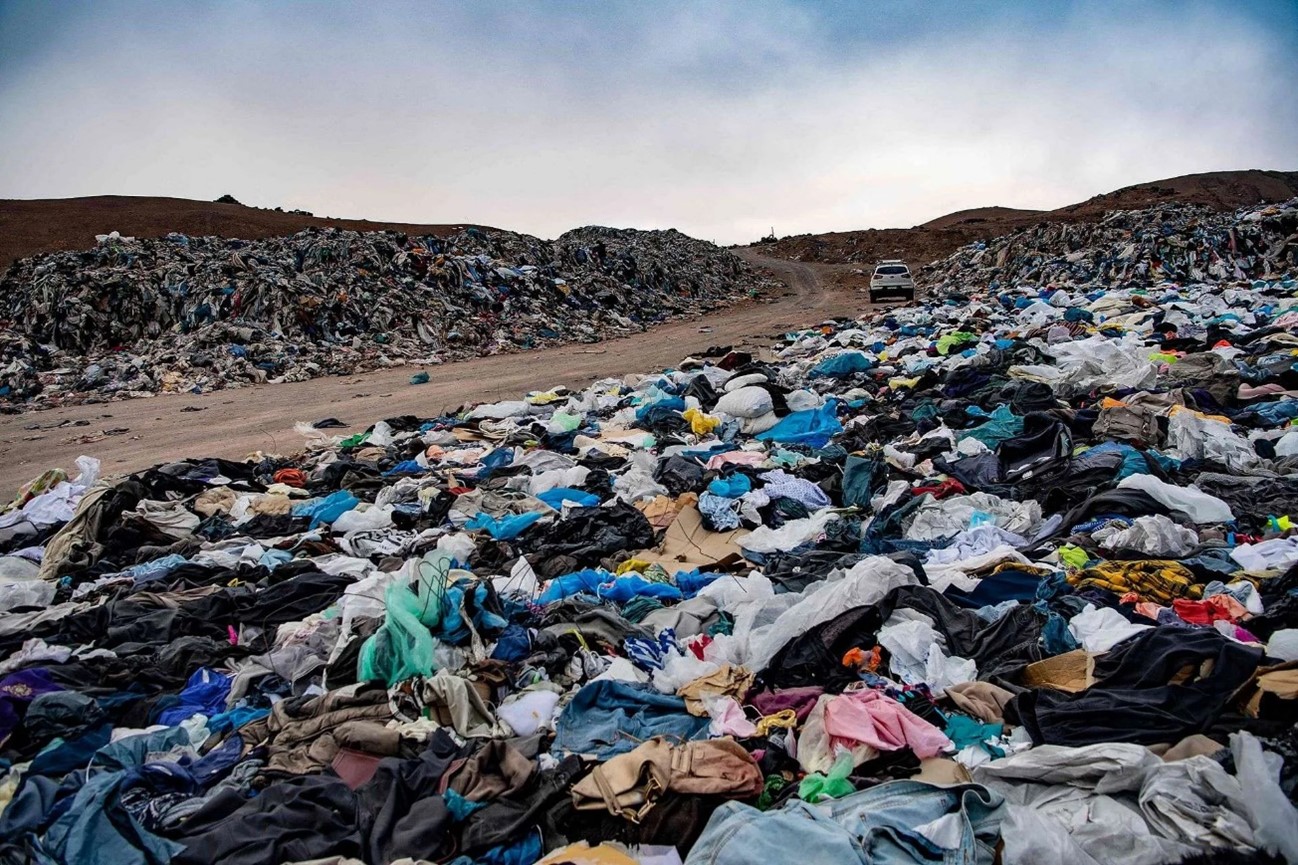
Reflect on the individuals who crafted your clothes, their long workdays, and the absence of fair compensation. Consider all the polyester, regular cotton laden with chemicals, and all the ink polluting our rivers. Recall the image of the Atacama Desert as our fast fashion clothing landfill. Now, think twice before you buy another piece of clothes or before you decide to print a new T-shirt for your event, race, school, congress, etc., as we all know where it will end up.
Last but not least is the e-waste. The increase in the consumption of electronic devices brings with it two major ecological problems. First, it drastically increases the mining and extraction of materials required for their production, resulting in the devastation and pollution of various ecosystems, displacement of communities, persecution of land and human rights advocates, as well as contemporary forms of exploitation and slavery, including child labour, and the funding of armed conflicts. Second, discarded gadgets generate a substantial amount of electronic waste: 62 million tonnes of e-waste were generated in 2022, an increase of 82% compared to 2010, and this trend is on the rise. But only 1% of the demand for rare earth elements is met by e-waste recycling.
Consider for a moment how old is of your “old” phone, and your headphones, computer, TV and every trendy kitchen gadget... Can you consider to prolong their lifespan, repair them, or purchase refurbished ones?
The human impact on creation is enormous, and on balance, overwhelmingly negative. As Christians,in a spirit of solidarity, I invite you to reduce our presence to allow other creatures created by God to claim their space and for future generations to have a planet to inhabit and find fulfilment. We have to be less to allow all other creatures to be more. And to be less is necessarily to consume less (those of us who have our basic daily needs satisfied), that is to say: to extract less and throw away less.