
AI and Democratic Citizenship
The advent of artificial intelligence (AI) has raised tremendous hopes and fears. A revolutionary technology without precedent, AI has the potential to promote shared prosperity and propel transformative scientific and biomedical advances. At the same time, if not carefully regulated, AI may be misused to spread terror and destruction – or even slip out of human control.
We have already seen the negative effects of AI on democracy. AI-driven social media algorithms have contributed to political polarization, feeding citizens content that reinforces their strongly held opinions and reducing their exposure to different points of view. And AI-generated deepfakes have begun to undermine public confidence in the reliability of news. “Disinformation did not begin with AI, yet today it finds a powerful amplifier in AI,” Pope Leo XIV wrote in his 2026 encyclicalMagnifica Humanitas. “The ability to manipulate content, images and videos exposes people to biased or misleading perspectives.”
As machine-human interaction increases, our democracies may well suffer further.
Citizenship is about more than informing oneself on the issues and casting votes in periodic elections. To be an engaged citizen is to participate actively in the associational life that makes democracy strong over time; it involves joining together with other citizens, whether in religious groups, social organizations, local governments, labor unions, alumni associations, or sports or hobby clubs. In face-to-face settings we get to know people of diverse racial, ethnic, and socioeconomic backgrounds. We form cooperative bonds and work towards shared goals. We exercise our freedom and develop lived forms of solidarity.
The more we interact with intelligent machines – from smart phones and AI assistants today to robots and virtual worlds in the future – the less we interact with other people in face-to-face settings. Family ties and close friendships are negatively impacted but can survive into the future because of their strong base in shared life worlds. But associational ties with fellow citizens – what Pope Francis called “social friendship” – are bound to suffer. As society grows more splintered, the vibrant associational life typical of healthy democracies is likely to decline. The feeling of being part of smaller communities that together form a larger, national community of shared purpose and identity, may well fade. Without that common sense of identity and feelings of national solidarity, government policies designed to support the most vulnerable, including children, the elderly, the sick, the homeless, and the unemployed, may lose political support. Democracy could be further reduced to periodic elections and policies that serve the interests of economic and technological elites, not the common good.
How concerned should we be about the fate of democracy? Interestingly, the Church has never taught that democracy is always and everywhere the best form of government. During World War II, when the murderous Nazi regime posed an unprecedented threat to peace and the common good, Pope Pius XII praised democracy and popular participation, breaking with a historic tradition of Catholic support for autocratic governance. The Church’s opening to the modern world at the Second Vatican Council (1962-65) was a further milestone. In accepting the principle of religious freedom and endorsing human rights, the Church moved closer to the democratic model. During his pontificate, John Paul II emphasized the principle of solidarity – a core value of Catholic Social Teaching – that helped to inspire democratic breakthroughs in his native Poland and across Central and Eastern Europe in 1989-90. But John Paul, like his successors, refrained from an unambiguous endorsement of democracy as the best form of government in all circumstances. From the Church’s point of view, political systems should ultimately be judged on whether they allow for popular participation, protect human dignity, and advance social justice, peace, and the common good in practice.
Democracy, which has historically proven most effective in meeting these criteria, cannot be taken for granted. In our AI era, citizens should press for more than multiparty elections and the protection of basic freedoms; that institutional core is not enough. We must carefully regulate and channel powerful technologies with the capacity to divide us from one another and short-circuit social and political participation. That means maintaining spaces in civil society where human contact and social friendship can flourish without the mediation of machines, beginning with the educational systems through which all citizens pass. It means fighting deepfakes and disinformation in the public sphere, so that citizens still operate in a world of facts and evidence and political representation has a strong basis. And it means protecting the dignity of human work, a critical foundation for participation in the wider society, even as machine-human interaction increasingly comes to shape economic life.
What about the danger of AI slipping out of human control – a much more radical, if more remote threat for our democracies?Much has been made of AI alignment, of the need to infuse machines with human values, so that they respect human agency and adhere to human morality. The problem, of course, is that democratic citizens do not agree on those values in practice. There is general consensus around values like honesty, integrity, freedom and equality. But some people emphasize individualism and others value equality and solidarity; some prioritize property rights and markets and others insist on a strong welfare state. Here, the Catholic Social Teaching developed since the 19th century in response to successive waves of industrial and technological transformation provides a valuable point of orientation. With its focus on the human person and the common good, it insists on a careful balance between freedom and solidarity, on the one hand, and between markets and social policies, on the other. Building AI that respects these values and their interdependence – along with the overriding value of human control – will increase the prospects for AI alignment. By calling for and working towards such value-driven governance, citizens can advance the prospects for a positive AI future, marked by shared prosperity and breakthroughs in the service of human dignity and the common good.
Author

Thomas Banchoff is vice president for global engagement at Georgetown University, where he also serves as professor in the Department of Government and the School of Foreign Service and director of the Berkley Center for Religion, Peace, and World Affairs, which he founded in 2006. He also serves as co-chair of the Task Force on Democracy and Global Citizenship of the International Association of Jesuit Universities (IAJU) and directs the IAJU Global Citizenship Curriculum Project, which is based at Georgetown. His books include The Jesuits and Globalization: Historical Legacies and Contemporary Challenges (2016, with Jose Casanova); Embryo Politics: Ethics and Policy in Atlantic Democracies (2011); Religious Pluralism, Globalization, and World Politics (2008); and Democracy and the New Religious Pluralism (2007). His essays have appeared in Commonweal, The Tablet, The New York Review of Books, The Washington Post, and other outlets.
Cover image credits: A person dressed in a dinosaur costume holds a sign advocating for democracy during a public protest. Photo: Chris F (Designer & Photographer at Magnum Press). Source: Pexels, published under a free-use licence on 18 October 2025.
Related Posts:

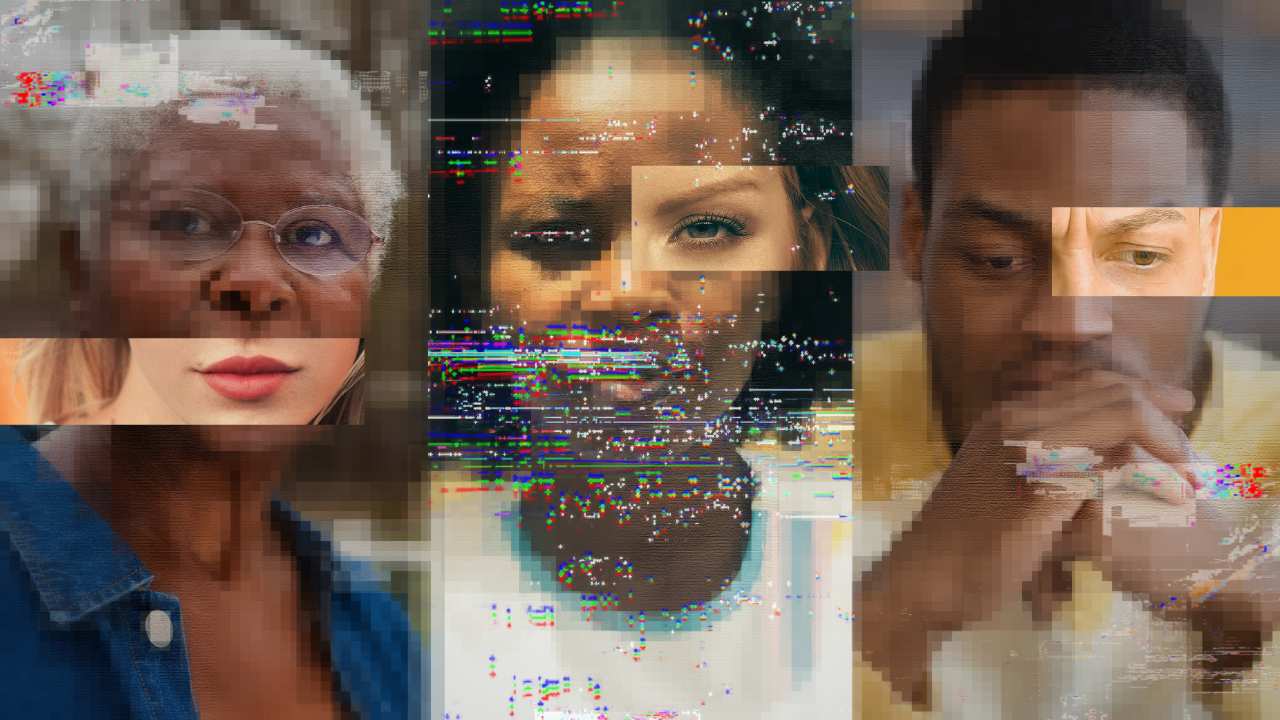
Artificial intelligence (AI) is increasingly entering public life in Ghana, including through digital systems used for identification, verification and service delivery. The ethical question is therefore not simply what AI can do, but what happens to people when digital systems become gateways through which citizenship, mobility or access to services are recognised. In northern Ghana, especially in border communities, this is a concrete question. I was privilege to visit Pusiga community in November 2025 with a Jesuit friend of my mine who is originally from the community. Thus, the topic for this article resonates very well with me.
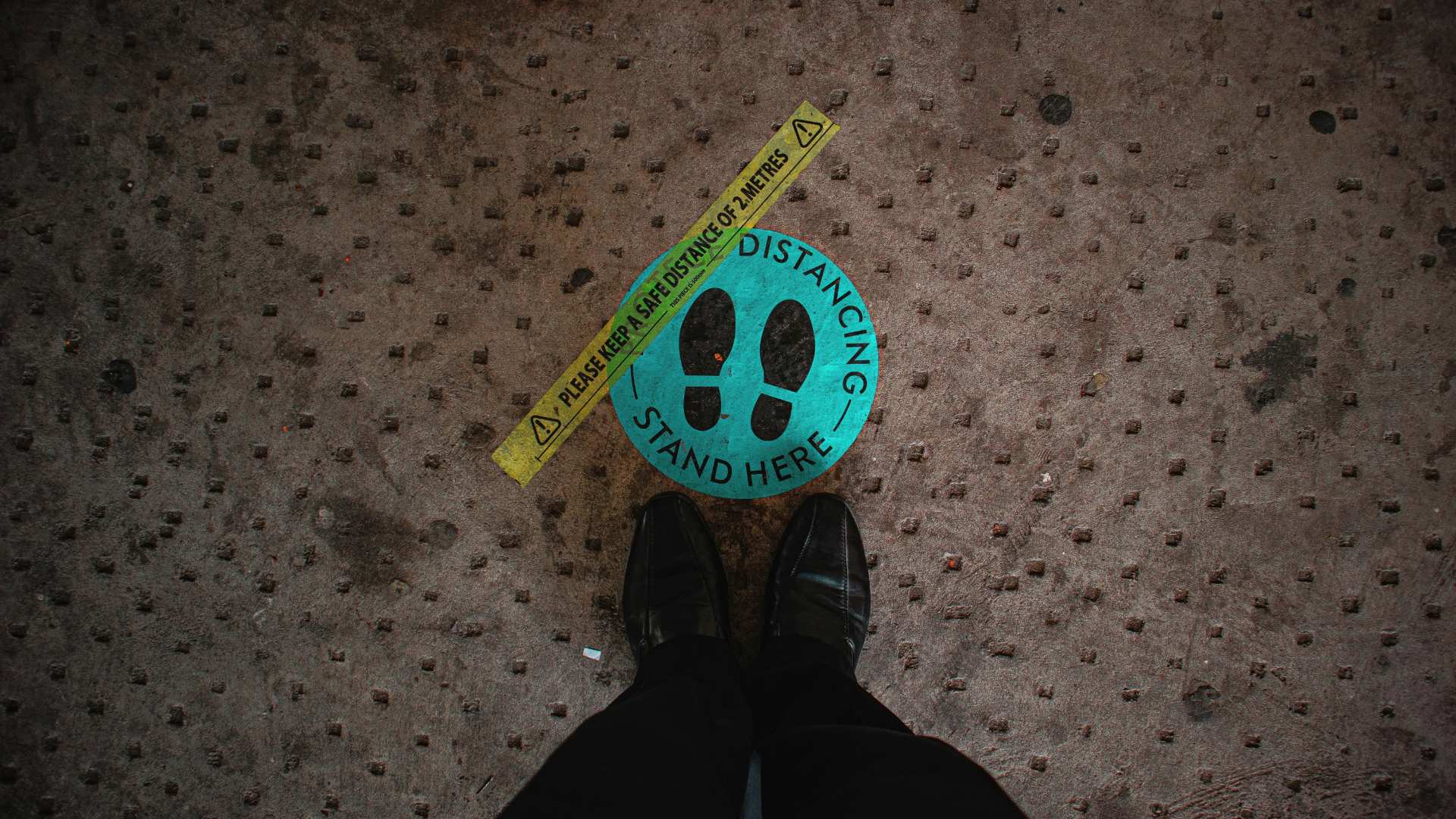
The article ‘Pandemic and Authoritarianism’, by Germán Rosa, SJ, was written in the midst of the COVID-19 crisis, but its insights extend beyond that context. The pandemic appears to reveal and accelerate political trends that were already present: the concentration of power, the weakening of democratic checks and balances, and the acceptance of extraordinary restrictions in the name of collective security. Rosa’s main concern is that fear may lead citizens to silently surrender their freedoms and rights, and that measures which were initially intended to be temporary become normalized and endure. Furthermore, in societies riven by inequality, control is never distributed neutrally: it falls most heavily on the impoverished, marginalized groups, migrants, dissidents and those who defend rights and territories.
In the affluent community where I live, I walk down the street wearing a t-shirt of the elite Jesuit institution I once attended. It’s as if I presumptuously assume that the t-shirt will alleviate the prospect of being seen by surveilling gazes. Yet, I am instantaneously reminded as car doors lock when I walk beside them, and as purses clutch when I pass by, that my body is rendered as a site of suspicion. I am reminded that my Blackness precedes my existence. I am reminded that my darkened body occludes the presumption of innocence. I am reminded that my dark skin has eviscerated my humanity and has turned me into an object of fear.

When Omar came upon the place in a neighborhood on the outskirts of town, he saw a white rosary hanging over the door and felt a sense of relief. He had been told it was a shelter run by nuns. He had been sleeping poorly for several days and walking in very difficult conditions. His feet were injured, his shoes were torn, and his clothes—which had been wet and had dried on his body over the past two weeks—were terrible. The smell was unbearable. His wife and two young children had been taken in three days earlier at another location, where they could regain their strength. He, being a man, was not allowed to stay in the same space; that was the safety policy they had explained to him.

Every political community arises, to some extent, from a promise of protection. But that promise cannot be understood in a narrow or reductionist way. Protection does not mean only defending against danger, containing threats, or neutralizing risks. It also means upholding the conditions that make a truly human life possible: belonging, recognition, education, work, health, participation, relationships, and rights. A society does not protect only when it prevents someone from being attacked; it also protects when it prevents someone from being abandoned, rendered invisible, or excluded from the community to which they belong.

Artificial intelligence makes Matthew Carnes’s proposal to move towards an economy of solidarity and reconciliation, grounded in the dignity of every person and the common good, especially urgent. Faced with a technological transformation that renders precarious work invisible, perpetuates discrimination, and threatens to concentrate the benefits of increased productivity, the text invites us to ask not only how much value innovation creates, but who shares in that value, who is excluded, and what conditions enable human flourishing. Lifelong learning, social protection, and the participation of those displaced by these changes emerge as essential conditions if artificial intelligence is to serve decent work rather than an economy without workers.