Unity in Diversity – God’s Way of Farming
Abstract
This article offers an overview of various agricultural approaches including Sustainable Agriculture, Conservation Agriculture, Climate-smart Agriculture, and Agroecology, among others. By classifying these concepts, it sets the stage for understanding their role in promoting ecological resilience. The article also highlights key lessons from field experiences at the Jesuit-operated Kasisi Agriculture and Training Center in Zambia, in partnership with the Seed and Knowledge Initiative.

A Conceptual Approach To Different Ways of Farming
Just about growing food?
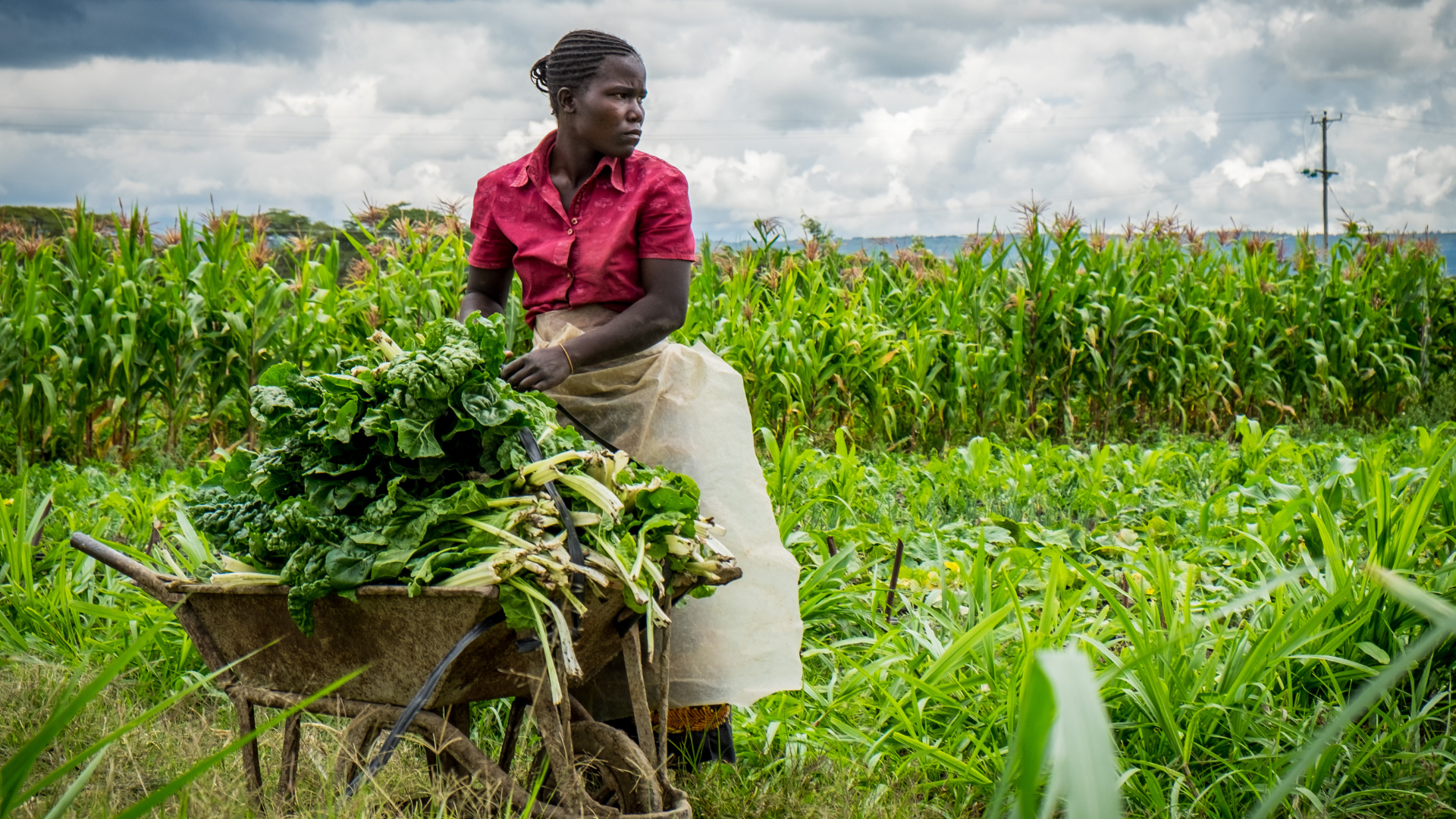
Over the last decades, images of protesting farmers have become nearly normal to us. Most recently, there have been big farmer protests in India, Germany, and Poland. Pictures of kilometre-long roadblocks of tractors, heaps of dung dumped in front of government buildings and banks, or the throwing of milk, vegetables, fruits, and other perishables in public spaces seem to be losing their impact on people. There is a danger that protests will become more and more violent or that farmers will opt for drastic actions like self-immolation because they cannot find alternative solutions to over-indebtedness.
This is one aspect of an underlying and ongoing process that some scholars describe as the corporate capture of our food systems. In the course of agricultural industrialization, several huge companies increase their market power and profits, giving them the power to shift state and international laws worldwide in their favour. Farmers are forced into a type of agriculture that is not viable for many of them, leading to a steady increase in farm sizes that can function within the tight framework of industrialized agriculture. Subsidy policies only slow down the process of farm death. Industrialized agriculture is the source of several problems like the degradation of farmland, pollution of water bodies, accelerated climate change, the rise of non-communicable diseases, and the deprivation of an essential cultural dimension—sovereignty over the food system. For most of these problems, the responsibility is not assumed by the originating agro-food industry but is passed on to the general public.
Farming is not just about producing food. Farming is a lifestyle, a way of life. Food itself is deeply connected to culture. The big cultures of the world have developed around “their” staple crop which often had the Gene Center in their area. Cereals, like wheat and barley, have influenced the old cultures of the Near East and the Mediterranean. Maize and potatoes are at the foundation of the high cultures of the Americas. Rice is strongly present in Asian cultures while sorghum and millet are in Africa.
Many cultural and religious practices have emerged around these life-giving crops. In the Eucharist, wine and bread from unleavened wheat are used as staple food in the Holy Land. Groups also distinguish themselves from others by their eating habits and taboos, creating a strong group identity. So eating pork meat is taboo for Muslims, Jewish communities, vegetarians or the vegan movement. At times, food has become the cause of social struggle for justice. Not only when people did not have to eat, but also when they were forced to eat that which did not express their culture.
Farming or food production is deeply embedded in humanity’s culture, and is, therefore, the place where worldviews and different ways of perceiving the world are incarnated or, where a group’s cultural and religious beliefs surface. These can mutually fructify each other, but can also uncover lines of economic, social, cultural, or political conflicts with inherent power dynamics.

Different Agricultures
There is no one agriculture, but many different agricultures. A multitude of agricultural concepts and names are on the market, whilst their exact meaning are often not very clear to practitioners and agricultural professionals. In some cases, too much clarity is not even desirable; some space is left open for people to organize and find a bigger base for promoting ideas. If an idea is too strongly defined it might lose its acceptability.
This article has two sections: a conceptual section and, another about our field experience. In this first section, I attempt to provide a basic classification of different terms like Sustainable Agriculture, Conservation Agriculture, Climate-smart Agriculture, Regenerative Agriculture, Organic Agriculture, Agroecology, Biodynamic Agriculture, Natural Farming, Zero-budget Farming, and Integral Ecology.
The list does not aim for completeness and the classification might need a more rigorous approach as it needs to consider typological, historical, and etymological criteria. Here, I suggest two main criteria for the [agricultural] classification process: the practice/input or goal-oriented approach, and the underlying worldview criterion.
a) Practice/Input or Goal-Oriented Approach
Some approach content predominantly by defining the goals (ends) to be achieved. They leave open, as much as possible, the practices or means through which these goals can be achieved. This might lead to the fact that a concept is largely recognized, but players with very different practices might even exclude each other from subscribing to the same concept.
Other approaches are quite clear on allowed practices (for example, ploughing) or the allowed inputs (more common). Questions about allowed inputs can include synthetic fertilizers, agrochemicals (pesticides, fungicides, herbicides), mechanization, GMOs or Hybrid-Crops, fossil fuel, etc. It can also concern the input-output relation if a more extensive or intensive system is desirable. Finally, there is differentiation also around the question of whether allowed inputs must come from within the farm or can be brought from outside the farm.
Most [agricultural] approaches include the practice/input and goal-oriented elements of the definition in various degrees.
b) Underlying Worldview
This second criterion is linked with the first one; this criterion looks at the underlying worldviews of an approach. There is a differentiation of approaches between a holistic worldview and, in the extreme case, a reductionistic worldview. In discussing approaches, tension is apparent between traditional knowledge and a modern scientific approach. Traditional knowledge often tries to give an explanation of the world as a whole, which might include very valid observations; whereas, Science tries to elaborate single causal relations. More recently, there have been attempts from the side of Science to tackle the complexity of the world through Big Data and Artificial Intelligence. However, there still seems to be a basic distinction between quantitative and qualitative approaches, where you can explain, in detail, the causal chain but are unable to deal with questions of personal taste or personal meaning. Philosophical analysis shows that reductionism is also a worldview that builds on assumptions out of its scope of verification. It is therefore not fundamentally different from more mystical views of the world like religious, philosophical, or esoteric approaches.
Further, it helps to understand what societal questions an approach tries to answer. It matters to look at the time of appearance and to see if an approach emphasizes continuity with the industrialised agriculture paradigm or if it proposes an alternative type of agriculture.
Finally, considering the people promoting an approach as well as their driving motivation helps in understanding better the underlying worldview. Is an approach originating from agricultural practitioners, academics, business people, or politicians? What is their main motivation--profit maximization (economic approach), protecting the earth's ecosystems (environmental approach), or building up of humanity or communities (social approach)? How are these dimensions articulated in a specific approach?
This criterion, underlying worldview, can provide some initial understanding of different approaches, especially to see where approaches are strongly insistent and where they are more supple or flexible.
A Brief Historical Background
Traditional agriculture evolved over thousands of years. There was then an ongoing exchange between different groups regarding practices, seeds, livestock, and vast experimental knowledge that people acquired over time without modern scientific methods. Farmers had a basic knowledge of soil fertility (slash and burn, crop rotations, terra preta). They developed the genetic base for all modern crops (maize was developed in a span of a 6,000-year-process from teosinte to modern maize), and they also had some understanding of soil microbiology (the roots of Bokashi are believed to have originated in ancient Korea).
It was during the 19th-century industrialization that industrialized agriculture emerged. Industrialization led to a strong increase in productivity and set a large part of the population formerly working in agriculture available for other activities. The increase in productivity can be explained through advances in the different fields of agriculture such as mechanisation, plant nutrition, agrochemicals, and hybrid seeds.
a) Mechanisation and Cultivation Methods
In the modern era, the number of inventions simplifying agricultural tasks increased. In the second half of the 19th century, steam engines replaced horses. Steam engines were very heavy and led to strong soil damage, imparting lessons about soil compaction. From there, more advanced machines and equipment were increasingly designed to serve the farmers’s needs.
b) Growing Knowledge of Plant Nutrition Requirements
Since the beginning of the 19th century, guano gained fame as a natural fertilizer and its trade was established. Research by chemists, like Humphry Davy and Justus von Liebig, started the science of plant nutrition. The outstanding importance of three macronutrients—Nitrogen, Phosphorus, and Potassium—was discovered, and ways to add these to the soil were explored. In the time between the two World Wars, the Haber-Bosch method to fix nitrogen under high pressure from the air was developed and opened up the possibility of producing nitrogen fertilizer at scale. Phosphorus and Potassium meanwhile were mined from suitable and pure-enough deposits. Afterwards, concerns about their accessibility and depletion emerged.
c) Development of Chemicals for Plant Protection
In 1896, the first major chemical herbicide Sinox was developed in France. Research during the period of the two World Wars led to the discovery of a large number of active compounds. In the late 1940s, the development of agrochemicals began. About 20 years later, more than 100 plant protection chemicals were released commercially.
d) Development of Improved-Seed-Varieties
From the 1850s onwards, backed by growing interest in genetics research, the breeding of improved [seed] varieties took off. In the 1920s, research stations in the USA experimented with hybrid seeds and the Hybrids were first rolled out in the 1930s.
These were the principles that Borlaugh would also later promote in the Green Revolution, a development approach to increase worldwide agricultural productivity to end world hunger.
After the 2nd World War, agricultural transformation accelerated enormously. In the upstream (agricultural inputs) and the downstream (food processing) areas of agriculture, huge aggregation processes took place. This gave rise to a small number of internationally operating companies having the biggest share of the market. As many States aimed to develop their agricultural sector, and while [commercial] companies were advocating for it, both international and national legislation increasingly shifted in favour of industrialized agriculture.
The negative effects of industrialized agriculture, however, became increasingly visible. Besides its intensified economic pressure upon farmers, its [negative] impact on the environment also became palpable. The famous book, “Silent Spring” by Rachel Carson appeared in 1962 and blamed industrial agriculture for the massive die out of insects. From the 1970s onwards a bigger number of people became concerned about these [adverse] developments. The underlying problem of social justice is that more and more profits were privatized while the costs for damages were socialized.
Emerging Key Agricultural Approaches
From this situation, different agricultural approaches were developed to rectify the circumstances.
a) Agricultural Approaches Open for Inputs from Industrial Agriculture
Sustainable Agriculture (SA)
Sustainable Agriculture (SA) is one of the widest concepts in the arena. It emerged from the late 1970s onwards in Australia and the USA. It is a more goal-oriented approach. The National Agricultural Research, Extension, and Teaching Policy Act of 1977 from the USA Department of Agriculture defines SA in the following terms:
a) satisfy human food and fibre needs;
b) enhance environmental quality and the natural resource base upon which the agriculture economy depends;
c) make the most efficient use of nonrenewable resources and on-farm resources and integrate, where appropriate, natural biological cycles and controls;
d) sustain the economic viability of farm operations;
e) enhance the quality of life for farmers and society as a whole.
The concept emphasizes economic, social, and production sustainability; and it strongly includes an environmental perspective. The term “sustainable” underpins its long-term perspective. The approach tries to correct the shortfalls of industrialized agriculture. It does not, however, exclude different agricultural practices; it remains open to industrialized agriculture. It is therefore a rather inclusive approach, with the risk of being watered down strongly.
The following two approaches namely, Conservation Agriculture and Climate-Smart Agriculture are closely related to Sustainable Agriculture. They further spell out the concept by remaining open to industrialized agriculture and the use of chemical inputs.
Conservation Agriculture (CA)
The term Conservation Agriculture was coined in the 1990s but the roots of the work reach far back to the Great Dust Bowl in the 1930s which eroded the topsoils of the Great Plains during several unusual dry years. The combination of ploughed fields with a destroyed soil structure and crop failure due to the drought left the topsoil unprotected, eroding through the strong winds of the plains.
The focus of the work is to conserve soils from degradation and [to retain] water in the soil. Conservation Agriculture (CA), in contrast to both Sustainable Agriculture and Climate-Smart Agriculture, is characterized by a set of practices to attain its goal:
- Minimum Tillage (reduced tillage or, no-till)
- Soil Cover (use of cover crops; mulching)
- Species Diversification (crop rotation)
CA is an example of an approach defined by several positive practices, but without excluding other practices. CA allows for the use of chemicals and synthetic inputs but is reduced as much as possible; and, GM-crops are also allowed. It follows therefore the main strategy of SA by remaining as open as possible: "While for some, CA means resource-conserving, low-external input agriculture, others associate it with highly industrial, glyphosate-resistant, GM-based agriculture, resulting in unlikely bedfellows such as Charles, Prince of Wales (an ardent organic farmer), and the large agri-business company Monsanto."
With its clear practices, CA is more on the side of practical farming. In contrast, Sustainable Agriculture is more of an academic approach while Climate-Smart Agriculture opens itself more to the political space.
Climate-Smart Agriculture (CSA)
CSA puts in its centre the attainment of the Paris Agreement and the realization of the Sustainable Development Goals (SDG). The concept was launched in a background paper by FAO in 2010 at the Hague Conference on Agriculture, Food Security and Climate Change.
CSA consists of a set of principles, like SA, which are:
- sustainably increasing agricultural productivity
- adaptation to climate change -- building up of resilience
- and mitigation of climate change (reduction of greenhouse gas emissions)
CSA aims to help in political decision-making and fundraising for implementing projects. It lists several sets of practices that fall under SA. One of the Climate-Smart production systems is Conservation Agriculture. However, it also avoids defining itself by omitting certain practices or inputs.
Regenerative Agriculture (RA)
RA can be considered an intermediate approach. It has grown side by side with SA in the USA. Initially, RA was promoted by the Rodale Farm Institute from 1983 onwards. The Rodale Institute was founded by Robert Rodale (1930-1990), one of the pioneers of Sustainable Agriculture and Organic Agriculture. His father, Jerome Irving Rodale, founded a printing press that in 1930 published on health and organic agriculture, and in 1942 the Rodale Organic Gardening Experimental Farm. The main focus of interest was the production of healthy food. The Rodale Farm Institute ran the longest comparative trials between conventional and organic agriculture.
Regenerative Agriculture emphasizes the need for farmers to regenerate soils by increasing soil organic matter. The transition of farmers’s stands from conventional to organic agriculture is the focus of RA. During this transition, synthetic fertilizers and chemical inputs might be of use but should be replaced, bit by bit. In contrast to the steep transition required by Organic Certification, RA leaves farmers more space to establish a smooth transition and a case-by-case strategy development.
Interestingly, there is a strong cross-fertilisation between the approaches of Sustainable Agriculture, Conservation Agriculture, and Regenerative Agriculture. Rodale Farm Institute also promotes no-till organic agriculture, which links it closely to Conservation Agriculture. The Institute developed special machinery for this purpose like the Rodale Roller Crimper, to prepare the cover crop for the planting of the cash crop.
b) Alternative Approaches to Industrial Agriculture
A second group of approaches describes itself as an alternative to the dominant industrialized agriculture. These approaches prescribe restraints on practices that are allowed and decisive in industrialized agriculture. Care for the environment is a priority but is strongly linked to social considerations. Economics plays a comparatively smaller role but is nevertheless an important factor. The approaches, however, differ in origin and underlying worldview.
Organic Farming
The organic movement developed from the early 20th century onwards, parallel to the rise of industrialized agriculture. The first conceptualization of the term is due to Lord Northbourne in his 1940 book, "Look to the Land". The Biodynamic Movement in Germany, Rodale in the USA, and the Australian Organic Farming and Gardening Society were pioneers in Organic Farming.
In 1972, the International Federation of Organic Agriculture Movements (IFOAM) was founded in Versailles to spread organic agriculture and improve its worldwide research. As a membership organization, IFOAM has more than 700 members in over 100 countries representing around 3.5 Million farmers.
In the 1980s, organic farmers advocated the creation of Organic Certification Standards, like the NOP Standard for the USA and the EOS Standard for the European Union. Accreditation is mainly done by governments.
The rules for certification state which practices are allowed in Organic Farming and those which are prohibited. The approach is therefore strongly driven by its agricultural practice. Disallowed are the use of synthetic fertilizers, agrochemicals, and GM crops. Some further regulations and specifications might differ in different member organizations or certification systems.
Besides this negative definition that provides its members with a clear sense of belongingness, there is a large amount of different practices defining the identity of each member.
Biodynamic Agriculture
Biodynamic Agriculture is one of the examples of an organic approach from the European context. It developed out of the Anthroposophic Movement around Rudolf Steiner. He held, in 1924, a series of talks about natural agriculture guided by a holistic, esoteric worldview. He sees the farm as a living organism embedded in a holistic cosmology. At the centre of his interest are fertilizer preparations based on the homoeopathic approach from manure and chemical elements.
The nationally oriented Nazi Regime, especially some of its leading figures, had a vivid interest in the organic approach. However, they ensured that its anthroposophic aspect was eliminated, as far as possible, to make it compatible with the national-socialistic ideology.
There is a strong parallel that connects early pioneers of organic farming like the Biodynamic Movement and the Rodale Initiative. It is their interest in highly qualitative and healthy food in opposition to the food provided by industrialized agriculture.
Today, Demeter is one of the strictest Organic Certification bodies; and the Demeter marketing company helps biodynamic farmers market their products efficiently.
Natural Farming
Even though the term “natural farming” has been especially adopted by movements in India, it originated from Japan. The Natural Farming approach was initially promoted by Masnobu Fukuoka (1913 - 2008). He laid out his principles in his book, "The One-Straw Revolution" which appeared in 1975. It is another holistic approach, standing in the Asian tradition, where he combines the production of food with aesthetics and spirituality. The ultimate goal is the cultivation and perfection of the human being.
Positively spoken, the approach consists of observing and mimicking nature. Negatively, it entails no-till, no synthetic fertilizer, no chemicals, no weeding, no pruning. In Japan, there is a widespread network of no-tuition natural farming schools at 40 locations and about 900 students. The approach is mainly practical.
Zero Budget Farming
Subhash Palekar from India developed, through observing the natural growth of forests, the principles for the Zero Budget Farming method. Between 1989 to 1995, he conducted a vast number of research projects on his farm.
The experience of many Indian farmers trapped by debts due to expensive external inputs stands behind the approach; therefore, it is an alternative position to industrialized agriculture that created the sorry situation [of over-indebtedness]. Subhash Palekar promotes a method that does not use chemicals or synthetic fertilizer but rather enhances soil life using the biomass produced on farms and liquid bio-fertilisers made from cow dung and dust. It minimizes external inputs and costs for the farmer to produce a crop basically out of his/her labour.
Agroecology
The concept of Agroecology, promoted by the FAO, does not formally exclude certain practices or inputs. However, through its strong bottom-up approach, it is linked to the holistic traditions of communities that are the main drivers of Agroecology. It can be counted among alternatives to industrialized agriculture.
The agroecology approach can refer to different things: an academic discipline, a social movement, or an agricultural practice. The basic intuition is to bring ecology and agriculture together. How do ecological processes play a role in agricultural production? How can they be used to make production more efficient, resilient, and environmentally friendly?
The approach originated in an academic discussion and the term was first mentioned at the end of the 1920s. A book from Tischler in 1965 carries the term agroecology in its title. Agroecology as an academic discipline is inherently multidisciplinary. It includes Agriculture, Ecology, Sociology, Economics, and History.
The studies and work especially of Miguel Altieri, Professor for Agroecology at the University of California oriented Agroecology towards a more political orientation and the international smallholder farmer network, Via Campesina, has taken up the term Agroecology to designate a social movement that grows from the bottom-up and faces the top-down approach of industrial agriculture.
Agroecology was taken up in 2014 by the FAO. Ten Principles of Agroecology have been developed in consultation with international stakeholders. A negative definition contrasting it with industrialized agriculture is avoided; the 10 principles positively provide a vision of an agriculture and food system which reflects and values traditional ways of farming and the cultures of different communities and smallholder farmers. However, the implications of farmer-managed seed and food systems and environmental trade-offs might lead to an exclusion of Hybrid Seeds, GMOs, fertilizer, and agrochemicals, but the FAO position avoids this conclusion.
Integral Ecology
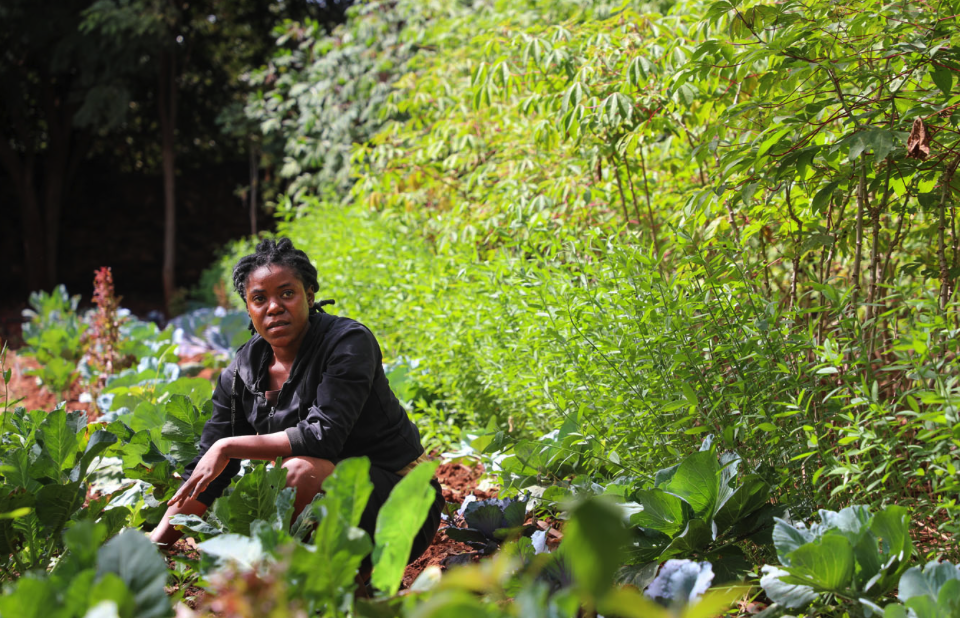
Even though not directly an agricultural approach, Pope Francis developed Integral Ecology in his Encyclical Letter, Laudato Si' in 2015 and can be easily connected to the efforts of creating an agriculture that is environmentally friendly, socially just, and economically viable.
Pope Francis links the environmental crisis with spiritual crisis. The different challenges that humanity faces, be it environmental, social, or economic are linked with humanity’s profound spiritual crisis. This crisis is rooted in the fact that humanity is not taking up the role of a caretaker but rather that of an individualistic ruler. Pope Francis’s Encyclical Letter is an invitation to all cultures, religions, and sciences, to work together to overcome challenges. Everyone needs to contribute to the full development of what is human. The market alone cannot create this; also, modern science and technology need to find their right place. There is the risk of reducing reality, but they need to be transcended in a more holistic worldview on human existence.
"Francis [of Asisi] helps us to see that an integral ecology calls for openness to categories which transcend the language of mathematics and biology, and take us to the heart of what it is to be human."
"Ecology studies the relationship between living organisms and the environment in which they develop. This necessarily entails reflection and debate about the conditions required for the life and survival of society, and the honesty needed to question certain models of development, production, and consumption. It cannot be emphasized enough how everything is interconnected. "
Allow me now to conclude this article’s conceptual section where I provided a basic classification of different terms like Sustainable Agriculture, Conservation Agriculture, Climate-smart Agriculture, Regenerative Agriculture, Organic Agriculture, Agroecology, Biodynamic Agriculture, Natural Farming, Zero-budget Farming, and Integral Ecology. In the succeeding section, allow me to share some lessons learnt from our field experiences at the KASISI Agriculture and Training Center in Zambia and its membership in the Seed and Knowledge Initiative.
Editor’s Note: Stay tuned for next week’s continuation, where we’ll dive into action plans based on real-world field experiences in Zambia.
 Fr. Claus Recktenwald, SJ
Fr. Claus Recktenwald, SJ is the Director of Kasisi Agriculture Training Center (KATC) in Zambia. He holds a Master’s Degree in Agricultural Sciences (Integrated Plant and Animal Breeding) from Göttingen University, Germany. Claus is especially interested in regenerating soils and biodiversity as a way to discover the beauty of God’s creation. He has been working at KATC since 2019 training smallholder farmers and multipliers in sustainable organic agriculture. Besides its training, research and project works, KATC also operates an organic demonstration farm showcasing sustainable ways of production.