The Reality of Papua: A Reflection by Ignatius Ismartono, SJ
We are pleased to share a valuable article by Ignatius Ismartono, SJ, titled "Papua in the Concerns of the Nation and the Church".
The text reflects on the complex reality of Papua, describing it as an unhealed wound bearing the cries of suffering, prolonged conflict, and ecological destruction brought about by a "new form of internal colonialism".
Throughout Church history, institutions have often become defensive when they feel that their past services are not appreciated. But modern society usually judges not only the history of service, but also the moral courage of the Church today in confronting structural injustice.
On the other hand, it is also unfair to reduce the entire Papuan Church to being an accomplice of the state or corporations. The reality is far more complex. There are priests and religious who truly live among Indigenous communities and quietly struggle alongside them.
Viewed through the spiritual and ecological lens of the Laudato Si' encyclical and the message of Divine Mercy, the piece invites us to reject resource exploitation and violence. Instead, it calls for the moral courage to build a future grounded in human dignity, solidarity with indigenous communities, the safeguarding of creation, and substantive dialogue.
Please find the document below.
Papua in the Concerns of the Nation and the Church In Indonesia.
Jakarta, Mei 25, 2026 - By Ignatius Ismartono, SJIn recent years, Papua has increasingly emerged in national discourse as a wound that has not yet truly healed. The land of Papua is not merely a geographical region on the eastern edge of Indonesia, but part of the very face of the nation, bearing the cries of suffering, prolonged conflict, ecological destruction, and a deep longing for dignity, justice, and peace. In this context, the voices of the nation, the Church, and culture itself become important to hear together.
The film Pesta Babi: Colonialism in Our Time presents Papua as a symbol of the struggle of ordinary people against oligarchic powers that control natural resources and determine the direction of people’s lives. The film does not merely speak about social violence, but also portrays how land, forests, and the living spaces of indigenous communities can be destroyed for the economic and political interests of a small elite. Papua becomes a mirror of a situation in which development has lost its conscience, when human beings and nature are treated merely as objects of exploitation.
In a critical reading of the film, modern oligarchy appears as a new form of internal colonialism. Indonesia may have achieved political independence, yet patterns of land control, resource exploitation, and the displacement of indigenous peoples often still follow the logic of old colonial structures. Forests are cleared for extractive industries, rivers are damaged for economic interests, and indigenous communities lose their ancestral lands. In the Papuan context, colonialism does not always come from foreign powers; it can also arise from within the nation itself through structures of power that marginalize ordinary people.
For this reason, Papua cannot be understood merely as a matter of security or economic development. In its 2026 Pastoral Appeal for National Awakening, the Indonesian Bishops’ Conference (KWI) emphasized that Papua is “an integral part of the face of Indonesia” and therefore demands goodwill, honesty, and approaches that are more humane, dialogical, participatory, and respectful of the history and culture of local communities. KWI also stressed that a security-based approach is neither a quick nor appropriate solution for Papua. Violence, fear, and the loss of mutual trust have left deep intergenerational wounds. (Press Realese Seruan Pastoral KWI 2026)
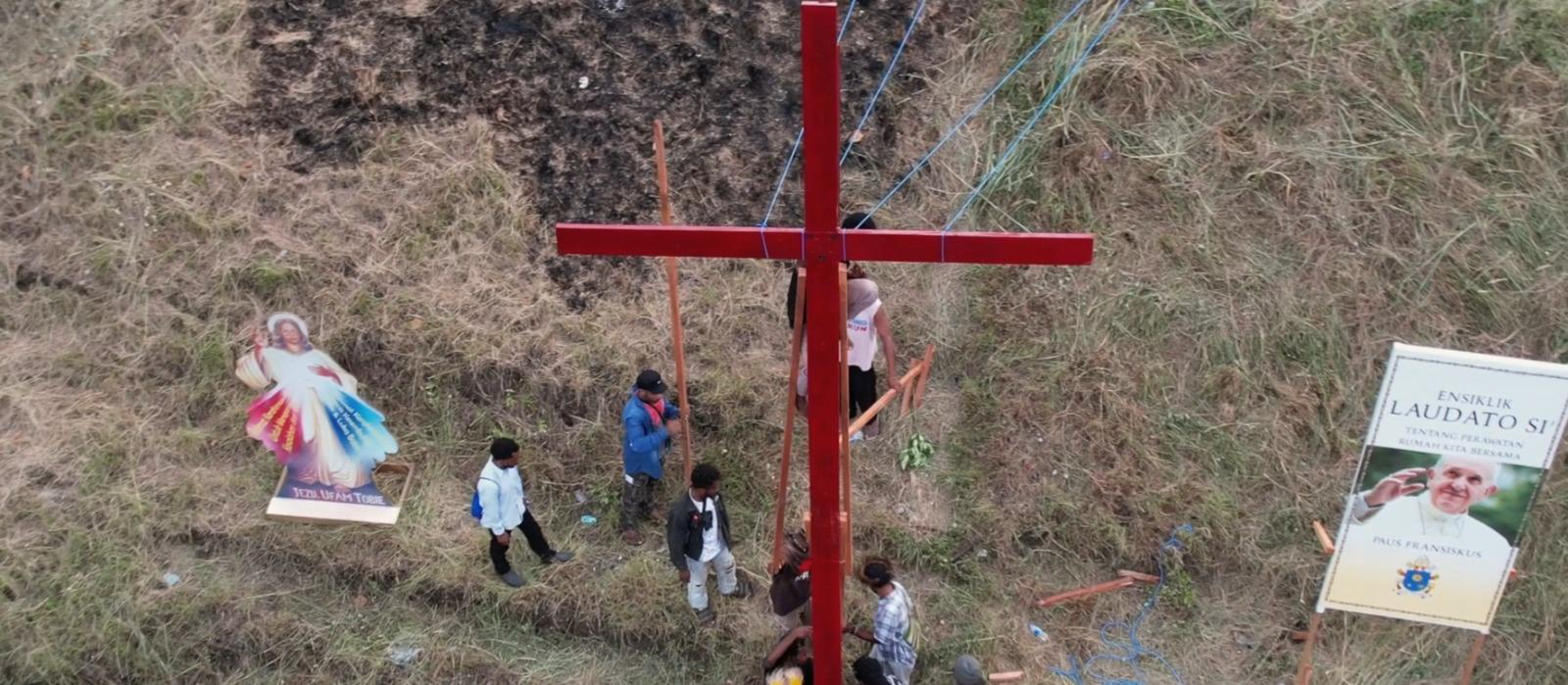
The Church’s concern for Papua is also strongly reflected in the ecological and spiritual interpretation of the film Pesta Babi. The appearance of a Laudato Si’ banner in the film becomes an important symbol that the struggle of the indigenous Papuan people is not only about economics and politics, but also about safeguarding creation. Forests are understood not merely as economic commodities, but as sacred living spaces. Laudato Si' reminds us that the environmental crisis cannot be separated from the suffering of the poor and indigenous peoples. The cry of the earth and the cry of the poor are inseparable.
Within this framework, Papua becomes a place where ecological and humanitarian crises intersect. Deforestation, large-scale food estate projects, natural resource exploitation, and top-down models of development can become threats to indigenous communities if they are carried out without respect for fundamental rights and local wisdom. KWI even specifically mentioned the food estate project in Papua as an example of development that can backfire when implemented in an exploitative manner and without transparent public consultation. (Press Realese Seruan Pastoral KWI 2026)
Yet the Church’s concern for Papua does not stop at social and ecological criticism. The film also shows the icon of Divine Mercy bearing the words “Jezu, ufam Tobie” - “Jesus, I trust in You.” This symbol introduces a profound spiritual dimension. Amid conflict, trauma, and uncertainty, the people of Papua are portrayed as a people longing for mercy, hope, and peace.
There are certain parallels between the world in which Saint Faustina Kowalska lived and the experience of many Papuans today. Faustina lived in a Europe overshadowed by war, anxiety, poverty, and uncertainty. Similarly, many Papuans live in fear because of prolonged conflict, displacement, and violence. Many ordinary people feel unheard, deprived of security, and burdened by social trauma.
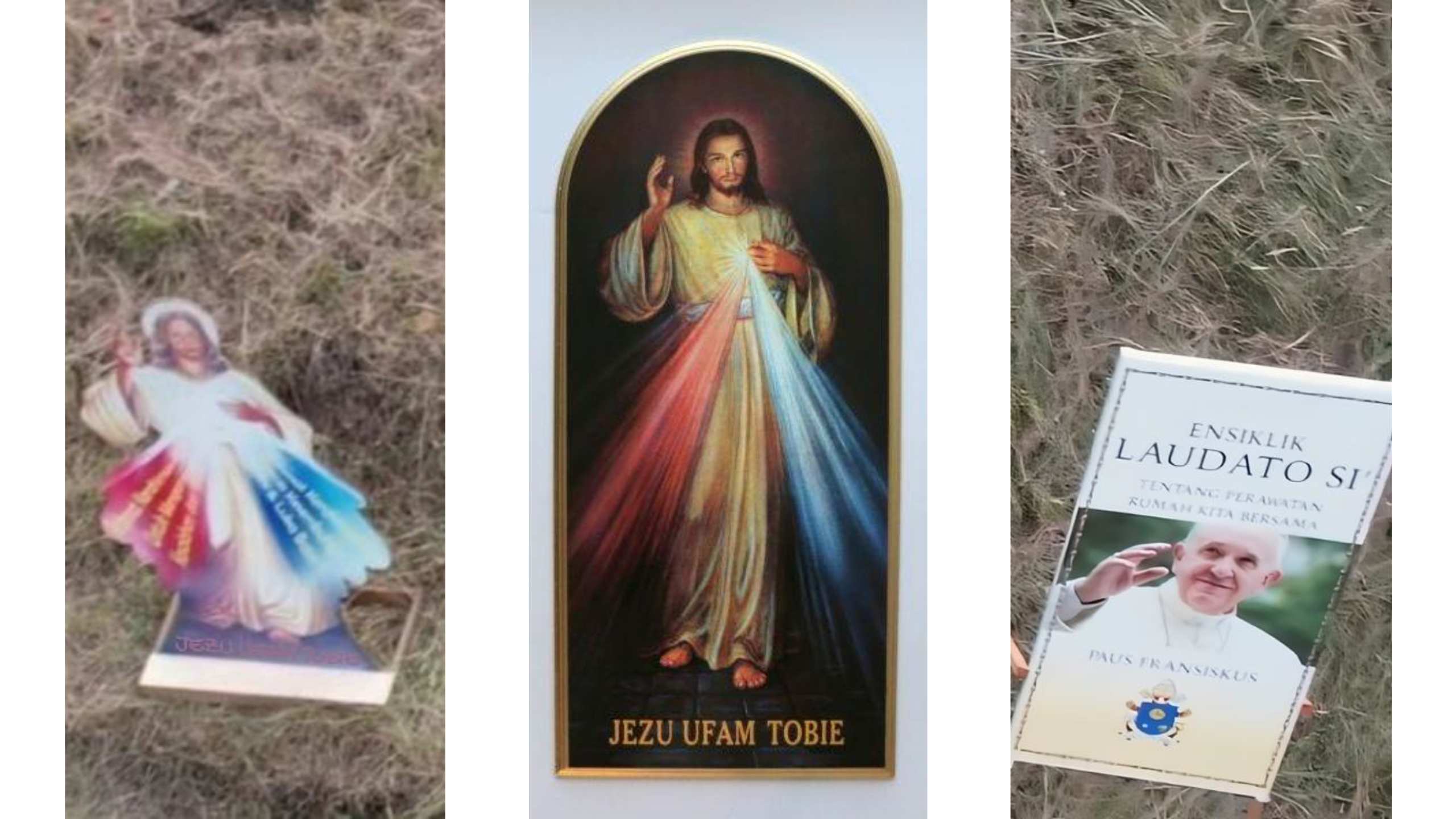
The message of Divine Mercy brought by Saint Faustina becomes deeply relevant in the Papuan context: humanity is called to build approaches grounded in human dignity, dialogue, forgiveness, and reconciliation. Papua does not need endless violence, but rather the courage to listen to one another and rebuild broken trust.
In such circumstances, the Church in Papua often serves not merely as a religious institution, but also as a place of moral and humanitarian refuge. The Church becomes a space where ordinary people find accompaniment, education, consolation, and a voice for their suffering. The prophetic role of the Church becomes visible when it courageously speaks about the suffering of indigenous communities, ecological destruction, and social injustice, while at the same time inviting all parties to seek peaceful and dignified solutions.
In its pastoral appeal, KWI called upon the Indonesian nation to build solidarity and preferential concern for marginalized communities, including the indigenous peoples of Papua. The Church rejects tendencies toward authoritarianism, militarism, and the centralization of power, while encouraging substantive dialogue and reconciliation aimed at healing intergenerational social wounds. (Press Realese Seruan Pastoral KWI 2026)
Ultimately, Papua is a mirror for Indonesia itself. The way this nation treats Papua reveals whether Indonesia is truly built upon human dignity, social justice, and cooperation, or whether it is dominated by the interests of power and economic gain alone. Papua reminds the nation that development without humanity produces wounds, and democracy without justice loses its meaning.
Therefore, concern for Papua should not end with sadness or anger. It must become a moral courage to build dialogue, solidarity, protection for indigenous peoples, respect for nature, and a concrete commitment to those who suffer. In the light of faith and humanity, Papua is not merely a problem to be solved, but a brother and sister to be heard, embraced, and defended together in dignity.
Cover image: Screenshot: "PESTA BABI: Kolonialisme di Zaman Kita - (Official Full Movie)" (Minute 1:50). Directed by Dandhy Laksono and Cypri Dale. Published on May 21, 2026, by the Redaksi JubiTV channel and collaborators.
Related Posts:
In Magnifica Humanitas, Pope Leo XIV warns that machine intelligence in war ends by “reducing victims to data.” The machine profiling that registers a person for food can also be used to select a person as a target. A small drone circling a road, with no one steering it, can have such a profile as its target. A drone like this is an autonomous weapon system. Once activated, it selects and attacks targets by itself, matching what its sensors detect to a programmed target profile. No human being decides, at the moment of the strike, that this particular person will die or is the right target. The case most often cited as the first use of such a weapon against people, reported by UN experts, was in Africa, in Libya in 2020.
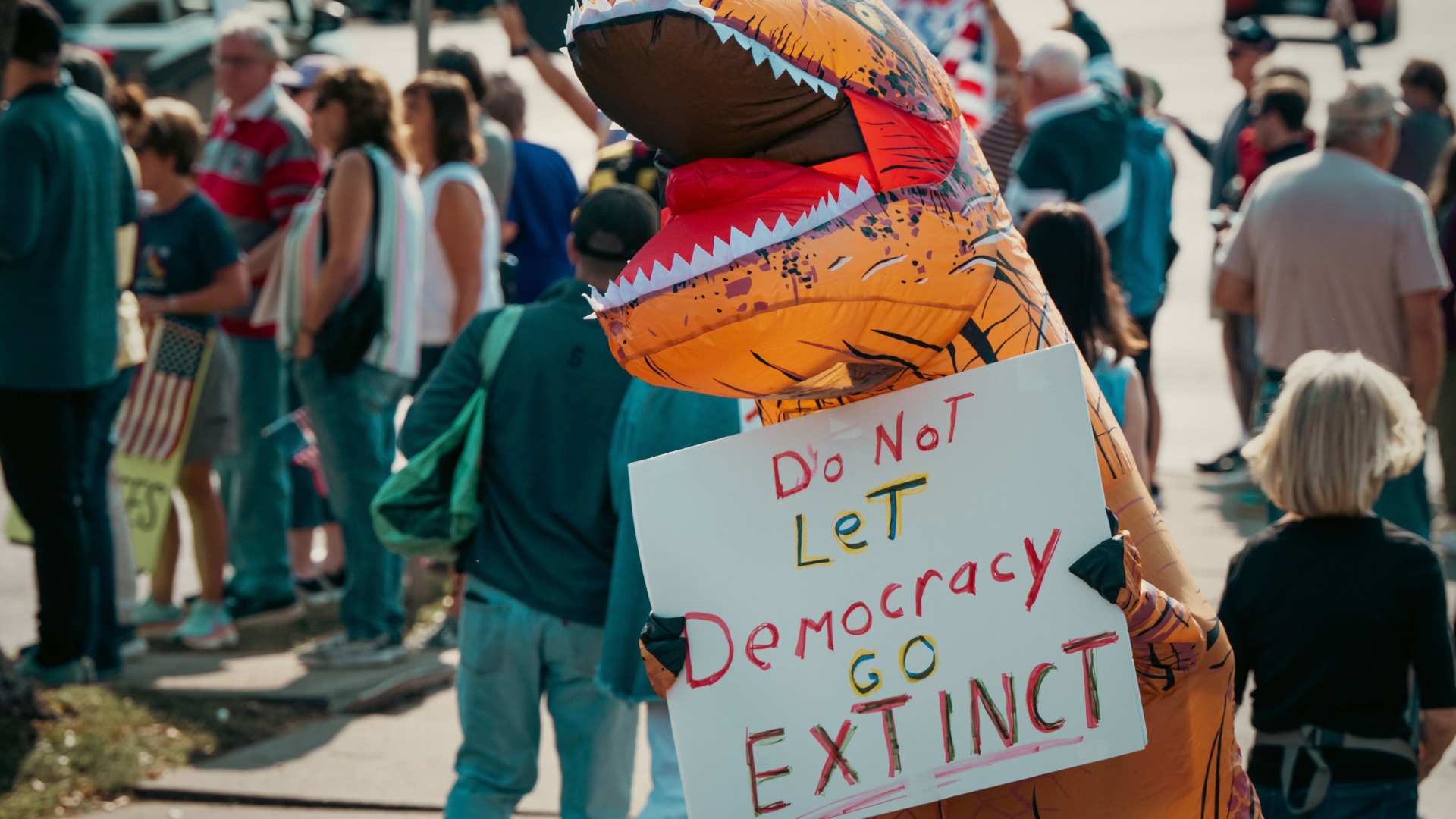
Democracy, which has historically proven most effective in meeting these criteria, cannot be taken for granted. In our AI era, citizens should press for more than multiparty elections and the protection of basic freedoms; that institutional core is not enough. We must carefully regulate and channel powerful technologies with the capacity to divide us from one another and short-circuit social and political participation. That means maintaining spaces in civil society where human contact and social friendship can flourish without the mediation of machines, beginning with the educational systems through which all citizens pass. It means fighting deepfakes and disinformation in the public sphere, so that citizens still operate in a world of facts and evidence and political representation has a strong basis.
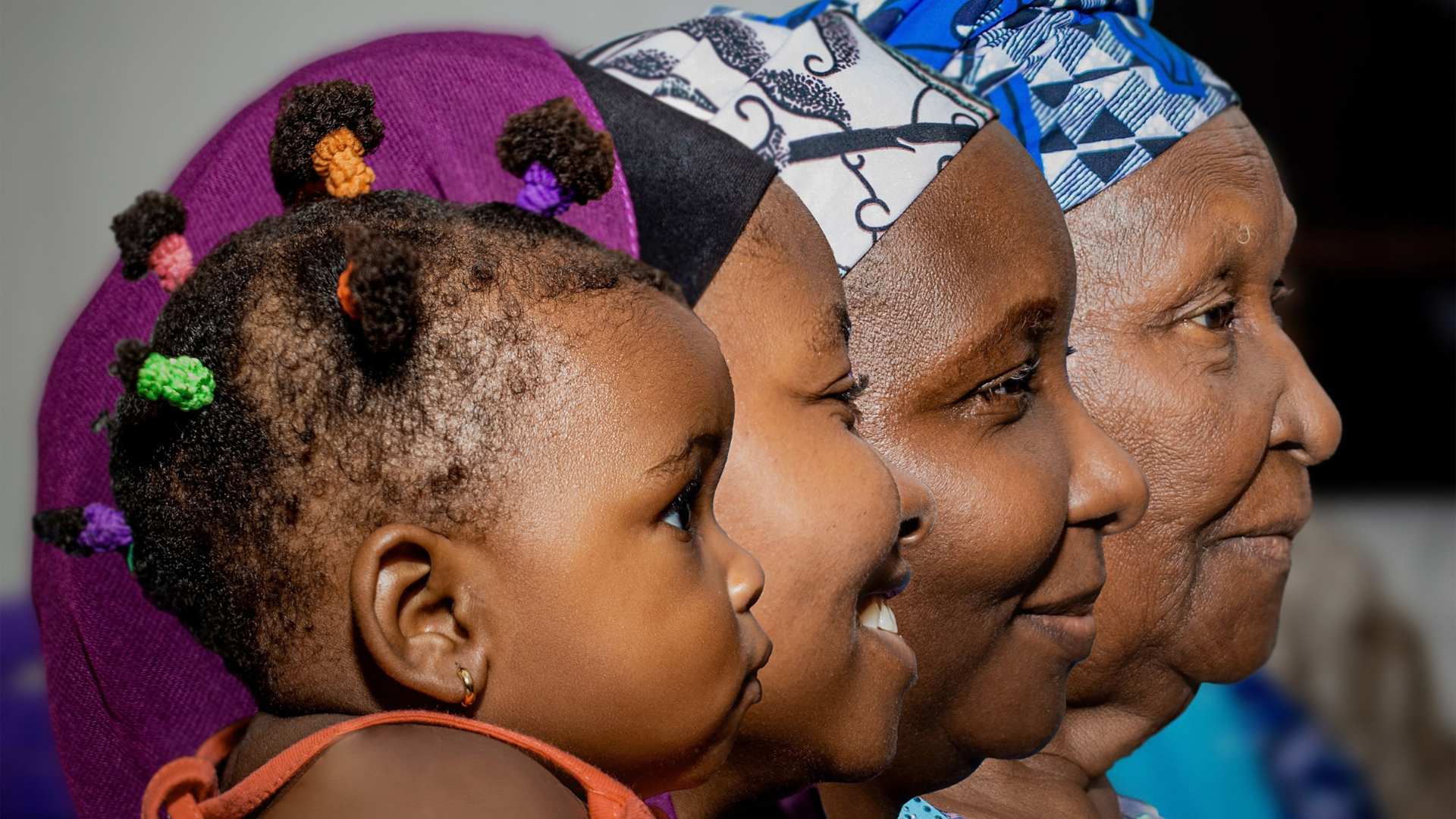
Artificial intelligence (AI) is increasingly entering public life in Ghana, including through digital systems used for identification, verification and service delivery. The ethical question is therefore not simply what AI can do, but what happens to people when digital systems become gateways through which citizenship, mobility or access to services are recognised. In northern Ghana, especially in border communities, this is a concrete question. I was privilege to visit Pusiga community in November 2025 with a Jesuit friend of my mine who is originally from the community. Thus, the topic for this article resonates very well with me.
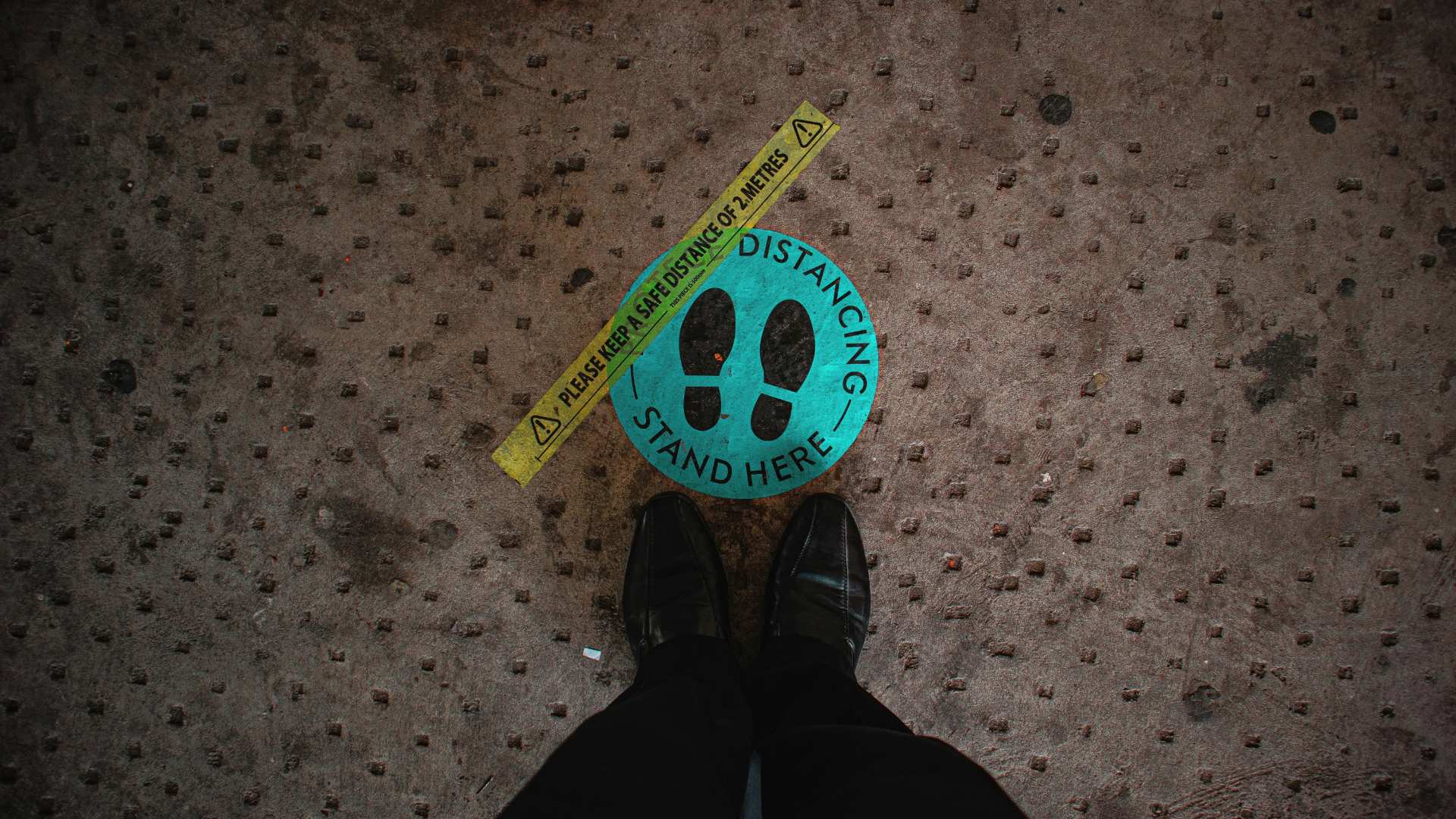
The article ‘Pandemic and Authoritarianism’, by Germán Rosa, SJ, was written in the midst of the COVID-19 crisis, but its insights extend beyond that context. The pandemic appears to reveal and accelerate political trends that were already present: the concentration of power, the weakening of democratic checks and balances, and the acceptance of extraordinary restrictions in the name of collective security. Rosa’s main concern is that fear may lead citizens to silently surrender their freedoms and rights, and that measures which were initially intended to be temporary become normalized and endure. Furthermore, in societies riven by inequality, control is never distributed neutrally: it falls most heavily on the impoverished, marginalized groups, migrants, dissidents and those who defend rights and territories.
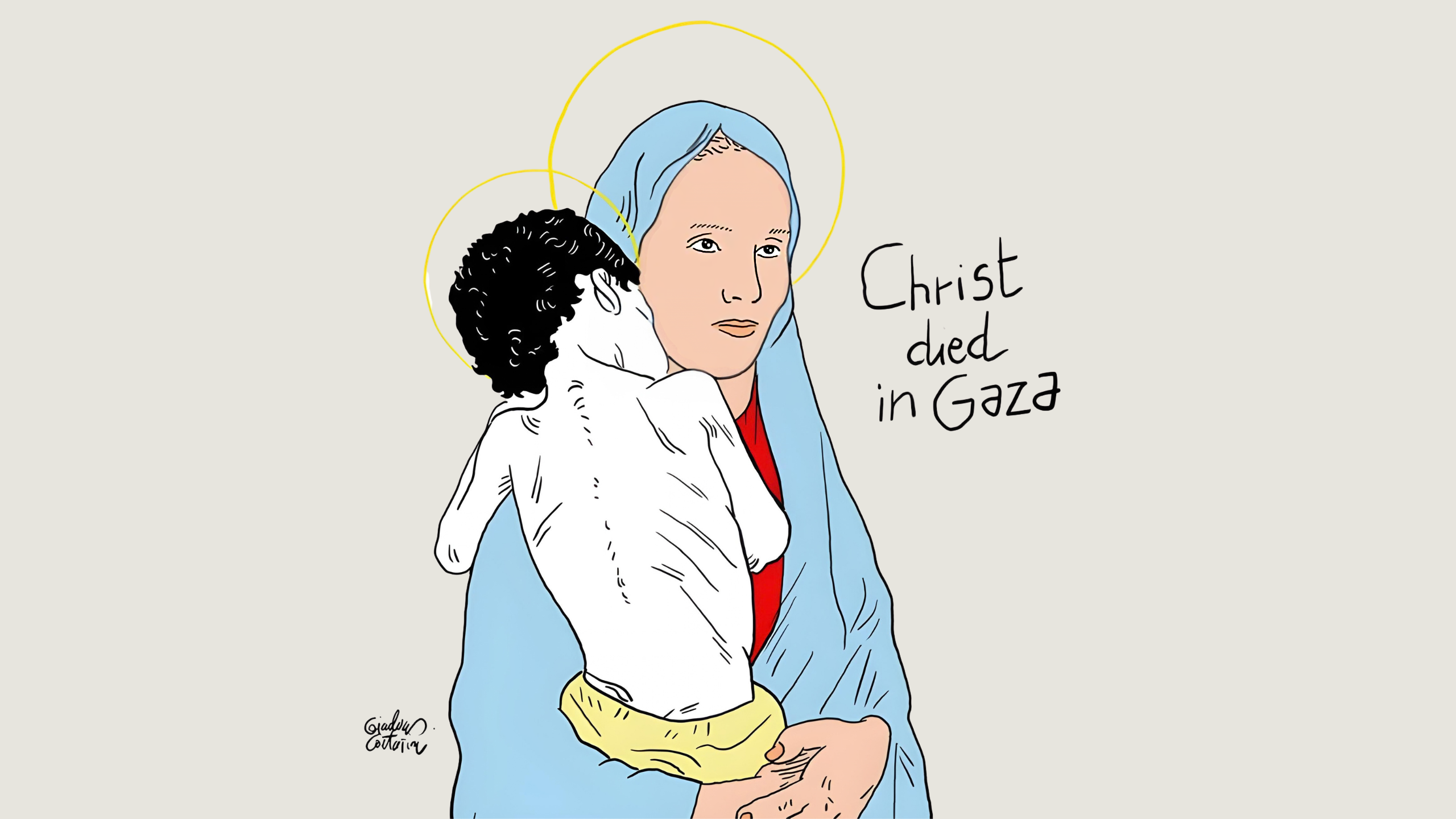
Speaking of dead children is uncomfortable. Yet it can also be healing. As I listened to the stories shared that day, I found myself returning to memories I may at times shy away from remembering. Iremember finding my sister’slifeless body in bed one Saturday morning. Ihad cometo carry her out with me to watch cartoons.As I listened tothe story of Hind Rajab, a 5-year-old girl who had been trapped inside a car attacked by Israeli forces,the memory of a little boy reaching out to touch his sister came back. The young girlhadmanaged to call the Red Crescent for help but hours later she and the paramedics who had come toassisther were all found dead. The chilling story reminded me of the shocking cold that struck my hand as I gently touched my sister’s arm in a futile attempt to wake her up.
Who Are the Victims and Those at Risk of Becoming Victims? When it comes to mining, particular attention must be paid to those who are most vulnerable: Indigenous communities whose livelihoods depend on their land, forests, rivers, and water sources; small-scale farmers; fishers; poor families; women, children, and older people; as well as communities with the least bargaining power in legal, economic, informational, and political matters. They may become victims when land loses its social function, when water sources are polluted or disappear, when the environment is damaged, when livelihoods are disrupted, or when their social and cultural life is transformed without their genuine consent.