Teaching Tuesdays: Key Principles of Catholic Social Teaching for a Wounded World
We live in an increasingly polarised world, marked by persistent inequalities, forced migratory flows and a public conversation shaped by algorithms that simplify complexity. In this scenario, questions arise that rarely find space: from where do we read social reality? Which ethical frameworks continue to operate when debate turns into noise? In this context, throughout 2025 the Secretariat for Social Justice and Ecology of the Society of Jesus placed at the centre one of the most demanding —and often least known— cores of the Church and its tradition: Catholic Social Teaching (CST).
A pedagogy for reading reality
Throughout 2025, the Secretariat for Social Justice and Ecology (SJES) of the Society of Jesus promoted Teaching Tuesdays, a weekly series that achieved something uncommon: translating the theological density of Catholic Social Teaching into concrete tools for reading and inhabiting contemporary social reality. Not as an abstract doctrinal body, but as a living key for ethical, political and economic discernment in contexts marked by tensions that are frequently assumed without being questioned.
What distinguishes this series is not only its intellectual rigour —nourished by the experience of Fred Kammer, S.J., and the work of a team of experts including Thomas Massaro, S.J., and Roberto Jaramillo, S.J.— but, above all, its method. Teaching Tuesdays retrieves the classic pastoral “circle” of see, judge and act, proposing it not as a slogan but as a demanding form of social pedagogy: before expressing opinions, to look; before judging, to understand; before acting, to discern.
In the edition devoted to social analysis, the authors insist on the need to begin with objective data and the social sciences in order to avoid naïve, romantic or selective readings of reality. Only from this informed “seeing” —they argue— is it possible to arrive at an honest evangelical judgement and a transformative action that does not limit itself to immediate but insufficient responses. What is at stake is not only what we say about reality, but what we leave out when we fail to look at it in depth.
Faith that discerns the present moment
Far from retreating into generalities, the series ventured to apply these criteria to concrete public debates. In different editions, Teaching Tuesdays analysed contemporary public policies from the perspective of Catholic Social Teaching, assessing their real impact on the most vulnerable sectors. The emphasis was not on partisan confrontation, but on ethical discernment: which decisions strengthen the common good and which deepen exclusion? Which consequences remain invisible when debate is reduced to slogans?
This approach makes it clear that Catholic Social Teaching is not a decorative theory or a pious language, but a critical tool that challenges economic structures, fiscal decisions, development models and migration policies. Where public discourse tends to simplify, CST introduces moral complexity.
In my view, one of the most consistent contributions of the series is its insistence that Christian faith has public consequences. Quoting Pope Francis, Teaching Tuesdays retrieves the idea of politics as “a very high form of charity” and challenges the temptation of indifference —that silent form of consent that often goes unnoticed.
The editions address with clarity sensitive issues that are rarely articulated from an integral ethical perspective:
- Economy and work: just wages not as a private agreement, but as a criterion of social justice that measures the health of an entire system.
- Taxation: the payment of taxes understood as a duty of solidarity and a concrete expression of the social contract.
- Property: the Church’s social tradition reaffirms that private property is not an absolute right, but is oriented towards the universal destination of goods.
In this sense, more than a collection of articles, Teaching Tuesdays functioned throughout the year as a moral compass. The series invites the recognition of so-called “structures of sin” —racism, structural poverty, unjust financial systems— not in order to denounce them rhetorically, but to assume personal and collective responsibility for transforming them into structures of justice and life.
In times marked by social fatigue, fragmentation and the saturation of discourse,Teaching Tuesdays reminds us that Catholic Social Teaching remains a lucid source for thinking about the present. Not only because of what it explicitly affirms, but because of the questions it leaves open and the silences it dares to interrupt.
The series concluded in December with an open invitation to delve deeper into the themes addressed over the course of these months. The Secretariat for Social Justice and Ecology invites the submission of a short essay —either of a general nature or focused on a specific aspect— that engages with the understanding of Catholic Social Teaching in the current context, sharing ideas, learnings and questions about its relationship with everyday life, work, and personal or community challenges. The three selected proposals will be published on the Secretariat’s website, and all participants will receive a certificate as a sign of gratitude and recognition. Those interested may write to [email protected] to learn about the guidelines and submit their texts.
The themes that Teaching Tuesdays placed at the centre
Beyond tone and method, the series outlined a clear thematic map. Not to close the debate, but to name what runs through —sometimes silently— our social, political and economic realities. All this content will be made available again in mid-2026 on an asynchronous platform of the Pontifical Javeriana University of Bogotá, thereby expanding access and the possibility of revisiting these materials in greater depth.
I. Foundations and method
- What is Catholic Social Teaching?
- Social analysis as the starting point for Christian discernment.
II. Core principles
- Human dignity.
- The common good.
- Freedom and rights understood as responsibility.
III. Social and political challenges
- Politics as a vocation of service.
- Social structures: sin and grace.
- Racism and discrimination.
- Migration and human rights.
IV. Economy and justice
- Private property and its social function.
- Work and wages.
- Poverty and the preferential option for the poor.
- Hunger as a moral scandal.
- Taxation and solidarity.
- Financial systems and global ethics.
The Said and the Unsaid
Beyond its formative contribution, Teaching Tuesdays brings to light an uncomfortable question: which realities have we stopped naming in order to be able to live with them? By returning to the principles of Catholic Social Teaching, the series not only articulates answers, but also illuminates persistent silences around normalised poverty, inequality that becomes part of the landscape, and exclusion that rarely finds words.
Perhaps this is where its greatest value lies: not only in what it explains, but in what it compels us to see. In a wounded world, learning to name —and to listen to— what is usually left outside the narrative is also a form of ethical responsibility.
 Tiffany Trejo
Tiffany Trejo is a writer, journalist, and institutional communicator. A Venezuelan migrant based in Peru, she brings over fifteen years of professional experience, with a trajectory shaped in recent years by work in social and ecclesial contexts across Latin America. She is the author of The Said and the Unsaid, a reflective column that explores the silences shaping narratives and the weight of what is left unnamed. More than a thematic project, it is a space defined by her perspective: ethical, critical, and deeply human.
Related Posts:

In Magnifica Humanitas, Pope Leo XIV warns that machine intelligence in war ends by “reducing victims to data.” The machine profiling that registers a person for food can also be used to select a person as a target. A small drone circling a road, with no one steering it, can have such a profile as its target. A drone like this is an autonomous weapon system. Once activated, it selects and attacks targets by itself, matching what its sensors detect to a programmed target profile. No human being decides, at the moment of the strike, that this particular person will die or is the right target. The case most often cited as the first use of such a weapon against people, reported by UN experts, was in Africa, in Libya in 2020.
Democracy, which has historically proven most effective in meeting these criteria, cannot be taken for granted. In our AI era, citizens should press for more than multiparty elections and the protection of basic freedoms; that institutional core is not enough. We must carefully regulate and channel powerful technologies with the capacity to divide us from one another and short-circuit social and political participation. That means maintaining spaces in civil society where human contact and social friendship can flourish without the mediation of machines, beginning with the educational systems through which all citizens pass. It means fighting deepfakes and disinformation in the public sphere, so that citizens still operate in a world of facts and evidence and political representation has a strong basis.
Artificial intelligence (AI) is increasingly entering public life in Ghana, including through digital systems used for identification, verification and service delivery. The ethical question is therefore not simply what AI can do, but what happens to people when digital systems become gateways through which citizenship, mobility or access to services are recognised. In northern Ghana, especially in border communities, this is a concrete question. I was privilege to visit Pusiga community in November 2025 with a Jesuit friend of my mine who is originally from the community. Thus, the topic for this article resonates very well with me.
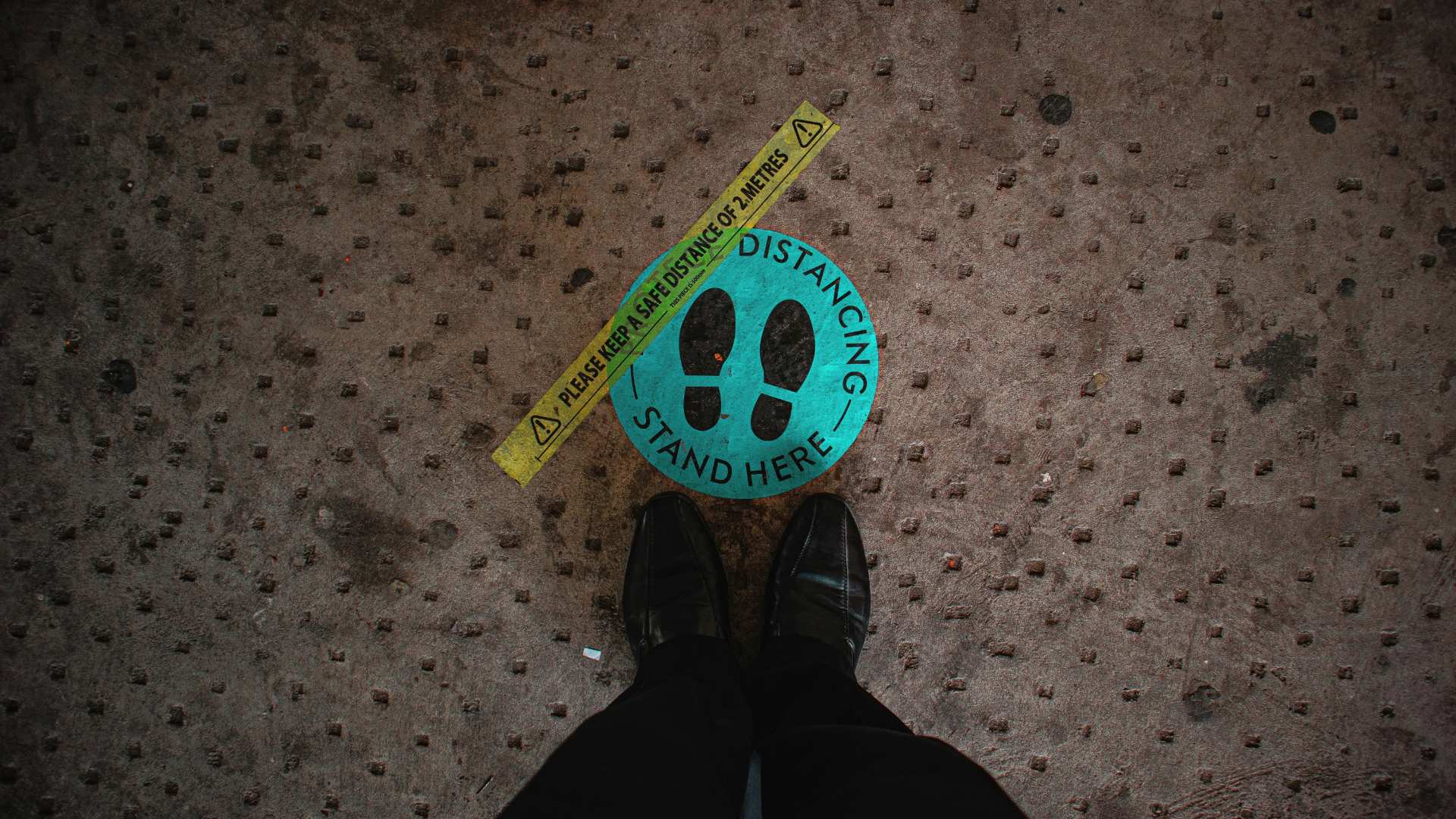
The article ‘Pandemic and Authoritarianism’, by Germán Rosa, SJ, was written in the midst of the COVID-19 crisis, but its insights extend beyond that context. The pandemic appears to reveal and accelerate political trends that were already present: the concentration of power, the weakening of democratic checks and balances, and the acceptance of extraordinary restrictions in the name of collective security. Rosa’s main concern is that fear may lead citizens to silently surrender their freedoms and rights, and that measures which were initially intended to be temporary become normalized and endure. Furthermore, in societies riven by inequality, control is never distributed neutrally: it falls most heavily on the impoverished, marginalized groups, migrants, dissidents and those who defend rights and territories.
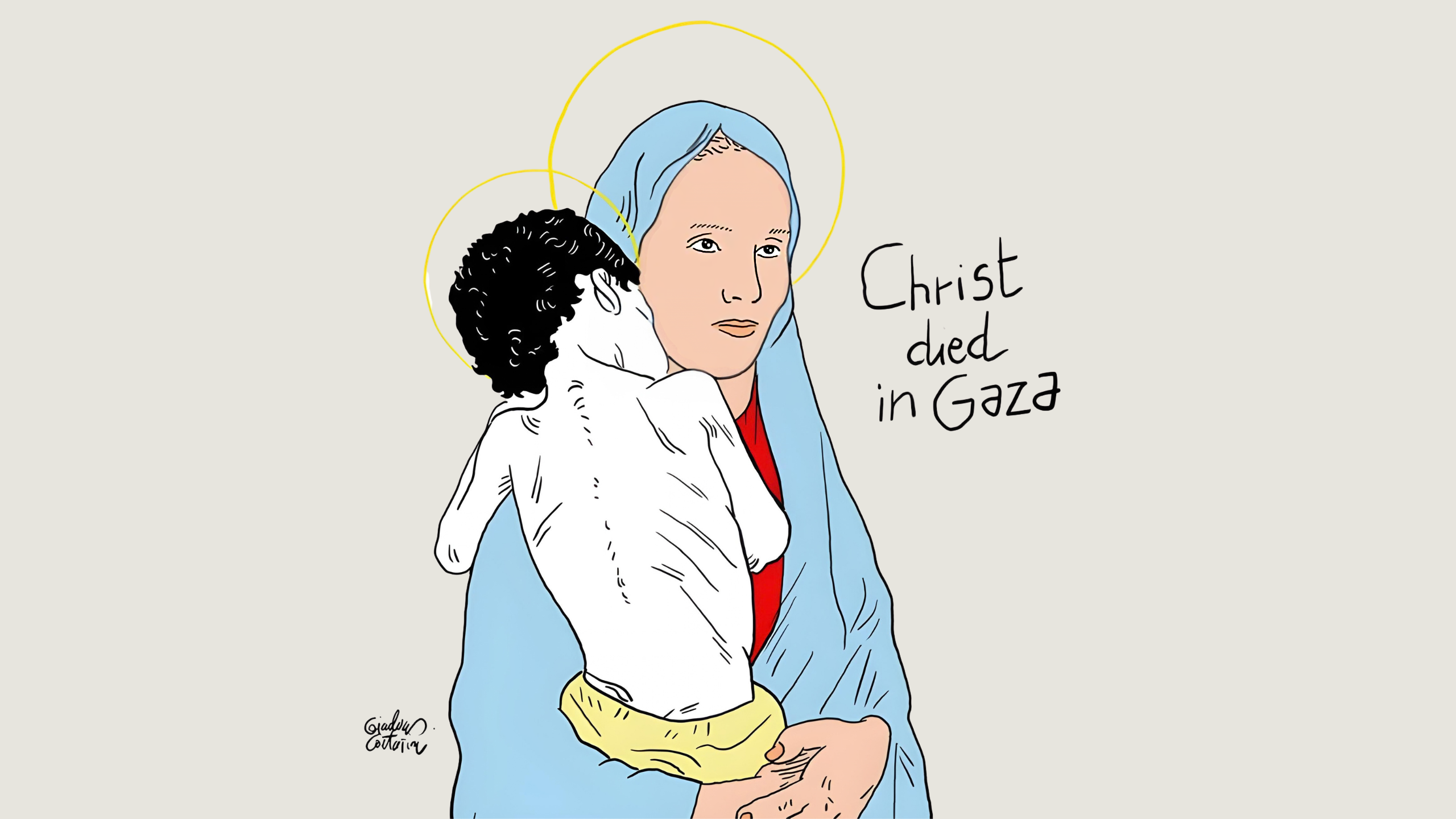
Speaking of dead children is uncomfortable. Yet it can also be healing. As I listened to the stories shared that day, I found myself returning to memories I may at times shy away from remembering. Iremember finding my sister’slifeless body in bed one Saturday morning. Ihad cometo carry her out with me to watch cartoons.As I listened tothe story of Hind Rajab, a 5-year-old girl who had been trapped inside a car attacked by Israeli forces,the memory of a little boy reaching out to touch his sister came back. The young girlhadmanaged to call the Red Crescent for help but hours later she and the paramedics who had come toassisther were all found dead. The chilling story reminded me of the shocking cold that struck my hand as I gently touched my sister’s arm in a futile attempt to wake her up.

Who Are the Victims and Those at Risk of Becoming Victims? When it comes to mining, particular attention must be paid to those who are most vulnerable: Indigenous communities whose livelihoods depend on their land, forests, rivers, and water sources; small-scale farmers; fishers; poor families; women, children, and older people; as well as communities with the least bargaining power in legal, economic, informational, and political matters. They may become victims when land loses its social function, when water sources are polluted or disappear, when the environment is damaged, when livelihoods are disrupted, or when their social and cultural life is transformed without their genuine consent.