Latin America – Climate Migrations and the care of the Common Home : a global picture
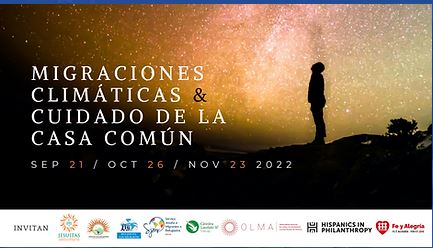
On September 21st at 8am Central America / 9am Colombia / 11am Brasilia, the first conversation on climate migration and care of the Common Home will take place. This will be the first of three dialogues to address the interrelationship between migration and climate change.
The interrelationship between migration and environmental phenomena occurring in the world is currently evident. According to IDMC, in 2020, 30.7 million new displacements were caused by disasters in 145 countries and territories. This figure is significant compared to other causes of migration and has an impact at different scales: local, national, continental and global.
There is a global consensus that climate change is understood as changes in large-scale climatic parameters (temperature, precipitation, changes in ocean and atmospheric currents and sea level rises), and that these changes are mostly caused by human activities in recent centuries. Humans have become a modifying force in the climate system and that is why the scientific community has called this new era the Anthropocene. According to the IPCC (2014) "about half of the cumulative anthropogenic CO2 emissions between 1750 and 2011 have occurred in the last 40 years" (p. 4).
The advance of climate change has also been accompanied by the global development of mechanisms that seek to protect the rights of the most vulnerable people, such as migrants. The Office of the United Nations High Commissioner for Human Rights and the Conferences of the Parties (COP) have recognized migration as an effect of climate change. The Paris Agreement took up the commitments and obligations of the States in terms of human rights and established additional considerations by recognizing the rights of indigenous peoples, local communities, migrants, children, among other vulnerable groups. In addition to these efforts, in October 2021, the United Nations Human Rights Council recognized the right to a healthy environment as a universal right (Resolution 48/13). For their part, the Global Compacts on Migration and Refuge, as a policy framework for States, address climate-induced migration. While the Refugee Compact calls for preventing and combating root causes such as climate, environmental degradation and natural disasters; the Global Compact on Migration in its objective 2 aims to "Minimize the adverse and structural factors that compel people to leave their country of origin", including natural disasters, adverse effects of climate change and environmental degradation.
In order to understand the regulatory and policy developments, as well as the challenges and advances that exist at the global level, the first discussion that will take place on September 21 will include the participation of:
- Louie Bacomo - JRS Asia Pacific Regional Director.
- Patricia Spadaro - Head of Advocacy on International Migration of Secours Catholique - Caritas France
- Asisé Mateo - Policy Coordinator and Liaison at the secretariat of the UN Network on Migration in New York - UN Network on Migration
- Mohamed Osman - Associate Liaison and Policy Officer at the Secretariat of the United Nations Network on Migration in New York - UN Network on Migration
- Susana Borràs Pentinat - Professor of International Public Law and International Relations and Researcher at the Center for Environmental Law Studies of Tarragona- URV-Spain.
These specialists will provide an overview from a territorial, human rights and gender perspective, to offer teams and allied networks a conceptual and experiential approach. They will provide us with elements to better understand the intersection of migration and climate change from the call to care for the common home that asks us to protect the environment and people, especially those who present situations of vulnerability with a focus on human rights and nature.
Panel 1: Climate Migrations & Care for the Common Home: A Global Perspective
Date: September 21, 2022
Schedule: 08h Central America / 09h Colombia, Peru, Mexico / 10h Roraima, Venezuela / 11h Brasilia
Spanish translation link -https://www.youtube.com/watch?v=KtVTf-AMM5Q
Portuguese translation link - https://www.youtube.com/watch?v=8laGL333BiM
The next meetings will address the Latin American reality (October 26), and the Brazilian reality on November 23.
This series of Dialogues to deepen the relationship between Climate Justice and Forced Migration are organized by the Jesuit Network with Migrants, the Integral Ecology Group of the Social Centers Network, the Jesuit Migrant and Refugee Service of Brazil, the Luciano Mendes de Almeida Socio-Environmental Justice Observatory, the Laudato Si Chair of the Catholic University of Pernambuco, and Fe y Alegría of the Conference of Jesuit Provincials of Latin America (CPAL), with the support of Hispanics in Philanthropy.
Source : Redjesuitaconmigrantelac
Related Posts:
Addressing today's environmental crisis requires educational institutions to embrace a transformative commitment. Inspired by the papal call and the framework of Integral Ecology, Jesuit universities are strengthening both their institutional practices and advocacy efforts while responding to the urgent challenge of fully integrating environmental education into their formal curricula.

Marking the 10th anniversary of Laudato si’, Pope Leo XIV sends a videomessage to the Network of Universities for the Care of Our Common Home, and encourages their synodal reflection ahead of COP30.
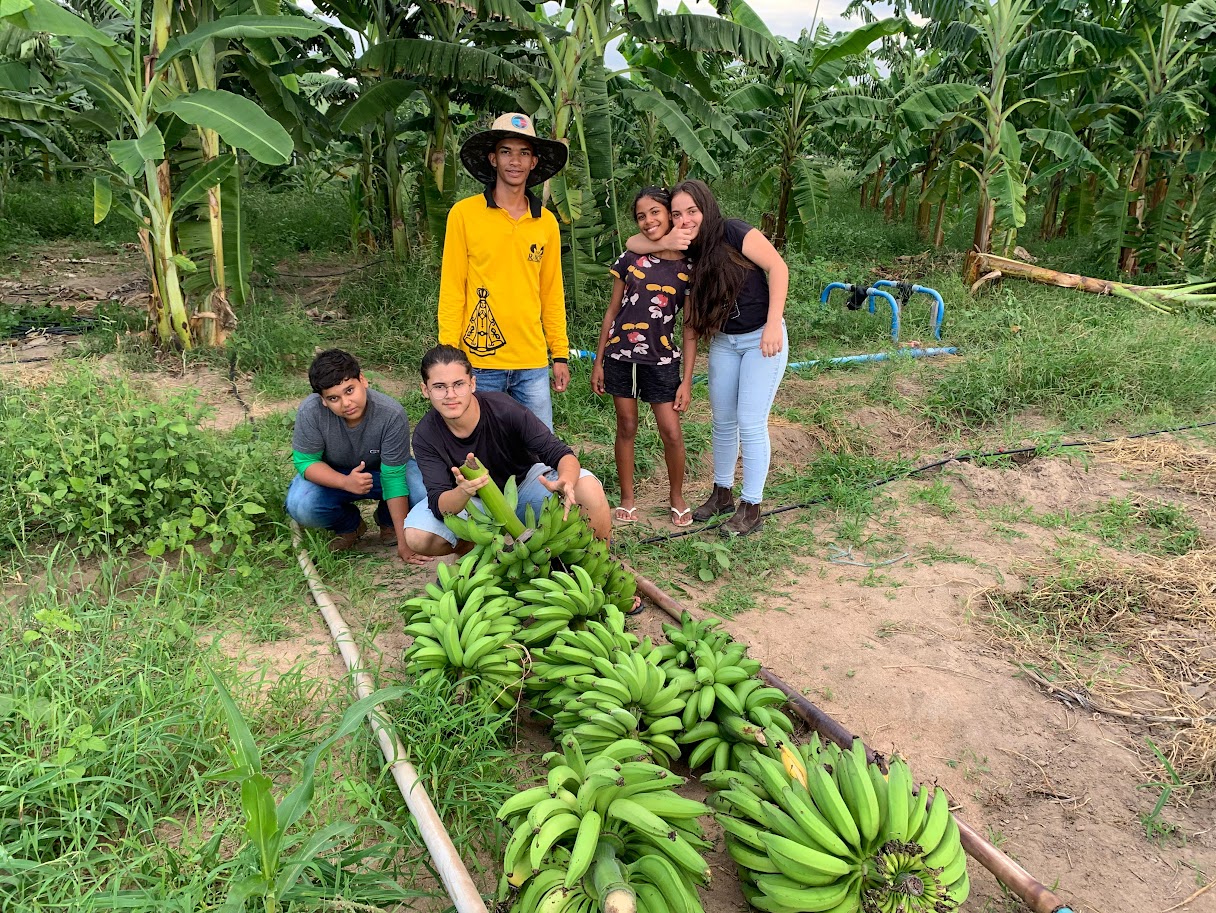
The Jaboticaba Agricultural Family School in Brazil reuses water for sustainable food production in a semi-arid region. Since 1993, it has combined agroecology with wastewater treatment to enhance food security and educate students. The project promotes environmental sustainability and aims to influence public policies in line with Pope Francis’s call for integral ecology.

It is from Latin America and the Caribbean that we present and disseminate this recently published work, the fruit of a two-and-a-half year working group that brought together Universities linked to AUSJAL and Social Centers linked to RCS (Jesuit Social Centers Network), all participants in the Conference of Provinces of Latin America and the Caribbean (CPAL). The work, which involves ten countries and 15 organizations, looks at the relationship between the environment and corruption in our continent innovatively, analyzing our challenges in the light of Integral Ecology.

Fr Roberto Jaramillo SJ, Secretary for Social Justice and Ecology (SJES) of the Society of Jesus in Rome, was in Jakarta recently. His visit provided an opportunity for dialogue with about 40 staff members of Sahabat Insan, the Jesuit centre for migrant workers. Their conversations centred around Laudato sí’s recommendation, paragraph 63: exploring local cultural wealth to develop an ecology capable of addressing the damage done to the Earth.
The Fossil Fuel Non-Proliferation Treaty (FFNPT) is an initiative that strives for an international agreement to phase out fossil fuel while ensuring a just global transition for workers, communities, and countries.