Latine America – The Multiple Faces of Migration on the Bolivia-Chile Border
The current government of Chile postponed the State of Emergency for 15 days, which means that migrants cannot enter that territory by land. The Jesuit Migrant Service Foundation receives daily between 3 to 4 groups of migrants, who indicate that they intend to reach Chile, despite the fact that they are informed of the current situation in that country in relation to the migratory flow.
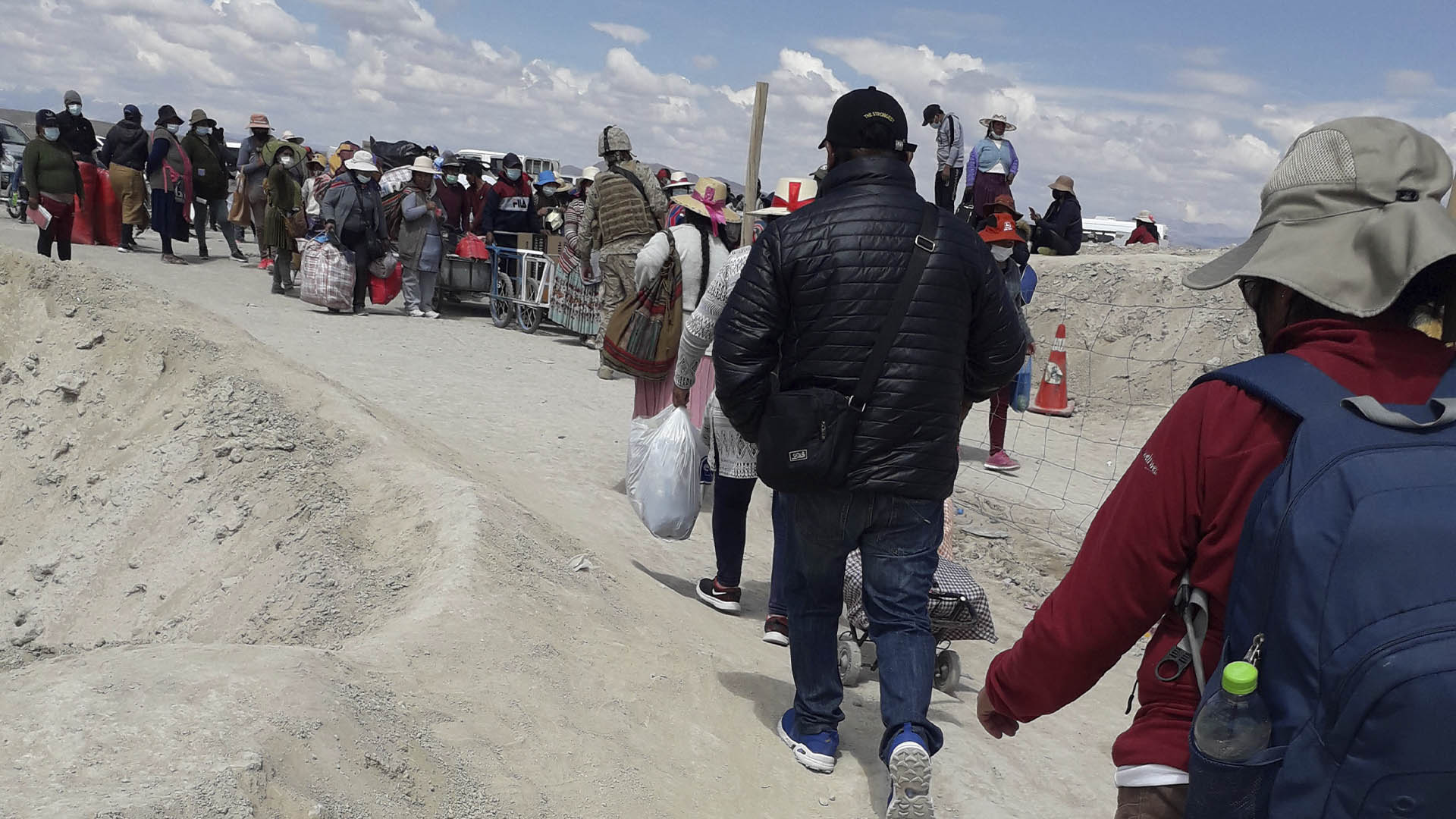
For this reason, the Jesuit Migrant Service (SJM) decided to travel to the border between Bolivia and Chile to verify the situation of migrants arriving to those populations. On March 19, the Foundation's team arrived in Pisiga Bolivar where they found the border open, with military protection on the Chilean side. On Saturday, both the towns of Pisiga Bolivar (Bolivian side) and Pisiga Carpa (Chilean side) held a fair, where they exchanged products, taking advantage of the fact that the border was open for several hours.
At the beginning of the tour in that area, the Foundation's team decided to cross the border along with the crowd that was also doing so. This time the team took dry food, water and medicines. To enter Chilean territory, the military asked for the Bolivian identity card.
Once in Chilean territory, we made our way to Colchane, a town about 20 minutes from the border. In the Chilean side customs, they have installed large tents, there we found groups of Venezuelan migrants, according to what they told us, they were waiting for the PCR test, from there and depending on the results, they would take them to Iquique. Through the trellis the SJM asked if they had food, to which they responded negatively, when we began to give them cookies, tuna, water and other products, a significant number of people gathered so that we could reach them with the products we were distributing.
Some of the migrants and the Foundation's social workers recognized each other, as days before they had passed by the Foundation's offices. Many of the groups travel with children and adolescents, so they received the products with much appreciation. At the time of delivery they indicated that they have been in that place for one or two days, and they hope that soon they will be able to leave the camp.
When we arrived in Colchane we found an empty town, only a Venezuelan boy was sitting in the square, waiting, as he said, for a person who would take him to Iquique, he had no luggage "they stole it", he said, "but I have my cell phone and my ID card". He stayed there, sitting down and covering his body with a blanket, while he ate and drank what we offered him.
At the entrance to Colchane there are some abandoned houses, and when we entered we found that this was the place where groups of migrants spent the night. The walls are full of graffiti, names and drawings, and on the floor, personal objects that are confused with the garbage that accumulates in those spaces. Silent stories of migration that were woven in those spaces, now uninhabited.
On our return we met a Venezuelan couple who decided to leave Chile: "You can't live in Chile, the work is not enough to pay the rent, the food, it is very hard to live there, we are going to Peru", the man was pushing a baby carriage where they were carrying their belongings and the woman was carrying a baby in her arms. Even though they were retracing their steps, they had an amazingly positive attitude.
As we approached the border we saw a woman carrying her baby girl on her back and tiredly rolling a suitcase full of dust, when we talked to her she explained that she was Bolivian and was returning to her homeland (Santa Cruz) because there is no more work in Chile, "I am a single mother", she commented and only stopped for a moment to give her little girl the food that the SJM offered her.
At approximately 4 p.m., Venezuelan migrants and Bolivians (mostly from Santa Cruz) began to gather at the border, but the Chilean guards would not let any of them pass. On the other side, in Bolivian territory, the Bolivian military were also doing their job.
In this panorama it was relatively easy to identify the "work" done by the "guides", or "Andean foxes" (as we call them, because they have a similar function to the "coyotes" of the border in North America), they approached people and offered their services in exchange for 100 Bs. (approximately $ 14 dollars), "I am gathering a group in my house, when it gets dark we will go to the summit", with these words they approached Venezuelan migrants or Bolivian people who wanted to pass to Chilean territory. In this way, human trafficking is normalized at the border, as is the constant deception to which groups of migrants are subjected by these "guides".
At around 5:30 in the afternoon, the SJM team returned to the city of Oruro, after 3 hours of travel they went to the area around the former terminal, where they found several groups of Venezuelan migrants waiting for the early morning to go to the border. A small group composed of an adult man, his son and grandson, said they were returning from Chile and intended to go back to Venezuela, but as they ran out of money, they would probably have to spend the night on the street.
These are some of the many stories that SJM heard and saw on the endless road that is permeated with the dust and hope of thousands of migrant steps.
Source: CPAL

Related Posts:
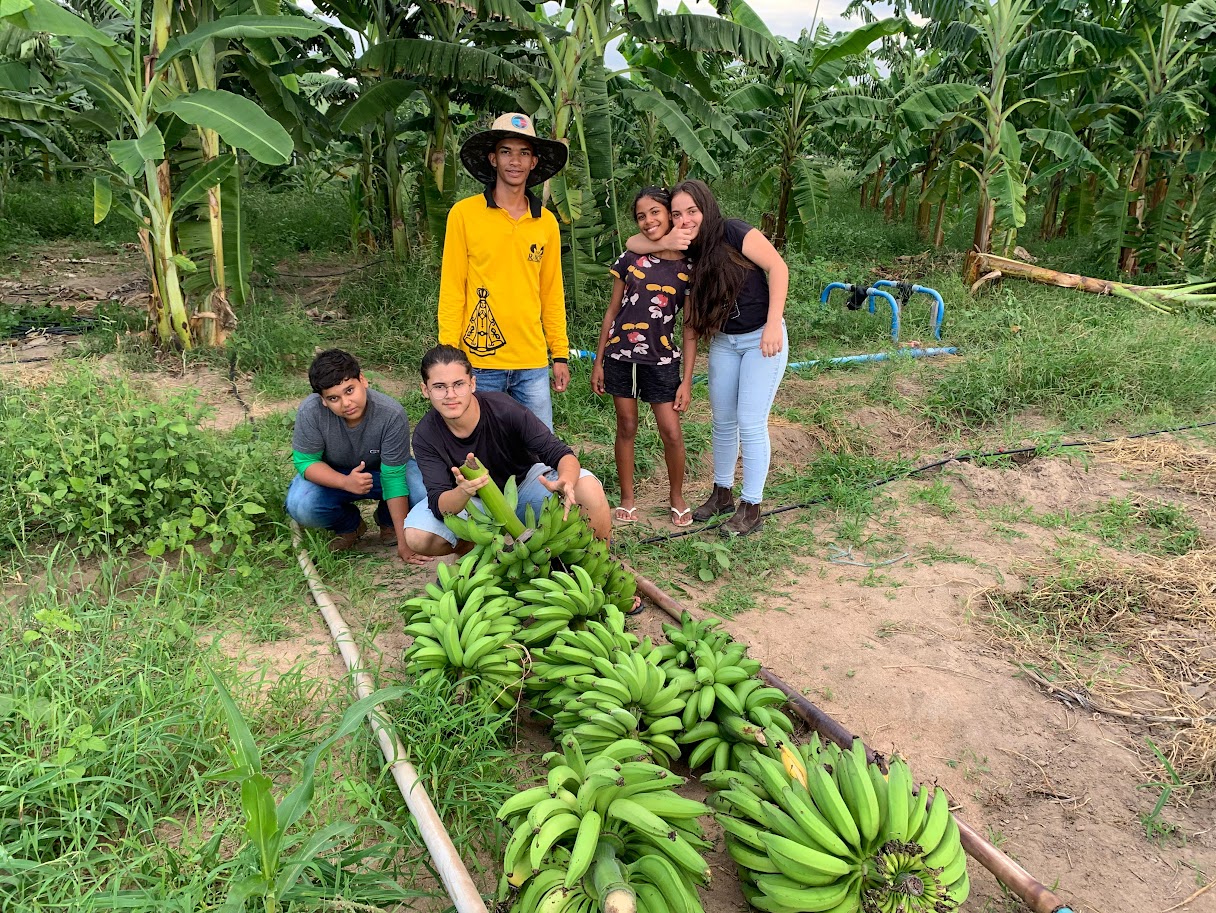
The Jaboticaba Agricultural Family School in Brazil reuses water for sustainable food production in a semi-arid region. Since 1993, it has combined agroecology with wastewater treatment to enhance food security and educate students. The project promotes environmental sustainability and aims to influence public policies in line with Pope Francis’s call for integral ecology.

The Central American Province of the Society of Jesus marks the first anniversary of the Nicaraguan government's confiscation of the Central American University, condemning the violation of education rights and academic freedom. They call for an end to repression, the release of political prisoners, and a return to dialogue and justice.

Stan Swamy Day in Viragalur was a moving tribute to a man who devoted his life to justice and the upliftment of the marginalized.

His journey was marked by a profound sense of detachment, as he left behind his nationality, culture, security, history, and companions to embrace a completely foreign environment.
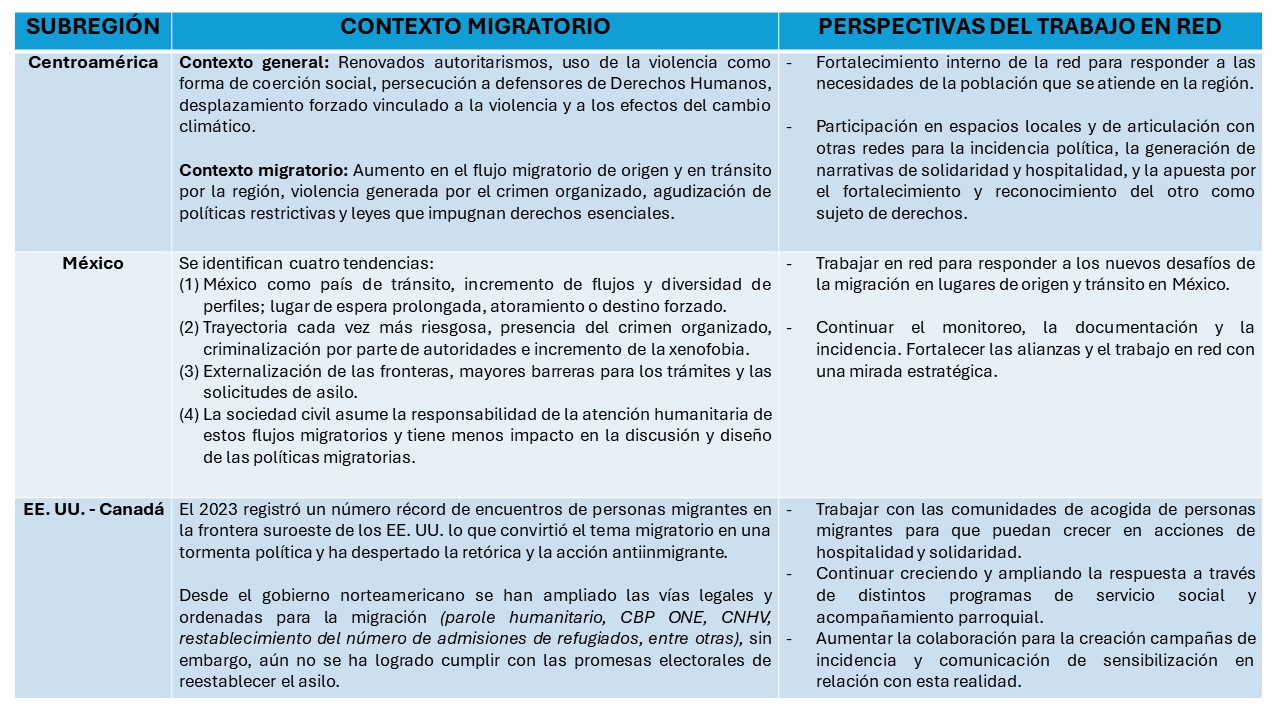
Jesuit Network with Migrants Central America and North America (RJM CANA) shared the first four months of the year report (January – April 2024): "They have been months of a lot of work to face the challenges in the migration context characterized by an increase in the migratory flow in vulnerable conditions throughout the region, however, also These have been months in which the fruits of networking have been confirmed".
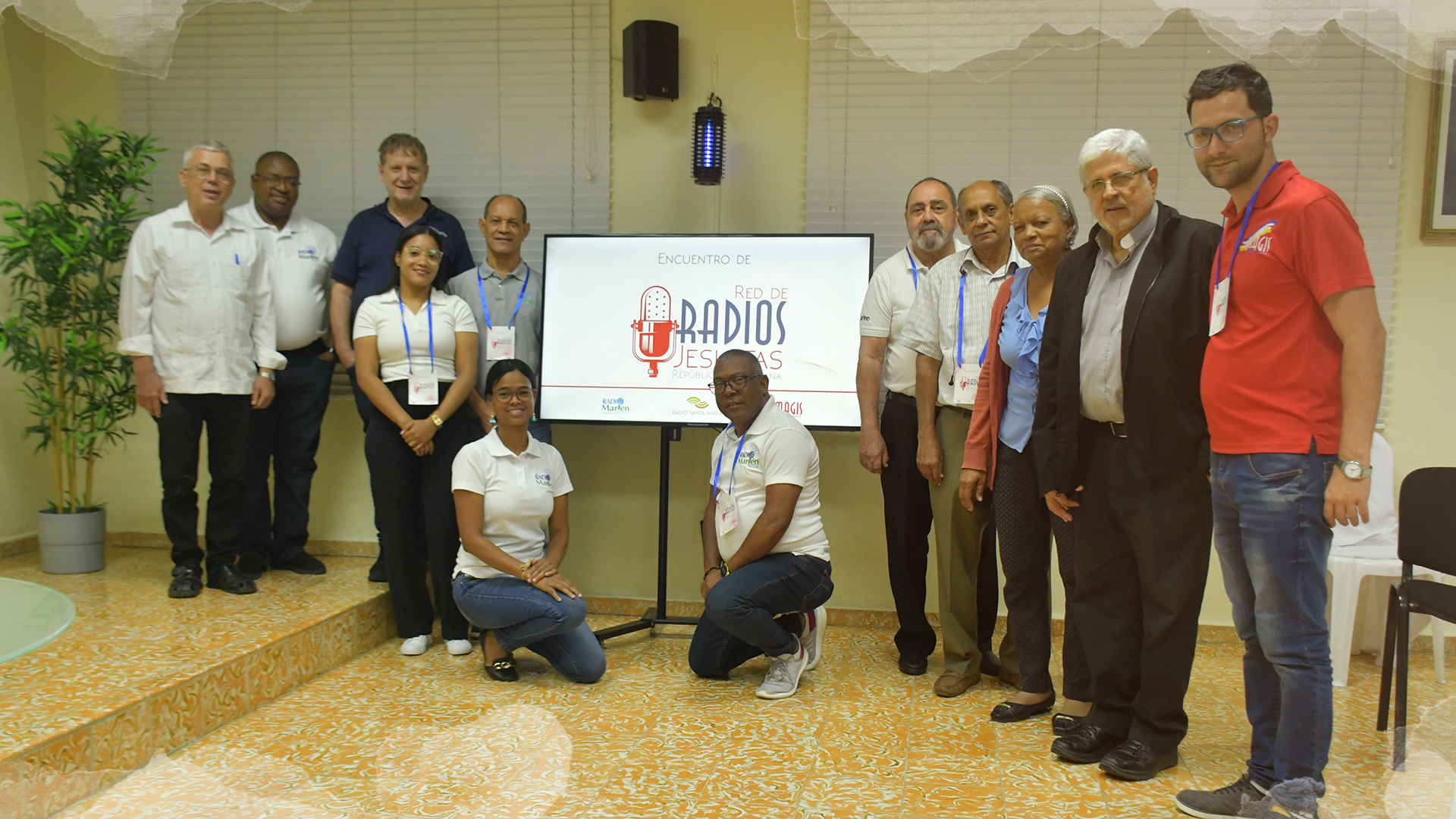
From April 5 to 7, the Jesuit Radio Network in the Dominican Republic met at the facilities of the Loyola Polytechnic Institute (IPL) in San Cristóbal. During the meeting, the construction of a shared itinerary that seeks to focus on collaboration and contextualized radio communication marked by the Apostolic Preferences approved by the Society of Jesus for the coming years was highlighted.