Latin America – Word from CPAL: PAC.2 and the LA Reality of the Pandemic
In the year 2021, a year of tenacious pandemic, the Conference of Jesuit Provincials of Latin America and the Caribbean approved the common lines of action for all the networks linked to the Society of Jesus in the continent in the coming years. It is a matter of facing the reality experienced by hundreds of millions of people from Christian hope as a service of faith and justice in a society marked by the emphasis of the persistent Covid 19.
The Consequences of the Pandemic
By the end of 2021, 14% of the Latin American population lives in extreme poverty: ninety million people! The middle classes are extremely vulnerable due to low levels of social security contributions and coverage. Women have massively abandoned the labor market and it has become practically impossible for young people to enter it. The loss of more than thirty million jobs is not now being compensated for by the scant recovery of a working population which, on the other hand, is frequently in the informal sector. The new jobs obey more to the need to work than to the real productivity of the economy. Those who now enter the labor market generally do so in worse conditions than those who preceded them.
The number of deaths due to the effects of Covid 19 in Latin America and the Caribbean up to 31 December 2021 accounted for almost a third of all the people who died in the world from this cause. This is a 'bookkeeping' of sick people and deaths far below the real numbers and the impact experienced by stressed health systems unable to cope with other ailments. Two thirds of the health personnel are women who were overexposed to the situation, often with a double shift of care with sick people at home.
Although the impact of mortality seems proportional to the age of maturity, the ECLAC report states that "the population of children, adolescents and young people has been one of the most affected by the socioeconomic impacts of the pandemic". Confinement and its socio-cultural impact, together with the fragility of educational systems, put many children in situations of malnutrition, school dropout or subjection to mistreatment and abuse at home. Not infrequently, this aggression was also directed at mothers. The digital divide meant that impoverished populations were doubly affected by the lack of schooling.
Similarly, the poorest populations suffered from the lack of health care linked to the saturation of the system and the absence of alternative food in school canteens. ECLAC concludes: "...the effects of the Covid 19 pandemic especially affect children, adolescents and young people belonging to populations that have historically faced situations of greater vulnerability". Among these groups, the report identifies indigenous people, Afro-descendants, migrants, women and people with disabilities. The crisis is widening social fractures.
The Horizon: A New Social Covenant
The 2021 Social Report, recently published by ECLAC, proposes a horizon: a new social covenant to adopt "transformative public policies, with equality and sustainability at the center". The pandemic has further underlined that, in a continent already marked by inequality, the only way forward is to "move towards an economy and a society of care". To this end, it calls for three types of measures: financial transfers, improvement in the quality of services and active employment policies.
In the first place, direct economic transfers to those living in greater difficulty have proven to be a barrier that has mitigated the impact on many people. ECLAC proposes, with the support of UNICEF, that this be done through "a universal transfer for children" and improvements in the pension system to increase the coverage and adequacy of benefits. To this end, measures aimed at greater financial soundness must be put in place.

Secondly, it points out that monetary transfers should not be made at the cost of a reduction in public services. In addition to water, energy and sanitation services, Internet connectivity is very important. It is necessary to ensure quality schooling from early childhood and the generation of an environment of real security in the street, school and home that allows growth without violence or fear. The report strongly emphasizes the need to avoid a "well-being of the population that is almost exclusively propitiated by women's unpaid work".
Finally, ECLAC proposes active employment measures, among which vocational and technical training stands out in a very relevant way. Although training alone is not enough, it is the main instrument for achieving quality incorporation into the labor market and overcoming technological, gender and ethnic gaps.
Our Mission during the Pandemic in a Latin America and the Caribbean
We know that these are challenges that must be assumed mainly by the states. The Covid 19 crisis has highlighted the importance of the state as an active economic agent, as a support for the most vulnerable populations and as a guarantor of public services that bring the community together. However, public administrations cannot replace citizens or civil society. And this is where, in this pluralistic world, the Christian community, the Society of Jesus and its networks within it, have a mission and a responsibility.
As we saw above, educational processes were weakened during the pandemic, leading to the deterioration of systems and the vulnerability of the poorest. Education as a universal right of quality is central as a response: all our networks, not only the educational centers linked to the Order, but also social and pastoral initiatives must commit themselves to promote public and private alliances so that quality education reaches everyone: children, but also adults whose needs are more evident when the labor market weakens or the crisis shakes institutions, companies and public services. The Global Education Pact proposed by Francis is a decisive instrument and a commitment that we must make a reality.
The drama we have experienced has mainly affected women. All our networks must assume the determination to confront all kinds of inertia, discriminatory practices and violence, and to promote equality and the necessary cultural and spiritual changes so that all people, whatever their sex, can be happy and participate with full responsibility in social, cultural, political, economic and ecclesial life. In this regard, the need to strengthen the security of all our institutional spaces is no less important.
In the same way, the fracture becomes harder for people who were previously excluded: people of African descent, indigenous people, migrants and refugees. All our initiatives must address this reality by seeking to heal the wounds, to reconcile the great human family by accompanying those who find it most difficult, wherever they are. Everywhere, yes, but recognizing that Haiti, Cuba and the Amazon must be causes that mobilize us all, whatever our location and task.
All the priorities proposed in our mission always look to the crucified and glorified God who is incarnated anew in our history and shapes our faith. The spirituality of discernment, that which helps us to confront the evils of our world and to know the deceptions of the "evil leader" in order to love and serve in all things, is our greatest treasure, the most important thing we can pass on to others in this time of pandemics. From a deep respect for religious diversity and personal worldviews, it is up to us to humbly offer what was freely given to us.
Source: CPAL
Related Posts:
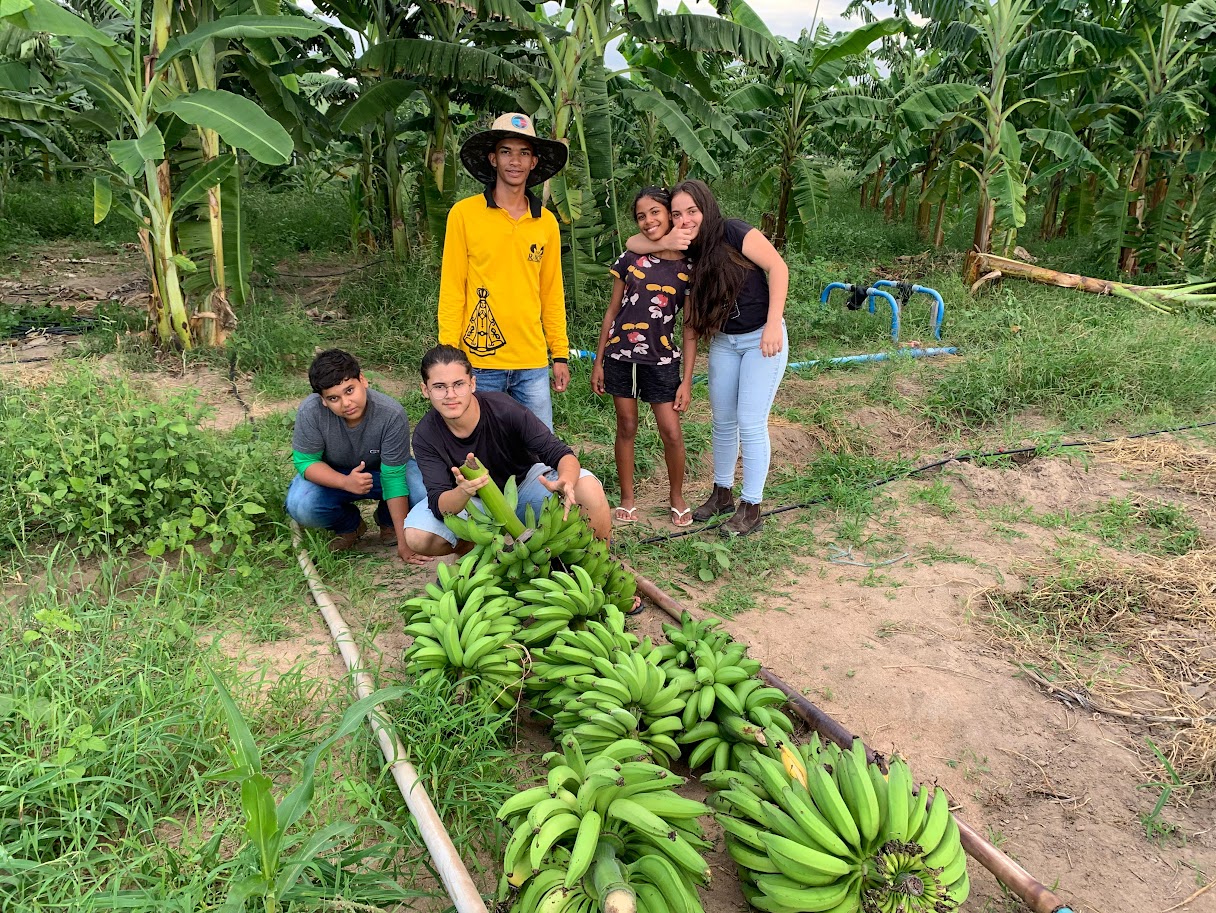
The Jaboticaba Agricultural Family School in Brazil reuses water for sustainable food production in a semi-arid region. Since 1993, it has combined agroecology with wastewater treatment to enhance food security and educate students. The project promotes environmental sustainability and aims to influence public policies in line with Pope Francis’s call for integral ecology.

The Fossil Fuel Non-Proliferation Treaty (FFNPT) is an initiative that strives for an international agreement to phase out fossil fuel while ensuring a just global transition for workers, communities, and countries.


Stan Swamy Day in Viragalur was a moving tribute to a man who devoted his life to justice and the upliftment of the marginalized.

The GIAN - EcoJesuit Core Group met in Lusaka, Zambia from 8 to 12 July. Jesuit delegates from South Asia, Europe, Latin America, Africa - Madagascar, the president of JCAM, the secretary of SJES, the current coordinator of EcoJesuit, and other collaborators from Kenya, Madagascar and Zambia were present.

His journey was marked by a profound sense of detachment, as he left behind his nationality, culture, security, history, and companions to embrace a completely foreign environment.