Nicaragua – Analysis of the Reality of Nicaragua
Political systems in Latin America are currently experiencing great moments of tension, in an economic context of crisis aggravated by the impact of the COVID 19 pandemic. In the political arena, it is no longer a question of extending electoral rights that is mobilising citizens, but rather the value of the vote and its effectiveness as an instrument for electing rulers and representatives to legislative bodies.
This requires a democracy that is inclusive, not exclusive and autocratic, and it requires autonomous electoral institutions, pluralistic and with transparent procedures, open to citizen control. Elections provide not only legality but fundamentally legitimacy to a government elected by popular vote. When these principles are not fulfilled and the spectre of fraud appears, political crisis enters the scene.
Nicaragua is going to elections in November this year. But irregularities have been drawing the world's attention. What is happening in Nicaragua? To answer this and other questions, the Social Centres Network of the Jesuit Conference of Latin American Provincials (CPAL) invited Nicaraguan lawyer and human rights activist Juan Carlos Arce to discuss the current political situation in Nicaragua. Arce is currently a member of the Human Rights Collective "Nicaragua Nunca Más" (Nicaragua Never Again), based in Costa Rica.
Nicaragua after the popular demonstrations of April 2018
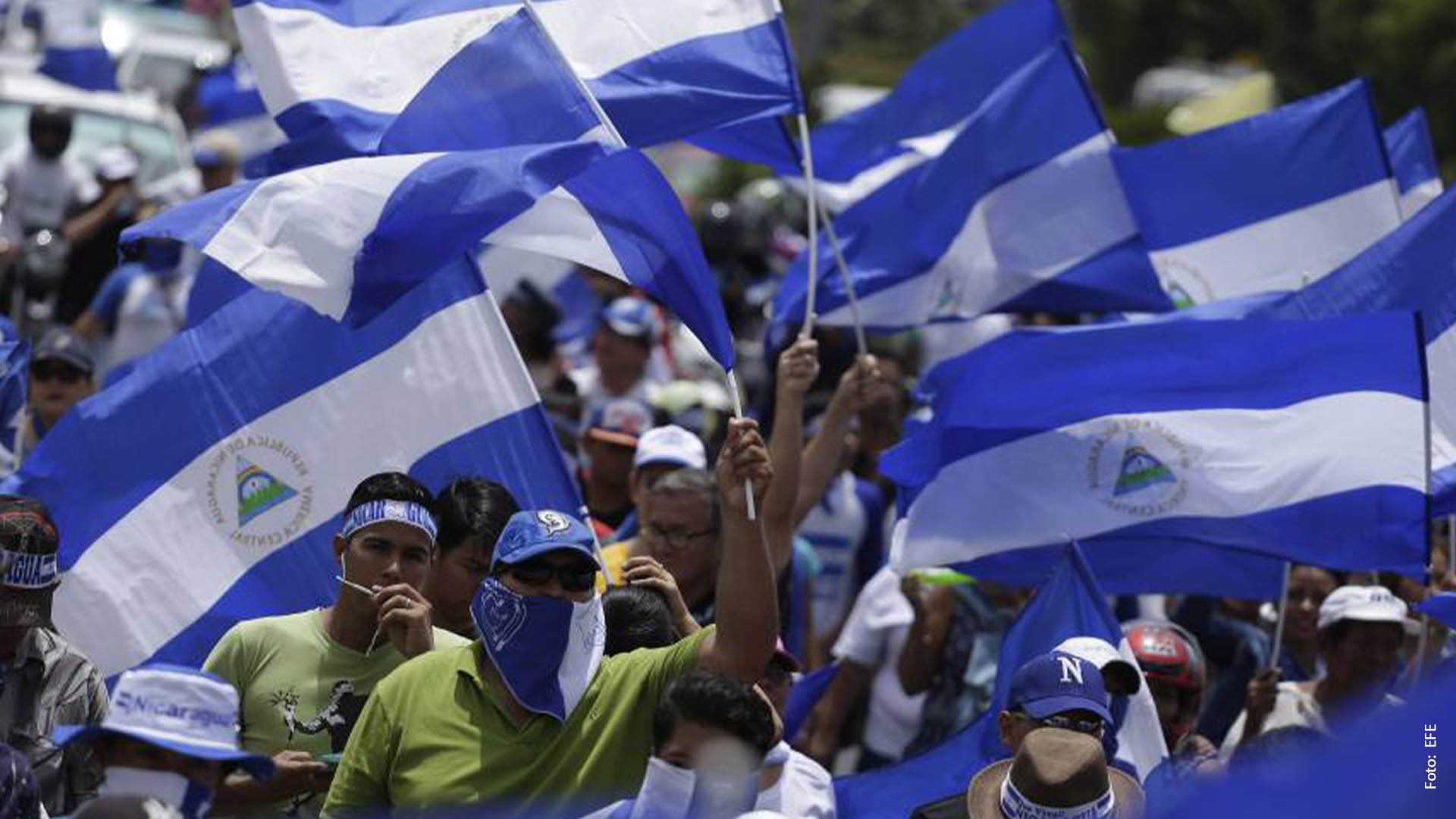
The current situation in Nicaragua has its origins in the civil protests of April 2018 against the government of Daniel Ortega and its violent response against the population. At that time, the Ortega-Murillo government decided to implement the recommendation of Sandinista Comandante Tomás Borges that in any situation that arose, the Revolution had to be defended "at any cost". And that was the order given by Vice-President Rosario Murillo to the Nicaraguan security forces and government supporters: "let's go all out", leaving 320 dead, more than 300 arrested and more than 103,000 Nicaraguans who took the path of forced migration.
In the years following the events of 2018, Nicaragua has been losing democratic spaces, with laws that criminalise social protest, freedom of opinion and political dissent. The laws against hate, the ninety-day imprisonment, the law against cybercrime, have been closing off democratic solutions to the current political situation.
In Nicaragua, the institutions of the state have been hijacked by the Ortega-Murillo family, rather than by the Sandinista government. Many of the grassroots militants, middle leaders and historic leaders of the FSLN such as Dora María Téllez and high-ranking officials such as Vice-Chancellor Víctor Hugo Tinoco, have been persecuted, arrested and exiled from the country.
This dismantling of the Nicaraguan state can be seen in the control that the Ortega government has over institutions such as the Army, the National Electoral Board, the National Assembly, the Prosecutor's Office and the Judiciary, which has allowed it to act against the opposition, to pass laws that violate human rights and to develop a policy of systematic violence against the population with the help of the police, the army and paramilitary groups, as happened in April 2018.
Presidential elections without opposition candidates
World public opinion is surprised to see how the Ortega government, through the judiciary and the electoral bodies it controls, has removed opposition candidates from the November elections. Seven candidates have been detained by the security forces, many of them incommunicado and in violation of their rights to due process, accused of being enemies of the country and even of laundering dollars, as in the case of Cristiana Chamorro, one of Ortega's strongest rivals in the presidential race, with an indisputable family tradition in favour of democracy in Nicaragua, daughter of Violeta Chamorro, former President of the Republic.
In addition to these arrests, the government has closed down 25 civil society organisations fighting for human rights, doctors' organisations and journalists. The only voice is that of the government, through Rosario Murillo, who dictates the guidelines for what should be reported in the country, as in the case of the handling of information about COVID-19, subject to official government control with the thesis that the pandemic has not been serious for Nicaragua. Any denunciation or non-governmental initiative is penalised by the authorities.
This control of the media began with the Ortega government, buying - thanks to dollar funds from Venezuela - radio, press and television channels, which are now in the hands of his children. And those that have managed to survive are self-censored due to police or fiscal pressure, or are being closed down, as in the case of "100 % noticias", "Confidencial" and Channel 2 television.
This progressive closure of democratic spaces, the arrest of presidential candidates and the outlawing of political parties and movements is jeopardising the November elections. The entire international community has expressed its concern and disagreement with the path taken by Ortega and his government. Even the governments of Mexico and Argentina, former allies of Ortega, have called their ambassadors for consultation, demonstrating their disagreement with what is happening.
Leaders of the Latin American left, such as Lula da Silva and Pepe Mujica, have expressed their concern and even their condemnation of the autocratic process in Nicaragua, as it is burying the legacy of the Nicaraguan Revolution against the Somoza dictatorship in the 1980s, a process that won so much admiration and solidarity not only in Latin America but also in the world. The social base of the FSLN, which had already begun to be lost in the 1990s, is now in sharp decline as the mobilisations of April 2018 were led and accompanied by the grassroots of Sandinismo itself.
The international situation
While it is true that the isolation of the Ortega government is a reality, the questions that were asked made it possible to clarify the following in relation to the international scenario. Firstly, the important role that the international community is playing at the moment. Before April 2018 it was more symbolic, but from that year to the present, both the UN and the OAS, with their observation and monitoring missions, as well as the European and Latin American Community, have been very actively present in this situation, with diplomatic pressure and, in the case of the United States and the EC, using the mechanism of sanctions against officials involved in human rights violations and crimes committed by the security forces in the events of April 2018.
Only Russia and China maintain their support for Nicaragua, especially Russia, which sells arms and maintains it as a base of operations for its policy of influence in Central America. China's project to open an inter-oceanic canal through Nicaragua has come to a standstill, so its presence in the region is minor. The rest of the countries in the region have remained distant, with the exception of Costa Rica, which since 2018 has become a migratory destination and refuge for political exiles.
The November electoral scenario
Under these conditions, the electoral scenario for November looks very complicated. For the OAS Secretary General, these would be the "worst possible elections" for Nicaragua, whose international rejection has already been announced, if the free and secure participation of all opposition forces in these presidential elections is not achieved.
Consequently, for a people tired and surrounded by institutional violence, with no options for democratic change and suffering a severe economic crisis, aggravated by the pandemic, the resources that the government plans to inject into its electoral campaign will not be enough to avoid a possible social explosion, accompanied by an implosion in the Sandinista movement itself, which is now divided and persecuted.
The Ortega government is convinced that under normal conditions it would lose the November elections. For this reason, it prefers to take a dictatorial path in order to remain at the head of a government that has demonstrated, even to its own party colleagues, such as Deputy Foreign Minister Víctor Hugo Tinoco, who is suffering from cancer and isolated in a prison without contact with his family, that it is a government devoid of all humanity.
Asked whether it was still possible to reach agreements between the government and the opposition, the speaker said that the problem was that there was no dialogue. In the government, the principle persists that the revolution cannot lose power, while the thesis of a "soft exit" or "soft landing" via elections has not been successful either, because it has been questioned by the victims of government violence themselves. In any case, negotiation will always be present as the best alternative to reach a peaceful solution to the current crisis.
Meanwhile, the struggle is being carried on in the interior of the country by the mothers of the detained and disappeared, who are mobilising together with human rights defenders, the doctors who are treating the population against the pandemic and the journalists who, from exile, continue their work of denouncing government repression, providing information so that the case of Nicaragua is not forgotten and the demands that were raised in the popular demonstrations of April 2018 can become a reality and continue to stand: Democracy, freedom, justice and a "free country to live in".
By Reinaldo Rojas, PhD in History. Retired Professor at the Universidad Pedagógica Experimental (Experimental Libertador Pedagogical University) Venezuela, collaborator of the Gumilla Centre.
Source: CPAL

Related Posts:
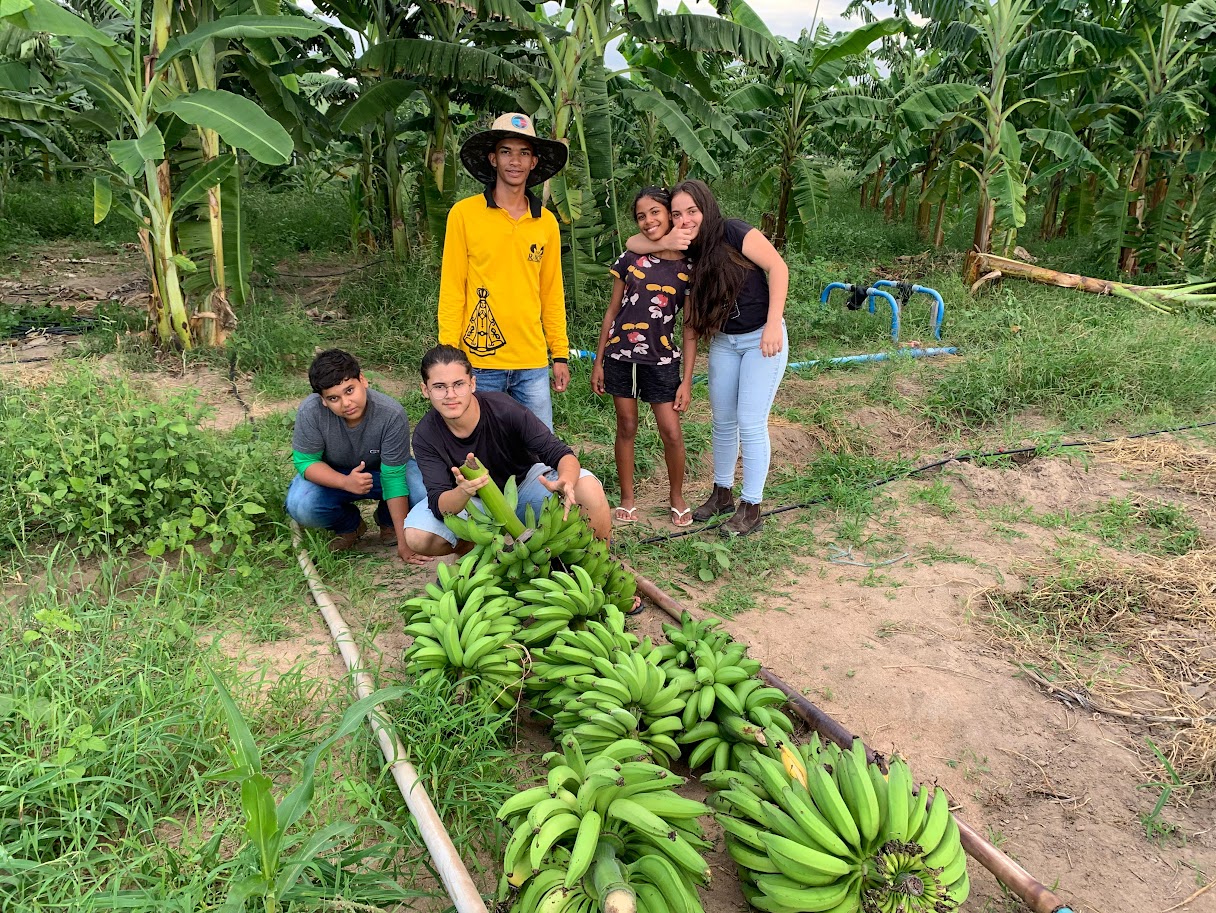
The Jaboticaba Agricultural Family School in Brazil reuses water for sustainable food production in a semi-arid region. Since 1993, it has combined agroecology with wastewater treatment to enhance food security and educate students. The project promotes environmental sustainability and aims to influence public policies in line with Pope Francis’s call for integral ecology.

MEXICO CITY (OSV News) -- An Indigenous Tzotzil priest and peace activist was murdered after celebrating Sunday Mass in Mexico's southern Chiapas state, where the Catholic Church has denounced government inaction in the face of rising violence. Father Marcelo Pérez, who ministered in Indigenous regions rife with territorial conflicts and later denounced drug cartel violence, was shot dead Oct. 20 by two assailants on a motorcycle as he drove away from the Guadalupe church in San Cristóbal de las Casas, according to Mexican media reports.

Stan Swamy Day in Viragalur was a moving tribute to a man who devoted his life to justice and the upliftment of the marginalized.

His journey was marked by a profound sense of detachment, as he left behind his nationality, culture, security, history, and companions to embrace a completely foreign environment.
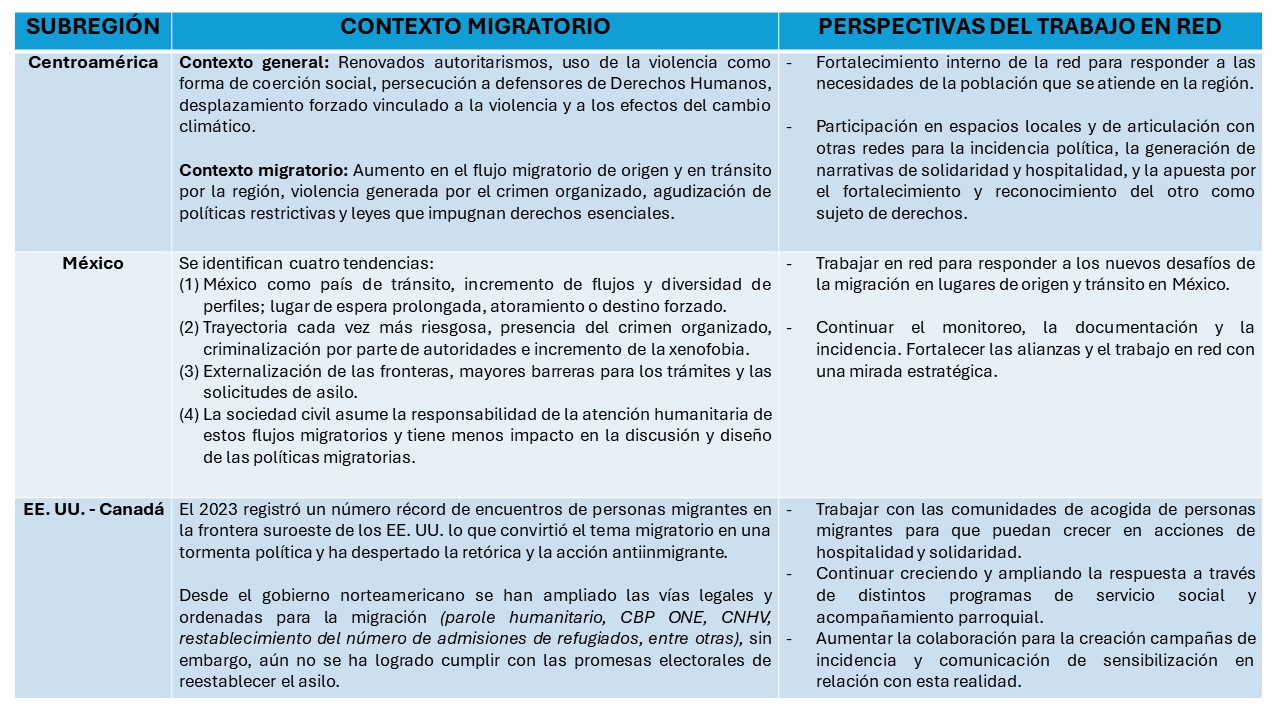
Jesuit Network with Migrants Central America and North America (RJM CANA) shared the first four months of the year report (January – April 2024): "They have been months of a lot of work to face the challenges in the migration context characterized by an increase in the migratory flow in vulnerable conditions throughout the region, however, also These have been months in which the fruits of networking have been confirmed".
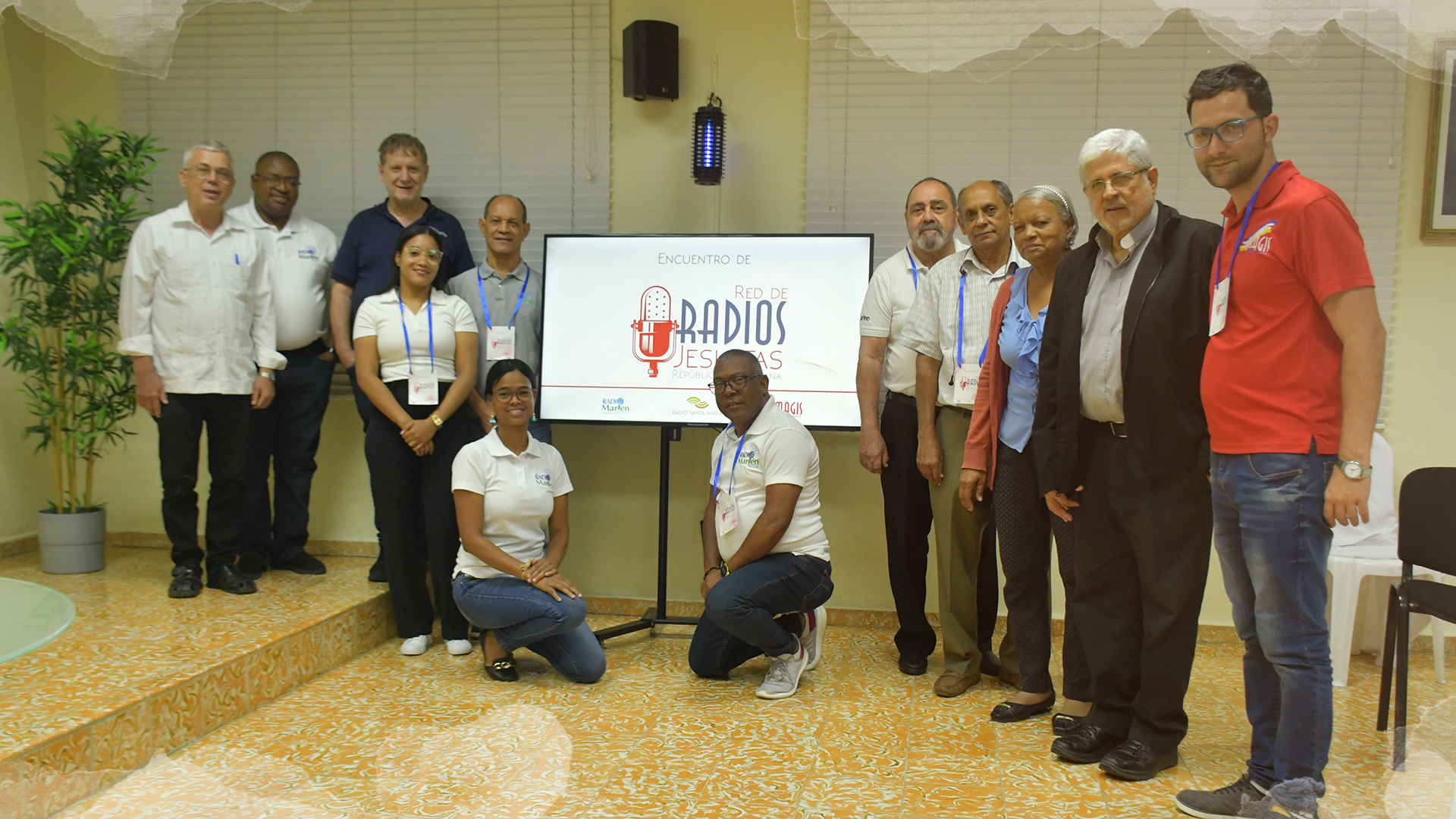
From April 5 to 7, the Jesuit Radio Network in the Dominican Republic met at the facilities of the Loyola Polytechnic Institute (IPL) in San Cristóbal. During the meeting, the construction of a shared itinerary that seeks to focus on collaboration and contextualized radio communication marked by the Apostolic Preferences approved by the Society of Jesus for the coming years was highlighted.