MANAGING A SOCIAL INITIATIVE – MY REFLECTIONS
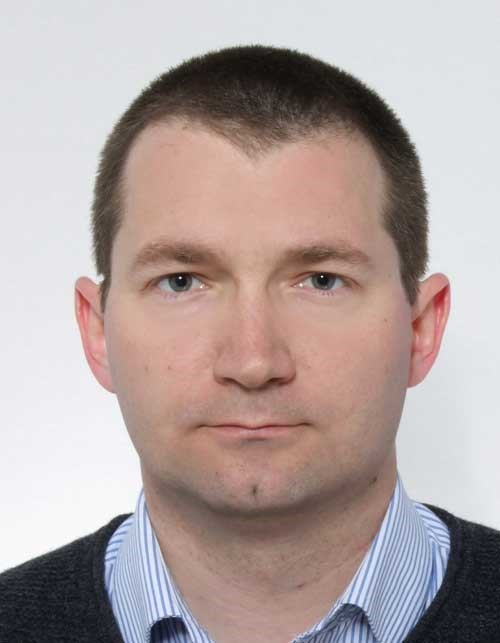 Norbert Frejek SJ
I have been involved in the broadly defined social apostolate from the time I studied philosophy during formation. I worked in a shelter for homeless women in Krakow, and later did my regency at the Jesuit Refugee Service in Berlin. When I was studying theology, I once again worked with refugees in a centre near Warsaw. There was a gap of three years, and then, after my diaconate, I started working at the social centre in Wroclaw. Our initiative is called the Angelus Silesius House, so named after a seventeenth century priest, Johannes Scheffler, who used the pseudonym "Angelus Silesius". He was a complex figure: a convert, a priest, a poet, a mystic and a philosopher. Controversial at times, he was also serious and noble. The founders of the Angelus Silesius House in 1993 may not have realised that this figure could be an inspiration for the social apostolate. It seems to me, however, that he embodies the very features of the social apostolate, inasmuch as it is inspiring, brings evangelical consolation and encouragement, and is at the cutting edge of social issues.
The social apostolate is a good starting point to stop talking about oneself and to start talking about people. Or, a little less about self, and more about people...
For me, as manager of a social initiative, the social apostolate presents three dimensions. The first is that of working with the people whom we address. For my organisation, this means, above all, educational work with young people and students from Poland and from abroad. Through meetings for young people we try to foster reconciliation between different nationalities by teaching people respect for different cultures and religions, and work to promote social justice and other values of fundamental importance to Catholic social teaching. At the same time, we take care of ethnic minorities - here I mean above all the Romani, both those born in Poland and those from outside. We offer them humanitarian aid and encourage them to find employment in the hope that they will see that the future can be better, but that a great deal depends on them. We also work on those (I deliberately use the preposition "on" here) who work with the Romani - their schoolmates, teachers, tutors, policemen and city wardens-in an attempt to change their ways of thinking about the Romani. We also invite students from Eastern Europe and familiarise them with Polish experiences of transformation after 1989. Recently, we started building a social cooperative for women who are at risk of losing employment in northern Tajikistan. All these works constitute a major part of our social apostolate. There is a team of employees and partners who work directly with our "target groups," and participants in our projects are in the hands of that team. Through the management and evaluation process, I keep abreast of what is going on, but I am not directly involved in the projects.
The second dimension of the social apostolate as I understand it is about being a leader. It involves managing employees and trainers who work directly with our beneficiaries. The greatest inspiration in conducting that work comes to me from the words of the Gospel: "For where your treasure is, there your heart will be also" (Matthew 6:21). I believe that there should be no separation between what you have in your heart and what you do. My primary task is not only to adhere to my organisation's mission and its strategy, but also to set targets and manage the organisation in a skilful way. Those aspects are, as one of our Polish politicians put it, "an obvious obviousness". My basic task is to care for the employees entrusted to me. Regardless of the extent to which they identify themselves with the Church, I try to demonstrate that this kind of work requires more than intellectual insights; it calls for an understanding of the world of feelings. If you work in the social apostolate, you need a capacity for empathy. The only person who is exempted from this requirement of higher empathy is the bookkeeper, responsible only for keeping papers and finances in order!
When you work on "social change", you should ensure that the change which is taking place becomes a valuable experience. This can happen only if you enjoy your work deeply, not if you just carry it out mechanically. I believe that building a team of many different people is a great challenge for a director, but building a team of mediocre people would be a defeat.
Finally, the third dimension is developing the capacity to read and see through the evangelical logic of the heart more than what others see in the media. I can see how phoney the Polish political, educational and social systems are at times. Those in power often lack this perception to be an effective change agent. Hence, an important dimension of our social apostolate comprises lobbying and advocacy. As manager of a 20-year-old organisation, I have the opportunity to participate in various meetings, mainly forums of state authority, to lobby and advocate, together with other NGOs, for good, long-lasting and comprehensive answers to problems concerning social and civil rights. In this way our involvement can be on firm and solid ground.
I also devote a lot of time to prayer for a better understanding of these three dimensions. I am then reminded of the words of Fr. Pedro Arrupe, S.J. to those involved in the Jesuit Refugee Service in the Philippines: "(...) please don't forget .... Pray. Pray much. Problems such as these are not solved by human efforts". For me those words are most relevant and pertinent to all engaged in the social apostolate.