Synergy : Educating Migrant Children, Caring for Mother Earth
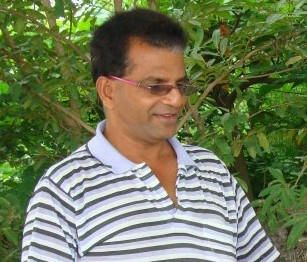 Jolly Nadukudiyil, SJ
As an earnest young scholastic, and later, as a young priest in Gujarat Province, India, I was reflecting on how to make my commitment more meaningful, in keeping with the magis, 'the fire' of a Jesuit. Finding meaning in my call and articulating it in my own way has been a long struggle.
This personal search, struggle and discernment led me to educating the children of migrant workers and at the same time, caring for mother earth. Strictly speaking, it is not an appointment or task given by the province but the crusade of a rebellious mind to discover the meaning of magis. And I found it at the Xavier Centre for Migrant Workers (XCMW) in Vadodara, India.
In the course of my priestly ministry at different places, I had felt a call within myself to work with the migrant workers, the real heroes,the ones who make urban life comfortable to the large richer section of society that lives in the cities, while they themselves live along the roadside, struggling to cook their 'rotlo' (food) out in the open. They are the ones who make the glittering city beautiful, providing it, over a period of time, with all the civic amenities, but they themselves are not only at the mercy of others for even a glass of drinking water but are also seen as a nuisance by the affluent. With no health care and no schooling for their children, the plight of these migrants has remained at a deplorable level.
After some experience of the life of migrant workers, and pondering over my commitment as a Jesuit, I slowly began to understand and feel an intense desire to work for them and with them more closely. And then I happened to read an article, where Fr. Kolvenbach, the former Superior General of the SJ, gives the criteria for choosing an apostolate. He says, "One of the most important criteria given by our constitution is that we should go wherever the most marginalized live, be with those whom nobody cares for and nobody is interested in".(PJ 80, 11 April, 2003). This remark confirmed my call to commit myself to this mission.
The migrants, coming from the rural villages near the concrete jungle of the cities, face many difficulties. I felt that I must address the issue in my own way. Hence, we started developing the area, 39 acres covered with thorny bushes and shrubs, into a land with lakes, water channels, trees and pipelines for better conservation and irrigation. Paths were laid down through the land with trees planted on both sides. More than 50,000 trees grow there today and some are well known medicinal plants and fruit trees. Many nature lovers, environmental scientists and college students, visit our centre to learn about the biodiversity here and the various techniques used for the preservation of nature. We have 207 migrant school-going children who stay in this beautiful home.
Working with the migrant workers, especially educating the children of migrant workers in the heart of Mother Earth creates an inseparable bond. For rural migrant workers, in the cycle of life from birth to death, everything beliefs, religion, worship, food is bound up with nature. Unfortunately, with the onslaught on nature launched by developmental processes, they are thrown out from their natural environment and migrate to the concrete jungle. Caring for these marginalized and exploited migrants, ('radical option for the poor'), and at the same time, caring for and nurturing Mother Earth comprise the guiding principle and measuring rod to understand my mission. In fact, caring for human beings and Mother Earth cannot be separated; they are two sides of the same coin, or like the two parts of hydrogen and one part of oxygen that make water.
Working with migrant workers and educating their children, I realized that I need to be patient and highly motivated to continue the mission. Their lack of interest and motivation are often a challenge keep going, but my life and interaction with them, and Ignatian discernment give me reason to continue my work. Hard, physical labour to convert the wild land into an ecologically rich livable paradise has been a difficult and challenging task. But my uncompromising and untiring conviction and commitment to my vocation has been the source of energy to face these difficulties and challenges. Today I feel a sense of satisfaction and fulfillment. I have witnessed many challenges in the mission to reach my dream, but they have moulded and strengthened me in my identity and commitment as a Jesuit.
I never spoke about Jesus or Christianity unless I was asked by the migrants, or associates, or staff, or visitors and guests in the course of my work and interaction. But I always spoke about human values that bind all created beings together as one creation in one Source. Perhaps this may be a different approach from the traditional form of evangelization. I feel that the less I speak about Christianity and Jesus, the more people are curious to know the source of my inspiration and energy to continue the mission. This approach has evolved spontaneously. Most non-Christian friends and benefactors of the mission have found an unusual and unconventional priest in me and that perception has to a great extent brought them closer to me.
Today the migrant workers interact with the mission and send their children to the Centre with a ray of hope, interest, ease, comfort and hope that a day will come when their children too will hold responsible positions in the society. I have a student from a nearby temple studying at our school to become the head of another temple in the near future.
It is also interesting to note that from among the places where I have worked as a Jesuit, this is the only one where I have received material and financial support spontaneously from the lay people, both Christians and non Christians. Even the Social Work faculty at MS University, Vadodara, along with some prominent people called 'friends of Israel,' has started a fund- raising programme for the education of the children studying at our Centre.
And finally, to conclude, I have followed the crucified and migrant Jesus among the migrant workers and their children together with our polluted and deformed earth mother. In my own little way, I am trying to bring about reconciliation between God and his migrant children on our Mother Earth.