Encountering God at Angola Prison
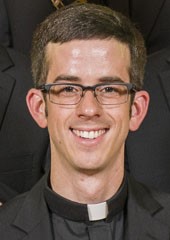 Chris Kellerman, SJ
In April, as part of a three-week seminar on Catholic social teaching, my Jesuit novitiate visited the Louisiana State Penitentiary, better known as Angola Prison.
Though in the past I worked for a program that assists recently released prisoners, until this day, I had not interacted with the permanently incarcerated. The experience of doing so turned out to be one of the most important moments of my novitiate.
Fr. Bernard "Bernie" Papania, the prison's full-time Catholic chaplain, met our group at the gate. He, along with a group of inmates selected by Fr. Bernie to be peer ministers, serves the Catholic population among the 8200 men at Angola.
After we were checked-in, Fr. Bernie took us to a room where the peer ministers awaited us. As far as I could tell, all of them were serving lifetime sentences, as are the overwhelming majority of inmates at the prison.
They gave us a wonderful presentation on the prison's inmate-staffed hospice program, followed by a series of testimonials. We novices were amazed that these men had grown in their faith amidst an extraordinarily challenging atmosphere. I was particularly touched by the story of Kevin, a young man convicted of double homicide, who eloquently spoke of his conversion sparked by contemplating a crucifix during a sleepless night.
When the session finished, the peer ministers led us on a tour of Angola. They showed us the prison's greenhouse and toy shop, and we visited a row of men who were being punished for disciplinary violations. As we walked to the dining hall for lunch, I caught up with Kevin. He told me more about living at Angola, and I asked him a question that had been on my heart the whole morning.
"Kevin, how do you get through this?"
He stopped walking and looked at me. "Some days are really hard. I know that I'm going to die here. I just hope I can make a difference in somebody's life."
I told him how much he had inspired me. He smiled and looked down, remarking that no one had told him that before.
As our visit came to a close, I got Kevin's address so that we could continue our conversation. I was deeply moved by all that I had seen and heard. Yet I experienced an interior tension: there was a family somewhere whose lives had been tragically and permanently altered by Kevin's actions. Despite his moving conversion, an elderly couple was still dead and a family still missed them. Did Kevin deserve to experience anyone's love and compassion? Did he deserve to feel anything but misery?
The answer, of course, is no. But neither do I. Some of the mistakes I've made have caused irreversible damage in the lives of good people, and nothing this side of heaven will erase that damage. I will die within the prison walls of these irreversible consequences.
Yet for some incomprehensible reason, God continues to love me. Somehow God's love has penetrated the walls of my own prison and embraced me with the love of my friends and family, my brother Jesuits, and those to whom I minister. I do not deserve their love-my prison of irreversible consequences reminds me of that-but it's precisely that undeserved love that convinces me that grace is real and that God can and will make all things new.
Kevin is going to die at Angola prison. I can choose to love him and others in his situation, to visit them and defend them when necessary, or I can choose to ignore or even hate them. My choice will not bring their victims back to life, nor will it bring down the walls which daily remind these men of what they've done. But my choice could determine whether or not they come to know the totally undeserved love of Christ that I have known. How can I feel anything except a passionate desire for them to experience that love in all of its lavish mercy, compassion and tenderness?
The day ended with Mass. Before the liturgy began, as we sat in the quiet prison chapel, someone approached the altar and stood on his toes to light the Easter candle. It's the candle that bears witness to the truth that Christ still is alive, that he still loves us and forgives us-even those of us who have built our own prison walls. The acolyte, a murderer, returned to his pew, and we all prepared to receive the crucified and risen body of our Lord.