Fishing for Nutrition on the East African Coral Coast
Bryan P. Galligan
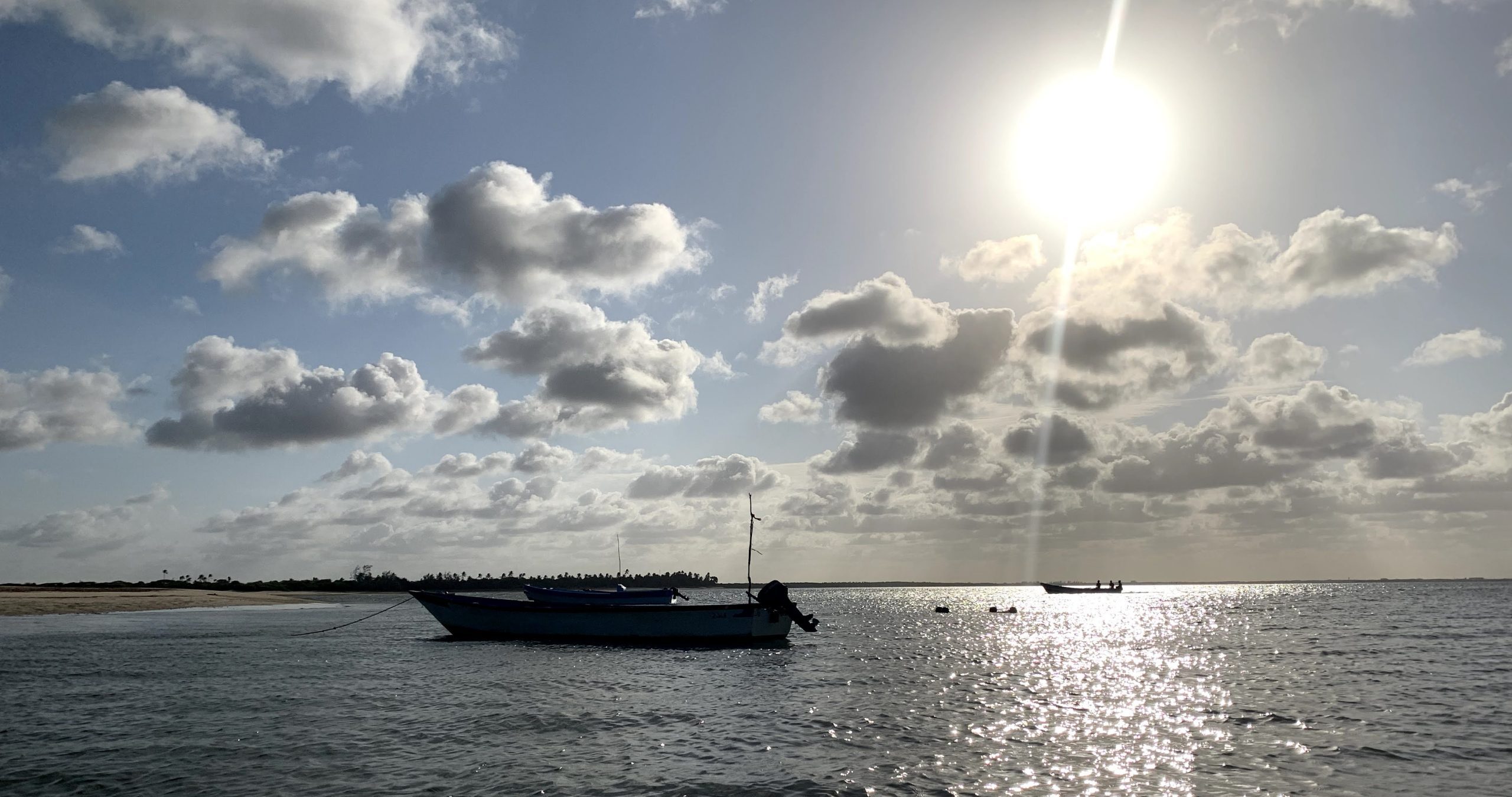
As the sun began to set and the shadows lengthened across the white sand, I lowered my mask and snorkel over my face and slipped into the warm Indian Ocean water. The tide had just turned, and I swam against the current across the lagoon's shallow waters. I could almost feel the beach receding in the distance, and I recognized the familiar shiver of fear and helplessness accompanying me every time I swam in open water. I charted a straight course for the fringing coral reef that lay between me and the open ocean, thrilled to finally be encountering one of the study sites where I had been analyzing years of data from the local fishery.

JCCU
I began my work on coral reef fisheries as a regent at the Jesuit Justice and Ecology Network Africa (JENA) in Nairobi, Kenya, and I have continued to collaborate with partners at JENA and elsewhere since returning to my native United States in 2023. My study system, the East African Coral Coast, is home to one of the longest reef systems in the world, stretching from the southern tip of Somalia [in East Africa] to KwaZulu Natal in South Africa. Millions of people depend on these coral reefs along thousands of miles of coastline for food and income. But too often, the fish they harvest are valued only in economic terms, which contributes to overfishing and food insecurity at a time when climate change already threatens the lives and livelihoods of coastal communities.
JCCU
Agroecology provides an alternative approach that sees coastal food systems more holistically. This holistic and systemic approach led my colleagues and me to connect the dots between public health nutrition and marine ecology, asking how fisheries can provide nutrition to people while also building ecological resilience on coral reefs. After a few years of research, we now find that these two goals often go hand in hand. In Kenya, fishers who use basket traps began adding escape gaps to protect juvenile fish in 2010. They could soon tell that the modified traps caught more fish, but our research also found that catches had become more sustainable and nutritious. We then evaluated fish catches across the region for their micronutrient content and found that small-scale fisheries provide key micronutrients to food-insecure coastal communities. In some countries we studied, ending overfishing, an important biodiversity goal, would also produce enough additional micronutrients to provide more than 100% of the current demand for selenium, omega-3, and zinc among children 1–3 years old. In other words, fishing less and using sustainable methods can support public health while protecting coral reefs.

JCCU
After several minutes of swimming, I reached the reef, turned around, and allowed the current to carry me on its slow journey to the shore. The seagrass meadows and coral patches slid by, revealing their coterie of cautious juvenile fish, territorial crabs, and even a few tiger cowries with their mantles extended like long fingers searching the water above. This reef was overfished but recovering; I was encouraged to see the diversity of species benefiting from the intact habitat the local community had worked to protect. I sighed contentedly through my snorkel as I thought of the interspecies care, building resilience and abundance in this little lagoon. The sun lowered toward the horizon, the current carried me along, and I knew the reef was healing.
 Bryan P. Galligan, S.J
Bryan P. Galligan, S.J., is a Jesuit scholastic of the U.S.A. East province studying theology at Boston College. Before his theology studies, Bryan served with the Jesuit Justice and Ecology Network Africa (JENA) in Nairobi, Kenya, where he coordinated the network's global advocacy efforts on food and climate justice and conducted research on coral reef fisheries.
Watch the video to know about the mission.

Related Posts:

By examining the tensions between democratic institutions, citizen participation, social movements, and the common good, the article opens a path for reflecting on how new forms of power emerge and how societies can respond to them. As AI systems increasingly shape public life and influence collective decision-making, Bado's vision of a more participatory and substantive democracy challenges us to consider how technology can be governed in ways that promote justice, inclusion, accountability, and human dignity. We invite readers to revisit this earlier reflection as a valuable source of inspiration for discerning how democracy may evolve in response to the opportunities and risks posed by AI and for ensuring that technological progress continues to serve people and the common good.

In Magnifica Humanitas, Pope Leo XIV warns that machine intelligence in war ends by “reducing victims to data.” The machine profiling that registers a person for food can also be used to select a person as a target. A small drone circling a road, with no one steering it, can have such a profile as its target. A drone like this is an autonomous weapon system. Once activated, it selects and attacks targets by itself, matching what its sensors detect to a programmed target profile. No human being decides, at the moment of the strike, that this particular person will die or is the right target. The case most often cited as the first use of such a weapon against people, reported by UN experts, was in Africa, in Libya in 2020.

Democracy, which has historically proven most effective in meeting these criteria, cannot be taken for granted. In our AI era, citizens should press for more than multiparty elections and the protection of basic freedoms; that institutional core is not enough. We must carefully regulate and channel powerful technologies with the capacity to divide us from one another and short-circuit social and political participation. That means maintaining spaces in civil society where human contact and social friendship can flourish without the mediation of machines, beginning with the educational systems through which all citizens pass. It means fighting deepfakes and disinformation in the public sphere, so that citizens still operate in a world of facts and evidence and political representation has a strong basis.
Artificial intelligence (AI) is increasingly entering public life in Ghana, including through digital systems used for identification, verification and service delivery. The ethical question is therefore not simply what AI can do, but what happens to people when digital systems become gateways through which citizenship, mobility or access to services are recognised. In northern Ghana, especially in border communities, this is a concrete question. I was privilege to visit Pusiga community in November 2025 with a Jesuit friend of my mine who is originally from the community. Thus, the topic for this article resonates very well with me.
The article ‘Pandemic and Authoritarianism’, by Germán Rosa, SJ, was written in the midst of the COVID-19 crisis, but its insights extend beyond that context. The pandemic appears to reveal and accelerate political trends that were already present: the concentration of power, the weakening of democratic checks and balances, and the acceptance of extraordinary restrictions in the name of collective security. Rosa’s main concern is that fear may lead citizens to silently surrender their freedoms and rights, and that measures which were initially intended to be temporary become normalized and endure. Furthermore, in societies riven by inequality, control is never distributed neutrally: it falls most heavily on the impoverished, marginalized groups, migrants, dissidents and those who defend rights and territories.
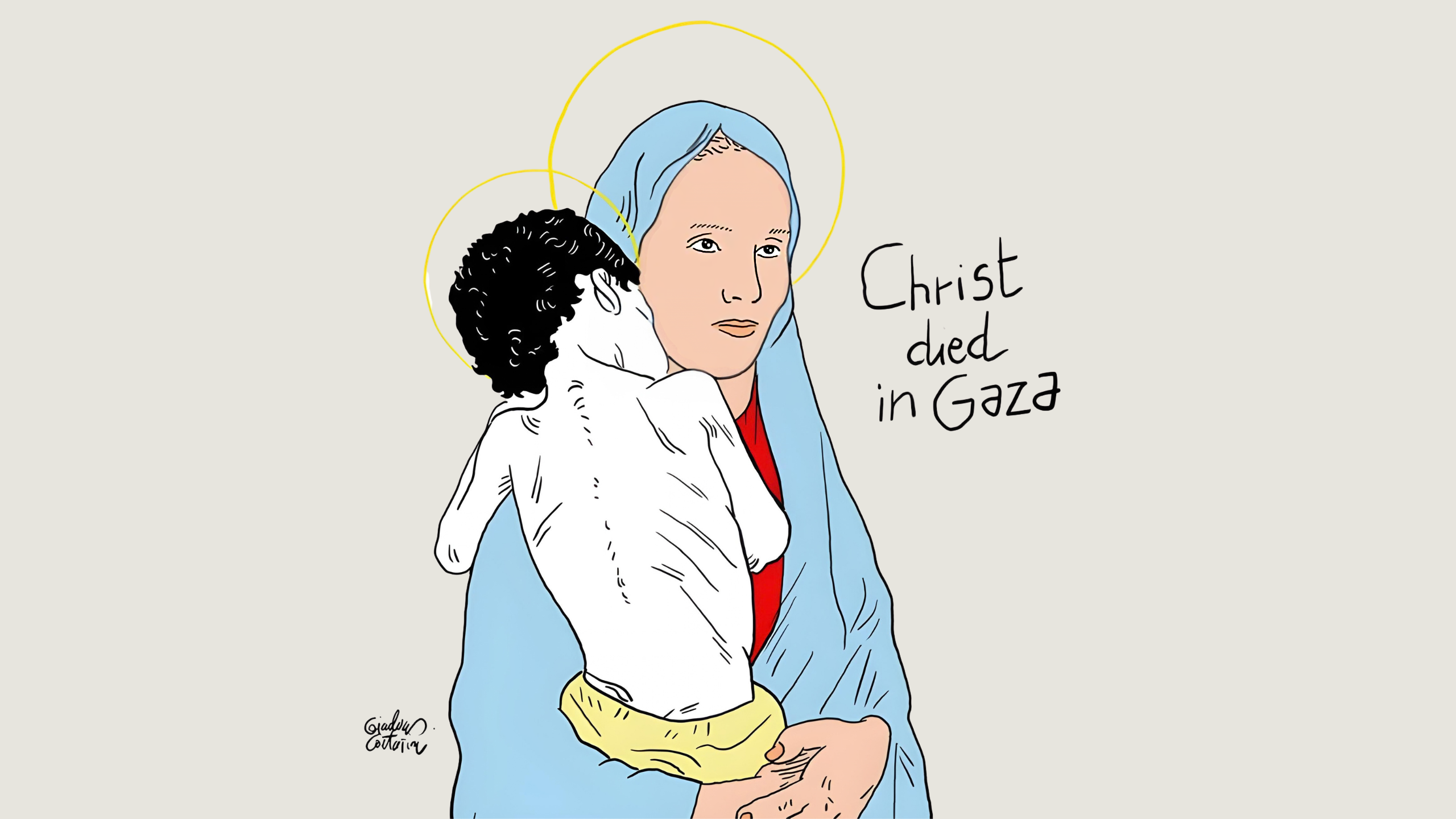
Speaking of dead children is uncomfortable. Yet it can also be healing. As I listened to the stories shared that day, I found myself returning to memories I may at times shy away from remembering. Iremember finding my sister’slifeless body in bed one Saturday morning. Ihad cometo carry her out with me to watch cartoons.As I listened tothe story of Hind Rajab, a 5-year-old girl who had been trapped inside a car attacked by Israeli forces,the memory of a little boy reaching out to touch his sister came back. The young girlhadmanaged to call the Red Crescent for help but hours later she and the paramedics who had come toassisther were all found dead. The chilling story reminded me of the shocking cold that struck my hand as I gently touched my sister’s arm in a futile attempt to wake her up.


