
The Arrupe “Style”: A Gospel-Informed Way of Proceeding
Abstract
This article reflects on the life and legacy of Pedro Arrupe, SJ, emphasizing his authenticity, humility, and Gospel-rooted leadership. It highlights how his deep faith, cultural sensitivity, and commitment to justice shaped the Jesuit mission in a rapidly changing world. Even in illness and marginalization, Arrupe remained a man of prayer and joyful trust, offering a timeless witness for today’s challenges.
An anecdote can summarize a person’s life. For six months, whenever Pedro Arrupe taught adults in Hiroshima, an elderly Japanese man would sit quietly and stare at him without speaking. Then one day, Arrupe dared to ask him, "What do you think of my explanations?” With a stoic face like a Samurai, the Japanese man replied, "I can't give my opinion because I haven't heard anything. I am deaf; you know? But it is enough to look into your eyes. You are who you say you are. Your faith is my faith.”
From his last trip to the Philippines, before returning to Rome, where he eventually suffered a stroke, he made a stopover in Thailand and spoke with some seminarians. He told them that when they go up to the pulpit to preach, "You will persuade not by what you say, but by what you are." This was Father Arrupe's great secret: the integration of authenticity, harmony, and freedom with the lived truth of the Gospel in his person. The human person is the message. Some built bridges between ideologies, cultures, and inequalities in a world radicalized by partisanship and party politics. Examples include Gandhi, Martin Luther King Jr., Oscar Romero, and our unforgettable Pedro Arrupe.

"I saw everything clearly."
When I visited him in Rome, time seemed to stand still, just as it had on August 6, 1945, at 8:15 a.m., outside Hiroshima. Then, Arrupe realized that the B-29 flying over the Japanese city was not the usual American cargo plane. He climbed the hill near his house, the Nagatsuka novitiate, and saw that the pika-don ("glow" and "blast" in Japanese) of the world's first atomic bomb had turned Hiroshima into a scene of smoke and ash. He then went down to the chapel, and in a moment that felt like eternity, prayed and asked God what he could do. He then understood that the immense energy developed for evil could be transformed into a creative force for good, and he dedicated himself to this cause. Today, as the world faces geopolitical and socioeconomic turmoil, Arrupe's insight remains—an awareness deeply rooted in his life.
His way of proceeding emanates from his life story. He was born in 1907 in the industrial city of Bilbao, where he became an orphan after losing both his parents, one after the other. His first encounter with inequality occurred in Madrid's suburbs while he was studying medicine, and his discovery of mystery took place at the Lourdes Grotto. He then decided to become a Jesuit and left a lasting impression at the Loyola novitiate. In Oña, Burgos, during his philosophy studies, he had a mystical experience, as he told me in Rome: "I heard a voice say to me, 'You will be the first,' and I felt an inner glow by which I saw everything clearly." I believe this enlightenment led to the “Arrupe style.” Pedro Arrupe looked beyond preconceived notions. That’s why, when he was with a Jesuit, he didn’t see a “lackey,” but a human being first and foremost, beyond a ruler’s utilitarian view.
In this way, Pedro Arrupe entered the new post-Conciliar era with a unique contribution: inculturation, a term he coined within the context of pluralism. He believed that "no culture is perfect" and that "cultural values are not absolute." A culture that closes in on itself becomes impoverished, stagnates, and dies. If faith is confined to a particular culture, it suffers from these limitations. Faith must sustain ongoing dialogue with all cultures. Faith and culture influence each other; faith purifies and enriches culture, and culture enriches and purifies faith… Pluralism in expressing faith is inevitable and a goal to strive for… While unity is maintained through the oneness of human nature and the unity of the life-giving Spirit, which embraces life and all endeavors, the Holy Spirit brings about the humanly impossible (and yet most profound human) desire for “radical unity in the most radical diversity" (Synod 1977). What does this openness imply? In this life, the truth is not anyone’s absolute possession; everyone holds a piece of the truth. The “Arrupe style” always presupposes this humble attitude of learning from others.
As a novice master in Hiroshima, he constantly returned to the source of his life: Jesus in the Tabernacle. He stayed in the worst room of the house, a dingy tower; he cleaned the shoes of the young Jesuits and struggled hard to understand the complex psychology of the Japanese. One of the last testimonies from that time describes him as someone "always with a smile on his face and a heart ready to please and help others."
Visiting the future
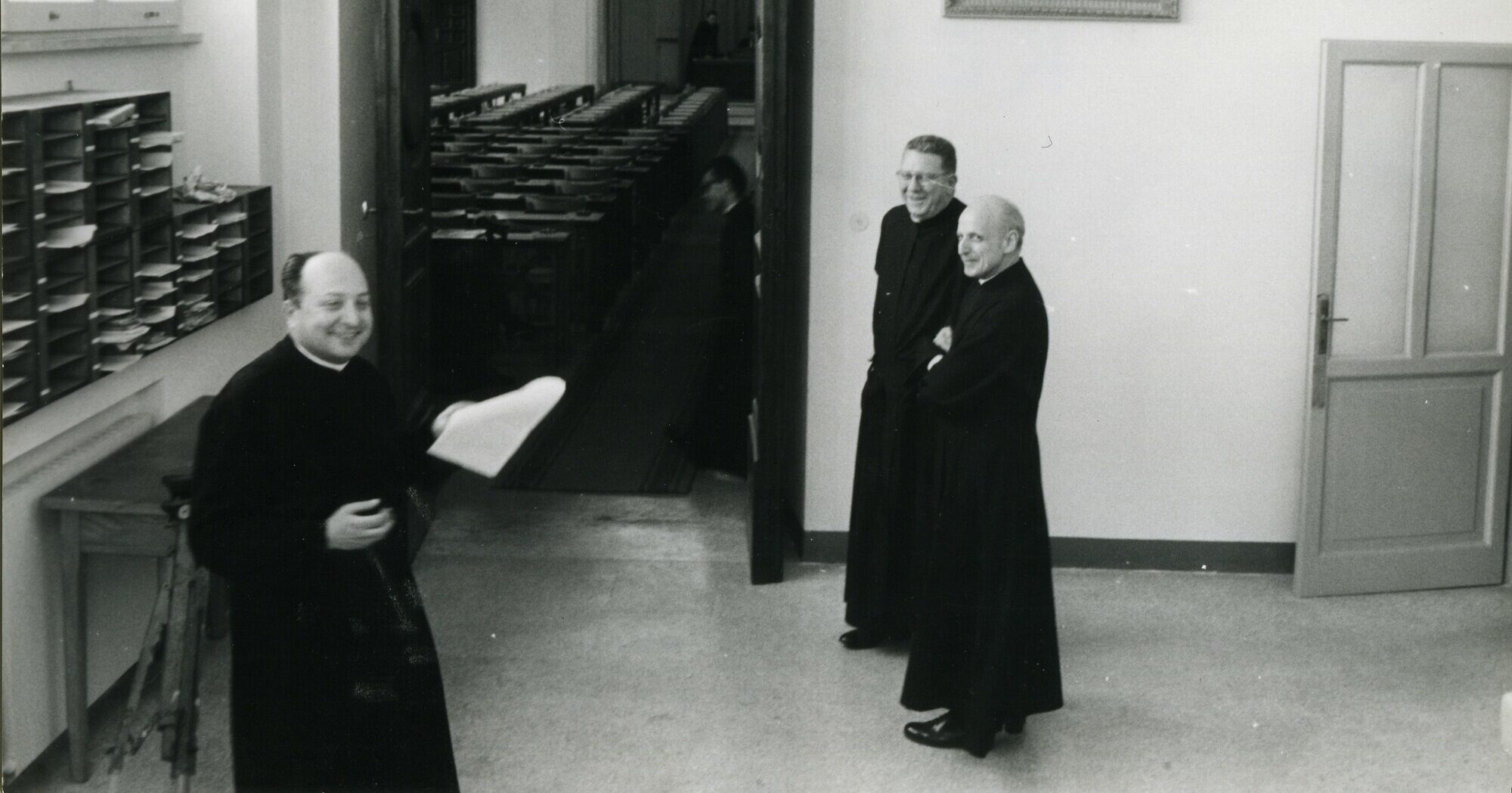
As head of the Jesuit Vice-Province of Japan, and with this mission’s international scope, Arrupe had the chance to see, as if in a test tube, what the future would hold for him in a more demanding role as Superior General of the Society of Jesus. All these foundations would produce great results, including shaping the post-Conciliar figure who motivated Jesuits to fight injustice on the frontiers of the Third World. "Don Pedro," as his colleagues affectionately called him, transformed the tough, "command and control" style of the Ignatian order into one of evangelical love, and his asceticism became a positive force for service, defining the Jesuits as "men for others." When Arrupe arrived in Rome in 1965, he was already ‘a man of the Council before the Council’ was even convened.
Arrupe's contributions were significant during a period of creativity and spiritual renewal within the Church. He was ahead of his time, providing insights into the future of the Church in Latin America, his stance against racism in the United States, and ideas on education [for justice], especially concerning the "schools for the rich." He met with worker-priests; he spoke out against dictators such as Franco and Stroessner. He visited imprisoned Daniel Berrigan, a Jesuit who burned the Vietnam archives. Arrupe actively participated in major ecclesial events.
His journeys to understand the Society made his humble and approachable figure closer to each Jesuit, who felt “personally cared for.” He embodied the universal Church's commitment to openness and dialogue. He saw religious life through the lens of mission; he trusted people completely and traveled the world to see firsthand the diversity of times, places, and individuals. He was tolerant of the weak and hesitant. He encouraged young people, as his successor Adolfo Nicolas recounted, to "visit the future.” His approach was apostolic, clear, daring, discerning, and highly participative—because GC 32 also became a means of consultation on issues that were heavily criticized by significant sectors of the Vatican, the Church, and the Society.
In God's hands
Far from fleeing or retreating during times of crisis, in the turbulent 1960s and 1970s, Pedro Arrupe pushed forward in pursuit of new horizons. However, this attitude, his evolving concept of obedience, and his friendly leadership style ultimately proved costly for him. He faced misunderstanding and even betrayal within his ranks. He was wrongly accused, with some saying, "One Basque founded the Society of Jesus and another was destroying it." He had to confront the risk of division among those who adhered to “strict observance.” Finally, during the General Congregation, he received an admonition from Paul VI, urging him to reconsider the suppression of the "grades" or categories of Jesuits and to choose justice. The Pope, whom he told me loved him "like a grandfather," and whom he kept in his personally composed breviary prayers, reprimanded him severely.
Nevertheless, the dark night [of the soul] would arrive during the time of St. John Paul II, who was hesitant to meet with the Jesuit General Superior. Arrupe only managed to speak with the Pope twice, each time for ten minutes. When he finally did, he offered his resignation because he felt he lacked the Holy See’s confidence; however, the Pope refused to accept it, as he had other plans for reforming the Society.
The “white Pope” and the so-called "black Pope" appeared to speak different languages at that time. Arrupe, nevertheless, obeyed, smiling and encouraging his companions. Still, something was breaking inside him, deep within the dark, hidden night of his soul. After returning from his trip to the Far East on August 7, 1981, he fell seriously ill with cerebral thrombosis. The Secretary of State, Cardinal Casaroli, left him weeping in his infirmary room. The Cardinal delivered the Pope’s letter, which halted the constitutional process of the Society, ignoring the Vicar appointed by Arrupe, Father Vincent T. O'Keefe, and instead appointing a new Vicar for the Society. The Pope appointed an octogenarian Jesuit, who had been a confessor to two Popes and whose beliefs were significantly different from those of the then General of the Society. Fr. Paolo Dezza, later made a cardinal, was the Pope’s chosen representative in the Order, with Fr. Giuseppe Pittau as coadjutor.
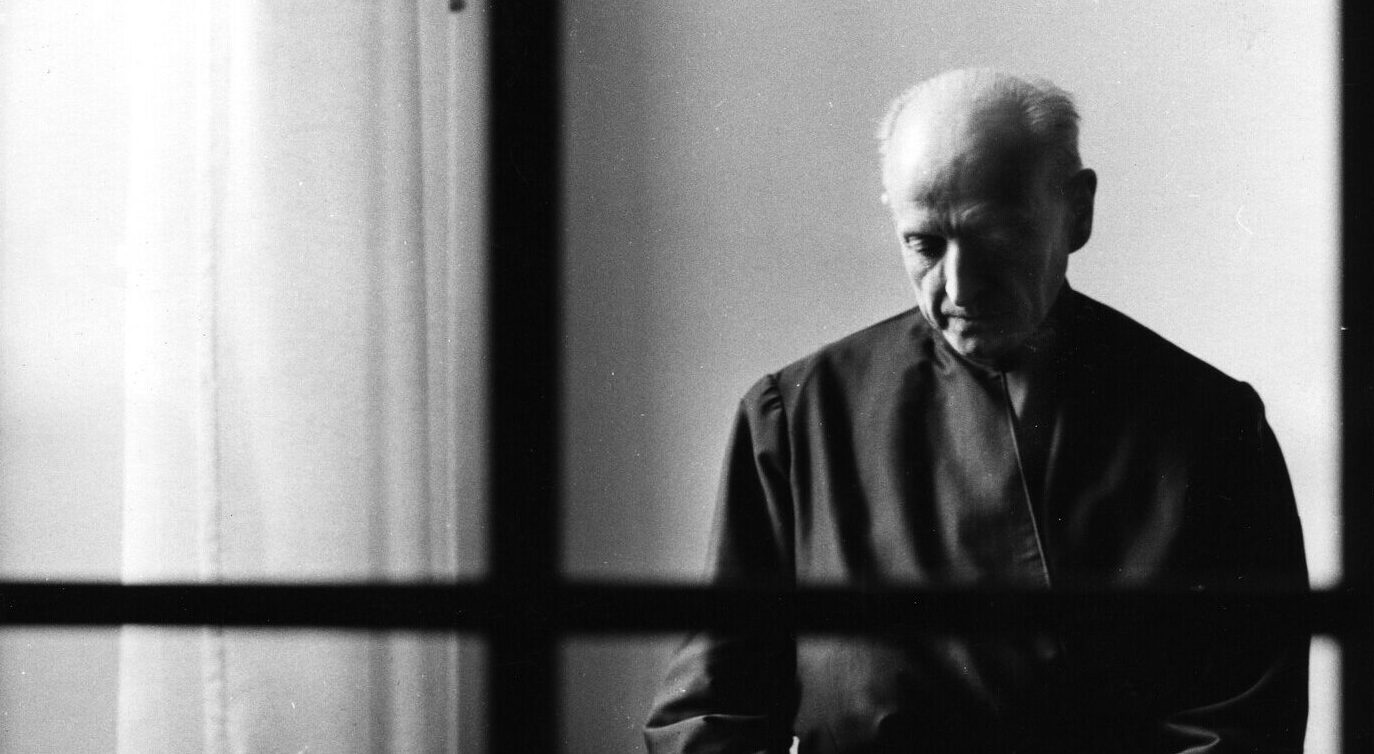
Arrupe bowed his head, stunned, and obeyed once more. When I visited him in Rome to gather information for his biography, Arrupe, with a rosary in hand, looked like the Cristo de Mantegna—pale and translucent. Despite the hardship of living with paralysis, he stayed cheerful, smiling, and kissing the hands of those who tried to kiss him, never letting go of the gesture with which he seemed to ask for forgiveness just for existing.
Then, with hesitant words, the man—who had spoken seven languages and been recognized by the most prominent people of his time—opened his heart to me. His heart was torn between obedience and his dark night, between confusion and clarity. He stammered, “I don’t understand… I cannot figure it out." He continued, “The Pope has said very little to me. I never tried to impose my will on anyone. I always talked with everyone. I was deeply convinced. I saw clearly. It was wonderful—a truly spiritual experience. Now, I feel broken. I am good for nothing. A poor man. In God's hands.” The foundation of Arrupe's style was a faith that always accepted God's will.
After the Society resumed its regular activities and the new General, Peter Hans Kolvenbach, was elected, Arrupe stayed in silence for nearly nine more years in his small infirmary room. During this time, the Pope himself visited him three times. There were also visits from unknown individuals and people from around the world who felt privileged by his friendship.
Pedro Arrupe Gondra was not only a holy man of our time but also a pioneer of inculturation in the Church and a leader in adapting religious life following the Second Vatican Council. As a cultural bridge between East and West, he was the spiritual father to many Jesuit martyrs in Third World countries, a pioneer in engaging with the world and various ideologies, a friend to refugees and drug addicts—and above all—a man in love with Jesus of Nazareth who balanced faithfulness and prophecy in his life. Behind his extensive activities was a prayerful inner life: that of a simple man who thoughtfully gave his secretary a cake with candles for her birthday, who regarded a subject as a lifelong friend, and who even managed to laugh at his own shadow.
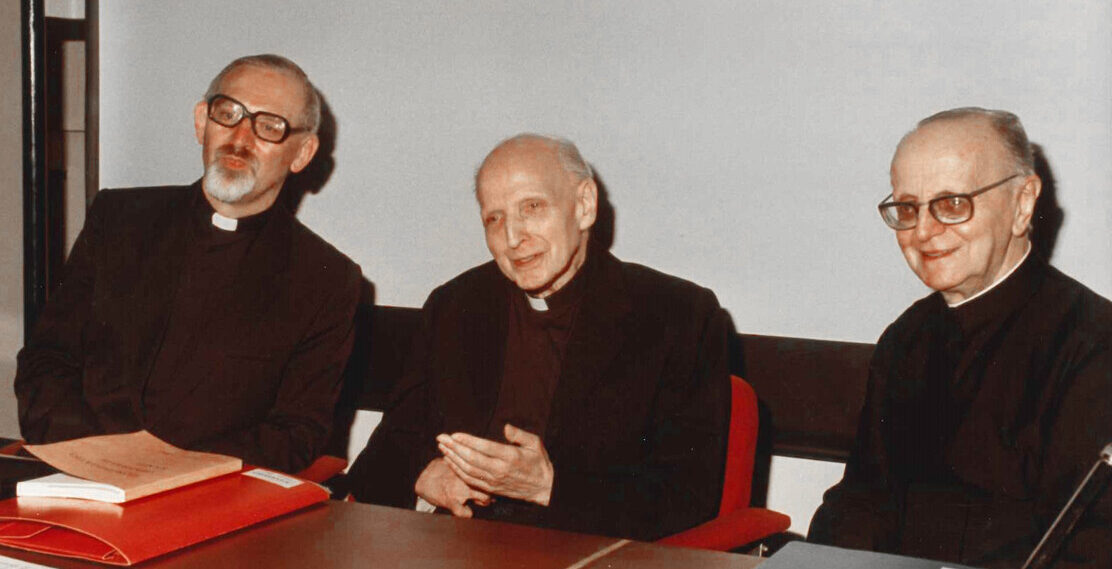
"Where is the Society going?" he was asked, and Arrupe replied with straightforward honesty: "Where God leads it.” Father Kolvenbach summarized this as "An absolute, joyful trust in the Lord, hope in the Crucified One who bore the terrible cross that broke his body but never broke his spirit."
Arrupe's ideas and style, far from aging, are more relevant than ever to the problems and challenges of our time. Perhaps because he was ahead of his time, one of his favorite phrases was: "We cannot respond to today's problems with yesterday's solutions." He found it unacceptable that the Church and the Jesuits, bound by a rigid interpretation of orthodoxy, would retreat into winter quarters, abandoning their role in dialogue with the contemporary world and culture. He wanted men to "have the future in the marrow of their bones."
He seemed to be discussing issues that trouble us today when referring to "the immense spiritual void today, which neither technical progress nor materialistic ideology can fill." He sensed the frustration that comes with a consumerist society, often mistakenly referred to as a welfare society. He understood the feelings of a citizen who, after briefly experiencing the promise of freedom, sees that dream fade away. He observed this happening in a world divided, filled with envy and distrust toward each other, as the community—meant to be the primary source of security and support—threatens to take away one’s freedom and personal identity.
He saw culture as a human ideal, describing it as "the harmonious unfolding of the whole person and every person." However, he noted the beginning of a significant crisis; by the 1970s, he observed that we were already experiencing a radical and rapid change, which was “not taking place in a straight and homogeneous way, but amid strong tensions and conflicts." He believed the world was suffering from the effects of a widespread "disorder": "Wealth, instead of serving the primary needs of most people, is often misused and wasted." Moreover, after learning about the spending on weapons of destruction, this privileged witness of the atomic bomb argued that the only solution couldn’t be achieved "by simply changing the structures and institutions, if the people who live in them are not also changed." Such personal change is now viewed as essential through the solidarity of people and a global [social] revolution, supported by international organizations. Father Arrupe thought this was crucial for world transformation. These ideas align with Pope Francis's stance against war, inequality, and the need for a Church "on the move" and "on the periphery."
He also thought about the youth we see on our streets today. Arrupe strongly believed in young people and held an optimistic view, trusting in their power to create change. He rejected "conventionalism, etiquette, and pure form" and embraced "simplicity, naturalness, spontaneity, and solidarity." He viewed young people as impatient and idealistic, characterized by genuine generosity through real service rather than hypocritical acts; they care for others, especially the most vulnerable, and possess a universal spirit as the world has become smaller. All of this occurred before the rise of the Internet, the expansion of information technology, digital platforms, mobile phones, and artificial intelligence. He felt a deep connection to the world as a global citizen. "I feel universal. Our role is to work for everyone, so I try to have as big a heart as possible to understand everyone," he said in an interview on RAI [Italian Broadcasting Company]. He was a citizen of the world who supported a universal passport.
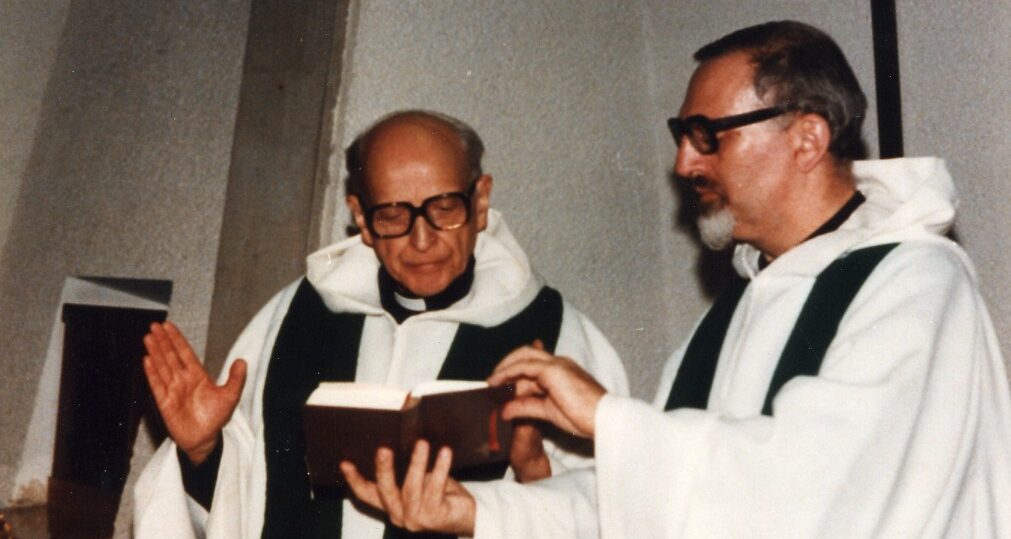
However, he also claimed that young people were “superficial and sensationalistic,” and history has proven him right. “We live," he said, "in an essentially sensory civilization, made up of images, of strong perceptions [...] A certain psychological weakness is sometimes observed in the new generations." He pointed out "a contradiction that can sometimes be seen in them, and in the contrast between their good desires and the maturity needed to carry them out." He used this as an example of what is often referred to as "weak critical thinking."
He firmly believed that future society should be frugal, which he saw as essential for humanity's survival. He spoke out against wastefulness and supported policies of austerity. For example, this paragraph could appear in a leading article in any serious media today: "The self-centered, selfish consumerist, obsessed more with the idea of possessing than with being, is a slave to the needs he creates for himself. He is unsatisfied, envious, and whose only goal is the accumulation of profit, as opposed to the steward, who does not seek to possess more but to be better, to develop his capacity to serve others in solidarity, and to be content with what is necessary." This was how he was—heroic, even—since we know he had taken a personal vow of perfection.
The same applies to current issues, such as women's rights. At a crowded press conference in Puebla, Mexico, he said that women's participation in church decisions would eventually “come,” but it would require “patience,” which made the journalists laugh. That prediction is beginning to come true with some of Pope Francis's appointments and views about women.
Amen and Alleluia
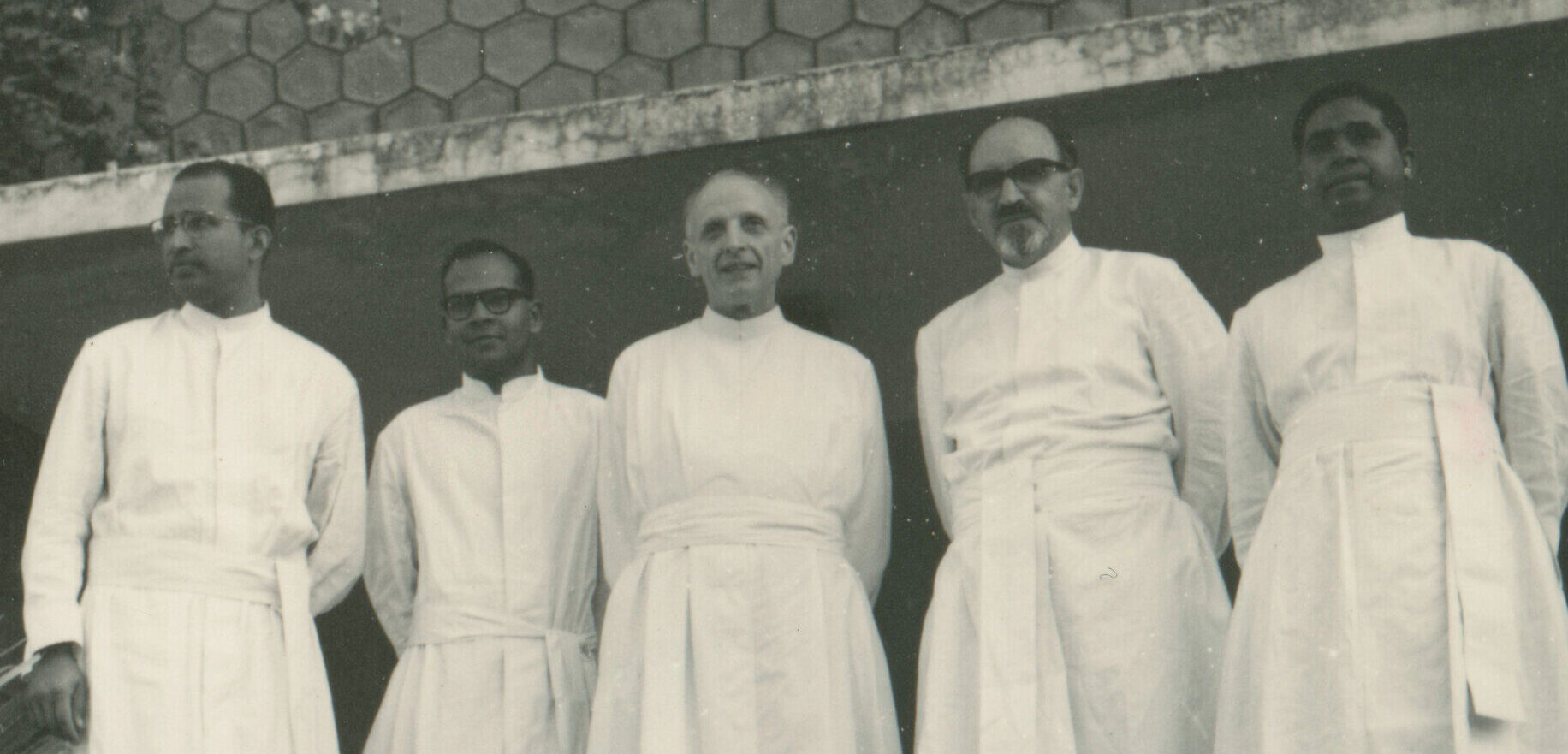
Finally, regarding other contemporary issues such as refugees, immigration, disarmament, ecumenism, hunger, spirituality, religious life, and a humanism without borders, this 21st-century witness and prophet gradually matured and committed himself in a Christian way. Such a worldview also involves the European Union, which appears to be closed off in its self-satisfied and ambiguous welfare state. Arrupe envisioned a "humanism open to the whole world." He added, "Europe, insofar as it increases its possibilities by uniting, must increase its concern to distribute resources in a spirit of dialogue, respecting the value of others and in the conviction of having to receive as much as it can give. Thus, Europe could not view its development as separate from that of the still less fortunate or less developed countries. Perhaps we could urge our governments to recognize their enormous responsibility in this regard fully. We often hear about the explosive situation in the Third World, but do we ask ourselves whether we Europeans do not share some of the responsibility for this situation?"
Regarding the Church, he deeply believed in respecting pluralism: "Pluralism in the expression of faith is not only not a necessary evil, but a good to be aspired to, which allows the manifestation and development of God's natural and supernatural gifts." He also believed that democratic values, currently scorned by new autocratic governments, are not foreign to the Gospel: "Today there is a crisis of obedience and authority. That is why ordinary people need to get involved. Moreover, this idea closely aligns with the teachings of St. Ignatius. Therefore, today, there is a shared responsibility in decisions that fall under the jurisdiction of the Superior. In the Society founded by St. Ignatius, many democratic elements facilitate decision-making. He respected the freedom of his subjects so much that he learned from them while also being extremely demanding of himself. Luis Urbez, who had just finished his studies in Italy with a specialization in film, once asked Father General what he thought about the world of film and media as an apostolic endeavor. Arrupe replied, "It is not for us Superiors to say what should be done. You, who know the subject, tell me what I should do.” When he asked me to write for him, as a "negro," a commentary on the Seven Words of Christ on the Cross for Latin America and to help him record it for Vatican Radio, he put his hand on my shoulder. Then, he said, "Forgive me for decorating myself with other people's feathers."
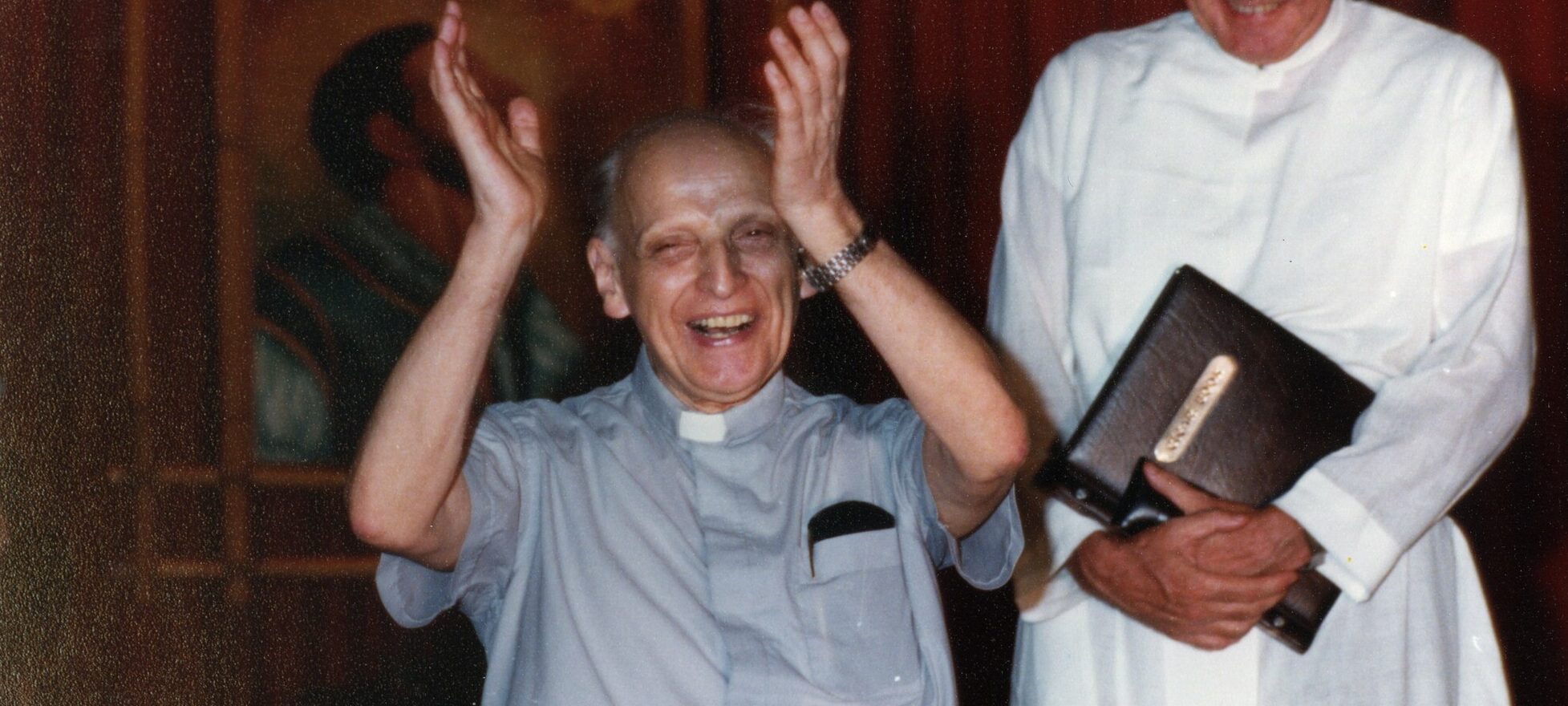
He was accused of secularizing the Society. His consistent response was, "I am not saying that the Society is secularizing, but that it is apostolically adapting itself to the secularizing world, which causes transformations that always have an apostolic meaning." Now, the accusations suggest the opposite: that out of fear of secularization's effects, the Church is losing contact with the world and its ability to engage with today's culture. Another criticism that Pope Francis has repeatedly voiced.
The core of the “Arrupe style" was deep faith and spirituality, which kept him constantly optimistic: "They say I am an optimist, and I believe it. It seems to me that having an optimistic temperament is a blessing from God at this time. The reason for this optimism is that I have great confidence in God. We are in his hands.” Such confidence stemmed from his charming simplicity and humility: "I am a poor man who tries to spoil as little as possible the work of God." He was unafraid of insecurity: "I still fully maintain today what I said then: Perhaps the Lord has never been so close to us, because we have never been so insecure." Arrupe’s last words before his death, which he repeated throughout his life, summed up a way of life more necessary than ever in today’s world—a world that has fallen into a collective depression: "For the present, Amen; for the future, Alleluia!"
(Original: Spanish)

Pedro Miguel Lamet, SJ
Madrid, March 2025
Disclaimer
The views, thoughts, and opinions expressed in the article belong solely to the author(s). They do not purport to reflect the opinion or views of the Secretariat.