Territories in tension: digital extractivism and socio-environmental resistance
Introduction
AI promises to transform all sectors of the economy, agriculture is no exception. Already, the sector is trending towards ‘precision agriculture’. AI is technology that accelerates this ‘datafication’ of agriculture. The gains are supposedly increased efficiency and a more ‘climate-smart’ agriculture, but the real effect will further entrench corporate agriculture monopolies at the cost of smallholder livelihoods and identity. This says nothing of the responsibility for the local ecological balances needed for sustainable water and the integrity of the larger biome. For the rural upland community where I live, the adoption of AI risks eroding local knowledge of land and place, alienating Indigenous from their life and work.
Bendum is a rural upland community that has resisted the pressures of neoliberal ‘development’.
Bendum is a village of over 300 inhabitants, located in the Upper Pulangi of Bukidnon Province, where eighty percent are Pulangiyēn the Indigenous People of the area, whose documented ancestry in the area dates back to the early part of the 19th century but was present long before that. They depended on their small clearings in the forest to provide for their daily needs and on forest resources to sustain not only their food supply but also their shelter, clothing and livelihood.
Their traditional livelihood activities and way of life were "interrupted and threatened by the entry of destructive logging operations in the 1960s and 1970s," (Walpole 2000) continuing until 1986. Logging companies extracted particularly the different lawaan trees (dipterocarp species, mainly Shorea spp.) for plywood, along with other high-quality timber, in the entire Upper Pulangi Valley, they also regulated communities and movements in the area causing many to relocate to higher lands. The influx of migrants arriving as company laborers remained in the area burning out the logged over areas, reducing Indigenous lands and resources.
The Tribal Council of Bendum has grown to provide collective leadership for the Indigenous community and a forum for the exchange of ideas. It was officially recognized by the government in 1994, as they have had a tradition of self-governance since before the Spanish arrived. A Certificate of Ancestral Domain Claim (CADC) in 1998 strengthened the people’s hold over the forest and allowed the community to oppose the entry of any mining, illegal extractors for wood and rattan, and be aware of the importance of having control over their own land and water. In this their culture, language and land become their strength as a People.
Corporate agriculture and monocropping in the 2000’s created a shift in land use having a major impact on the socio-economic dynamics of upland communities. Bukidnon Province has seen a substantial increase in yellow maize production on the plateau as a response to a growing livestock sector in the Philippines. Bukidnon is a top producer in agriculture and fisheries, contributing ₱162.34 billion to the national economy in 2025 (PSA 2026). The Bukidnon Plateau is the corporate capital of pineapple production, as well as bananas and other fruits. The Philippine Packing Corporation has a monopoly over 30,000 hectares and has a usually complex history of benefiting some and displacing others. (Acosta, 2018). Valencia, just south of this area, relies on irrigation from the Pulangi for major rice production. Further south is the sugar-producing area. However, the mountain area to the west has a much poorer economy like Lanai del Sur while to the east the hidden valley of the Pulangi watershed has an economy more like Agusan del Sur. (Ecojesuit video, 2019)
Smallholder upland farmers are attracted by the low maintenance of high-yielding genetically modified (GM) maize and the promise of high returns. However, changing climate patterns, pests, and other environmental factors frequently result in crop failures and cycles of family debt. Bukidnon recorded the largest number of poor families in Region X with 115,000 families or 36.9 percent of the total poor families (PSA 2022). Pope Leo reminds us of where “in poorer regions, small minorities lived in consumerist affluence alongside situations of dehumanizing poverty.” (MH, no. 40)
The families engaged in this maize production in the larger area of Upper Pulangi are among the poorest in the agriculture sector. This shift to GM maize farming has taken over land for other food crops given the pressure to expand land area. Many farmers have reduced their own food production, hoping to buy rice when they get paid. Children who eat GM corn, if they have nothing else, say it is hard to digest. Herbicides are not widely understood, and using containers around water sources has left many people in the community sick. The long-term use of fertilizer (NPK), pesticide and herbicide use, notably glyphosate, generally applied without protective gear, has affected many people. (ESSC, 2023).
Apu Palamguwan Cultural Education Center is supporting the Bendum community to re-identify and adopt ‘culture-based livelihoods’ as an alternative to GM maize production. ‘Culture-based livelihoods’ are approaches to agroecology and climate action that incorporate indigenous worldviews, knowledge, and practices. These include carbon sequestration through forest management and assisted natural regeneration, major forest fire mitigation through controlled burning, and regenerative traditional agricultural practices, among others.
The hope is culture-based systems can help indigenous and migrant farmers adapt to changing weather patterns, transition to climate-resilient crops, and provide a stable livelihood. Working with the local and national government is crucial in establishing payments for forest guardians who actively manage the area through the tribal councils along the watershed of the Pulangi River. This would be ecologically and culturally more respectful rather than the proposed promulgation of Protected Areas that inevitably puts Indigenous Peoples as second voice and establish offices in the city rather than active service in the area.
Regarding the impact of AI on local education, it is initially affecting a limited level of the youths’ outputs though not yet contributing to brainstorming. The sense is that critical thinking will be adversely impacted, and our teachers are not of a sophistication to guide and set limits to the use. AI plays a creative role in videos when the youth can set the direction of the desired presentations.
The growth of AI in agriculture is the latest challenge to Bendum’s livelihood and cultural identity.
Mainstream discourse around AI in agriculture mostly assumes that adoption is the goal. Benefits commonly centre around two main benefits: efficiency and resilience. Efficiency: AI enables ‘precise agriculture’ Using images or sensors, via mobile phones, drones or satellite imagery, AI can diagnose crop health, analyze soil moisture levels, project weather patterns, and identify optimal harvest timings. AI can enhance farmers natural resource management capabilities, but barriers to smallholder adoption are significant, including low existing levels of digital infrastructure, AI relies on internet connectivity, high cost and capital requirements, and low levels of digital literacy, while not addressing the diversity of crops and crop ecological niches and the resilience these give despite the focus on economic inclusion and evaluation.
To this end, policy recommendations focus on addressing barriers to adoption, building a multi-stakeholder collaboration network, and enhancing farmers’ AI literacy. strengthening the rural credit system (Yuan Y. Sun Y. 2025). However, it is important to remain realistic in evaluating what the immediate possible outcomes might be in the context of marginal societies.
A key question is missing from this discourse: what does AI mean for the personhood of the rural farmer, and the identityof rural upland communities. As Jesuit organizations, this is the question that should concern us most. A major concern is that there is no clear ethical or moral standard guiding the development of AI (Vatican, Antigua et Nova, 2025). Culturally there are more than enough problems with social media that society, community, and families cannot manage. In this void, there is a real risk AI entrenches the hegemony of corporate agriculture and degrades the personhood of small hold farmers.
Smallholders are being framed as inefficient or under-skilled with AI being the solution.
‘Rural development’ is often assumed to mean that “traditional” small-scale agriculture must be transformed into “modern” capital-intensive agriculture. Climate change has seen the emergence of a new imperative ‘climate-smart’ agriculture but not the broader biome accountability. Modern farming “can” technically be shown to reduce greenhouse emissions of traditional farming, but not overall accountability. Small hold farming practices are treated as problems to be corrected rather than as knowledge-rich ways of cultivating land. Against this backdrop, AI almost seems a necessity. It promises to lift small hold farming out of tradition into a cleaner economic model and more efficient modernity but without adequate risk evaluation.
The barriers to adoption are too significant for small hold farmers to adopt AI independently with consideration for their parameters of existence. Instead, agriculture undergoing “oligopolistic platformisation”: AI platforms are being built and controlled mainly by firms that were already dominant, especially large agribusinesses and Big Tech companies (Sauvagerd, 2024). This creates an Ag-Big Tech Complex: a dense web of collaboration between two already concentrated industries.
Farming becomes increasingly datafiedand restructured around external systems.
Agricultural AI tools are algorithmic systems relying on vast amounts of data. All aspects of farming are becoming datafied, not only physical variables like soil, weather and crop health, but also farm operations, machine use and management practices. This has three effects, first, farmer ‘knowledge’ is reduced to whatever can be measured and predicted by algorithms. Second, farmers “labour” shifts from direct care of land, crops, and ecosystems toward care of devices, platforms, and technical systems. Third, farms themselves become uniform. “Smart farming thrives on uniformity, as big data-based correlation models yield the most accurate probability estimates on data with few outliners”. “(T)the threat of algorithmic monoculture with dire consequences for social and environmental diversity” (Cieslik, K 2025).
As corporate farming adopts AI and grows in ‘sophistication’, the narrative that smallholders are ‘unskilled’ or ‘backward’ becomes further entrenched and creates a pressure to adopt AI.
Malik (2023) describes such a dynamic emerging with the growth of state-supported ‘farming as a service’ (FaaS) in India: “a scenario where [small farmers] failure to adhere to [prescriptions of algorithms] renders them particularly susceptible to individualized blame and could subject them to further interventions that diminish their autonomy and decision-making.” However, due to financial and technical barriers to adoption - they are caught in a bind. They may adopt only taking on debt and dependent relations with agribusiness firms
They may subordinate themselves through contract farming. “Buyers and farmers establish the contractual terms of production… with technologies, agricultural inputs, and extension services typically provided to the farmer” effectively alienating themselves from their farming work. They may exit agriculture altogether, often through migration to towns and cities as is happening much of the indigenous youth today seeking a minimal economic but vulnerable existence. Again, we are reminded when understanding the outcome of unemployment, “the prospect of greater poverty and inequality looms large, which would leave many individuals marginalized,” (MH. 155).
Overall, these dynamics see smallholders being worse off in that livelihood becomes more precarious, as they are likely to be dependent on or pushed out by corporate agriculture. The sense of self and culture is also eroded, as their knowledge is devalued, their labour transformed and culture connection to the land ignored.
Culture-based approaches to agriculture are a small but important source of resistance to the ‘techno-solutionist’ paradigm of AI.
How do we avoid the bleak picture above? AI feels like an omnipresent force, an inevitability. The resistance of rural upland communities seems not only futile, but hard to conceptualize in the first place. Communities like Bendum offer a thoughtful comparison, with their culture-based approaches to agriculture. Jesuit organizations can support such communities. These ‘alternative economies’ can act as “incubators, where people perform every day the alternative world they would like to construct, its logic rendered common sense.” (Kallis, 2018).
The ‘alternative world’ that needs to be constructed calls for recognition of Indigenous and smallholder knowledge. Culture-based approaches to forest and farming are presented as ecologically necessary. As Antiqua et Nova notes, human intelligence cannot be reduced to facts or task-performance. It includes how the whole person engages reality, and Indigenous Peoples close to the earth often possess a profound sense of nature and its cycles.
AI needs to be a support, not substitute, as tools must support not replace farmer judgment. We must resist the technocratic paradigm, where all problems are treated as solvable by technology and “human dignity and fraternity are often set aside in the name of efficiency.” Instead, AI should be placed “at the service of another type of progress, one which is healthier, more human, more social, more integral.” The question becomes: does technology deepen the farmer’s vocation and guardianship, or does it subordinate farming to optimization and external control? Governance needs to protect justice, and AI innovation must be organized through participation, local accountability, and protection from concentrated power. By supporting and amplifying the works of communities like Bendum, we may “little by little, generate a counterhegemony that influences the common sense.”
Pope Leo in his review of the Social Teachings of the Church “reminds us of the principle of the universal destination of goods and “that the earth’s goods — soil, water, air and
natural resources — are given by God to the entire human family to sustain the lives of all, and that every person has an inherent right to the use of such goods, both now and in the future.” (MH, no.65) And that this applies not only to material but “immaterial and cultural goods.”Perhaps our hope, our consolation comes from viewing history with faith “through the eyes of the little ones, rather than through the perspective of the powerful.” (MH no. 224).
References
- Walpole, B. D. (2002). An analysis of the drivers and impacts of land use change in the tropical uplands of Mindanao, Philippines (Doctoral thesis, King's College London).
- Kallis, G., Kostakis, V., Lange, S., Muraca, B., Paulson, S., & Schmelzer, M. (2018). Research on degrowth. Annual Review of Environment and Resources, 43(1), 291-316. https://doi.org/10.1146/annurev-environ-102017-025941
- Yuan Y and Sun Y, The values, challenges, and strategies of AI in empowering sustainable livelihoods for farmers, 2025. (Link)
- East Asia Forum, AI can sow the seeds for ASEAN’s food security future,2025. (Link)
- Fulcrum, Making AI Work for Food Security in ASEAN,2024. (Link)
- Sauvagerd, Mayer and Hartmann, Digital Platforms in the agricultural sector: Dynamics of oligopolistic platformisation, 2024. (Link)
- Hickel, J. (2021) “What does degrowth mean: a few points of clarification”, 2022. (Link)
- François Gerber (2020) Degrowth and critical agrarian studies, The Journal of Peasant Studies, 47:2, 235-264, DOI: 10.1080/03066150.2019.1695601
- Cieslik, K. The Dismal Harvest: The Uneven Landscapes of AI in Agriculture,2025. (link)
- Haroon Akram-Lodhi, What is Critical Agrarian Studies?, 2018. (Link)
- Carcomo et al., Artificial intelligence applications in agriculture need a justice lens to address risks and provide benefits to smallholder farmers, 2023. (Link)
- Malik, S. Ali. Linking climate-smart agriculture to farming as a service: mapping an emergent paradigm of datafied dispossession in India, 2023 (Link)
- Ecojesuit, Why the Margins Persist in a Growing Economy, Video, 2019. (Link)
- Dicastery for the Doctrine of Faith, Vatican, Antigua et Nova, 2025. (link)
- Pope Francis, Address to Members of the Global Researchers Advancing Catholic Education Project. (Link)
- Pope Francis, Address to Participants in the seminar “The Common Good in the Digital Age”,2022. (Link)
- Pope Francis, Fratelli Tutti, 2020. (Link)
- Philippine Statistics Authority (PSA), 2022. (Link)
- Philippine Statistics Authority (PSA), 2026. (Link)
- Acosta, I. (2018) Pacification Through Pineapple: The Role of the Del Monte Plantation in American Colonialism and Land Rights Issues in Bukidnon, Philippines, 2020. (Link)
- His Holiness Leo XIV, Magnifica Humanitas – MH, 2026.
- Environmental Sciences for Social Change Institute, Winds of Change, Video, 2023. (Link)
Author

Pedro Walpole works in sustainable environment, community land management, and disaster risk reduction in Southeast Asia. HisPhD is in Land Use Change Mindanao from King’s College, London. He works to communicate the real causes of landslides and flooding as they occur around the Philippines, site assessments of relocation areas and developing disaster risk reduction protocols exploring broader collaboration with stakeholders through Environmental Science for Social Change. He is director of the Apu Palamguwan Cultural Education Center (APC), a kinder to grade 12 basic education school and technical training center for Indigenous children using the mother tongue. He continues to live with the Pulangiyēn People. Pedro would like to acknowledge the support of Jesse Gray (nSJ) in researching the topic.
Cover image credits: A local farmer shares with a student the difficulties faced by upland corn farmers in Bukidnon, Philippines. Photo: R Javier | ESSC. Source: Environmental Science for Social Change (ESSC), published on 24 October 2019.
Related Posts:
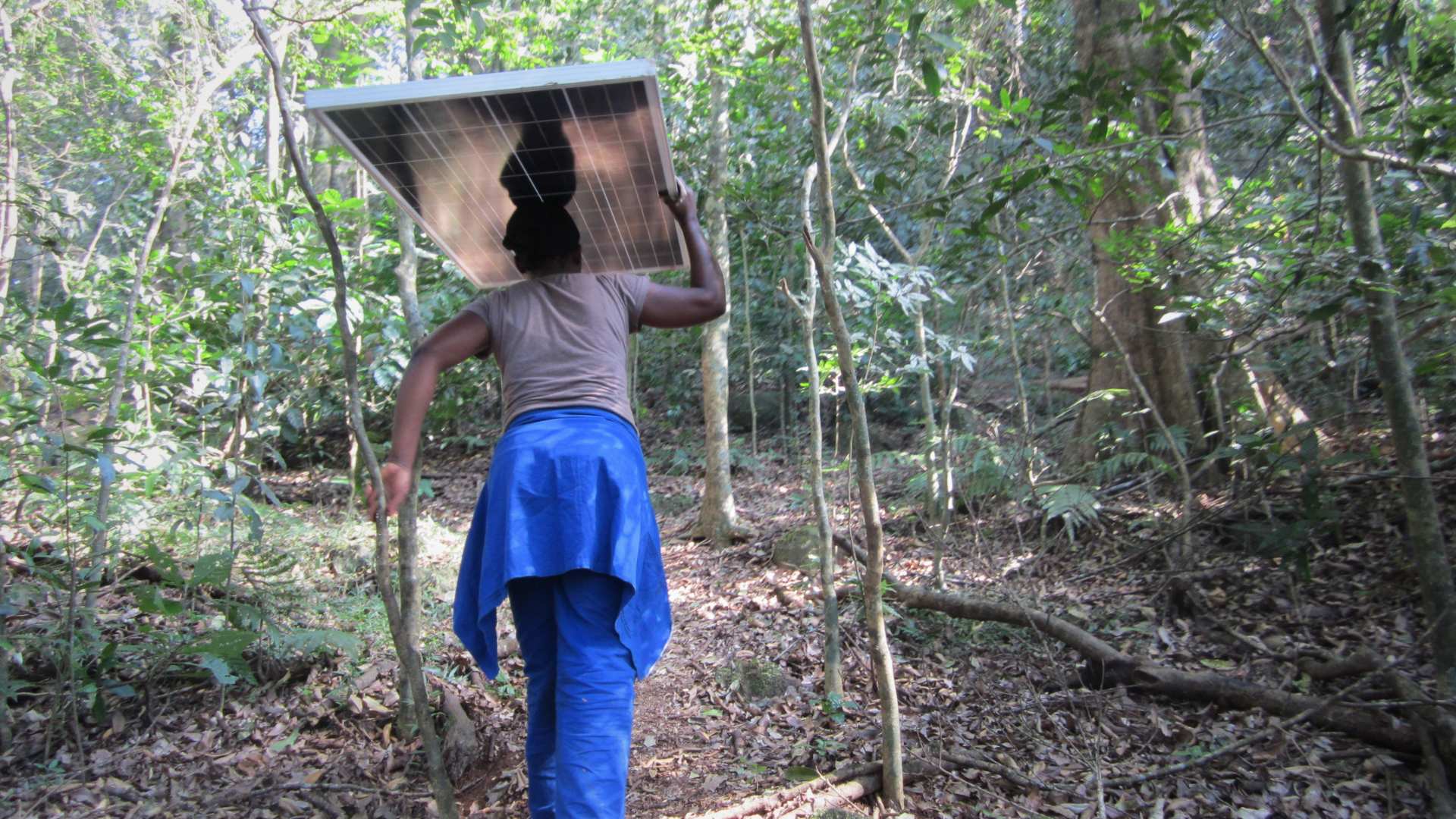
AI is at the core of green technology, which has been the good news promising to reverse the curve of our carbon footprint and ease the stress of breaching the planetary boundaries. Nowadays, unfortunately, AI is becoming increasingly energy-intensive, so the net energy gain of green technology is no longer certain. This situation confirms the rebound effect and calls for strong moral and ethical standards that set criteria for both the production and use of AI. Ecodonomy is the art of elevating the city-nation. Can we, as human beings, decide not just to build “Towers of Babel” but to rebuild humanity materially and elevate it, based on values such as the common good and the universal destination of goods and services?

By examining the tensions between democratic institutions, citizen participation, social movements, and the common good, the article opens a path for reflecting on how new forms of power emerge and how societies can respond to them. As AI systems increasingly shape public life and influence collective decision-making, Bado's vision of a more participatory and substantive democracy challenges us to consider how technology can be governed in ways that promote justice, inclusion, accountability, and human dignity. We invite readers to revisit this earlier reflection as a valuable source of inspiration for discerning how democracy may evolve in response to the opportunities and risks posed by AI and for ensuring that technological progress continues to serve people and the common good.

In Magnifica Humanitas, Pope Leo XIV warns that machine intelligence in war ends by “reducing victims to data.” The machine profiling that registers a person for food can also be used to select a person as a target. A small drone circling a road, with no one steering it, can have such a profile as its target. A drone like this is an autonomous weapon system. Once activated, it selects and attacks targets by itself, matching what its sensors detect to a programmed target profile. No human being decides, at the moment of the strike, that this particular person will die or is the right target. The case most often cited as the first use of such a weapon against people, reported by UN experts, was in Africa, in Libya in 2020.

Democracy, which has historically proven most effective in meeting these criteria, cannot be taken for granted. In our AI era, citizens should press for more than multiparty elections and the protection of basic freedoms; that institutional core is not enough. We must carefully regulate and channel powerful technologies with the capacity to divide us from one another and short-circuit social and political participation. That means maintaining spaces in civil society where human contact and social friendship can flourish without the mediation of machines, beginning with the educational systems through which all citizens pass. It means fighting deepfakes and disinformation in the public sphere, so that citizens still operate in a world of facts and evidence and political representation has a strong basis.

Artificial intelligence (AI) is increasingly entering public life in Ghana, including through digital systems used for identification, verification and service delivery. The ethical question is therefore not simply what AI can do, but what happens to people when digital systems become gateways through which citizenship, mobility or access to services are recognised. In northern Ghana, especially in border communities, this is a concrete question. I was privilege to visit Pusiga community in November 2025 with a Jesuit friend of my mine who is originally from the community. Thus, the topic for this article resonates very well with me.
The article ‘Pandemic and Authoritarianism’, by Germán Rosa, SJ, was written in the midst of the COVID-19 crisis, but its insights extend beyond that context. The pandemic appears to reveal and accelerate political trends that were already present: the concentration of power, the weakening of democratic checks and balances, and the acceptance of extraordinary restrictions in the name of collective security. Rosa’s main concern is that fear may lead citizens to silently surrender their freedoms and rights, and that measures which were initially intended to be temporary become normalized and endure. Furthermore, in societies riven by inequality, control is never distributed neutrally: it falls most heavily on the impoverished, marginalized groups, migrants, dissidents and those who defend rights and territories.