Africa – Journeying with the Zimbabwean Exemption Permits (ZEP) Holders in South Africa
The imminent scrapping or termination of the Zimbabwean Exeption Permit (ZEP) by the South African Department of Home Affairs (DHA) which is to be effected on 30 June 2023, has left many ZEP holders in a state of anxiety, confusion and panic. At the end of Novemebr 2021, the DHA issued a directive regarding the termination of ZEP that was to be effective on 31 December 2021. A one year grace period was subsequently granted and later extended to 30 June 2023.
For the many employed ZEP employed in South Africa, they regretebly face very limited possibility of transitionig to the regular immigration through the General Work Permit. The stringent South African Department of Labour requirements are exceedingly challenging and would disqualify almost all of the ZEP holders. There is however, a possibility of applying for a waiver through which - in theory – employers and individuals could be granted exemption from some of these stringent requirements to allow ZEP holders continue to stay and work in South Africa.
However, many of the 180 000 or more ZEP holders who have applied for the waivers have still not received responses from the authorities and many more are still not sure of what is the best possible way to proceed as the termination date of the ZEP approaches. This state of unertanity is further exacerbated by misinformation that is circulated by unreliable sources and many ZEP holders unable to get proper advice due to lack of resources, including access to online information and legal advice.

To help mitigate the challenges of misinformation, the anxiety, confusion and panic faced by many ZEP holders in South Africa, the Migration Commission of the Society of Jesus (JESUITS) in Southern Africa, in collaboration with the Scalabrini Centre in Cape Town, the Catholic Parliamentary Liason Office, the Zimbabwean Chaplaincies, other Churches, the African Diaspora Workers Network (ADWN) mobalised other stakeholders including the ZEP National Co-ordination Committee (ZNCC) and Zimbabwe Exile Forum (ZEF) to organise the ZEP Dialogue and Information Sharing Meetings. The Zimbabwean Embassy was represented by their Consular Generals and staff in Cape Town and in Johannesburg.
St Michael’s Parish, Cape Town and Holy Trinity Parish, Johannesburg, both run by Jesuits, hosted the meetings that ran concurrently on Saturday 20 May. The objective of the meetings was to primarilycreate a platform on which credible and plausible information pertaining to the ZEP could be shared by reliable stakeholders who are conversant with the subject. We hoped that through the information shared and the discussions thereafter many questions appertaing to the ZEP termination would be answered. Secondly, the meetings were not only to be a source of empowerment with reliable knowledge for ZEP holders, but also a sense of solidarity and a support for them to confidently face the challenges presented by the termination of their permits.

Although the meetings had specific objectives that were to a great extent achieved, not all questions were answered, especially those related to challenges pertaining to DHA. The meetings also underlined the root causes of the anxieties, confusion and panic among most ZEP holders and their children. The following were some of the causes of the ZEP holders’ problems: Fears of not only being denied a General Work Permit but the backlog as well; the cumbersome and slow process of the online apllications that need to be done for waivers and permits is already terribly backloged; the uncertainity around children’s education and their future; access to serivices like health; the financial and other physical assets that have been accumulated over the years.
Participants of both meetings
in Cape Town and Johannesburg concluded that there was need for a follow-up
dialogue and information sharing meeting. Turn out was also not as much as
anticipatated partly because word might not have gone out wide enough, or because
of the general lack of interest among ZEP holders who are now waiting to see
the outcome of the decision of the court. In Johannesburg with the civil
society, IOM, UNICEF, Trade Unionists, ZEP holders and the Zimbabwean Consular
General in attendance, it was decided that one other key stakeholder that
should have been there was the DHA. Many important questions remained
unanswered as they were pertaining to the challenges related to DHA. We will
endavour to have the DHA in the follow-up meeting and hopefully have clarity on
many unaswered questions.
By Rampe Hlobo SJ
Chair : Migration Commission

Related Posts:
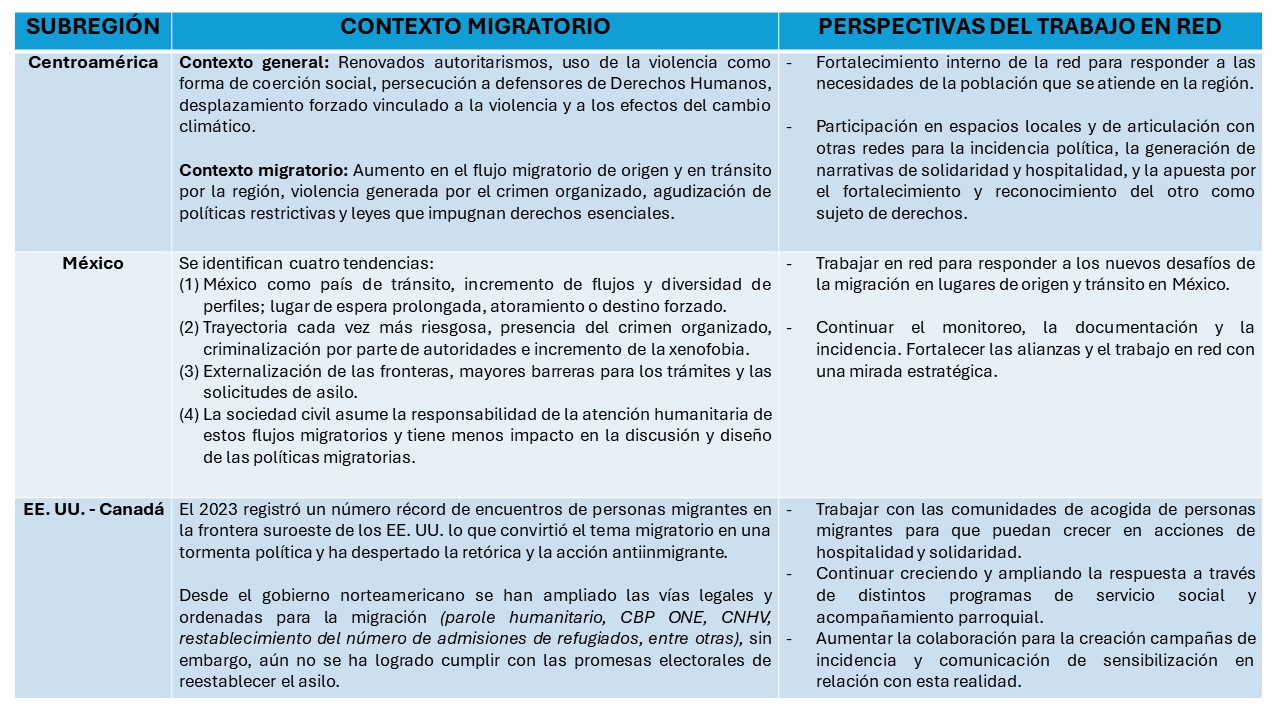
Jesuit Network with Migrants Central America and North America (RJM CANA) shared the first four months of the year report (January – April 2024): "They have been months of a lot of work to face the challenges in the migration context characterized by an increase in the migratory flow in vulnerable conditions throughout the region, however, also These have been months in which the fruits of networking have been confirmed".
On Wednesday, April 10, the European Parliament voted on the European Pact on Asylum and Migration. JRS Europe directors jointly opposed the pact and urged European institutions to reject it: "We cannot support a system that will allow the systematic detention of thousands of people, including children, at the EU external borders."
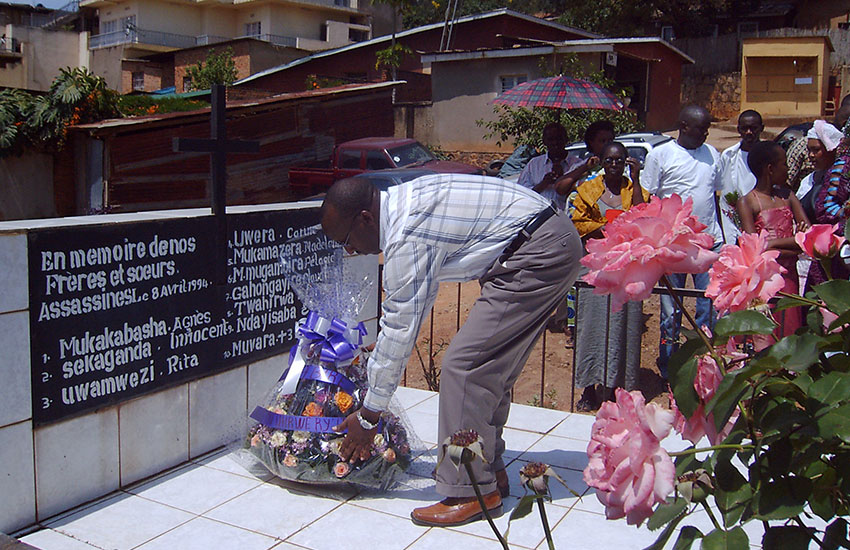
On the memorial day of the 1994 genocide against the Tutsi, J. Baptiste, a Jesuit genocide survivor from Rwanda, shared his story of the tragic event. On behalf of fellow Rwandans, he concluded with a prayer: "My prayer today is to find the last remains of the victims…, then [this] commemoration will mean something different. Only then will our wounds heal and the ongoing reconciliation process move faster."
The Cartagena Declaration, adopted in 1984, emerged in response to the growing displacement crises in Latin America. Its importance lies in its expanded approach to defining a refugee, recognising the causes of displacement beyond armed conflict events. Despite progress in these 40 years, implementation challenges of the recognition criteria and the commitments made in the adopted plans persist.
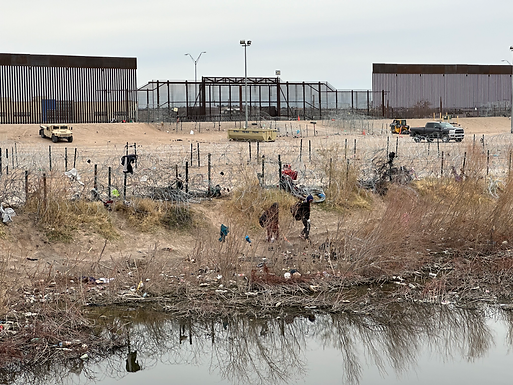
This story narrates the spontaneous act of hospitality leading to a community effort to support a migrant family's journey. It illustrates the transformative power of personal compassion amidst global migration challenges.
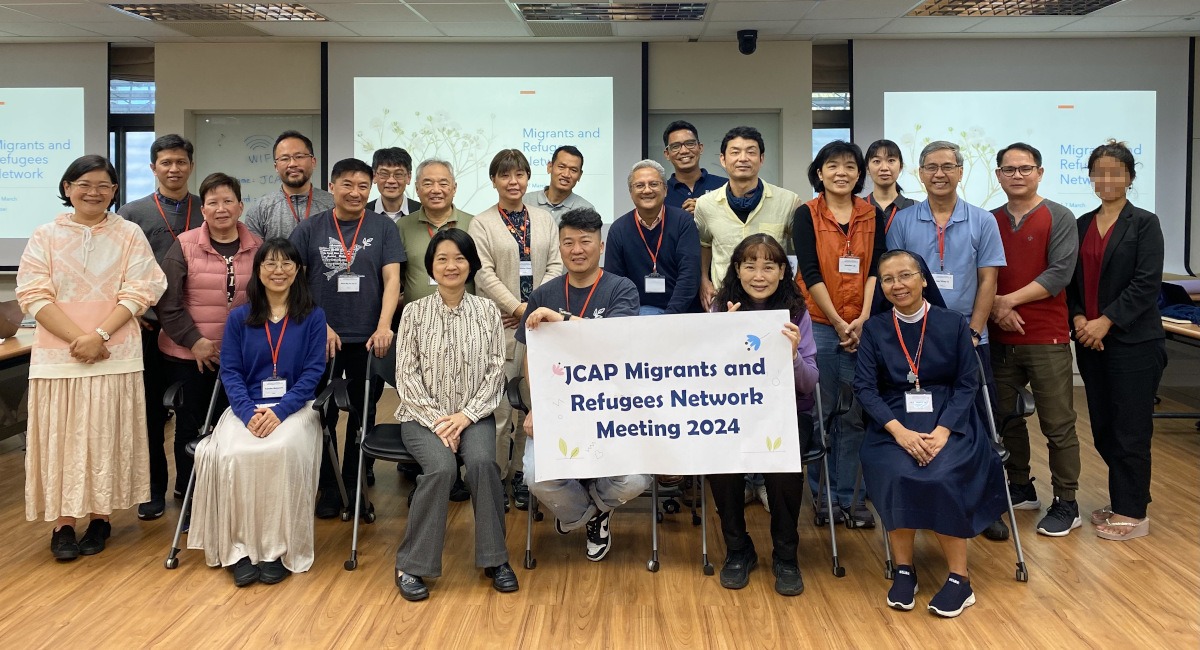
The Migrants and Refugees Network in Asia Pacific gathered to address migrant and refugee challenges, guided by collaboration, prayer, and Ignatian spirituality principles. Discussions ranged from updates on regional migrant situations to Taiwan's progressive immigrant response, culminating in the finalization of a five-year action plan highlighting the network's dual mission of support for both migrants and its members.