Latin America – Illegal mining advances on indigenous lands
The report by the Alianza Consejo Político en Defensa de los Territorios (Political Council Alliance in Defence of Territories) states that illegal mining increased more than eight times in the Amazon between 2016 and 2022.
A new report by the Alianza Consejo Político enDefensa de los Territorios (Political Council Alliance in Defence of Territories) states that illegal mining increased more than eight times in the Amazon between 2016 and 2022. The document's projection is based on the National Institute for Spatial Research (INPE) data.
The INPE data show that the tolerance for mining and the dismantling of control structures has led to successive and significant increases in mining. In 2016, for example, mining in indigenous areas covered 12.87 km² but continued to increase and grew significantly in 2019, reaching 97.24 km². A new leap occurred in 2021 when mining stretched to 114.26 km². Only in 2022 was a registered decrease in activity observed; there were 62.1 km². Still, it was much higher than what was recorded six years before.
According to the report of the Political Council, entitled "Terra Rasgada: how mining is advancing in the Brazilian Amazon", between 2010 and 2020, illegal mining on indigenous lands increased by 495%, with Kayapó (PA), Mundurukú (PA) and Yanomami (RR) territories the most impacted by the activity.
According to the Indigenous Missionary Council - CIMI, the growth of illegal mining in the Amazon became more evident in January this year with the humanitarian crisis of the Yanomami. In January alone, the Ministry of Justice estimated that 20,000 miners were inside the indigenous resguardo, with an average number of indigenous people in the region of 30,000.
In addition, the report also highlights the impacts of illegal activity on the environment, such as the contamination of rivers by mercury released by gold mining near the villages, generating the loss of terrestrial and fluvial biodiversity, causing the siltation of waterways. Data from the Ministry of Health indicate that in 2023 alone, around 50 Yanomami Indians died from disease or malnutrition.
With information from https://paamsj.org.br/
Source : jesuitas.lat
Related Posts:

The Justice in Mining network has advanced efforts to protect communities affected by mining. Key achievements include stronger collaboration among 22 Jesuit institutions, documenting crucial case studies and advocating for corporate accountability as demand for critical minerals grows.
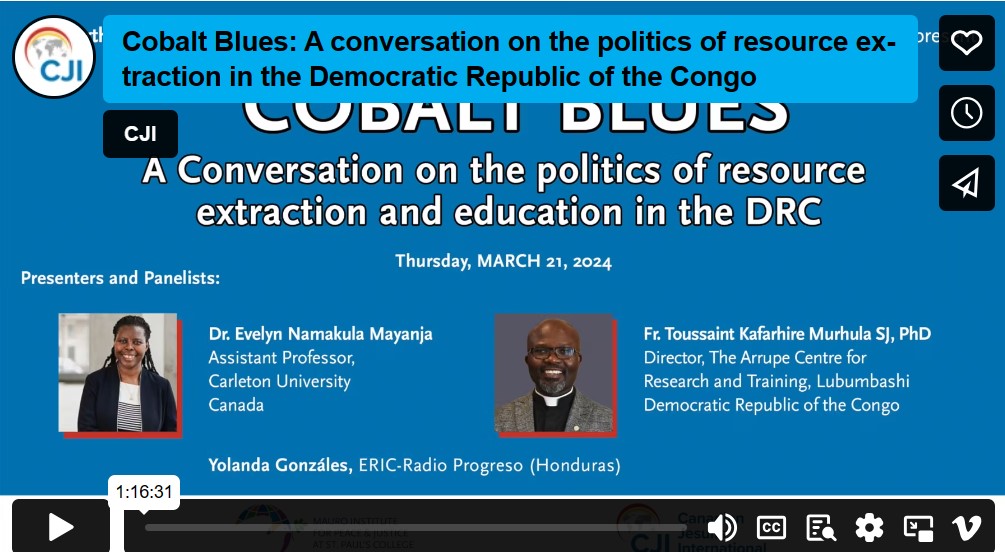
Resource persons at the "Cobalt Blue" webinar organised by the Canadian Jesuit International stressed the root causes of mining misery: the legacy of colonialism, racism, unchecked consumerism, and a greedy global economic-political system that overlooks ethical and environmental concerns are among the main reasons for the untold suffering caused by mining and the extraction of natural resources in the Democratic Republic of the Congo (DRC).
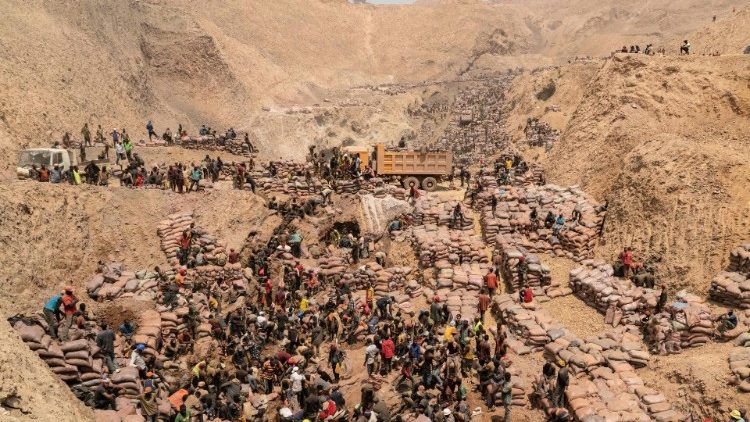
"Conflicts in Africa in the Context of the Exploitation of Natural and Mining Resources" was the theme of a seminar in Accra, Ghana. Participants in the seminar convened by the Symposium of the Episcopal Conference of Africa and Madagascar (SECAM) called for the end of the ruthless depletion of natural resources by multinational corporations and foreign powers.
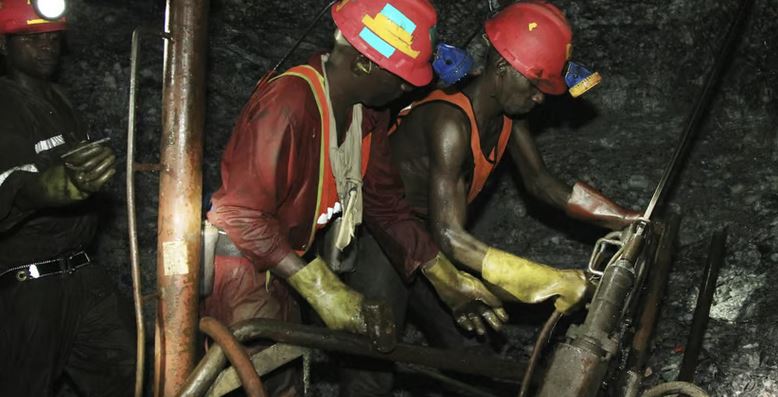
A Catholic leader in South Africa, a country where mineral wealth long has been an economic mainstay, says that today the Church in his country often encounters “the suffering face of Christ in sick mine workers.”
Latin America – Statement of the Jesuits on the Caribbean Border on the Extractivist Model of Mining
Statement published by the Jesuits on the border between the Dominican Republic and Haiti in which they warn of the risks posed to the local populations and their livelihoods by an extractive mining project.

The coordinator of the Brazilian network of Churches and Mines, a Comboni religious missionary, talks about the second edition of their initiative in September: the Earth is not an infinite reservoir of resources to be taken without limits.