Canada – Green energy transition must not sacrifice human rights, says Jesuit priest
OTTAWA — As Canada and other countries transition to green energy technology in response to climate change, Fr Jacques Nzumbu SJ underscored that such a move must not be made at the expense of the environment, and the human rights of vulnerable people like those in his home country, the Democratic Republic of the Congo (DRC).
Fr Nzumbu, who is a specialist in conflict minerals and renewable energy technology, spoke at a press conference on Parliament Hill organized by Canadian Jesuits International (CJI) as part of its fall campaign, Green Justice: Human Rights and Energy Transition. The campaign focuses on ensuring that solutions advanced to address climate change do not worsen the inequality between the Global North and South.
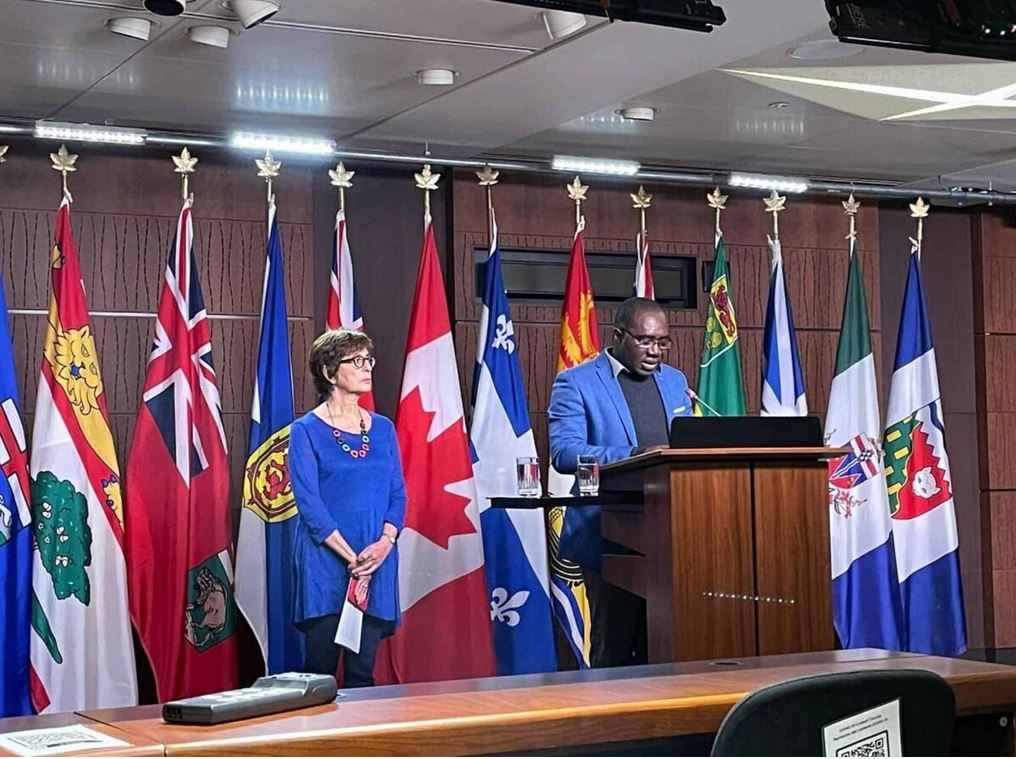
“Yes, we need green transition, but we also need a just, equitable and sustainable transition, not only in Canada, but everywhere in the world,” said Fr. Nzumbu. He decried the devastating impact of mining operations, some by Canadian companies, on local communities in in Lualaba, DRC.
Child labour is rampant in artisanal mines, said Fr. Nzumbu, who visited artisanal mines and saw children cleaning cobalt, some alongside their pregnant mothers, in muddy, toxic waters — all for $1 a day. Cobalt is used for lithium-ion batteries used in electric vehicles, laptops, and smart phones.
Children work because their families are very poor, and their parents cannot really afford to send them to schools. “But the place of children is in school,” said Fr. Nzumbu. “Can we accept batteries coming from this kind of work?”
Both artisanal and industrial mining cause significant environmental damage, said Fr. Nzumbu, citing how mining companies pollute soil, water, and destroy forests that are important for the capture of carbon to balance the country’s cover in order to mitigate climate change. “Mining and oil operations are destroying the capability of Congo to capture carbon, so the future of our country is in danger.”
Fr Nzumbu urged Canadians to use their power as citizens and consumers to question where the batteries that cell phones, and green energy technology such as electric vehicles come from. They must also demand that laws be enacted compelling mining companies to practice due diligence and corporate social responsibility, he said.
CJI Executive Director Jenny Cafiso said that CJI, along with all other members of the Canadian Network on Corporate Accountability (CNCA), supportstwo private Members’ bills introduced in the House of Commons March 29, 2022.
Bill C-263 aims to empower the Canadian Ombudsperson for Responsible Enterprise (CORE) to compel Canadian corporations to provide documents and testimonies in response to complaints about their actions that violate human rights. Bill C-262 will require Canadian companies to exercise due diligence with respect to human and environmental rights throughout their global supply chains.
If passed, these bills would give marginalized communities in the Global South more protection against forced labour, land and water contamination and violence against women. “These bills will require companies to change their behaviour or face consequences,” said Cafiso.
Source: canadianjesuitsinternational.ca

Related Posts:

The Justice in Mining network has advanced efforts to protect communities affected by mining. Key achievements include stronger collaboration among 22 Jesuit institutions, documenting crucial case studies and advocating for corporate accountability as demand for critical minerals grows.

The Central American Province of the Society of Jesus marks the first anniversary of the Nicaraguan government's confiscation of the Central American University, condemning the violation of education rights and academic freedom. They call for an end to repression, the release of political prisoners, and a return to dialogue and justice.

Stan Swamy Day in Viragalur was a moving tribute to a man who devoted his life to justice and the upliftment of the marginalized.

This pervasive Great Holiness (Wakȟáŋ Tȟáŋka) and blessing invites us to see our relationship with all created being and to recognize and know our brotherhood and sisterhood, not just with our human brothers and sisters but with all that exists and whose aura of holiness blesses us each and every day.

The worldwide network of Jesuit organisations, Xavier Network, involved in responding to humanitarian crises around the world, expressed shock at the April 2 killing of 7 aid workers delivering essential food aid. "We cannot be silent." Xavier Network joined the global Jesuits' call for "an immediate ceasefire, for negotiations and for the beginning of a process that will bring freedom, liberty and justice for all in the Middle East, the only road to true peace."
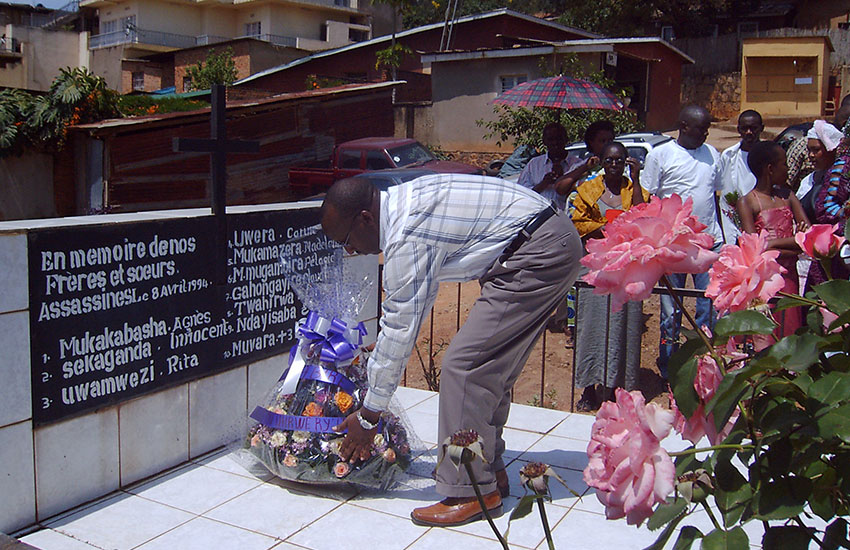
On the memorial day of the 1994 genocide against the Tutsi, J. Baptiste, a Jesuit genocide survivor from Rwanda, shared his story of the tragic event. On behalf of fellow Rwandans, he concluded with a prayer: "My prayer today is to find the last remains of the victims…, then [this] commemoration will mean something different. Only then will our wounds heal and the ongoing reconciliation process move faster."