Latin America – Social conflicts and social contract
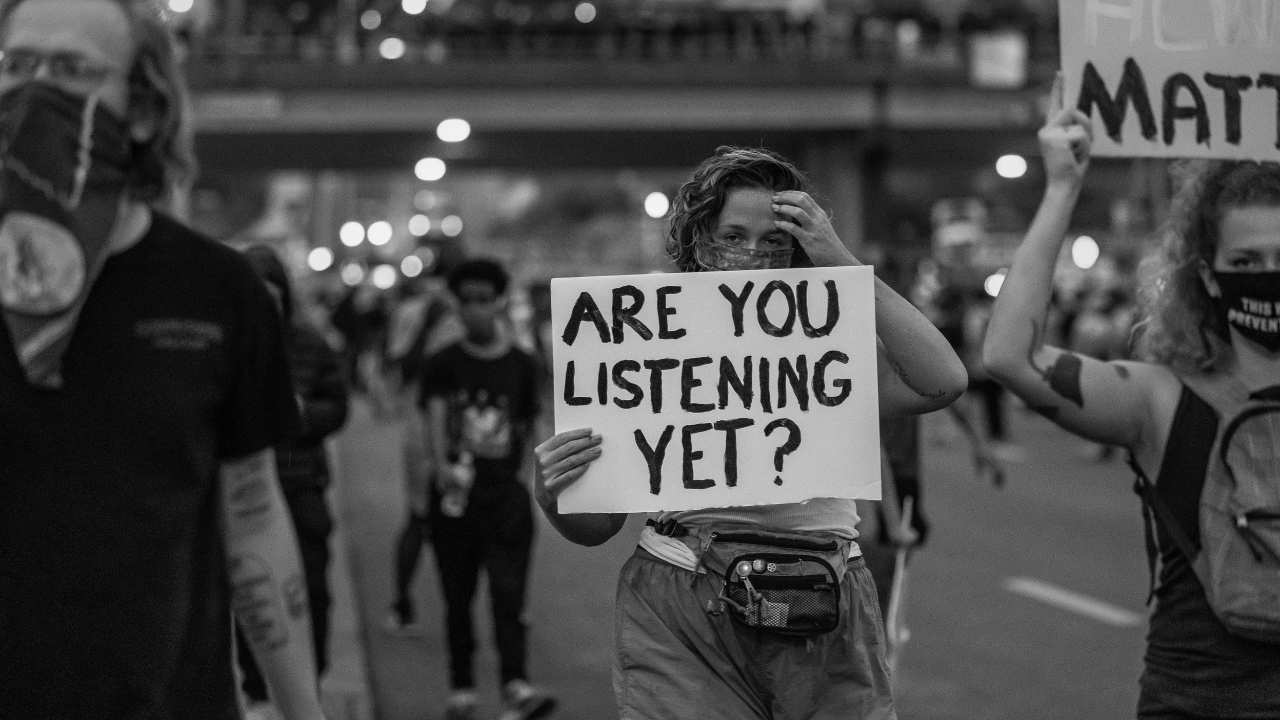
Social conflicts are inevitable, but preventing them from becoming social explosions is not only intelligent, but it is also a requirement of justice.
Contractualist thought is one of the great contributions of modernity to political philosophy. Contrary to the traditional theory - which asserted that the power of the sovereign came from God or belonged to the natural order of things - contractualism argues that the authority of the sovereign comes from the political will of the citizens.
Although there were already attempts in fifth-century B.C. Greece and the Middle Ages to overcome the mindset that the king is king by God's grace and the slave is slave by nature, there is now a fairly widespread consensus that Thomas Hobbes' Leviathan (1651) is the foundational text of political contractualism.
The State and the power of the sovereign do not come from a natural or supernatural order, but from a particular kind of original contract in which the citizens renounce part of their freedom to endorse it to the sovereign, who, with the power received from all, guarantees peace and disciplines social conflicts. Only in this way do human beings manage to leave the state of nature in which they find themselves, in which - since there is no State, no laws, no justice - everything is permitted for the defense of oneself, the family and the community to which one belongs. Hobbes ends his work with a justification of political absolutism reflected in the title page of the book: a quasi all-powerful giant who, inspired by the biblical monster that lives in the sea (Job 3,8; 40,25), in one hand carries the sword and in the other the staff, symbols of political-military and religious power.
John Locke will set reasonable limits to Hobbes' absolutism. In his "Second Treatise on Civil Government" (1690) he limits the exercise of the power of the sovereign, who rules and commands legitimately only to protect and guarantee the fundamental rights and liberties of individuals: life, liberty and property. And this is extremely revealing, since introducing the right to (private) property within the set of "natural" rights clearly reveals that the contractual spirit that moves Locke's thought is very close to the interests of the nascent and thriving modern bourgeoisie. The right to life refers to one's own body, the right to liberty to freedom of action and movement, and the right to property to the possibility of having something as mine and you something as yours -especially the land where each of us lives-. It will come as no surprise to anyone that later classical economic liberalism has drawn from Locke's thought as one of its most endearing sources.
Closer to the forceful and well-known social conflicts that were to lead to the storming of the Bastille in 1789, Jean-Jacques Rousseau's "The Social Contract" (1762) pointed the way to what would be a very interesting version of the social contract in modernity. The state of nature for Rousseau will no longer be that war of all against all that must be overcome - as in Hobbes: homo homini lupus - but on the contrary, the state of nature is what we must strive to preserve in human beings. We are all born free and yet everywhere we find ourselves in chains, said the Genevan. Hence his manifest and deep concern for education and politics, both of which tend to empty humans of their authentic nature and, on this emptiness, try to build the social being that we are: selfish, vain and competitive.
Rousseau wonders about the historical origin of inequalities and human conflicts, and finds that this is to be found - to Locke's scandal - in the fact of having introduced property as something proper to human life. In the state of nature there is no property, but by choosing to live with others and alongside others we invent it and move further and further away from our true nature. This makes the State and education necessary, something like a necessary evil that we all require to allow the strengthening of the volonté générale. This is not the arithmetical and insubstantial result of the sum of isolated individual wills at odds with each other, but the expression of that will, sometimes hidden, but still shared from the core of our common human nature, originally good.

With the help of Rousseau, we could venture this hypothesis: social conflicts are inevitable and we would be wrong to pretend to live at the beginning of the 21st century in a peaceful and idyllic state of nature without conflicts. But given the characteristics of human nature, these conflicts are socially manageable and, for this, the State is essential. If we are the source of our conflicts, we are also the source of their solution. These conflicts are insurmountable and can become something like a fatal curse if we do not manage to build -among all of us- an authentic general will, originally human, that is, one that springs from our deepest human entrails.
"Everything is perfect when it comes from the hands of God, but everything degenerates in the hands of man", that is what Rousseau writes at the beginning of his "Emile" (1762). Actually, that is a translation, the author does not mention God, but the Auteur des choses. In any case, education and politics - two of the human activities that affect us most - must be, for that very reason, a way of balancing or mending the prejudices that come from how far we have strayed from our unfathomable origins.
With that we come a little closer to John Rawls, whose major work, "A Theory of Justice," was published fifty years ago. The aim of this book, its author tells us, is to present a conception of justice that generalizes and takes to a higher level of abstraction the contractual thought of Locke, Rousseau and Kant. Let us look at the social relevance of his proposal.
His is not a theory designed to solve problems of public order arising from social explosions, problems of economic theory, or problems of what educational or health system a society should have in order to be considered just. It does not follow, however, that his work should be considered irrelevant when reflecting on such concrete social issues as these. As he himself says in the preface to his work, it is a matter of offering, from the contractualist tradition, "the most appropriate moral basis for a democratic society". "More appropriate" means more just, one that manages to overcome the one offered by the dominant utilitarianism, the theoretical basis of the supposed efficiency of capitalism.
It is evident that since the 19th century utilitarianism offers a sufficiently solid conceptual basis for societies to be more economically efficient. But, Rawls tells us, on an exclusively utilitarian basis no society becomes more just, that is why its moral foundation is rather precarious, so that "A theory of justice" starts with another assumption: "justice is the first virtue of social institutions, as truth is of systems of thought". Justice, not efficiency or productivity.
The point is that, in highly differentiated societies, in which there are people and communities with multiple and diverse conceptions of what is good, expressed in religions, ancestral worldviews and philosophies of diverse origin, the principles that must govern the basic structure of society cannot be chosen or formulated except from a shared conception of what is just. In order to live together and to be able to resolve their conflicts in peace, human beings do not need to unite around what they consider to be good or around what gives meaning to their lives, but around what is just in the context of the concrete conditions in which they live. All individuals and all communities have the same right to their religious and philosophical conceptions, but no one has the right to force others to share them. With respect to what is just, on the other hand -that is Rawls' great bet- it is reasonable to think that they can reach reasonable and beneficial agreements for all.
And that is what the two principles proposed by him want to achieve. The first says that in a just society each person -including those who live in communities with a strong communitarian accent- should have the most extensive scheme of basic freedoms that is compatible with a similar scheme of freedoms for others. The second is that in such a society inequalities are permitted only if they can reasonably be expected to be "advantageous to all," and that jobs and positions are available to all on the principle of equal opportunity.
Rawls' work represents an interesting renewal of the contractualist tradition in the 20th century. It offers criteria for resolving social conflicts from a perspective that includes all its actors under a concept of justice in which it is possible, in turn, for all to recognize each other. This cannot be achieved without what Rawls calls "original position": putting oneself in the place of those who think and feel differently from oneself in order to choose -with them and never without them or against them- basic principles of social justice. Social conflicts are inevitable, but preventing them from becoming social explosions is not only intelligent, it is also a requirement of justice.
*By Vicente Durán Casas, SJ - Jesuit priest, Doctor of Philosophy and Professor of Philosophy of Religion at the Pontificia Universidad Javeriana - Colombia.
Source: CPAL

Related Posts:

The Jaboticaba Agricultural Family School in Brazil reuses water for sustainable food production in a semi-arid region. Since 1993, it has combined agroecology with wastewater treatment to enhance food security and educate students. The project promotes environmental sustainability and aims to influence public policies in line with Pope Francis’s call for integral ecology.

MEXICO CITY (OSV News) -- An Indigenous Tzotzil priest and peace activist was murdered after celebrating Sunday Mass in Mexico's southern Chiapas state, where the Catholic Church has denounced government inaction in the face of rising violence. Father Marcelo Pérez, who ministered in Indigenous regions rife with territorial conflicts and later denounced drug cartel violence, was shot dead Oct. 20 by two assailants on a motorcycle as he drove away from the Guadalupe church in San Cristóbal de las Casas, according to Mexican media reports.

The Central American Province of the Society of Jesus marks the first anniversary of the Nicaraguan government's confiscation of the Central American University, condemning the violation of education rights and academic freedom. They call for an end to repression, the release of political prisoners, and a return to dialogue and justice.

Stan Swamy Day in Viragalur was a moving tribute to a man who devoted his life to justice and the upliftment of the marginalized.

His journey was marked by a profound sense of detachment, as he left behind his nationality, culture, security, history, and companions to embrace a completely foreign environment.
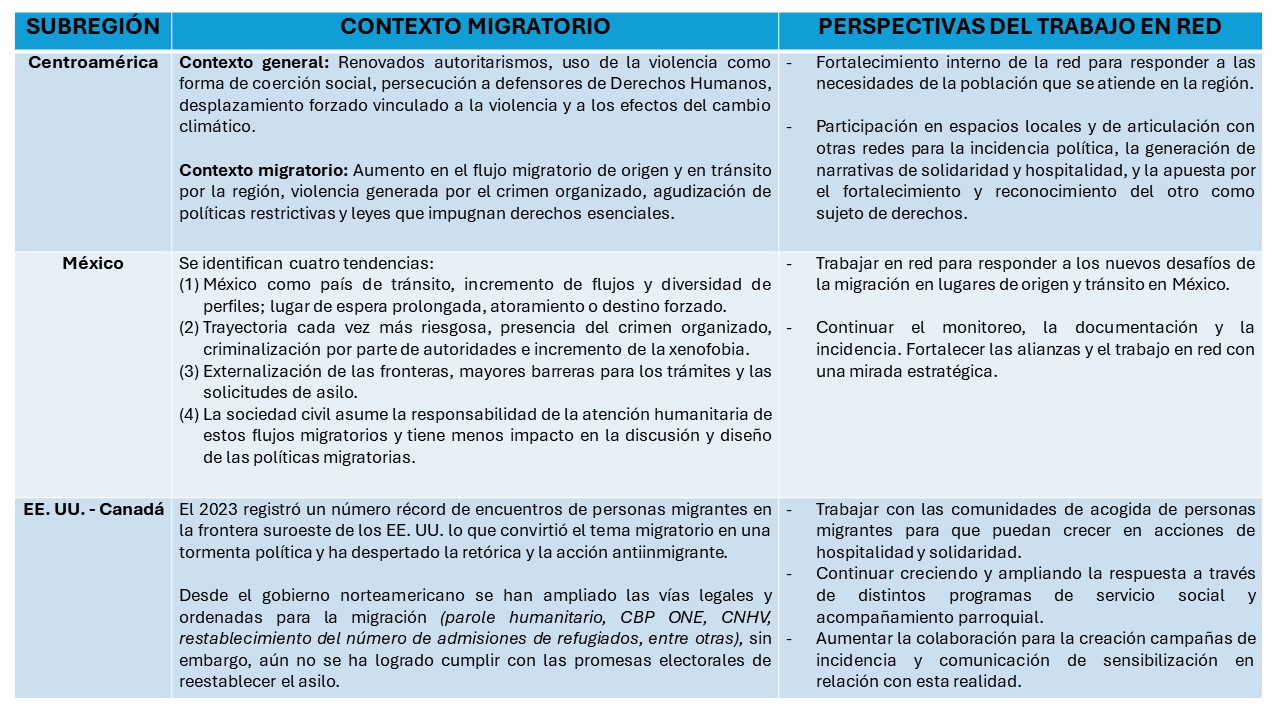
Jesuit Network with Migrants Central America and North America (RJM CANA) shared the first four months of the year report (January – April 2024): "They have been months of a lot of work to face the challenges in the migration context characterized by an increase in the migratory flow in vulnerable conditions throughout the region, however, also These have been months in which the fruits of networking have been confirmed".