“Slow the Flow Project”: Bringing Connection to Country into Our Jesuit Way of Proceeding
I acknowledge that the sovereignty of the First Nations Peoples of the Continent, now known as Australia, was never ceded by treaty nor in any other way. I acknowledge and respect the First Nations Peoples' laws and their ecologically sustainable custodianship of Australia over tens of thousands of years through land and sea management practices that continue today.
"… the earth herself, burdened and laid waste, is among the most abandoned and maltreated of our poor; she "groans in travail" (Rom8:22)."(LS #2[1]).
For our Jesuit Way of Proceeding, we need to understand that care for our local waterway is as important as care for those on the margins. We do know that the cry of the earth is connected to the cry of those made poor. But what does this look like in our Ignatian way?
The Jesuit Care for Our Common Home team collaborates with the Institute of Sisters of Mercy of Australia and Papua New Guinea (ISMAPNG) in Australia. The collaboration is through the "Slow the Flow Project". This faith-in-action project cares for the country and those disrupted by climate disasters in Eugowra, west of the State of New South Wales in Australia.
Eugowra, a town of 500 residents, was overwhelmed by a one-in-5,000-year flood on November 14, 2022. A "rain bomb" led to rapid and powerful flooding, causingdeath and destruction.Two persons died,and eighty per cent of the town's homes and businesses were destroyed.
Eugowra residents usually have 7-10 hours' notice of an approaching flood. In 2022, however, there was only a 1-1.5 hours' advance notice. This lack of warning and preparation time led to the devastating loss of life and property.
So much more than land, property, and people of Eugowra were damaged.After the flash flood, the Bathurst local community of the ISMAPNG-Mercy reached out to the Bathurst Catholic Diocese to see how integral ecology could be a lens to build back resilience. The ISMAPNG Integral Ecology Animator,Sally Neaves, has since become the project's lead coordinator, which aims to work with farmers to shift water flows in the landscape. Incidentally, Sally is also the Australian Integral Ecology Fellowship[2] Coordinator, a Fellowship Program supported by the Australian Jesuit Province.
The Slow the Flow Project in Eugowra is working to heal the country, which, as the First Nations People of Australia tell us, is much more than the physical land; it includes caring for people, animals, plants, the dead, and the yet-to-be-born.
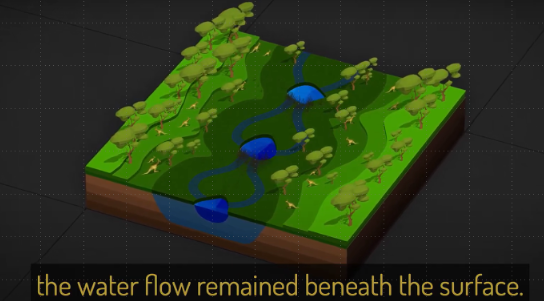
The aim is to restore the landscape so that it may once again absorb and disperse rain via vegetation and leaky weirs. This also means that the landscape is hydrated in dry times as runoff is reduced across the landscape when rain comes.
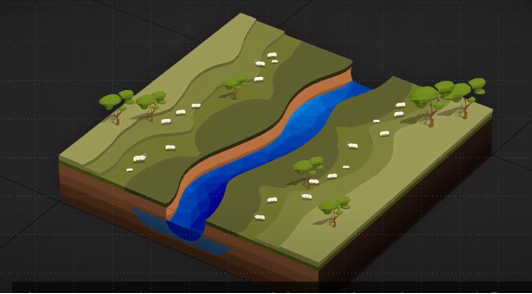
This is the picture of many Australian landscapes: the topsoil is gone, creeks have scarred out a channel, and are without vegetation in dry times. Consequently, the landscape is dehydrated; runoff to channels occurs when rain comes.Moreover, the amount of accumulated water leaving each farm causes floods when a town or any pinch point traps fast-moving water.
Thus, the Slow the Flow Project means managing water in the landscape differently: increasing rainfall infiltration, reducing damaging runoff, and retaining more water on each farm.
The Project Coordinator, Sally Neaves, contactedthe Mulloon Institute to request the return of leaky weirs that had been removed from the landscape. The Mulloon Institute shares that leaky weirs are built from natural materials such as rocks, logs, soil and, importantly, vegetation, which, among other things, binds the structures together. The structures are designed to raise the water level of the stream and slow and filter the flow, giving it a chance to infiltrate and recharge the groundwater. During wet times, the flow spreads out across the floodplain. In dry times, the water flows beneath the surface and replenishes the creek. This allows for enhanced agricultural productivity and improved conditions for wildlife and gives us rehydrated landscapes that are more resilient to climatic extremes.
For the Eugowra community, the return of leaky weirsis a very new way of farming, so a long road of ecological conversion is underway.
In Eugowra, after the disaster, there still was an awful lot of trauma marked with blame, fear, and grief. There was blame on the earth and fear that the nearby National Park contributed to the flooding. Lots of love is needed to listen to the cries of those made poor and the earth in Eugowra.
Therese Welsh's journey
Therese Welsh, a 2024 Integral Ecology Fellow, is a local farmer on this integral ecology journey. Therese held a "Slow the Flow Workshop" on her propertyby theWaterhole Creek, a tributary of Mandagery Creek, a key impact area for slowing the flow of the Mandagery Creek catchment in the Eugowra Valley.
TheOctober 27 2023, "Slow the Flow Workshop" on Therese's propertywas attended by some 50 farmers, landholders and supporters. The gathering was the first in a series of capacity-building workshops. It was designed to prevent future devastating floods in Eugowra and find partners to reduce the water flow speed and the destruction of Mandagery Creek and its tributaries.
The Mulloon Institute expert team, along with local agronomists, the Local Land Services--New South Wales, Landcare, the Red Cross, CWA, the local parish and dioceses and others,conducted the gathering, which enabled the community to understand creek flow patterns, water cycle, the role of vegetation, the multiple benefits of storing water in the landscape, and practical methods to slow down the flow, reducing peak flows and the destructive velocity of floods. There were also site visits to learn how land care efforts and individual farmers have made a difference through planting and restoring vegetation some 20 years on.
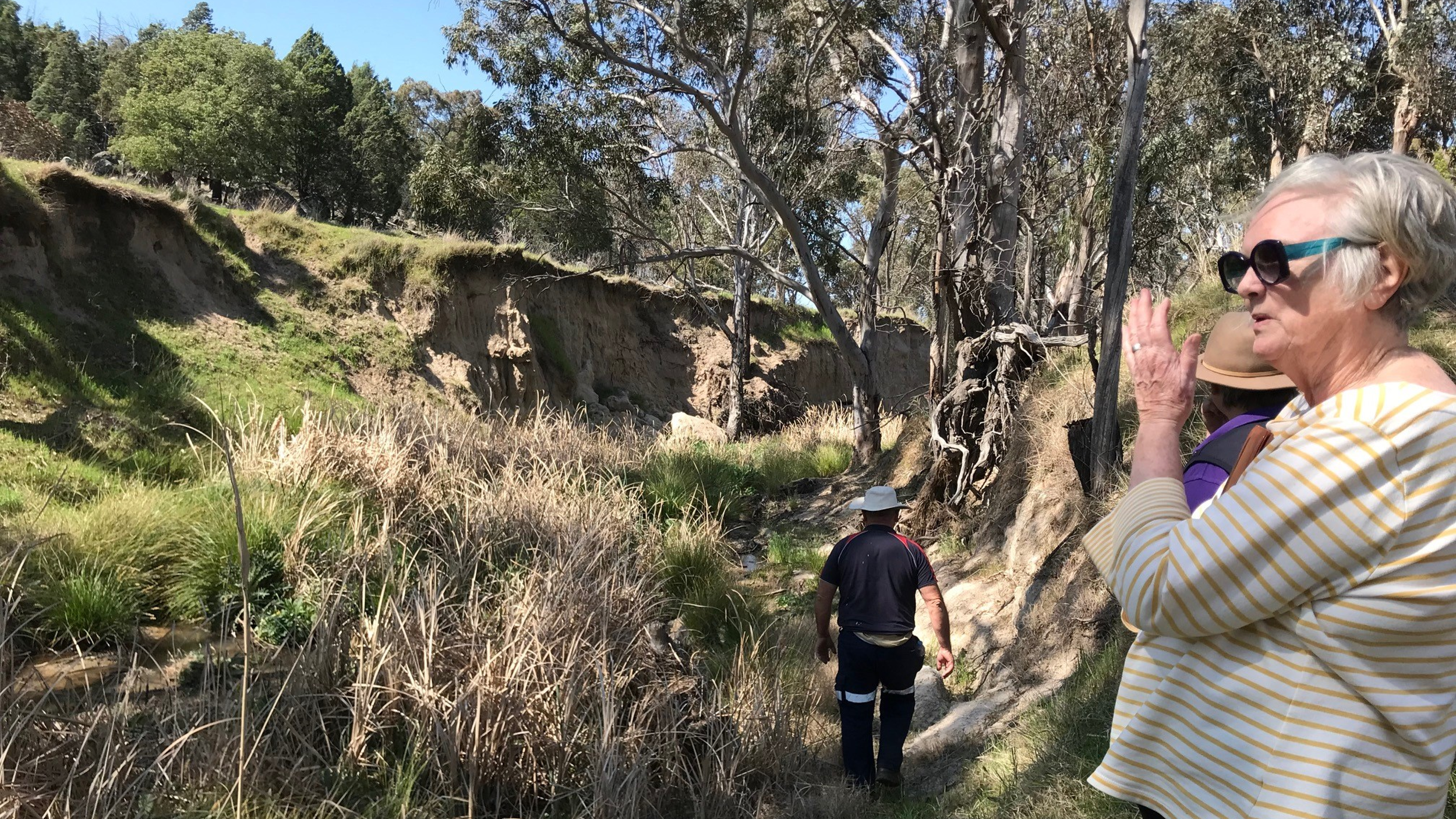
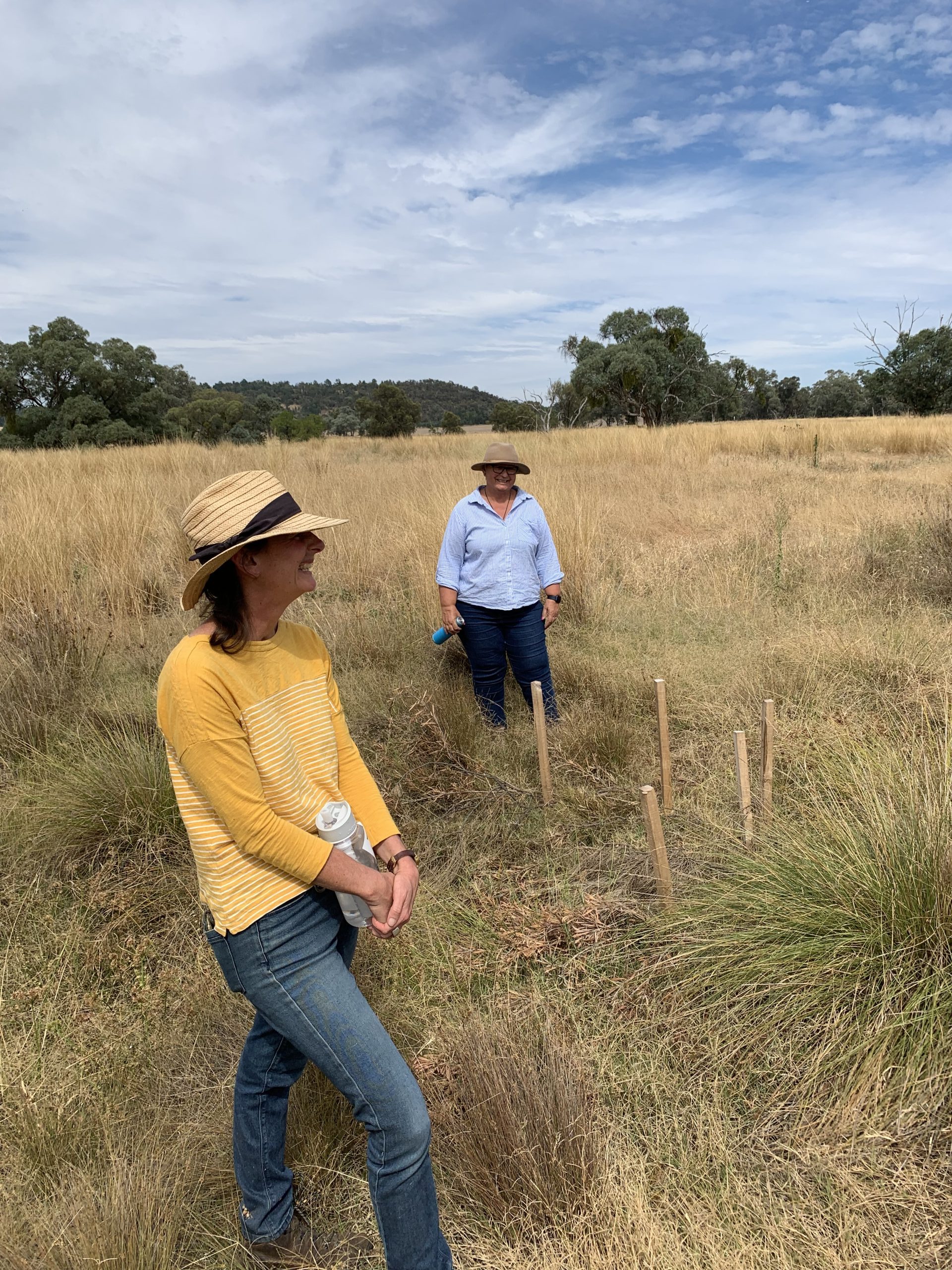 Photo credit – Sue Martin, March 2024
Sally is in the foreground, and Therese is in the centre. Both stand in a small ephemeral tributary of Waterhole Creek, which only flows after heavy rain.While creek remediation occurs, sheep have been removed from this paddock. "Slow the Flow" interventions have been undertaken with the wooden pickets in a V shape that have branches placed from local species across the wooden stakes to form a cover of branches across the path of the flow of the water, and when the water does flow the seeds in the branches have a chance to germinate and grow in the creek bed bringing back the landscape form that was pre-European. It is a simple technique but requiresa great connection with the land to get to know the Country and help it heal.
Therese has been farming with her husband, a multi-generational sheep farmer in Eugowra. In 2019, Therese took on the call of St. Francis to "start by doing what's necessary; then do what is possible; and suddenly you are doing the impossible". The regenerative transformation of the farm's Hell Hole Creek was underway. The dry ephemeral creek has the potential to regrow the natural grasses, sedges, fungi, ground covers and trees that have always been there. Together with the local Land Services and Australian Landcare, they received a grant to protect the habitat of the critically endangered Swift Parrot. The commitment was forten years of lock up and to give back via offering the site for field days and participating in a short documentary about the project.
The project has been very successful. After planting 400 trees, they celebrated the flow of water for over three years, the regrowth of unique species, and the successful growth of most of the plantings.
Therese shares, "With the ongoing maintenance of weeds and feral animals, we have assisted nature to flourish, and thereby we ourselves are flourishing. We have slowed the flow and watched where the animals go. We have hosted field days, and the whole process has been documented. We have created a retreat space to include a labyrinth that provides visitors with a mind, body, and spirit experience amongst nature, connected to Mother Earth, enjoying natural processes, flowering of shrubs, and abundant wildlife. We have connected to ancestors through mindful, contemplative prayer and connection with deep listening to the landscape and nature and the still small voice within."
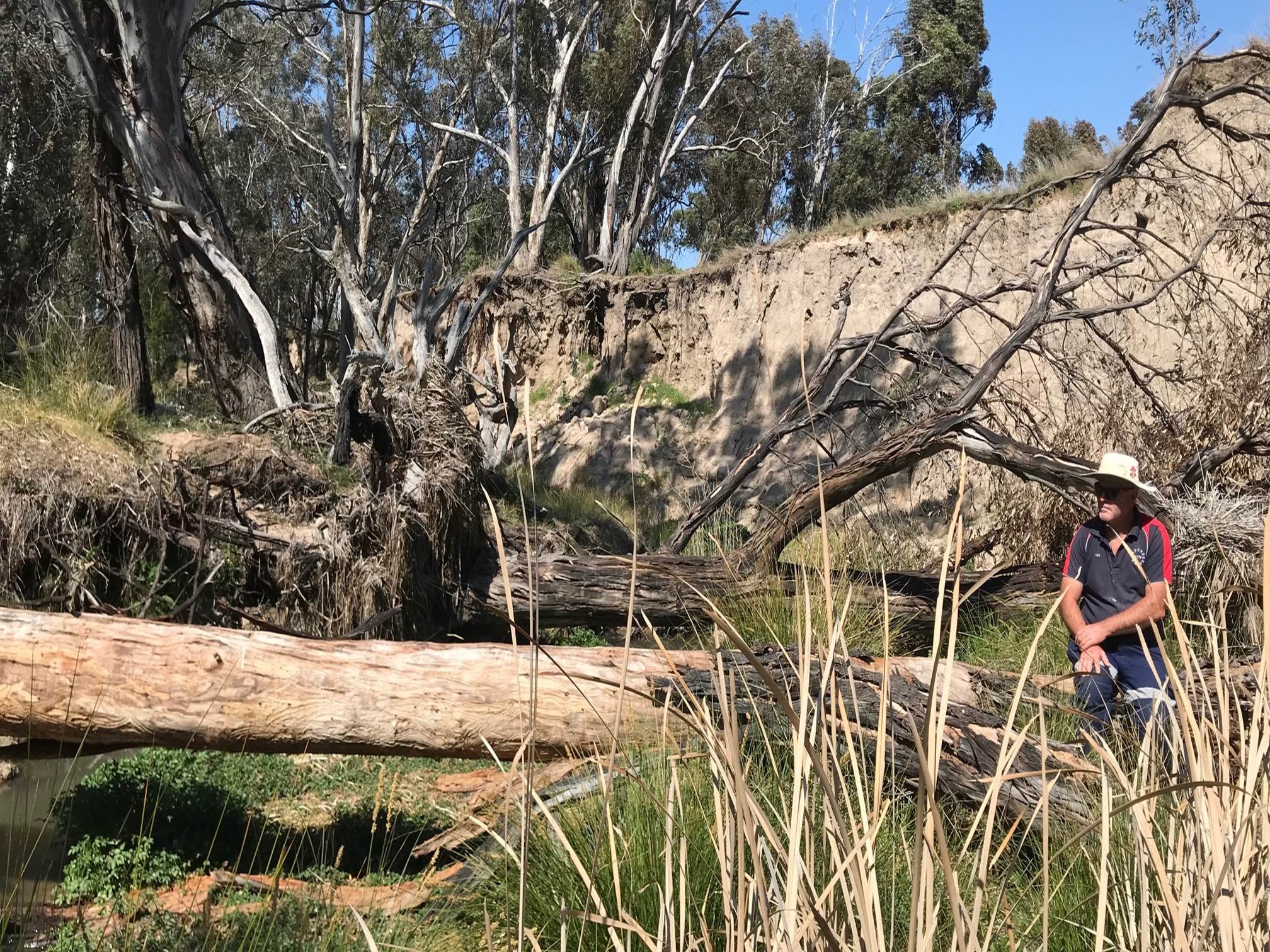
The Mulloon Institute[3]
The Mulloon Institute grew from an on-ground research across the Mulloon Creek waterway near Canberra, Australia. This approach included property and catchment scale rehydration and restoration research, which has been recognised globally. Mulloon has signed the Call to Action as part of the United Nations Climate Change Conference, COP28. The Call to Action seeks collaboration from Non-State actors – from farmers and fisherfolk to businesses, cities, civil society, consumers and all those engaged in food systems – to develop the Non-State Actors Call to Action for Transforming Food Systems for People, Nature, and Climate. The Call to Action mobilises collective efforts around a shared vision of food systems that deliver significant, measurable progress for people, nature, and climate by 2030. This shared agenda aims to scale action, raise ambition, and unlock the potential of food systems as one of the main solutions for people, nature, and climate change.
A Jesuit Response
"Teach us your way so that it becomes our way today, so that we may come closer to the great ideal of Saint Ignatius: to be companions of Jesus, collaborators in the work of redemption" (Fr. Pedro Arrupe).
Recently, theLoyola University Chicago Climate Conference 2024, themed "Feeding a Changing World: Climate Change and Global Food Systems", had an amazing keynote speaker, Amanda Little,whose key message was for us to "Look after the soil, this is the most important thing we can do." Amanda Little, author of "The Fate of Food: What We'll Eat in a Bigger, Hotter, Smarter World" and TED Talks's "Climate Change is Becoming a Problem You Can Taste", shares,"Our food systems have not been designed to adapt to major disruptions like climate change. The climate crisis could devastate our food supply –but there are farmers, entrepreneurs and engineers who are radically rethinking what we grow and how we eat, combining traditional agriculture with state-of-the-art technology to create a robust, resilient and sustainable food future."
In Australia, the Ecojesuit's identified focus is onagroecology, known as regen farming or regenerative agriculture, which aims to revive and improve ecosystem function on farms and landscapes through practices designed to work with the landscape, crops, people and climate. While regenerative may be the new buzzword, many of these methods aren't new and have been used by Indigenous cultures for thousands of years. Indigenous cultures have long understood the importance of working with nature to nurture the land and ensure sustained health and productivity across all systems. By embracing the knowledge and expertise of Indigenous cultures and traditional farming practices, we can learn valuable lessons about land stewardship, biodiversity, and the importance of a holistic approach to landscape care.
The work in Eugowra is a great example of how we can simultaneously address more than one Laudato Si' Goal.[4] The Slow the Flow Project went beyondLaudato Si's Goal #1, "Response to the Cry of the Earth", with a community engagement process that addresses
Goal #7, "Community Resilience and Empowerment." It is an approach that Jesuits and Jesuit ministries could include in our Laudato Si' Action Plans.[5]
The 7th goal, "Community Resilience and Empowerment", seeks all to develop resilience by analysing the physical, social, and spiritual ways a community is likely to be affected by climate change and biodiversity loss and making a plan to resiliently prepare for those changes, ensuring buildings are ready for changes in heat, storm intensity, and sea-level rise, and ensuring members of the community can travel to other locations in the event of a weather emergency. Understanding the impacts at a bioregional scale is important, too, so the lessons that Therese and Sally are sharing with us can be used in any community worldwide.
The Bathurst Diocese desires to create a home for the Laudato Si' team, inspired by Sally and Therese and the work at Eugowra. The Bathurst Diocese Laudato Si' Action Plan now includes supporting education programs, spirituality and emerging social enterprises that share this vision for a thriving community for generations to come. TheDiocese connects itsLaudato Si' Action Plan to the Slow the Flow Project.
I was so blessed to be part of the Integral Ecology Leadership Program's immersion in Bathurst Diocese and to see the Slow the Flow Project first-hand. I am encouraged that more visits are planned for those across other Catholic Religious Institutes so the journey can be shared.
As members of the apostolic body of the Society of Jesus, we can look at how we can better support our Eco-Justice centres across the Jesuit Conferences to explore similar approaches to the Slow the Flow Project. These approaches could focus on rehydrating the landscape to support the Ecojesuit's priority on agroecology, as this impacts the most vulnerable in food and water. The other insight from the Slow the Flow Project is the importance of processes. The project took a community-building approach, which is more likely self-sustaining as key parties are fully informed, committed and active participants.
It is up to all of us to build a healthy, hopeful, and sustainable Common Home for all.
[1] https://www.vatican.va/content/francesco/en/encyclicals/documents/papa-francesco_20150524_enciclica-laudato-si.html
[2] https://institute.mercy.org.au/2023-mercy-integral-ecology-emerging-leaders-fellowship-2/
[3] https://themullooninstitute.org/
[4] https://laudatosiactionplatform.org/laudato-si-goals/
[5] https://laudatosiactionplatform.org/plans/?page=1
Sue Martin <[email protected]>
Care for our Common Home Project Officer Australian Jesuit Province, JCAP RWC Assistant Coordinator, SJES Advisory Committee.