My Life with Decree 4
Few things words have influenced me as a Jesuit as much as the ringing words from Decree 4 of the 32nd General Congregation of the Society of Jesus: “The mission of the Society of Jesus today is the service of faith, of which the promotion of justice is an absolute requirement. For reconciliation with God demands the reconciliation of people with one another.”
GC 32 was convened in 1975, some 13 years before I entered the Jesuit novitiate in Boston, then in the old New England Province. But from the number of times that this line (and GC 32 overall) was quoted by my novice director and the assistant novice director one might have thought that GC 32 had just happened a few weeks before.
The ”faith that does justice” was an animating focus of my novitiate, my subsequent formation and, indeed, the whole of my Jesuit life.
To begin with, our novitiate “experiments,” that is, our various ministries, were geared towards working with the poor. For me, as someone who had spent several years working in the corporate world and making a good salary, this was a novelty. My first ministry in the Jesuit novitiate was at a hospital for the seriously ill, in Cambridge, Massachusetts. There I worked, alongside the hospital chaplains with people who had suffered severe brain injuries (among other illnesses). Many of the patients no longer received visits from their families, so, as the pastoral care department told us, they were poor in ways that might escape the casual observer.
Decree 4, one could say, was as influential as anything else we read during the novitiate. In fact, it even became the source of some lighthearted humor. (Anyone with even the slightest exposure to Jesuits will not be surprised by this!) The phrase “the faith that does justice” was applied seriously in our novitiate, but occasionally humorously. For example, the oldest and most broken down of our few community cars, and therefore the one that seemed the simplest and most in keeping with poverty, was called “the car that does justice”!
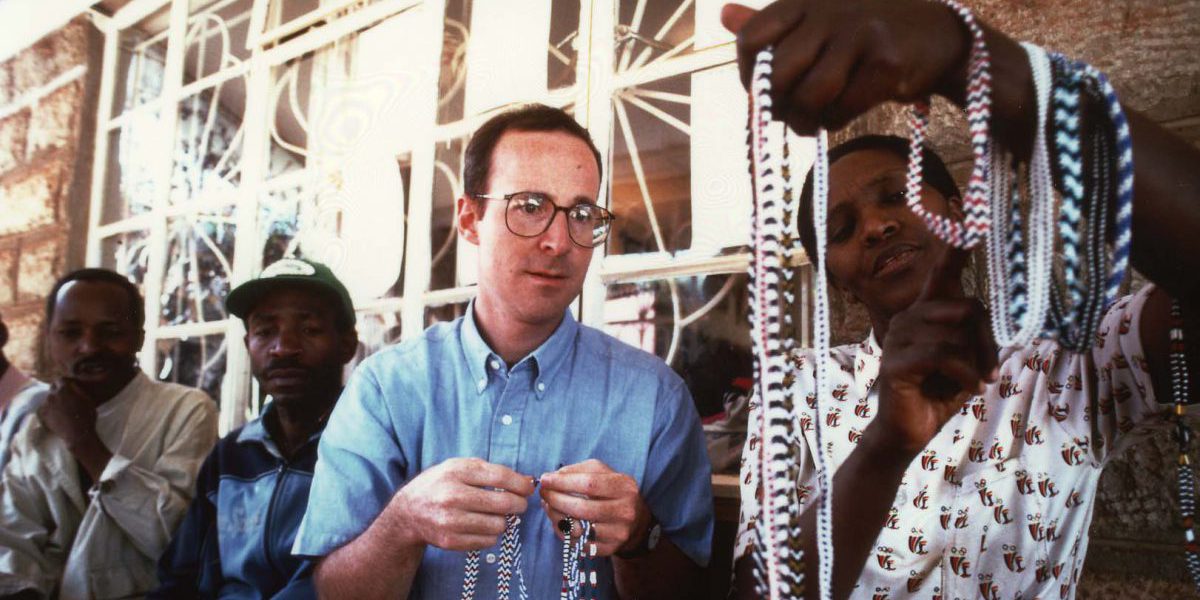
But it wasn’t until a few months later, when my fellow novice and I were sent to work in Kingston, Jamaica, that I really encountered those “on the margins.” We were missioned by our novice director to work with Mother Teresa’s Sisters (the Missionaries of Charity), who worked with men and women who were homeless in the poorer sections of Kingston.
The Sisters’ ministry, to me, seemed like Decree 4 in action. They would bring in from the streets those who were too poor or sick to care for themselves and, often, gave them a dignified place to die. My fellow novice, William (“Bill”) Campbell and I were asked to clean, dress and feed the men (while the Sisters worked with the women).
Working in Kingston (I also worked as an orphanage for boys, teaching them how to read) brought me into contact, for the first time, with grinding poverty. I saw, for the first time, how difficult the lives of the poor were, how little they had in terms of resources and how much they suffered. To a relatively young man (age 28 at this point) I remember thinking, “This is so unfair!” In other words, unjust.
The impetus to work with the poor continued through the novitiate. In the second year of the novitiate, I worked at a homeless shelter in downtown Boston and then at a Nativity School (the original school, in fact) with middle-school students from underprivileged backgrounds in New York City. (That school would later serve as a model for small “middle schools” in the inner city.)
One of the many things I’m grateful for in terms of my formation is that these ministries with the poor were simply a “given.” That is, we discerned where we would work with the poor, not if we would work with the poor. It was not only animated by St. Ignatius Loyola’s desires for men in formation but, once again, the restatement of our mission as Jesuits, as outlined by Decree 4.
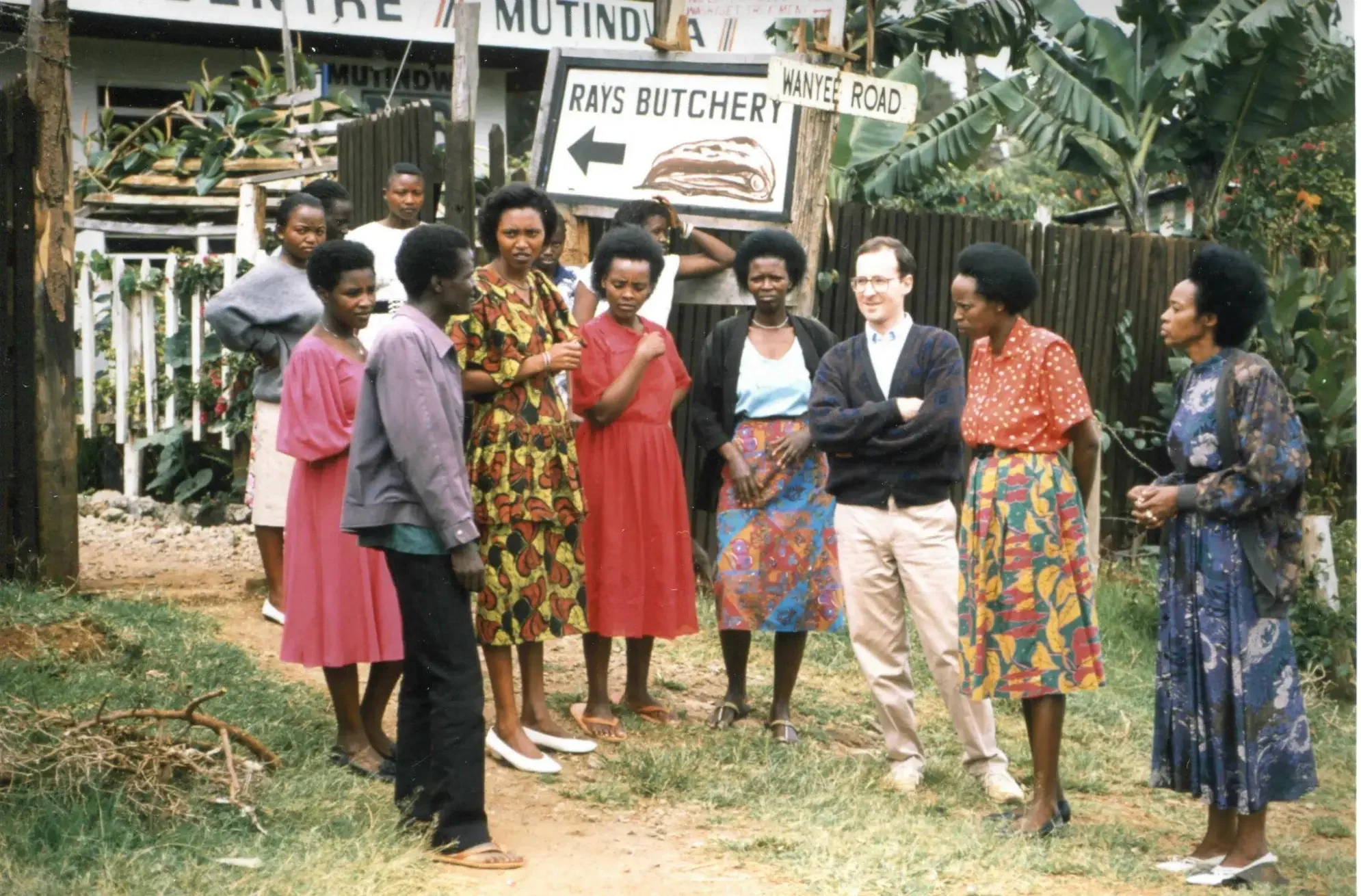
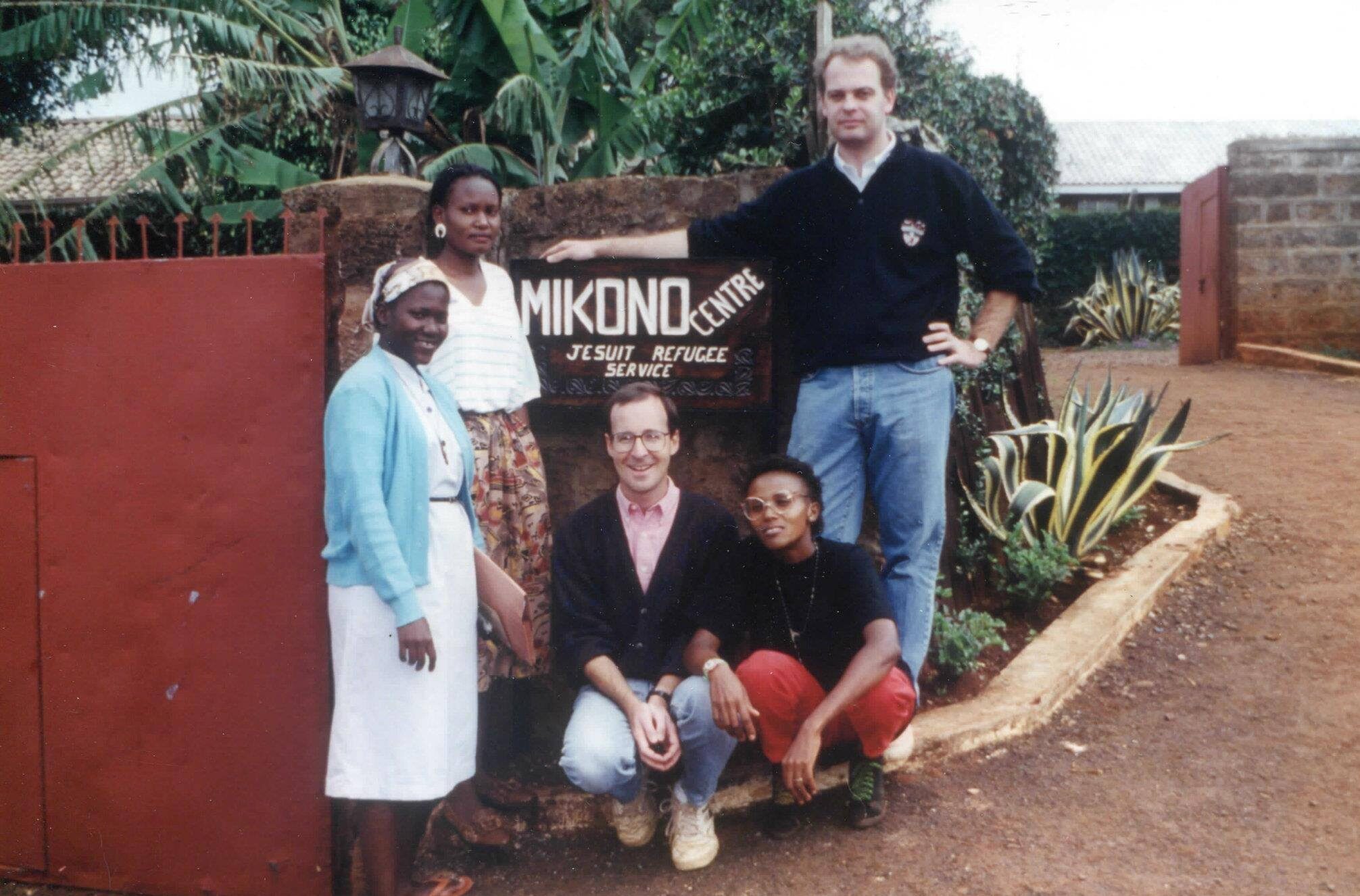
In terms of “justice,” though, it was my regency experience that made me see, in detail, the injustices visited upon those with precious little. My formation director sent me to work with the Jesuit Refugee Service in Nairobi, Kenya, where I helped refugees from all around East Africa who had studied in Nairobi. There we assisted them in starting small businesses to help them support them and their families. In time, we started a small shop (still in business) called the Mikono Centre, which marketed their wares. (Many of the refugees made handicrafts like wooden sculptures, paintings and batiks.)
The question of justice was brought much more to the fore than ever before. Why? Mainly because I was there for a full two years, which meant a deeper familiarity with their situations. There I realized that no matter how hard they worked, they were often condemned to poverty. It’s not enough, as we were taught in the novitiate, to ask why someone is poor; it’s important to look at the systems that keep people poor.
Let me give you an example.
At the time, JRS would give to many of the refugees modest grants to help them start small businesses, based on skills that they brought with them from their home countries. So, for example, a woman who wanted to start a small sewing business in her house (her shack, really, in a slum) would apply for a small grant and then would be given funds to begin a small business. For example, a woman with knowledge of sewing would be given funds to purchase a small sewing machine and some little fabric. (To guard against their being robbed or misusing the funds, we would make the cheques out to the suppliers.) These were exceedingly modest grants to refugees who lived in some of the worst slums of Nairobi.
But for the local people it was a lot of money. And sometimes the Kenyan neighbors of the refugees would see that they had a new sewing machine and the ability to now make a living, and they would grow jealous (naturally) and sometimes (again, not surprisingly, given the grinding poverty) they would grow angry and vituperative. Often it was even worse if the refugee business was a success.
On one occasion, a refugee’s neighbors grew so angry and jealous that they burned her house down. And it was here that I thought of GC 32. It wasn’t enough to give the woman charity (the grant for her sewing machine). Because the very social construct in which she lived made it impossible for her to get ahead. It was a question not simply of an individual’s being poor, but an individual’s being poor in a system that kept all poor, and that, as a result, turned people against one another. Even though she did everything right (apply for a grant, purchase the sewing machine and work hard) the unjust system in which she lived conspired against her.
Here I saw the need for “reconciliation of people with another.” That meant reconciliation between the refugee and her Kenyan neighbors, but also between the poor in Kenya and the wealthy in Kenya, and the poor worldwide with the wealthy worldwide. At least that’s how I saw it as a young Jesuit.
These days when you mention “Decree 4” to some young Jesuits, they may look at you with a blank stare. Perhaps this is not surprising. For them, 1975 is ancient history and, besides, there have been several other General Congregations since then.
These days younger Jesuits are perhaps more likely to know the Universal Apostolic Preferences, which are, I think, guided by Decree 4. What else is “Walking with the Excluded” after all?
The Society of Jesus has long carried out the Gospel message to care for the poor, and has more recently lived out the call of GC 32 and now asks its members and our colleagues to “walk with the excluded,” who include many of the people I’ve been talking about: migrants and refugees, the poor in our inner cities, the sick, the lonely, the marginalized overall.
I have also tried, as best as I could, in my work at America Media (and on social media) to live out the call of Decree 4 by focusing attention on these groups. It's easy for people to “tune out” the problems of those on the margins, because it makes us uncomfortable. For me, however, as someone working in the media, I can share stories of those on the margins to awaken people’s compassion for them. And this, thankfully, is easy to do. (For example, it’s easy to share stories from the Jesuit Refugee Service or other works that care for the poor.)
Whenever Jesus saw someone who was struggling, the Gospels tell us that his heart was “moved with pity.” (The Greek word used, splangchnon, was even stronger: he felt it in his “guts.”) The same can happen when people read compelling stories of those struggling, even if it’s on Facebook, Twitter, Instagram or TikTok. And when our hearts are moved, it can move us to action. So it’s up to all of us to raise up such stories of those on the margins.
But let me suggest another group that may go overlooked, with whom I’ve ministered for the last few years: LGBTQ Catholics. And they are among the most marginalized in the world.
As many people know, in several countries you can be executed for engaging in same-sex relationships, and in dozens more countries you can be imprisoned. Lesbians, gays, bisexual and transgender people are regularly beaten, harassed and treated like dirt. And when it comes to LGBTQ Catholics, they often feel unwelcome in what is, after all, their church too. In certain parts of the church, in fact, church leaders don’t even want to acknowledge their existence. It’s hard to imagine a greater “marginalization,” or how one could feel more excluded.
So these days when I think of Decree for and reflect on “reconciliation of people with another,” I think of the need to bring together this group of people, LGBTQ Catholics, with their brothers and sisters in the church. I’m grateful that many Jesuits and their colleagues are taking the first tentative steps in this ministry, which, to me, is part of the living out of Decree 4, because reconciliation with God “demands” the reconciliation of people with one another.
That’s one reason I was so moved when a Jesuit mentor said that he understood this new ministry with LGBTQ people, as a “ministry of reconciliation.” It helped me understand that ministry in a new way and connect it to the ministries that I had done ever since the novitiate. All of this thanks not only to Jesus, not only to the Gospels, not only to the long tradition of Catholic Social Teaching, but to that remarkable statement that we call Decree 4.
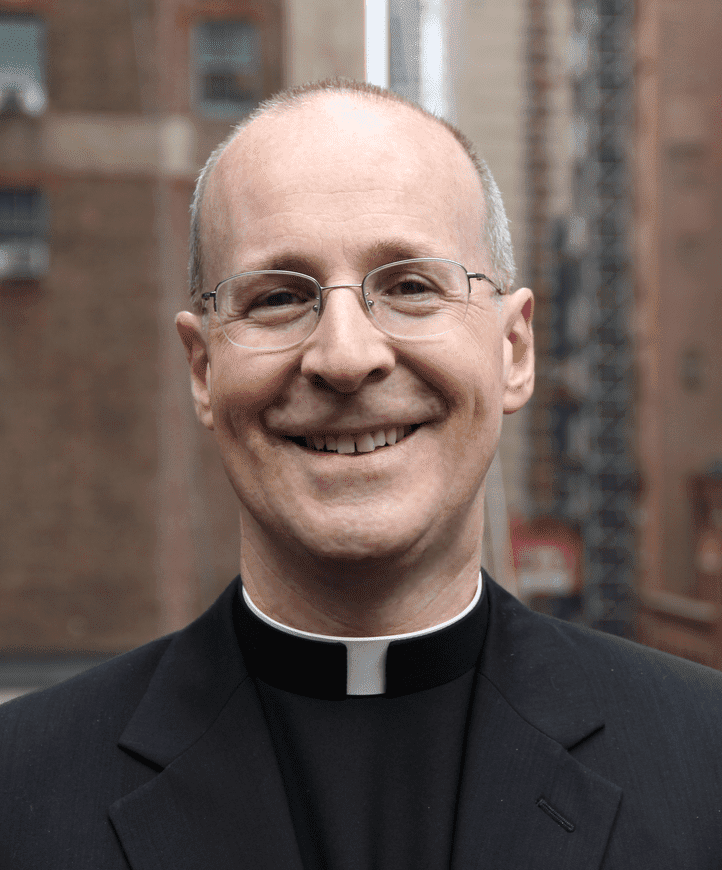
James Martin SJ is editor at large of America Media, consultor to the Dicastery for Communication and founder of Outreach, a ministry for LGBTQ Catholics. He is the author of several books including, most recently, “Come Forth,” about the Raising of Lazarus
Related Posts:

In Magnifica Humanitas, Pope Leo XIV warns that machine intelligence in war ends by “reducing victims to data.” The machine profiling that registers a person for food can also be used to select a person as a target. A small drone circling a road, with no one steering it, can have such a profile as its target. A drone like this is an autonomous weapon system. Once activated, it selects and attacks targets by itself, matching what its sensors detect to a programmed target profile. No human being decides, at the moment of the strike, that this particular person will die or is the right target. The case most often cited as the first use of such a weapon against people, reported by UN experts, was in Africa, in Libya in 2020.
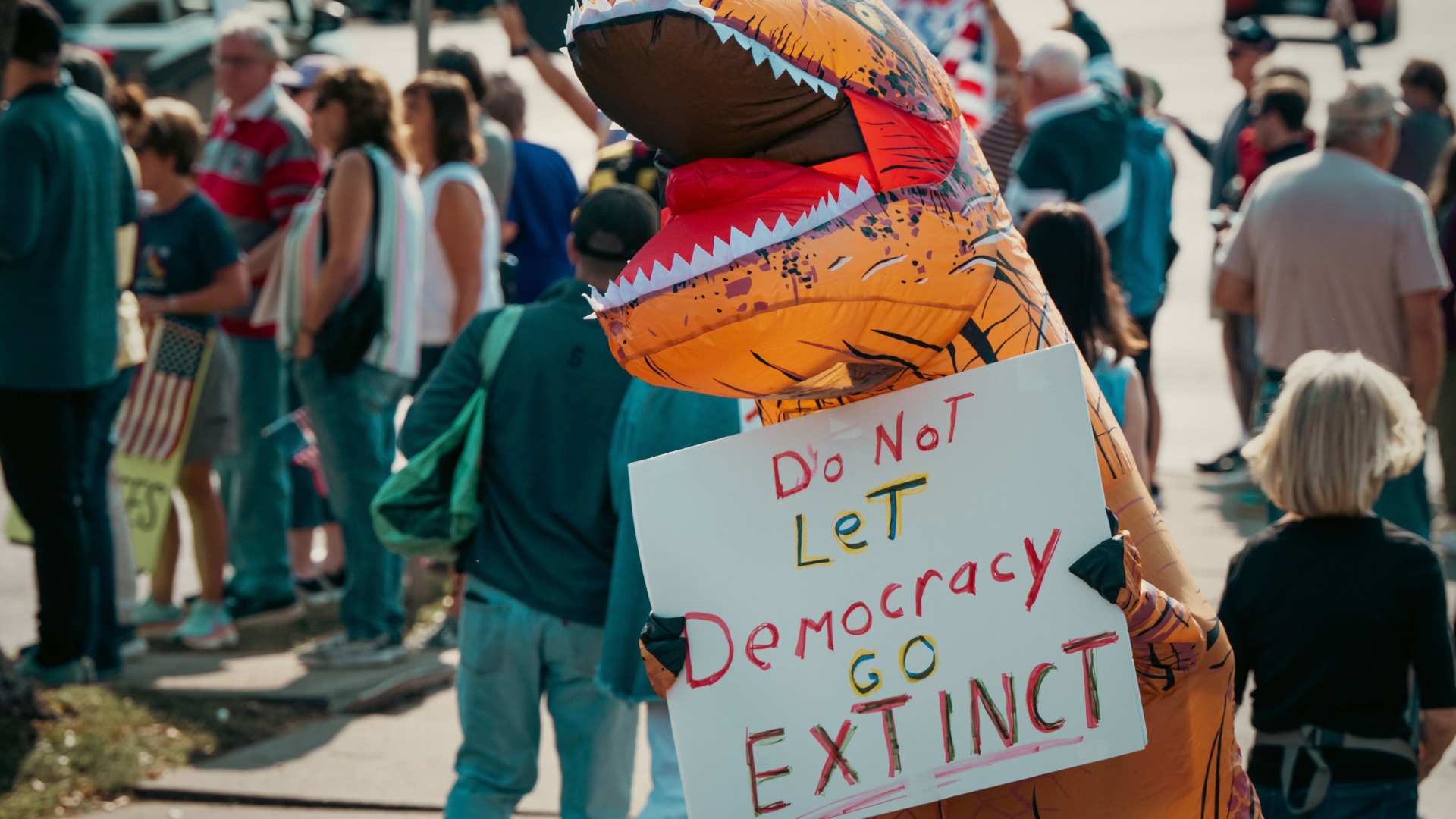
Democracy, which has historically proven most effective in meeting these criteria, cannot be taken for granted. In our AI era, citizens should press for more than multiparty elections and the protection of basic freedoms; that institutional core is not enough. We must carefully regulate and channel powerful technologies with the capacity to divide us from one another and short-circuit social and political participation. That means maintaining spaces in civil society where human contact and social friendship can flourish without the mediation of machines, beginning with the educational systems through which all citizens pass. It means fighting deepfakes and disinformation in the public sphere, so that citizens still operate in a world of facts and evidence and political representation has a strong basis.
Artificial intelligence (AI) is increasingly entering public life in Ghana, including through digital systems used for identification, verification and service delivery. The ethical question is therefore not simply what AI can do, but what happens to people when digital systems become gateways through which citizenship, mobility or access to services are recognised. In northern Ghana, especially in border communities, this is a concrete question. I was privilege to visit Pusiga community in November 2025 with a Jesuit friend of my mine who is originally from the community. Thus, the topic for this article resonates very well with me.
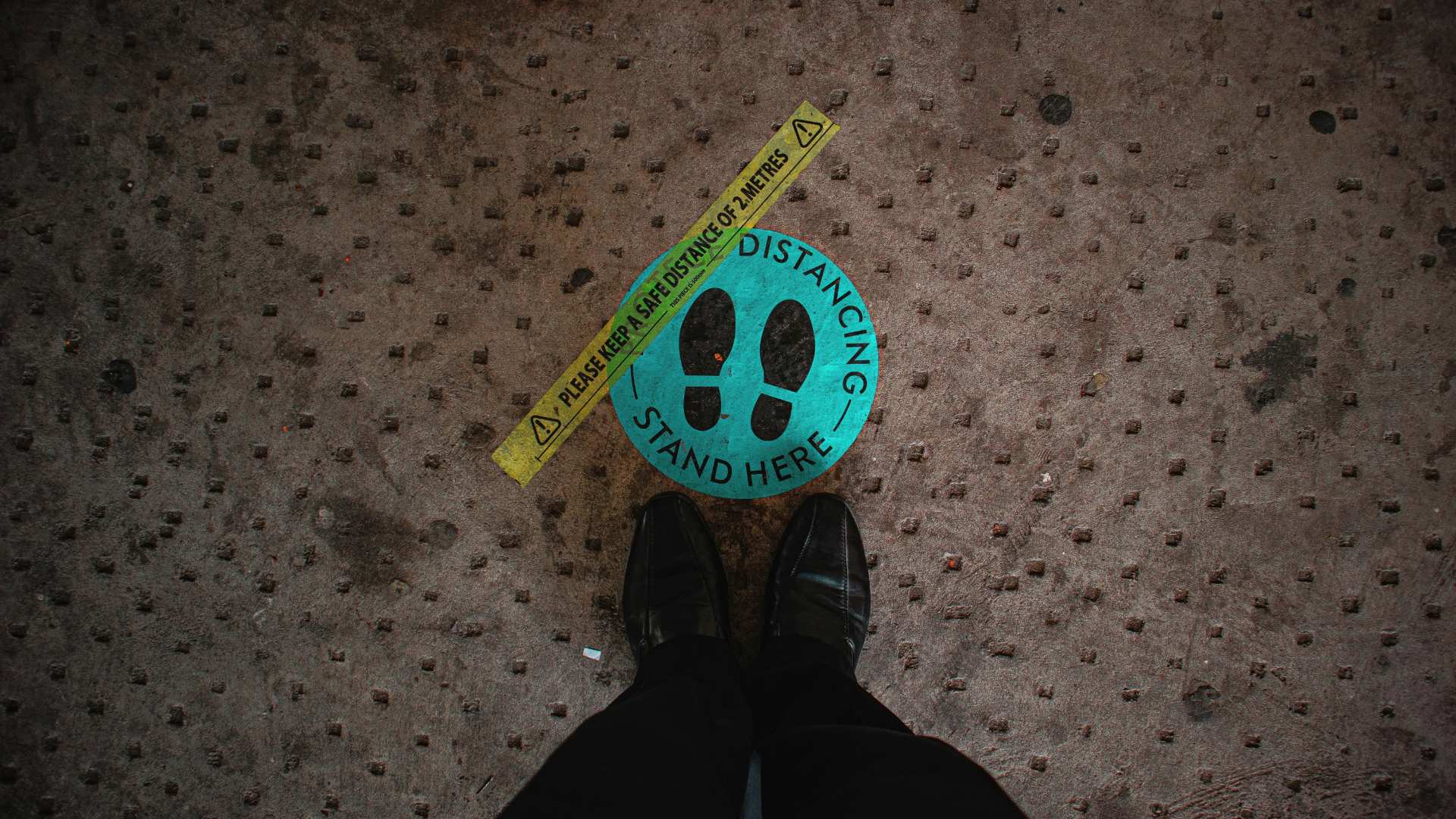
The article ‘Pandemic and Authoritarianism’, by Germán Rosa, SJ, was written in the midst of the COVID-19 crisis, but its insights extend beyond that context. The pandemic appears to reveal and accelerate political trends that were already present: the concentration of power, the weakening of democratic checks and balances, and the acceptance of extraordinary restrictions in the name of collective security. Rosa’s main concern is that fear may lead citizens to silently surrender their freedoms and rights, and that measures which were initially intended to be temporary become normalized and endure. Furthermore, in societies riven by inequality, control is never distributed neutrally: it falls most heavily on the impoverished, marginalized groups, migrants, dissidents and those who defend rights and territories.
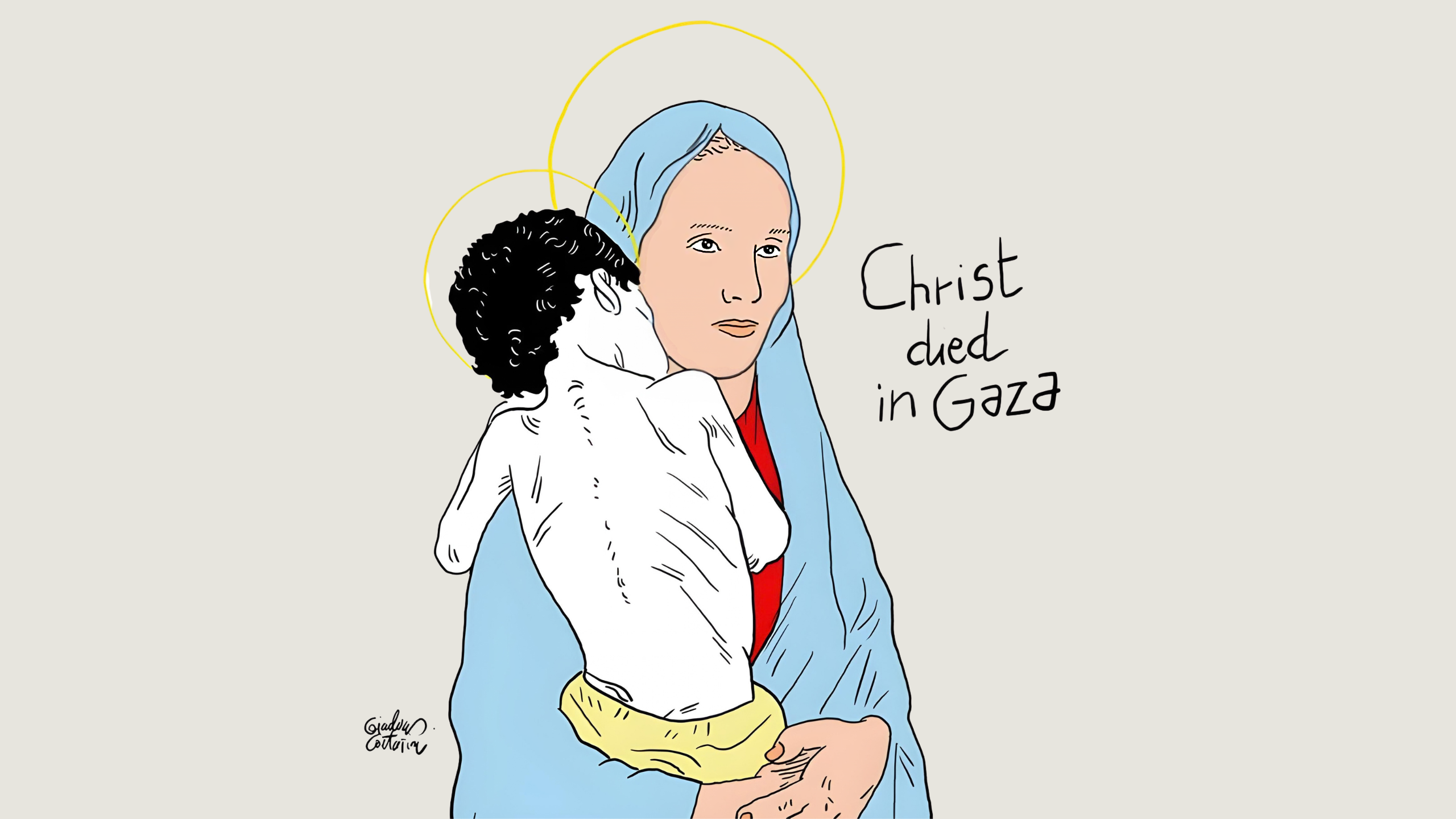
Speaking of dead children is uncomfortable. Yet it can also be healing. As I listened to the stories shared that day, I found myself returning to memories I may at times shy away from remembering. Iremember finding my sister’slifeless body in bed one Saturday morning. Ihad cometo carry her out with me to watch cartoons.As I listened tothe story of Hind Rajab, a 5-year-old girl who had been trapped inside a car attacked by Israeli forces,the memory of a little boy reaching out to touch his sister came back. The young girlhadmanaged to call the Red Crescent for help but hours later she and the paramedics who had come toassisther were all found dead. The chilling story reminded me of the shocking cold that struck my hand as I gently touched my sister’s arm in a futile attempt to wake her up.

Who Are the Victims and Those at Risk of Becoming Victims? When it comes to mining, particular attention must be paid to those who are most vulnerable: Indigenous communities whose livelihoods depend on their land, forests, rivers, and water sources; small-scale farmers; fishers; poor families; women, children, and older people; as well as communities with the least bargaining power in legal, economic, informational, and political matters. They may become victims when land loses its social function, when water sources are polluted or disappear, when the environment is damaged, when livelihoods are disrupted, or when their social and cultural life is transformed without their genuine consent.


