
GC-32 gives me hope for the future.
I am as old in the Society of Jesus as GC32 – 50 years! I have a secret to share: as a first-year novice, our Novice Master allowed us to take part in the Province sharing on the decrees of GC32 – against all norms for first-year novices! There I heard young radical Jesuits complain that our educational institutions of the Province only serve to sharpen the tools of the exploiters so that they can exploit people in a more efficient manner! I had just graduated from St. Xavier’s College, our Jesuit College in Mumbai, and I was amused to imagine that the College had motivated me to join the Jesuits in order to exploit better! But I also saw a strong resolve in the members of the Province to make sure that all our Jesuit institutions would find ways of integrating “justice” into our mission of “the service of the faith”. My Novitiate grounded me in this theme – so biblical, in any case – of working for justice in the world.
The Society in India took this theme of Decree 4, GC32 seriously and ways were found, for instance, of putting those in formation, in solidarity with the poor. Instead of the comfortable Jesuit residence, during my second year of philosophical studies, 4 of us (from 4 different Indian provinces) opted for and were allowed to stay in the biggest slum of Asia - Yeravada (a few minutes cycle-ride from our classes on philosophy in Pune, Maharashtra), where we hired a small hut, with tin sheet walls and mud floor, for the whole year. There were common toilets for the hundreds who lived in the slum and were only usable immediately after they were cleaned once a day! A humorous fact we soon learnt, was that the only source of water for all the residents, was within the enclosure of the women’s toilets and so, the four of us males, had to take turns in carrying our buckets to the enclosure entrance and request any woman going in to fill them for us! We experienced gender discrimination in Indian society first-hand: the heavy work of filling water was exclusively a woman’s task. The experience in the slum had a strong impact on me - in particular, the poor living conditions and the unseen violence against women and children. We learnt solidarity with the poor.

Regency at the Ciudad de los Muchachos in Alicante, Spain, gave me an international flavour of solidarity – catering to children who were abandoned or from dysfunctional homes – a challenging task dealing with the volatile temperament of these emotionally disturbed children. Theological studies, back in Pune, took us once again to residence with the poor, building relationships with them, but this time, in the better-endowed chawl system, with one-room tenements and common toilets. This was GC-32 in action during our formation, giving us an experience of the lives of common people and preparing us to take up “action for justice” in the real world.
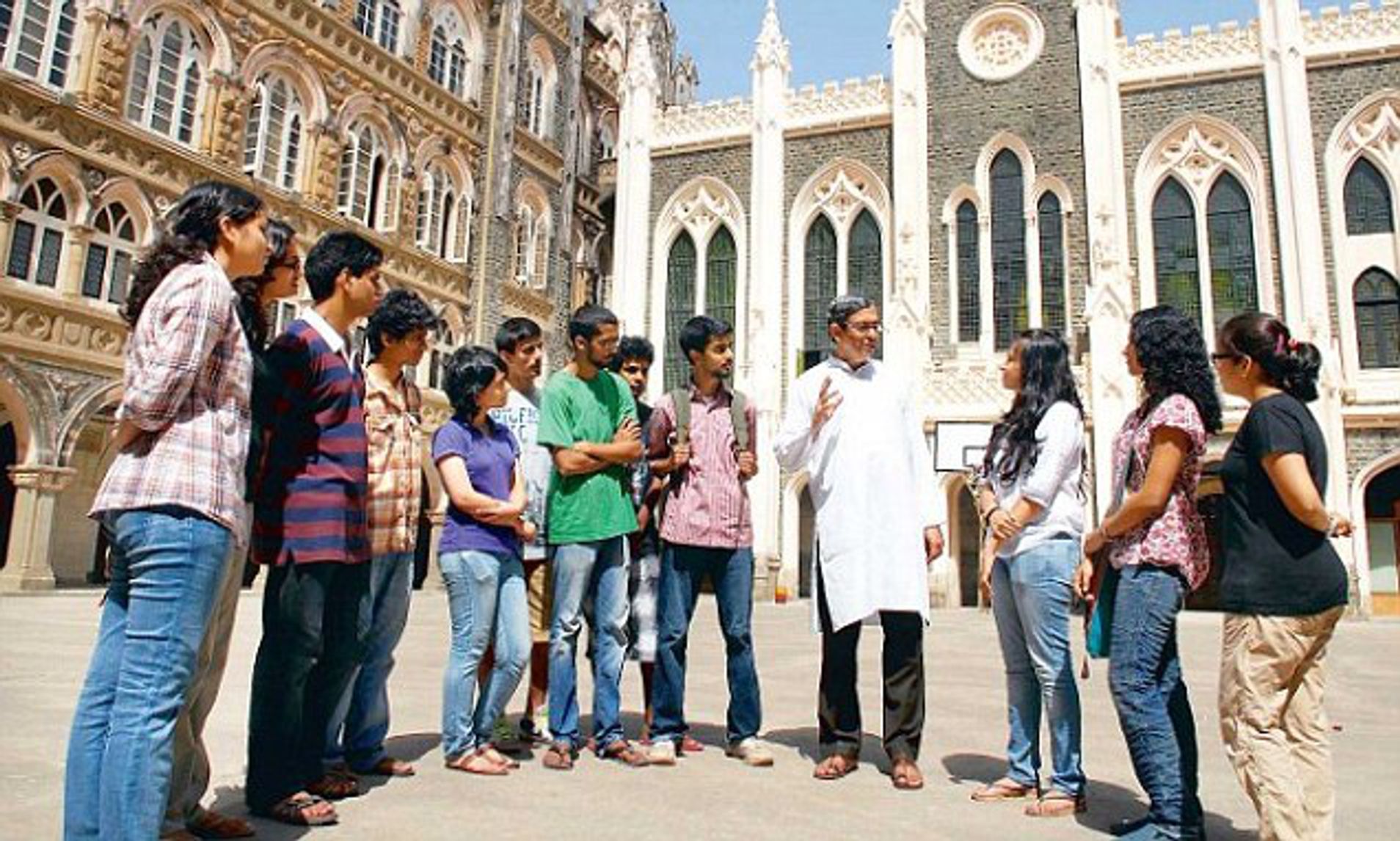
Having qualified for work in Higher Education, I began at St. Xavier’s College, my alma mater, looking for ways to integrate academic excellence with social consciousness: forming men and women for others and encouraging competence, conscience, and compassionate commitment. An opportunity arose when the College secured academic autonomy from the University, with the freedom to design our curriculum. Our Jesuit team was instrumental in making concrete what we heard Fr. General Kolvenbach say to those in Higher Education, “When the heart is touched by direct experience, the mind may be challenged to change. Personal involvement with innocent suffering, with the injustice others suffer, is the catalyst for solidarity which then gives rise to intellectual inquiry and moral reflection”.He recommended that programs to give students such experiences should “not be too optional or peripheral, but at the core of every Jesuit University’s program of studies”. St. Xavier’s College, which was the first Autonomous College under the University of Mumbai, introduced a mandatory 2-credit, non-academic, “Social Involvement Program.” It required 60 hours of actual contact with the under-privileged in service, over a whole year – following in the footsteps of other Jesuit Autonomous Colleges in South India, but unheard of in academic institutions in the rest of the country. GC-32 was clearly the inspiration and had a strong impact on students, several of who thanked us for making it mandatory because otherwise, they felt, they would never have opted for it and would have missed a life-changing experience. We have evidence that it influenced the career-choices of several students, besides influencing the thoughts of many more on social justice.
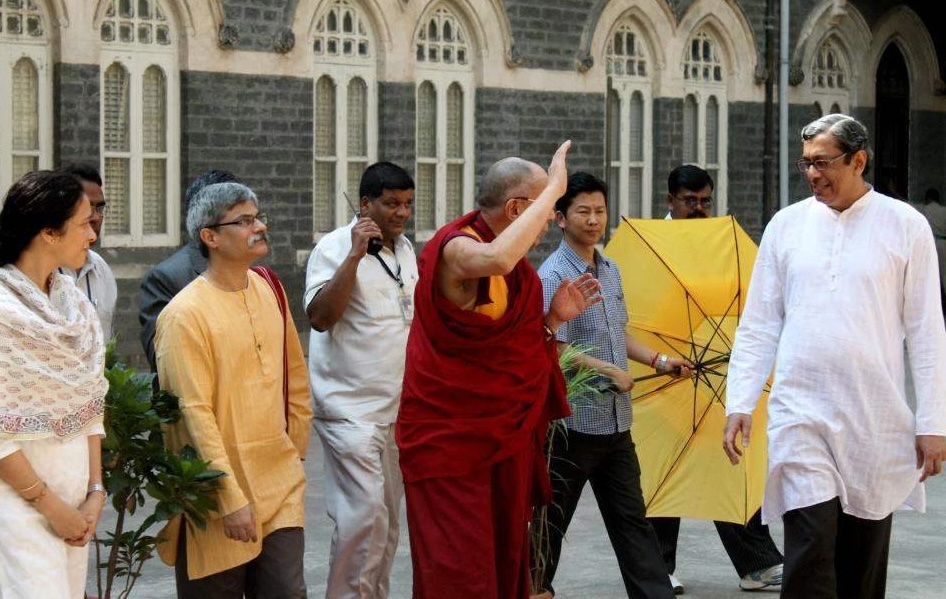
As Head of the institution for 12 years, I sought opportunities to keep St. Xavier’s at the forefront of discussion and dialogue on the many justice issues facing our country – even though this could have had some negative repercussions. At our very popular College Cultural Festival called “Malhar” – our Jesuit team introduced a “Conclave” – a forum for serious discussion, bringing in important resource persons like the Dalai Lama and other eminent thinkers and social activists from across the country. Our students were exposed to the most controversial yet crucial justice debates of our time.
The year 2014, known as a watershed in India’s democratic history and in the run-up to the 2014 General Elections, on my Principal’s blog, I wrote a critique of the Model of Development and Governance that a major National Political Party was advocating. This became the subject of prime-time National News-Channel programs, which criticized the involvement in politics by an academic administrator (the political party in question also asked for my arrest) but also went into the merits of the subject raised – a discussion on public policy for justice. Sadly, my then critique of the communal and divisive agenda, along with the promotion of crony capitalism that would be destructive of the ecology, still holds true, more than ever, for the Indian national political scene.
Many themes that emerged from GC32 inspired us to action. One was the need for “collaboration” with lay people. I remember objecting to a slogan from GC35 – that a Jesuit is “a flame that kindles other flames” – as it sounded to me and to some of my colleagues on the academic staff of the College, to be too condescending. Would we as Jesuits be ready to be kindled by a flame lit by others? Subsequently, the term, “collaborator” too came under critique and a “partner” was thought to be a better term to use for those we work with, giving them a status of equality. GC32 provided us with an inspiration that had deep consequences in our imagination of the Jesuit mission. It required a change of mindset that does not come easy and is still a work in progress.
Partnering with women definitely needed and still needs a change in Jesuit attitude. Indian society, as is the case with many other cultures, does not treat women as equals and this is interiorized to such an extent that we are not even aware of it. In my opinion, several of our Jesuit institutions did not accept good lay leadership at various points in time, due to Jesuits not being comfortable working under the leadership of women. But the change is visible (forced or not) and we now find lay and religious women leading some of our important institutions. I wonder if this would have happened without the sea-change started by GC32 and we need to admit that this remains a challenge!
India is a land of diverse religions. Christians are a miniscule minority and hence our relationship with people of other faith is crucial. Vatican II gave us the lead, creating a movement to treat other religious traditions (containing possible ‘seeds of the Word’) with respect. But for us Jesuits, GC32 provided the catalyst and the motivation to look to other religious groups as partners in the building up of God’s Kingdom of justice and peace. After retirement from academics, as Parish Priest of a Jesuit Parish in Mumbai, attempts to initiate lay people to this change in worldview even earned for us the title “anti-Christ” from some of those who could not understand the new acknowledgement that other religious traditions also offer their adherents an authentic God-experience. The cultural celebrations of the Hindu dandiya dance festival or the communal meal of the Muslim iftar during Ramzan – held on Church grounds to bring together people of all faith, as well as a pilgrimage for Catholics to the religious shrines of others to understand their traditions of worship, were considered unacceptable by some, yet greatly appreciated by others who were open to learn what God’s Spirit is doing among diverse groups of honest seekers. Some even felt they appreciated their own faith better from their exposure to other religions.
credit: Mailonline
I am convinced that Pedro Arrupe and Decree 4 has prepared us to confront an emergency that the world has not sufficiently awakened to yet: the ecological crisis of global warming and climate change, caused by the use of fossil fuel. Many of us are now trying to find a biblical foundation for what is needed and I have begun by asking many groups, “Why did Jesus not die of old age?!” I argue that Jesus went about doing good – healing, feeding the hungry, calming the storm, even raising the dead and speaking so effectively of a loving God. People wanted more of Him and pursued him across the countryside. Why then did he not live long and finally die of old age? A very simple answer: because he also worked for justice … and paid the price. He pointed out the accusers’ own sinfulness when the woman caught in adultery was brought before him; he spoke plainly to the Pharisees, calling them ‘a brood of vipers’ and ‘whitened sepulchres’; he cleansed the temple declaring, ‘you have made it a den of robbers’. Jesus worked to change unjust structures and He is our model of working for justice.
I submit that our 50 years of reflecting over and acting on Decree 4 has brought us to the point where we must evolve an ecological liberation spirituality (much like the liberation theology of Latin America) to involve the Society and the Church in advocacy against the use of fossil fuel through socio-political action. Scientists state clearly that the world has only about 15 to 20 years to act decisively, to prevent the increase in the earth’s temperature above 2 degrees from pre-industrial times, which is estimated to bring ecological disaster on a large scale, some of which is already in evidence.On January 10, 2025, the World Meteorological Organization released official temperature data for 2024, showing it to be the hottest on record, exceeding the pre-industrial level by nearly 1.55°C. Ecological justice – which is required to prevent the type of climate change that will adversely affect all life on the planet – needs advocacy with the Governments of the world. The recent Jesuit Policy Brief on Ecology states: “The Society of Jesus is called to advocate for Climate Justice, especially for the most vulnerable communities affected by climate change, at two critical meetings of the United Nations Framework Convention on Climate Change (UNFCCC) taking place in 2025: in Bonn, Germany, in June, and Belem do Pará, Brazil, in November.”Advocacy is an ongoing process aimed at changing attitudes, actions, policies and laws by influencing, both people in power and systems or structures at different levels, for the betterment of those affected by the problem.No other issue has ever been so crucial for all God’s creatures as the need to prevent global warming through the elimination of fossil fuel. Can GC32 inspire us all to urgent action? Having just directed an 8-day Ignatian Retreat for Jesuits on the theme of Ecology, at the invitation of the Provincial of an Indian Province, I feel that GC32 has empowered us to take on this task, led by God’s Spirit. The seed sown by Decree 4 has taken firm root and has grown into a tree. May the Golden Anniversary inspire us on to an adequate effort to Care for Creation!

Frazer Mascarenhas S.J.
Coordinator, West Zone Ecology Platform, India.


