Curing Our Common Home
“Ajining dhiri ana ing lathi, ajining raga ana ing busana.”
This Javanese proverb somehow means that a person's character or personality is perceived by what he says and what he wears. Whatever is inside a person is revealed through behaviour, character, thoughts, choices, etc. The exterior mirrors the interior. Based on this proverb, how should we reflect upon personal qualities and human civilization in this era? How should we assess our personal qualities whenever we see natural destruction, war, crises, and disasters occurring in various parts of the world? How should we view the human race whose activities make the earth sick? We should stop blaming, condemning and demanding that others be responsible for all of this. We ought to pause to reflect on whether our actions glorify God or, conversely, degrade and destroy God's glorious creation.
We invite all who read this article to reflect and take steps towards ecological conversion. Our common home, the earth, is sick. The pain of environmental damage is not a result of the earth’s will to harm itself but a consequence of human mismanagement of creation. Ironically, humans are given the gift of reasoning, yet they use their reasoning to destroy creation. Perhaps, one would say, this was to meet human needs and not to damage the earth. However, the fact that the planet is sick and that human actions caused it cannot be denied. Even if you don't realise it, such negligence is a sin that must stop. This is our starting point for inviting and educating people to participate in efforts to maintain and improve environmental sustainability; this is our contribution to curing the earth, our common home.
Organic-Integrated-Sustainable Farming Practices
The Kursus Pertanian Taman Tani (KPTT) Agricultural Course in Salatiga is a work of the Society of Jesus (Jesuits) in Indonesia, operating in the agrarian sector. We carry out this work through agricultural education and production using innovative or [climate] smart and scientific organic methods emphasising environmental sustainability and integration.
KPTT Salatiga was founded in 1965 in response to Indonesia's unstable socio-economic conditions after its independence; it was established on the joint initiative of the Pancasila Farmers Association, IKIP Sanata Dharma, and the Jesuits. The goal was to educate agricultural cadres to become qualified, capable and have a heart. Through KPTT's development, thousands of people from all over Indonesia were educated, from Sabang to Merauke, from children to older adults. Our alumni have become competent people who care enough to develop agriculture in their respective areas.
Our agricultural practices are continually evolving and ongoing, not just a one-time effort. We went through a long process, with all its ups and downs, until we found Organic – Integrated - Sustainable Farming to be our contextual choice for today's world. In the past, we carried out conventional agricultural practices that used synthetic chemical pesticide fertilisers. We knew the practice provided benefits like good quality and high quantity of farm products in the short term. Eventually, we realised that the practice was not good in the long term because it left chemical residues on agricultural land damaging the soil and the life of microorganisms. Finally, in 2020, we confirmed sustainable organic farming to be at the heart of our way of farming. We strengthened this commitment in 2023 by defining our KPTT mission as a "Pastoral Work for Ecological Education Center" with "Ecological Human Spirituality" as its soul or guiding principle.
Our spirituality is rooted in awareness of the natural love relationship between God, others, and the environment. A person born into this world is already involved in this relationship, and he couldn't deny it. The human "I" becomes this relationship's centre of awareness and reflection. From there, we began searching for a spirituality that encourages humans to offer devotion to the Creator, the origin and purpose of human life. That spirituality brings humans into a harmonious relationship with their Creator God, fellow humans, and nature. The human "I" will naturally realise how this relationship must be maintained. All his thoughts, actions, habits, and character will give birth to an ecological way of living, offering what is "environmentally friendly" and even far beyond that. We realised that spirituality is lived and manifested in our education and agricultural practices.
Along with it comes the awareness that humans cannot stand alone and must be humble. All this directs us from ego to eco, a conversion from self-centredness towards concern for our common home, the earth. With "Ecological Human Spirituality," we can actively care for the planet and educate many more to become ecological people.
KPTT does integrated organic farming by combining plantations with animal husbandry. Agricultural-plantation products provide livestock with food that fulfils their nutritional requirements. And from the livestock, our vegetable and fruit plants get manure in solid and liquid form, making plants grow abundantly. An added benefit of using manure in the agricultural and plantation sectors is that it maintains the soil microorganisms' life, allowing the soil to be fertile for quite a long time. These are sustainable farming practices, smart practices which we believe can contribute to healing the earth, especially as regards food production.
Agriculture, animal husbandry, and plantations are the fields in which we provide educational services. The threat of a food crisis, one of the impacts of the ecological crisis, directly challenges us to find effective ways to maintain food production. As we all know, this food crisis occurs because of the gap between population growth and food production growth. The population grows like a geometric series (1, 2, 4, 8, etc.), while food production grows like an arithmetic series (1, 2, 3, 4, etc.). Certainly, this is a challenge when we see that every human being needs food as energy to survive. With such a growth gap, the risk of food scarcity, food price inflation, and famine threaten humanity. In addition, there are food production businesses that do not pay attention to sustainability. Although they use the land for agricultural purposes, the land will not be productive in the long term if they do not seriously consider environmental care and sustainability.
It's not finished there; climate change and the reduction in agricultural land area in various parts of the world also play a role in slowing down the rate of food production. May we become collectively aware of all this and, consequently, strive for independent food production in our respective places in response to this crisis. From this perspective, we at KPTT are encouraged to play an active role in caring for the earth through our areas of expertise, inviting and educating more and more people to cultivate food while preserving the environment.

Education and Training
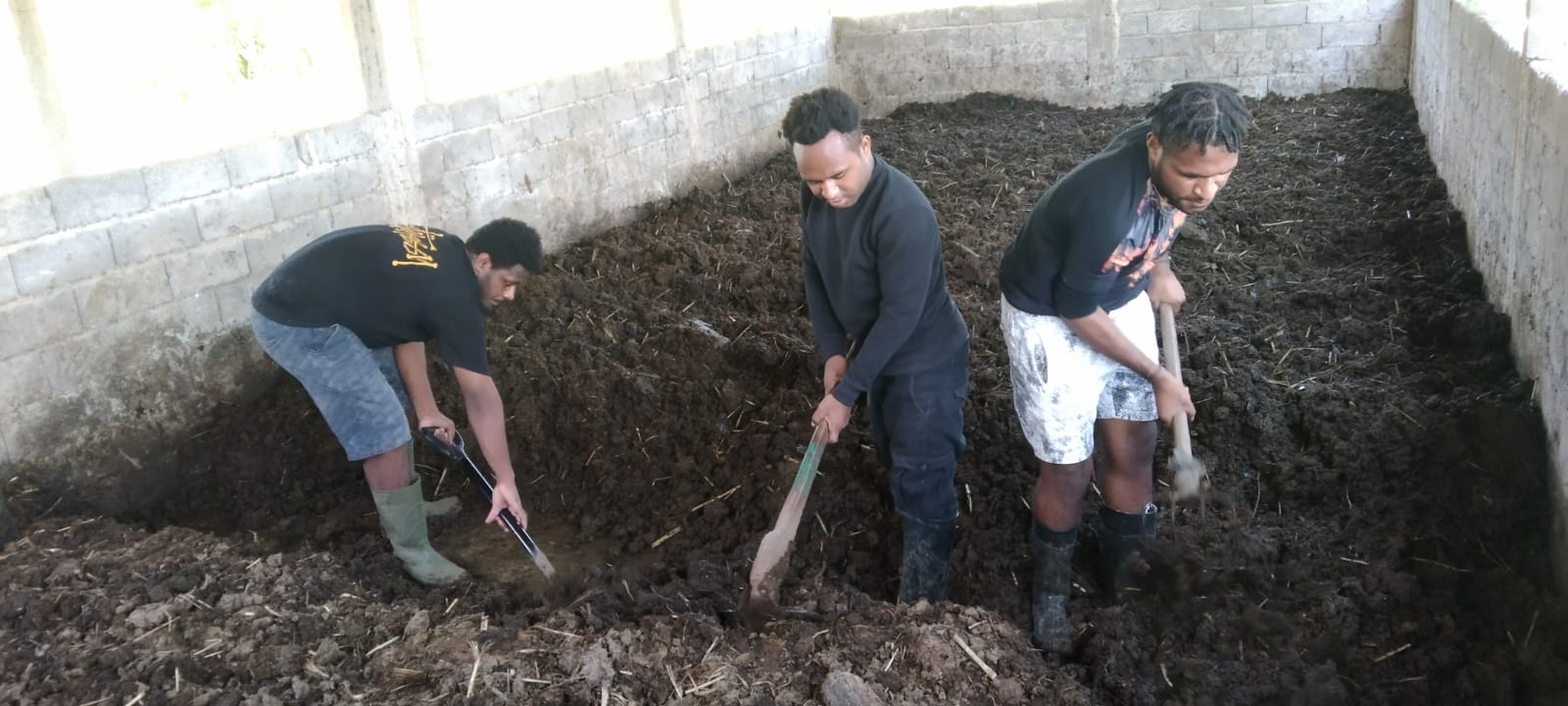
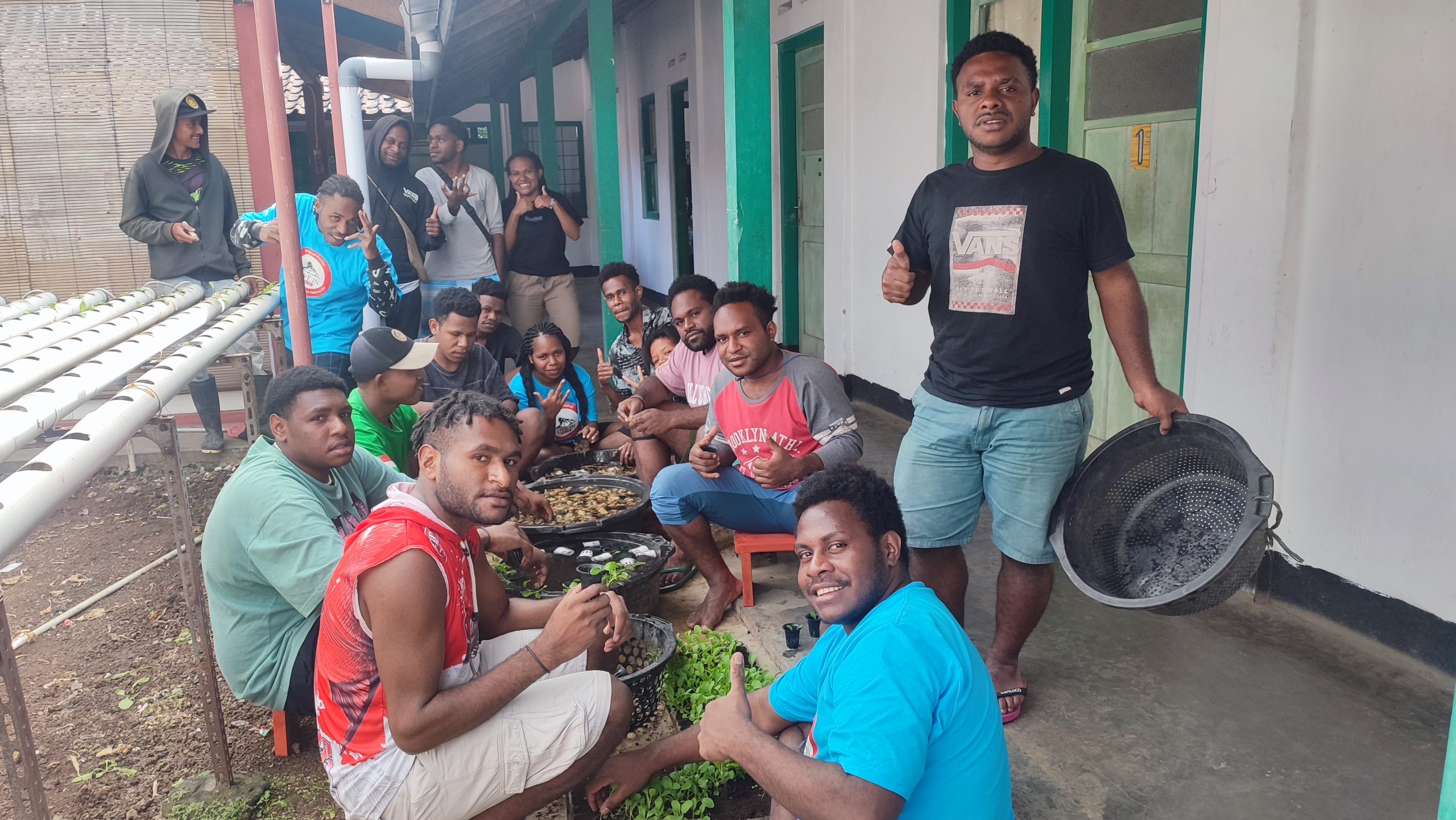
We assist agricultural people in several ways. Technical courses are the first tool we use. As an educational institution, technical courses have always been our first form of assistance since KPTT's foundation. Our courses have two main emphases: theoretical classroom learning and practical learning; eighty per cent of course time is used for field practicum. Course participants manage 10 hectares of land as a vehicle for learning. Themes in this course include complete agriculture (leaf vegetables, fruit vegetables and mushrooms, from land preparation, seeding and caring to selling), animal husbandry (ruminants, poultry, pigs), and plantations (coffee, avocado, durian, cassava). The course program has reached many participants from Indonesia and abroad, such as Timor Leste, Myanmar and Malawi. Additionally, participants learned complementary themes such as composting and modern agricultural methods such as hydroponics, urban farming, and permaculture. We built this learning package to educate more agricultural people in increasingly modern times.
The years have made us aware of the need to provide other forms of assistance. Besides offering technical courses, we organise field trips or visits to farms (emphasising an introduction to the world of agriculture and animal husbandry), live-in experiences (emphasising hands-on experience and nurturing compassion), as well as recollections and retreats (emphasising Ignatian Spirituality and Ecological Human Spirituality). We also have a volunteer program where young people learn and work with us in mentoring anyone who comes to KPTT. We provide various mentoring assistance to accommodate the increasing number of people who do not work as farmers but are motivated to learn about agriculture and ecology. We are grateful that these mentoring programs reach school students, from various levels of education, in the context of implementing the "Kurikulum Merdeka" organised by the Education Service of the Republic of Indonesia.
This Work Will Never End
We believe KPTT's work positively impacts our common home. As part of the Universal Church and, specifically, of the Society of Jesus, our spirituality provides additional colour to God's work of saving creation. In line with the Church's encyclical Laudato Si' and the Jesuit Universal Apostolic Preferences, we are committed to going beyond providing agricultural products and technical education by reaching the inner aspects of anyone who comes to us. This spirituality is in harmony with the pastoral steps taken at the provincial, regional, and international levels of Jesuit governance. Amid all the challenges and difficulties of our local context, we believe this work will continually respond to environmental concerns in various places. The food scarcity crisis directly challenges us who work in the agrarian sector. The call to educate more and more people about the ability to produce food smartly, preserve the environment, and conserve energy is what we live for today.
We call on everyone to participate in our efforts to overcome today's crises, particularly the ecological crisis and food scarcity. The agricultural and livestock sectors are the dominant sectors in food production. Young people should open their eyes and hearts to realise that the world's future is in their hands. We mainly mention young people because, in our context, very few youth are interested in entering the world of agriculture. When we asked children about their dreams, none expressed interest in becoming farmers. In their minds, being a farmer is a tiring and dirty job. Thus, we also try to provide children with an understanding of the world of agriculture to prepare the community for their future.
In closing, we would like to say that we are genuinely grateful to have participated in the work of caring for our common home. The Spirit burns within us, encouraging us to continue to do our human best for nature and others as an offering to God, our Creator. May God always bless this work and use it for the wider work of salvation. Let this happiness also reach the brothers and sisters who read this article
 Jonathan Willy Kutanaka
Jonathan Willy Kutanaka is the education
coordinator at the Kursus Pertenian Taman Tani (KPTT) Salatiga, Indonesia, a
benchmark institution for agricultural and livestock learning that focuses on
productive development, human development and spirituality.