Language and Violence: The Power of Words to Harm, Heal, or Transform – A Sri Lankan Reflection
In Sri Lanka—a land of breathtaking beauty and painful histories—language has never been a neutral tool. It has been a weapon, a shield, a wound, and, at its best, a bridge. The island’s long struggle with ethnic conflict, political polarisation, and social inequality has shown repeatedly that words can do what weapons do: divide, destroy, and dehumanise. Yet, it has also shown that words can stitch together broken trust, speak dignity back into lives erased by violence, and invite communities into a deeper humanity.
For decades, Sri Lanka’s conflicts were narrated not only through bombs, bullets, or rebellions but also through powerful vocabularies of suspicion and exclusion. The rhetoric of “us versus them,” so familiar in global conflicts, appeared here in local forms—Sinhala versus Tamil, North versus South, soldier versus insurgent, patriot versus traitor. These binaries did not arise suddenly. They were cultivated slowly through political speeches, media narratives, school textbooks, and everyday conversations.
The Power to Wound
Language in Sri Lanka has long carried the weight of ideological battles. The Sinhala Only Act of 1956 was not merely a linguistic policy but a narrative declaration - one that defined linguistic identity as the gateway to political belonging. For Tamils, it signalled the erasure of their language and dignity. For Sinhala speakers, it symbolised cultural restoration. Either way, language became not a shared medium of coexistence but a symbol of power and grievance.
During the civil war, terms like “terrorist,” “traitor,” “enemy,” and “extremist” permeated public discourse. These words reshaped the imagination of a nation. Communities were painted with broad strokes of fear. Empathy became rare. Suspicion became normal. As Marshall Rosenberg observed, “Violence is the tragic expression of unmet needs” - yet, in Sri Lanka, dominant narratives obscured those unmet needs, portraying entire communities as existential threats rather than as human beings carrying fear, memory, and aspiration.
Even today, hate speech and social media misinformation are potent forces. Muslims are labelled as “invaders,” Christians as “converters,” plantation workers as “outsiders.” Repeated and amplified, these words narrow our moral imagination. They prepare society to tolerate discrimination long before violence erupts. Conflict always begins in language.
The Silence That Harms
Just as harmful as violent speech is the silence that erases suffering. In Sri Lanka, the perspectives of victims - families of the disappeared, war widows, plantation communities, displaced fishermen, impoverished farmers—rarely penetrate national dialogue. Governments speak in the vocabulary of security, political elites in the language of ethnic mobilisation, and media houses often echo dominant narratives.
Silence becomes complicity when it allows harm to continue unchallenged. Desmond Tutu’s warning - “If you are neutral in situations of injustice, you have chosen the side of the oppressor” - resonates painfully here. When stories of suffering are ignored or dismissed, violence becomes invisible, and its victims become unseen.
The Power to Heal
Yet Sri Lanka offers countless moments where language served as a balm rather than a blade. Following the 2025 Cyclone -Ditwa, communities crossed ethnic boundaries with compassion that softened decades of hostility. After the civil war, numerous reconciliation initiatives - led by religious groups, women’s collectives, and youth movements - used dialogue circles, storytelling, and theatre to rebuild trust.
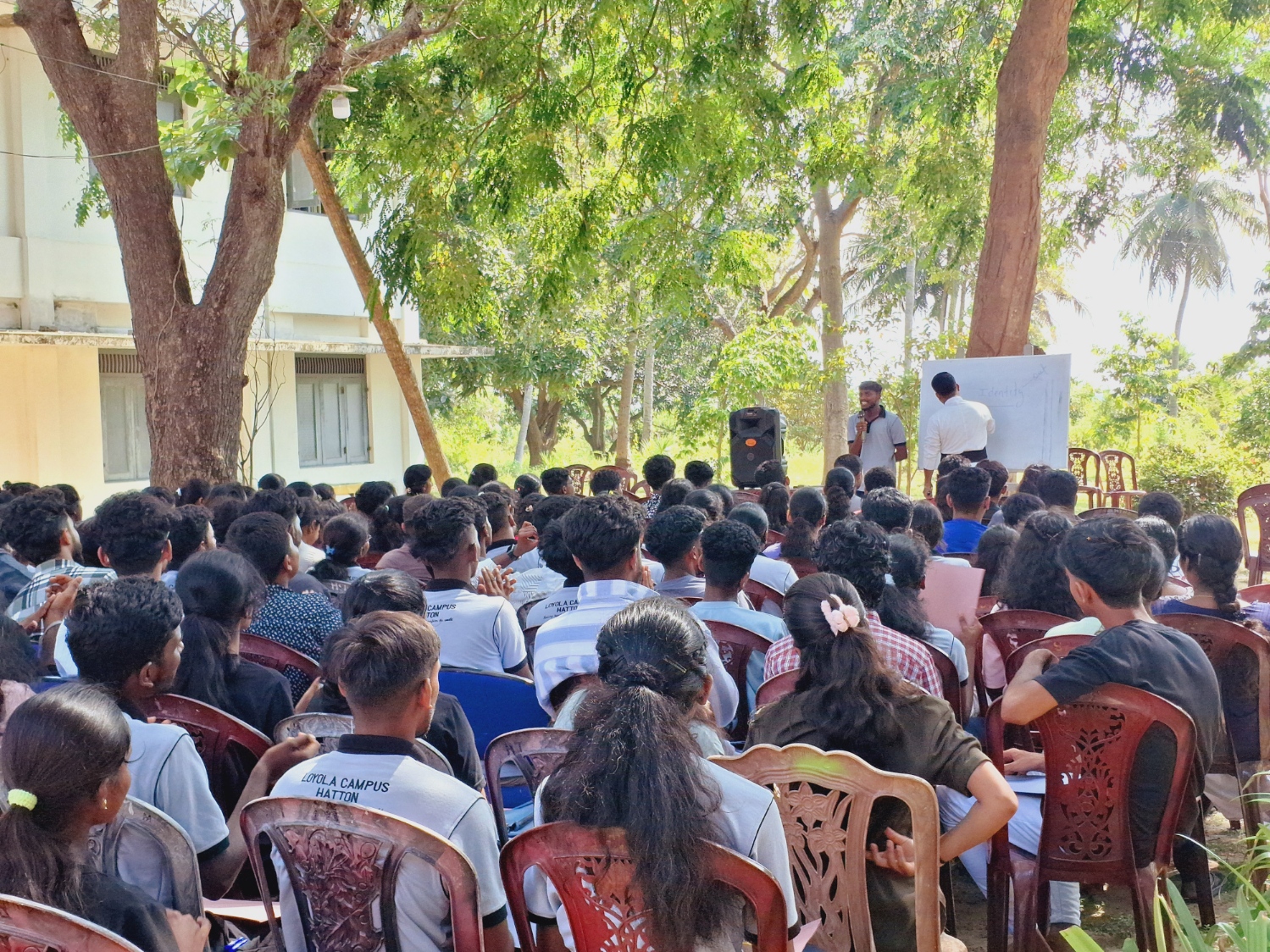
Storytelling, especially, has been transformative. In Mullaitivu, Batticaloa, Mannar, Vavuniya, Puttalam, and Hatton, victims gather in safe spaces to share memories - sometimes trembling, sometimes resolute. These narratives restore dignity. Listening to them allows communities, often divided, to confront uncomfortable truths and rediscover humanity in one another.
Artists, poets, filmmakers, and journalists have also challenged dominant narratives, reminding the nation that language can reveal what politics tries to conceal: the human cost of conflict and the fragile hope of reconciliation.
Paths of Education, Dialogue, and Reconciliation
In 2024, we started a project “Paths and practices of education, dialogue and reconciliation in Sri Lanka - EDIRI, funded by AICS (Italian Agency for Development Cooperation), and promoted by Fondazione MAGIS ETS in Italy and The Trustees of the Society of Jesus - Sri Lanka Province, together with the Loyola Campus. We engage young people who are at the margins of the Sri Lankan society by offering a structured educational system which fosters critical thinking, dialogue, and transferable skills.
We seek to equip them to participate in an emerging knowledge-based economy while nurturing their capacity to question dominant narratives, resist dehumanising language, and contribute to social reconciliation. By strengthening local educational capacities and creating inclusive learning communities, we want to affirm education as a form of nonviolent action—one that empowers voices that too often are silenced and supports the construction of a more just, peaceful, and cohesive society.
In recent years, Loyola Campus has emerged as a crucial force in reshaping Sri Lanka’s linguistic and relational landscape. Loyola Campuses’ Mission – Educate, Empower and Transform - recognizes that peace begins with how people speak, listen, and understand one another.
The campus conducts programmes in Nonviolent Communication, conflict transformation, restorative dialogue, and community storytelling. Participants - youth, teachers, religious leaders, community members - learn how words can escalate tension or invite understanding. They explore how unspoken fears and unmet needs shape aggression and how compassionate language can soften hardened identities.
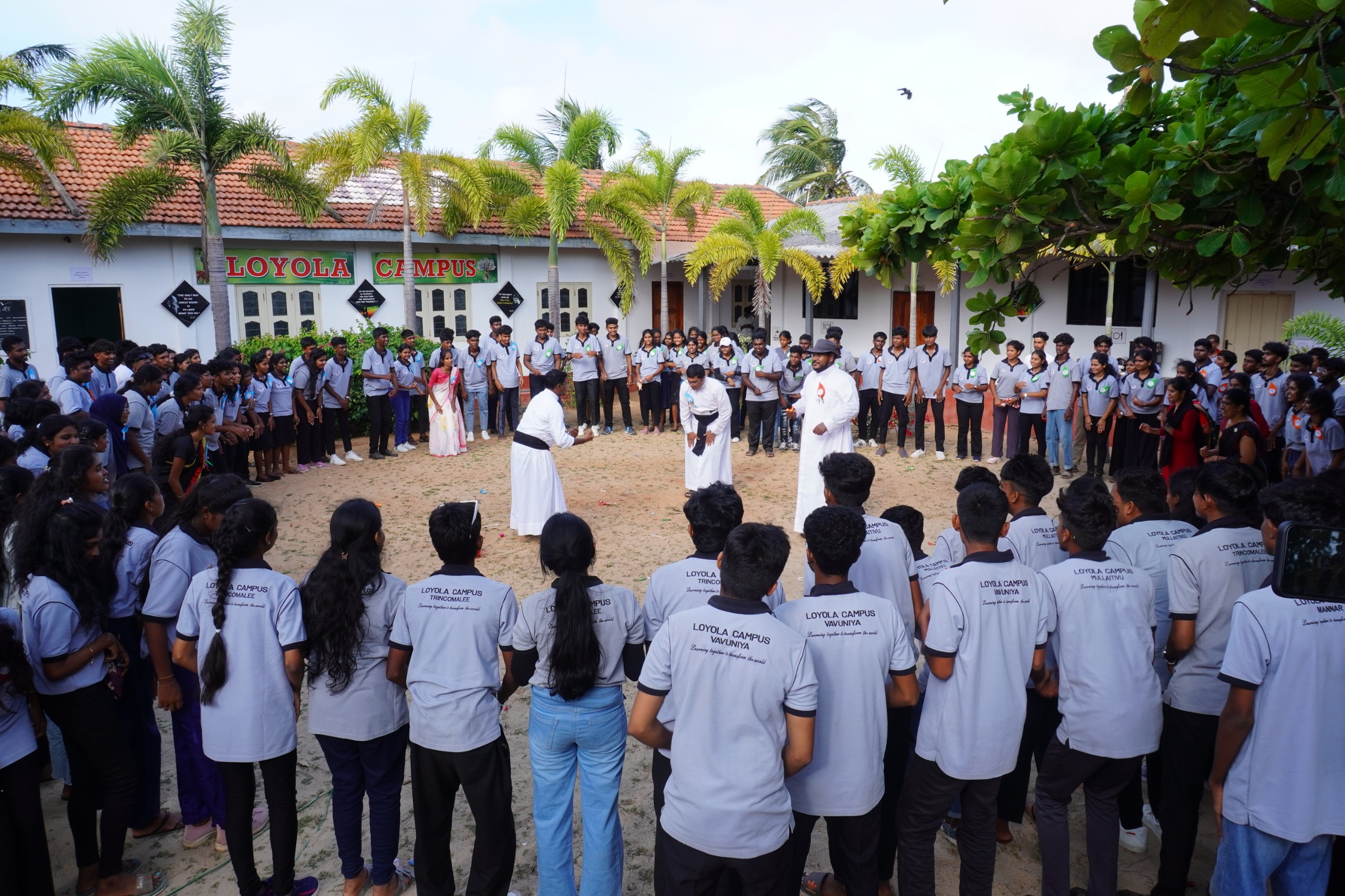
These workshops are more than lessons; they are encounters. Tamils, Muslims, and Sinhalese, Buddhist monks and Catholic priests, plantation workers and urban youth sit in shared circles of honesty. Through dialogue, they begin dismantling inherited stereotypes and rebuilding trust.
Because religion shapes the identity in Sri Lanka, Loyola Campuses’ together with Fondazione MAGIS give special attention to interfaith engagement. Through shared reflection, peace pilgrimages, and collaborative community projects, Buddhist, Hindu, Christian, and Muslim leaders rediscover common ground. Here, language becomes a bridge - clarifying fears, affirming shared values, and strengthening bonds of trust across communities.
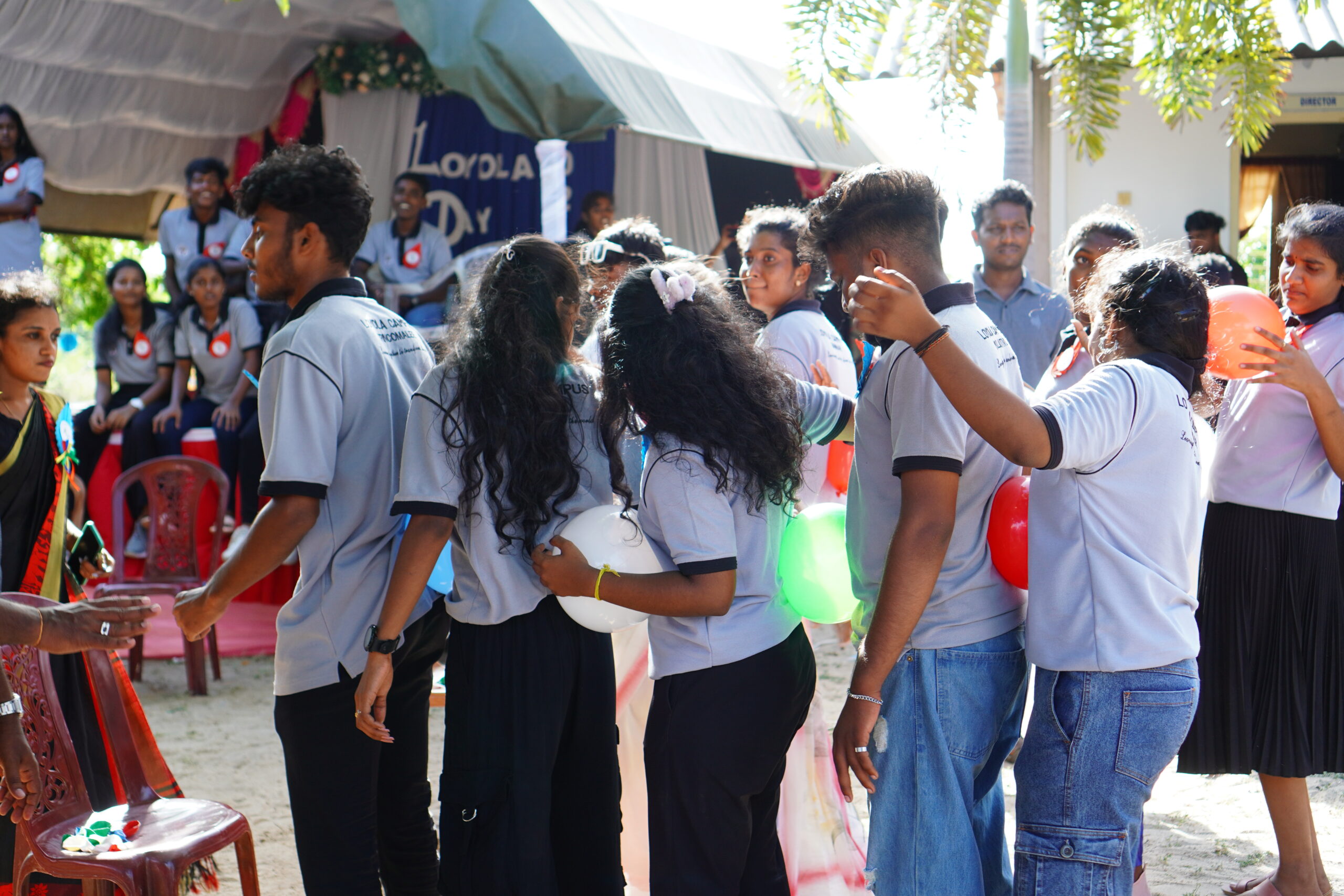
Under the broader vision, we play an equally vital role in nurturing social cohesion across the island. With eight Centres in Trincomalee, Batticaloa, Vavuniya, Mullaitivu, Mannar, Thanamalwila, Boragas and Hatton, Loyola Campus brings together young people from diverse ethnic and religious backgrounds - often for the first time.
In these classrooms:
• Sinhala, Tamil, and Muslim youth learn side-by-side.
• English, IT, and skills training become equalising tools.
• Students participate in dialogue sessions, cultural exchanges, and community projects.
• Teachers integrate restorative language and peace education into everyday lessons.
A Loyola classroom becomes a microcosm of the Sri Lanka we hope to build - one where difference is not a threat, but a shared resource.
Through leadership training, teacher formation, and digital storytelling projects, Loyola Campus equips a generation to resist racism, challenge misinformation, and become ambassadors of peace in their communities. These exercises help young people reflect on the power of language, learn to express disagreement constructively, and transform narratives that might otherwise perpetuate prejudice or fear. As Pope Francis observed, “we must learn the lexicon of peace and not become accustomed to the vocabulary of war,” highlighting how the words we choose influence the world we create.
By combining ethical education with practical skill-building, Loyola Campus together with Fondazione MAGIS ETS, nurtures both the personal growth of participants and their capacity to contribute to social reconciliation and inclusive communities.
The Power to Transform
If hate speech can mobilise mobs, then compassionate speech can mobilise communities. If propaganda can sow division, then education can cultivate critical thinking. If political rhetoric creates enemies, then dialogue can create neighbours.
Across Sri Lanka, small movements of linguistic transformation are taking root. Interfaith circles speak a language of common humanity. Youth groups create videos that challenge stereotypes. Teachers foster restorative classrooms. Community radio stations amplify marginalised voices.
Transformation is cumulative—built word by word, story by story.
A Call to Responsibility
Sri Lanka’s future depends on the narratives we choose to nurture. Will we repeat the stories of fear and division, or will we craft new vocabularies of dignity and truth? Will our public language remain hostage to political agendas, or will we create spaces where humane speech can flourish?
Narayan Desai reminds us, “Words are not weapons, but they can wound more deeply than knives.” In Sri Lanka - a land that knows wounds and resilience - our responsibility is clear: to ensure our words heal more deeply than they harm.
Through the sustained efforts of educators, peacebuilders, storytellers, communities, and institutions like Loyola Campus, a new narrative is already being written—one of dignity, dialogue, and reconciliation.
Originally published in Paxlumina Vol.07 | No.01 | January 2026
Francesca Flosi is from Fondazione MAGIS ETS - Project Manager of AID 12970/01/7 EDIRI project.
Milroy Fernando is the Country Director of Loyola Campus in Sri Lanka.
Related Posts:
Artificial intelligence (AI) is increasingly entering public life in Ghana, including through digital systems used for identification, verification and service delivery. The ethical question is therefore not simply what AI can do, but what happens to people when digital systems become gateways through which citizenship, mobility or access to services are recognised. In northern Ghana, especially in border communities, this is a concrete question. I was privilege to visit Pusiga community in November 2025 with a Jesuit friend of my mine who is originally from the community. Thus, the topic for this article resonates very well with me.
The article ‘Pandemic and Authoritarianism’, by Germán Rosa, SJ, was written in the midst of the COVID-19 crisis, but its insights extend beyond that context. The pandemic appears to reveal and accelerate political trends that were already present: the concentration of power, the weakening of democratic checks and balances, and the acceptance of extraordinary restrictions in the name of collective security. Rosa’s main concern is that fear may lead citizens to silently surrender their freedoms and rights, and that measures which were initially intended to be temporary become normalized and endure. Furthermore, in societies riven by inequality, control is never distributed neutrally: it falls most heavily on the impoverished, marginalized groups, migrants, dissidents and those who defend rights and territories.
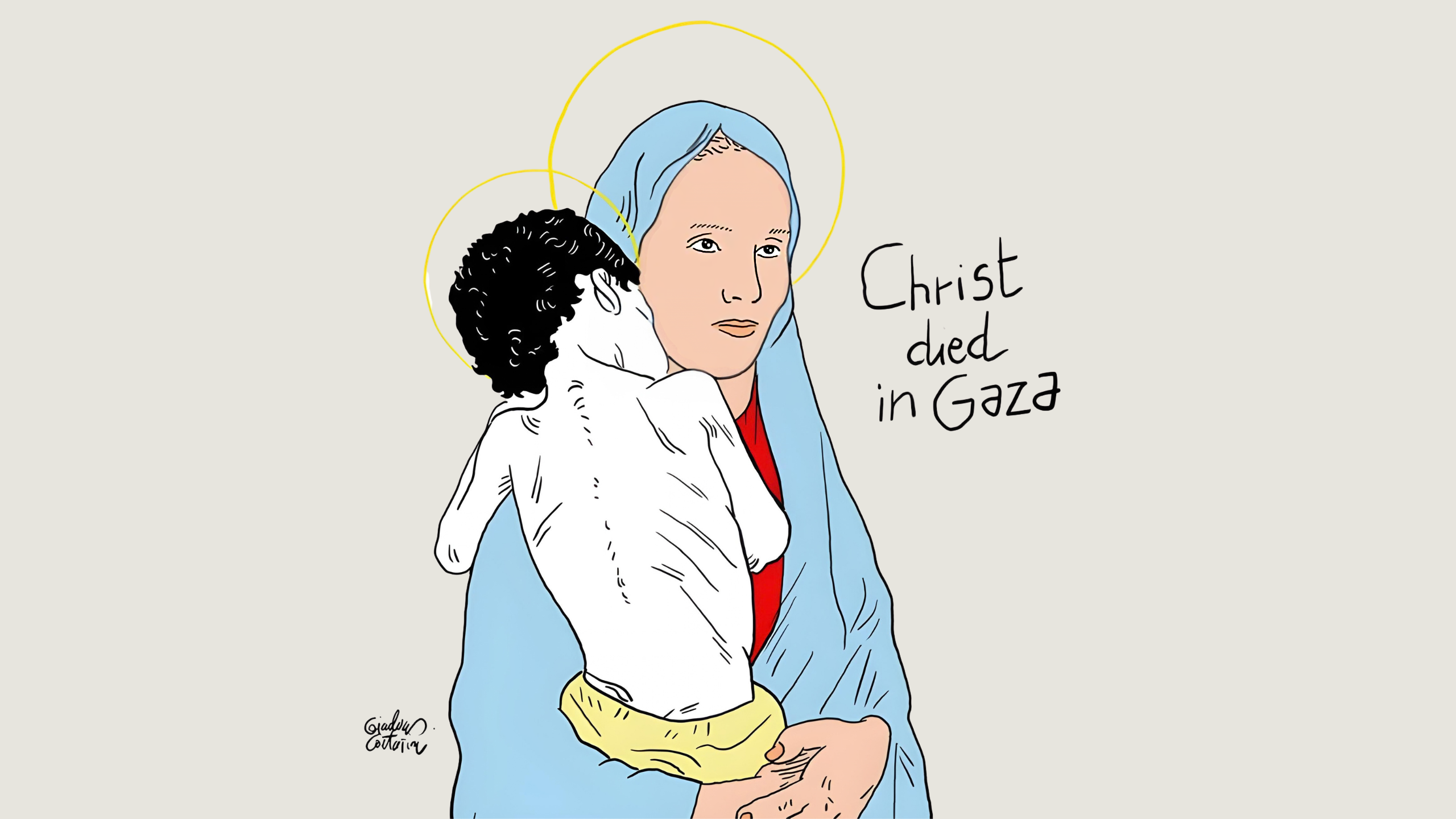
Speaking of dead children is uncomfortable. Yet it can also be healing. As I listened to the stories shared that day, I found myself returning to memories I may at times shy away from remembering. Iremember finding my sister’slifeless body in bed one Saturday morning. Ihad cometo carry her out with me to watch cartoons.As I listened tothe story of Hind Rajab, a 5-year-old girl who had been trapped inside a car attacked by Israeli forces,the memory of a little boy reaching out to touch his sister came back. The young girlhadmanaged to call the Red Crescent for help but hours later she and the paramedics who had come toassisther were all found dead. The chilling story reminded me of the shocking cold that struck my hand as I gently touched my sister’s arm in a futile attempt to wake her up.
Who Are the Victims and Those at Risk of Becoming Victims? When it comes to mining, particular attention must be paid to those who are most vulnerable: Indigenous communities whose livelihoods depend on their land, forests, rivers, and water sources; small-scale farmers; fishers; poor families; women, children, and older people; as well as communities with the least bargaining power in legal, economic, informational, and political matters. They may become victims when land loses its social function, when water sources are polluted or disappear, when the environment is damaged, when livelihoods are disrupted, or when their social and cultural life is transformed without their genuine consent.
In the affluent community where I live, I walk down the street wearing a t-shirt of the elite Jesuit institution I once attended. It’s as if I presumptuously assume that the t-shirt will alleviate the prospect of being seen by surveilling gazes. Yet, I am instantaneously reminded as car doors lock when I walk beside them, and as purses clutch when I pass by, that my body is rendered as a site of suspicion. I am reminded that my Blackness precedes my existence. I am reminded that my darkened body occludes the presumption of innocence. I am reminded that my dark skin has eviscerated my humanity and has turned me into an object of fear.

When Omar came upon the place in a neighborhood on the outskirts of town, he saw a white rosary hanging over the door and felt a sense of relief. He had been told it was a shelter run by nuns. He had been sleeping poorly for several days and walking in very difficult conditions. His feet were injured, his shoes were torn, and his clothes—which had been wet and had dried on his body over the past two weeks—were terrible. The smell was unbearable. His wife and two young children had been taken in three days earlier at another location, where they could regain their strength. He, being a man, was not allowed to stay in the same space; that was the safety policy they had explained to him.