Brazil – “A Vida por um Fio” Campaign releases statement on the Yanomami tragedy
By REPAM | Pan-Amazonian Ecclesial Network - REPAM-Brazil
The organisations that make up the "A Vida por um Fio" [or"Life on a String"] Campaign of Self-Protection of Threatened Communities and Leaders released on Tuesday (7 February) a statement on the tragedy of the Yanomami Peoples. In the document, the organisations state that the "obsession for enrichment has led, and continues to lead, the invaders of Yanomami territory to the destruction of the environment and human life" and that "the increase in illegal mining, promoted by the previous government, has caused disease, violence and hunger in the Yanomami peoples".
The statement highlights the work of the Church in Yanomami territory: "the Catholic Church in recent decades has closely followed the suffering of the indigenous people and has made bold statements in defence of the life of our Yanomami brothers and sisters.
Dom Mario Antonio da Silva, former bishop of the diocese of Roraima, said illegal mining "has grown with the consent of the legislative and executive powers, including bills attempting to gain validity and recognition". Moreover, in the same statement, the former bishop denounces "the omission and negligence of the authorities ... (because) the protection of indigenous territories is a constitutional obligation of the federal government, also guaranteed by international treaties and conventions."
The organisations state that it is urgent to abandon the concept of progress that confuses development merely with economic growth. Accordingly, they are committed to "not approving bills and other legislative initiatives that provide for the release of mining in indigenous lands.
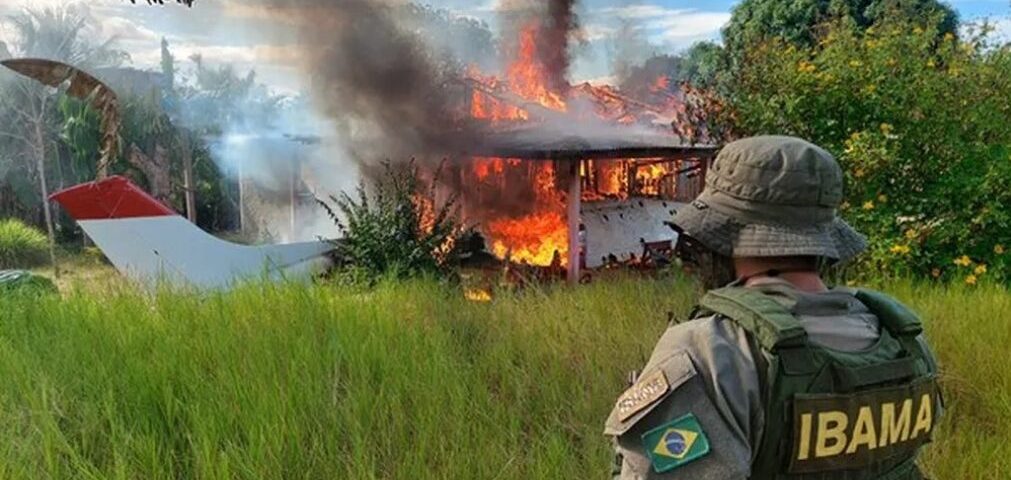
The Yanomami peoples, present in the northern region of Brazil (states of Roraima and Amazonas) and in Venezuela, have for centuries resisted the presence and invasion of colonisers in the early stages and later by whites. The Yanomami Indigenous Land is rich in biodiversity and subsoil. Unfortunately, the obsession for enrichment has led and continues to lead, the invaders of Yanomami territory to the destruction of the environment and human life.
In recent years the increase in illegal mining, promoted by the previous government, has caused disease, violence and hunger among the Yanomami people. Therefore, a few days ago, Minister Luís Roberto Barroso of the Federal Supreme Court (STF) directed the Attorney General of the Republic, the Military Prosecutor's Office, the Ministry of Justice and Public Security and the Regional Superintendence of the Federal Police of Roraima to investigate the possible participation of officials of the Jair Bolsonaro government in the exercise, in theory, of the crimes of genocide, disobedience, breach of judicial secrecy, and environmental offences related to the life, health and safety of various indigenous communities (Pet 9565 and ADPF 709).
In the persons of its governor and deputies, the state of Roraima has encouraged laws promoting mining activity in the state's territory, including indigenous lands. Business people from Roraima promote campaigns to liberate the miners (the Garimpo é legal movement) with large parties in downtown Boa Vista, a city with the monument to the miner as its symbol. In this context, it is common to hear prominent politicians utter racist and prejudiced phrases against the indigenous peoples.
The Catholic Church, in recent decades, has closely followed the indigenous people's suffering and made bold statements in defence of the life of our Yanomami brothers and sisters. For example, Dom Mario Antonio da Silva, former bishop of the diocese of Roraima, said that illegal mining "grew with the consent of the legislative and executive powers, even with bills attempting validity and recognition". The former bishop denounced "the omission and negligence of the authorities... (because) the protection of indigenous territories is a constitutional obligation of the federal government, also guaranteed by international treaties and conventions" (Letter to the people of God, Boa Vista-RR, 1 June 2021).
In the last month, some actions are materialising with the change in the federal government. President Lula decreed a health emergency in the area and announced some measures, such as the installation of a field hospital in Boa Vista and the dispatch of medical teams to provide emergency assistance, in addition to the building of an Emergency Operations Centre for Public Health (COE), managed by Sesai. It also created a National Coordination Committee to confront the lack of health care for the populations in the Yanomami territory. [The committee, comprised of the] ministries of Indigenous Peoples, Health, Defence, Justice, Development and Social Assistance, Family and Fight against Hunger and Management and Innovation in Public Services, will discuss the measures to be adopted and support the articulation between powers and states. It is to present an action plan in 45 days.
The President ordered that air and river traffic be cut off to combat illegal mining in the Yanomami Indigenous Territory. A delegation from the Ministry of Human Rights and Citizenship (MDHC), the National Council on Human Rights (CNDH), the Office of the Public Defender of the Union (DPU) and the Ministry of Indigenous Peoples, among others, were present in Roraima. Yanomami indigenous associations (Hutukara, Urihi,...) and the Indigenous Council of Roraima were heard on the grave situation of the Yanomami peoples. Ecclesial and civil society institutions were also present.
Faced with the tragedy of the Yanomami people, televised by the president-elect's visit to Boa Vista, Brazilian society has mobilised itself in a great campaign of solidarity. Although the collection has been providential, food could not always be delivered for different reasons. The most reliable collection channels are always the indigenous associations because they know the territory and the reality of the Yanomami people very well.
In the fight against illegal mining in the Yanomami Indigenous Land, the immediate departure of all miners present is extremely important, but it is not enough. "The miners don't have the money to buy the dredges digging up the Uraricoera, Mucajaí and other rivers. They don't have money to buy track-type tractors and cut down the forest to build another landing and take-off field in the forest" (GENOCIDIO CONTINUADO. RECYCLED PIROTECNIA. Memélia Moreira). It is necessary to pursue and hold accountable those who financed and connived: politicians, prominent business people, the military and Federal Police agents.
It is necessary and urgent to abandon "a mistaken concept of progress that confuses development merely with economic growth, the multiplication of material wealth" (Letter of the First Meeting of the Catholic Church in Legal Amazonia, 2013). [It is imperative] to embrace "a new way of understanding the scope of care for our common home, aware that everything is interconnected" (IV Meeting of the Catholic Church in Legal Amazonia, 2022).
As the "A Vida por um Fio" [or"Life on a String"] campaign is committed to the self-protection of leaders and threatened communities from the actions already initiated, we will always demand:
- The non-approval of bills and other legislative initiatives that provide for the release of mining on indigenous lands;
- The strengthening of public institutions for the inspection and control of deforestation, fires and invasions of indigenous lands;
- The construction of plans to put in place public health policies for indigenous peoples, assumed by the Federal Government, the state and municipal governments and their executing agencies;
- The accountability of the politicians and large companies that promote illegal mining and of the public agents complicit in this illegality in the Yanomami Indigenous Territory;
- The suspension of illegal mining in the Yanomami Indigenous Land and the expulsion of all miners;
- The guarantee of alternative income to the work of mining so that the Yanomami youth can remain in their territories, in dialogue, respectful of their ways of life and economic relations;
- The research on water quality, the presence of mercury, the pollution level of the rivers, and the environment in the Yanomami Indigenous Territory.
Brasília, 7 February 2023.
Source : olma.org.br
Related Posts:

Addressing today's environmental crisis requires educational institutions to embrace a transformative commitment. Inspired by the papal call and the framework of Integral Ecology, Jesuit universities are strengthening both their institutional practices and advocacy efforts while responding to the urgent challenge of fully integrating environmental education into their formal curricula.

Marking the 10th anniversary of Laudato si’, Pope Leo XIV sends a videomessage to the Network of Universities for the Care of Our Common Home, and encourages their synodal reflection ahead of COP30.

It is from Latin America and the Caribbean that we present and disseminate this recently published work, the fruit of a two-and-a-half year working group that brought together Universities linked to AUSJAL and Social Centers linked to RCS (Jesuit Social Centers Network), all participants in the Conference of Provinces of Latin America and the Caribbean (CPAL). The work, which involves ten countries and 15 organizations, looks at the relationship between the environment and corruption in our continent innovatively, analyzing our challenges in the light of Integral Ecology.

Fr Roberto Jaramillo SJ, Secretary for Social Justice and Ecology (SJES) of the Society of Jesus in Rome, was in Jakarta recently. His visit provided an opportunity for dialogue with about 40 staff members of Sahabat Insan, the Jesuit centre for migrant workers. Their conversations centred around Laudato sí’s recommendation, paragraph 63: exploring local cultural wealth to develop an ecology capable of addressing the damage done to the Earth.
The Fossil Fuel Non-Proliferation Treaty (FFNPT) is an initiative that strives for an international agreement to phase out fossil fuel while ensuring a just global transition for workers, communities, and countries.