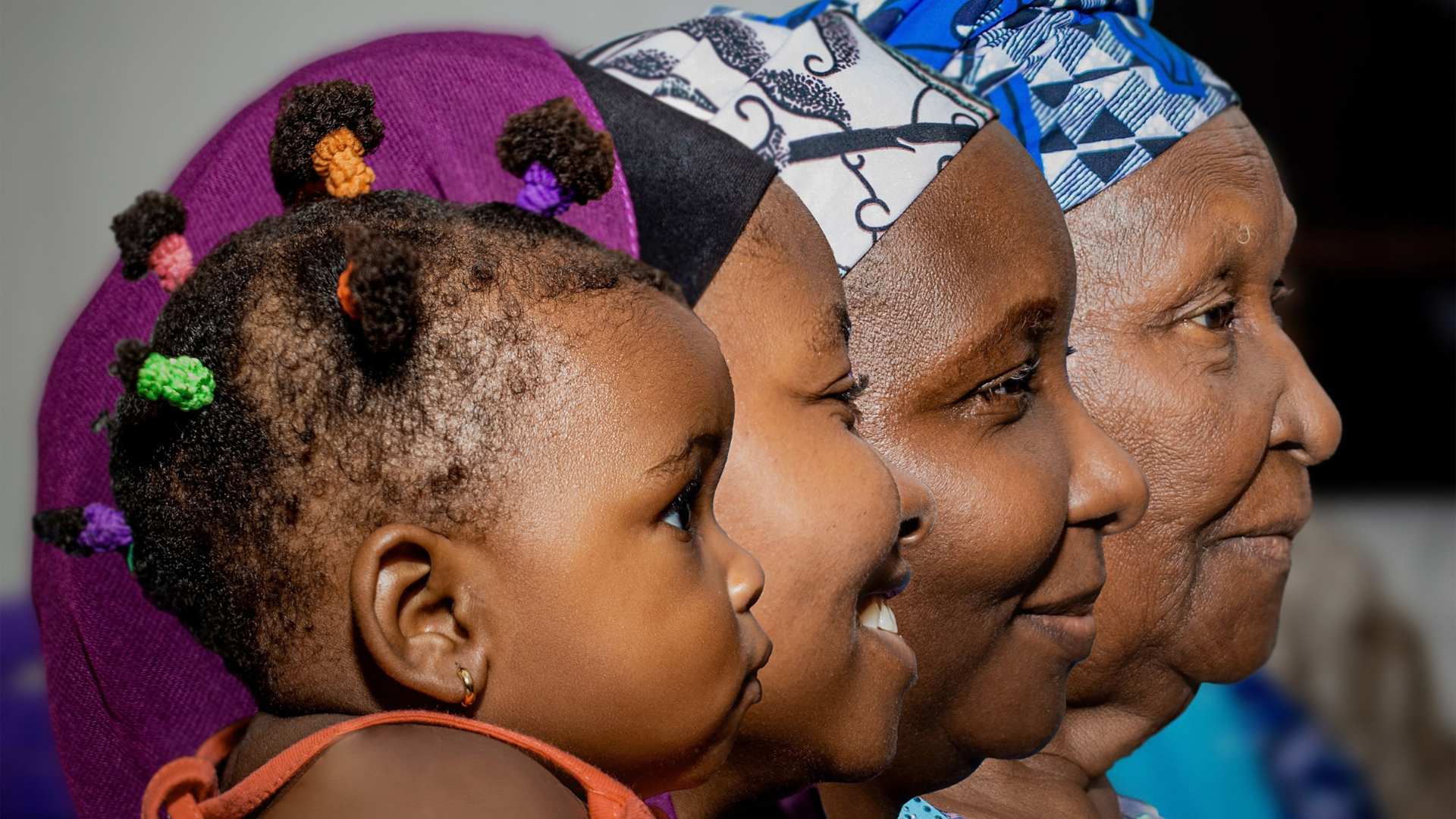
Africa – Businesses of internally displaced women flourish in Nigeria
Jesuit Refugee Service Nigeria supports the businesses of internally displaced women through Village Savings and Loan Associations.
"Cattle rearing was everything to me; it was the only way my family and I could survive. But everything changed when Boko Haram attacked my community. I lost my livelihood, and life became difficult at that time," Patience recounted.
Patience, a 39-year-old mother of seven, painfully narrated her ordeal after her family was displaced due to the Boko Haram insurgency in her community, Chibok. She said: "I saw them kill anyone who dared to cross their path. We didn't have time to take anything from the house, so I told the children to run. It took us more than four days to reach the Biu community. I had no way to earn money; my husband and I did everything we could to feed our seven children, but we couldn't send them to school.
Patience had no other means of livelihood apart from cattle rearing and farming. She and other women in the community were looking for ways to get loans to start a business that would help them and their families. She recalls: "It was an arduous search for us; the ones we found made us pay substantial interest rates, which prevented us from making a profit. We had no means of subsistence until the Jesuit Refugee Service (JRS) came to our aid. JRS came exactly when we needed help because things were already getting out of hand.
JRS, with the support of Misean Cara and ALBOAN, introduced a Village Savings and Loan Association (VSLA) in the Bui community. The VSLA is a savings cooperative for displaced women to develop a culture of savings and achieve internal credit support among themselves. It is also a formal learning environment where women are introduced to new business opportunities to support household income generation.
Patience said: "JRS provided us with starter kits and a 20,000 naira token after the training; that's how we started". As a member of the VSLA, Patience found ways to support the women in her community to become self-sufficient, sharing their basic skills and vital income-generating activities, such as crop and livestock production.
Today, the VSLA, which started with 25-30 members, has expanded to two groups in Biu. As a result, the women in the community are now self-sufficient with the money they save from the VSLA, are more independent and can have the capital they need to start their businesses, send their children to school and take care of their needs.
"This is very important for us because it lessens child marriages in the community," she continued. "The men are happy with what we do and have formed their group. At first, I thought VSLA was about collecting money and doing what I wanted to do with it, but JRS taught us how to set up businesses for a stable income. So at the end of the saving circle, I save more and can live better".
The VSLA programme goes beyond being an economic empowerment tool, as the meetings are also used for skills development. This involves using the community's limited resources to encourage savings and knowledge sharing on crucial income-generating activities. Patience is hopeful that the initiative will continue even in the absence of JRS and that it will also reach out to other women in the community.
Image: Jesuit Refugee Service.
Source: https://jrs.net/es /
Related Posts:
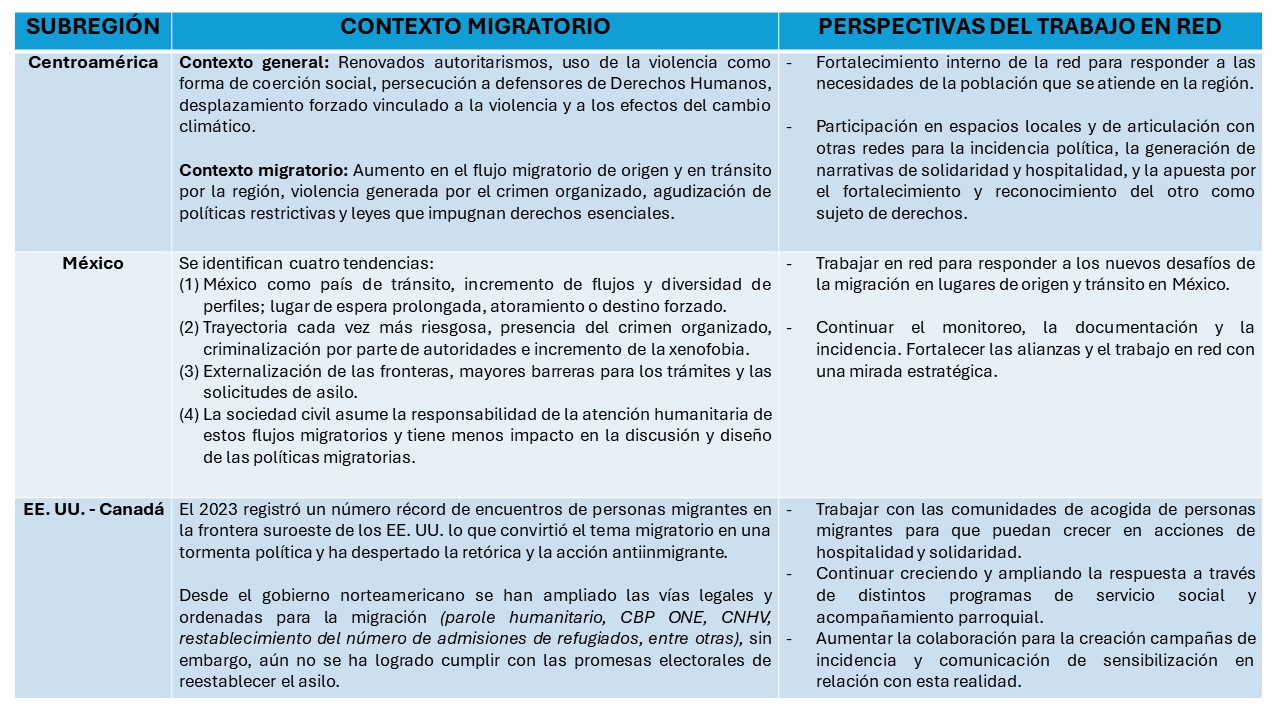
Jesuit Network with Migrants Central America and North America (RJM CANA) shared the first four months of the year report (January – April 2024): "They have been months of a lot of work to face the challenges in the migration context characterized by an increase in the migratory flow in vulnerable conditions throughout the region, however, also These have been months in which the fruits of networking have been confirmed".
On Wednesday, April 10, the European Parliament voted on the European Pact on Asylum and Migration. JRS Europe directors jointly opposed the pact and urged European institutions to reject it: "We cannot support a system that will allow the systematic detention of thousands of people, including children, at the EU external borders."
The Cartagena Declaration, adopted in 1984, emerged in response to the growing displacement crises in Latin America. Its importance lies in its expanded approach to defining a refugee, recognising the causes of displacement beyond armed conflict events. Despite progress in these 40 years, implementation challenges of the recognition criteria and the commitments made in the adopted plans persist.
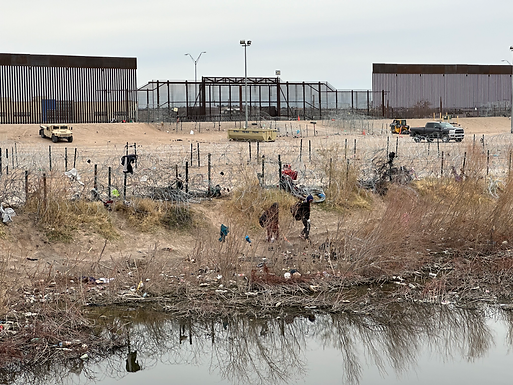
This story narrates the spontaneous act of hospitality leading to a community effort to support a migrant family's journey. It illustrates the transformative power of personal compassion amidst global migration challenges.
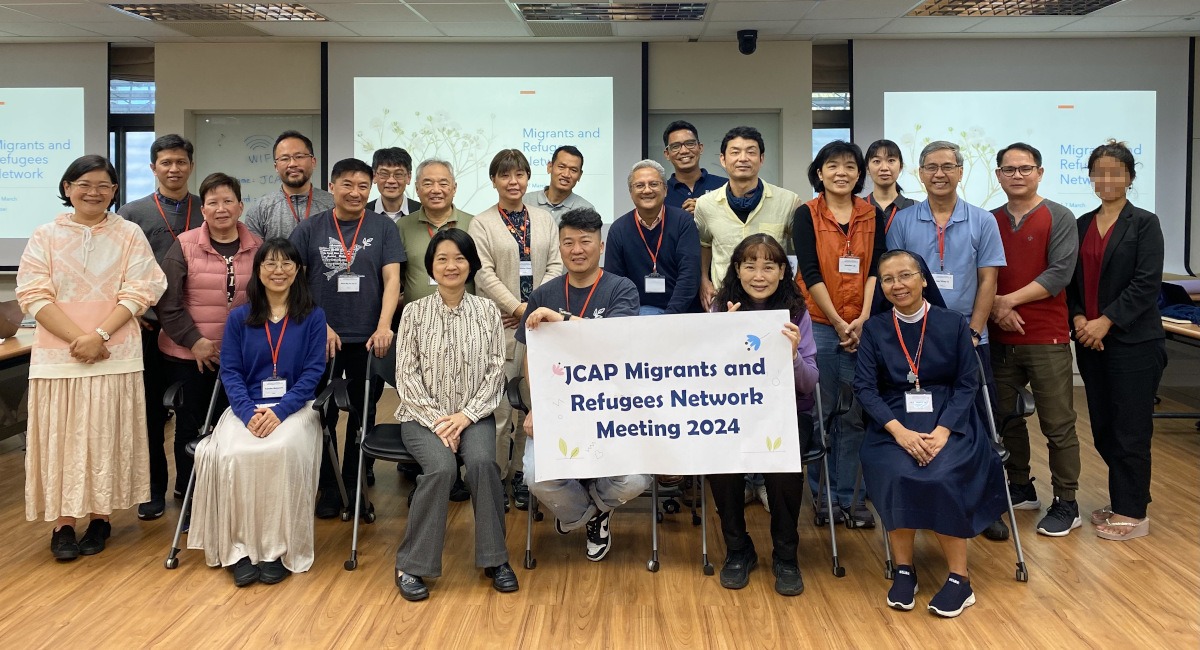
The Migrants and Refugees Network in Asia Pacific gathered to address migrant and refugee challenges, guided by collaboration, prayer, and Ignatian spirituality principles. Discussions ranged from updates on regional migrant situations to Taiwan's progressive immigrant response, culminating in the finalization of a five-year action plan highlighting the network's dual mission of support for both migrants and its members.
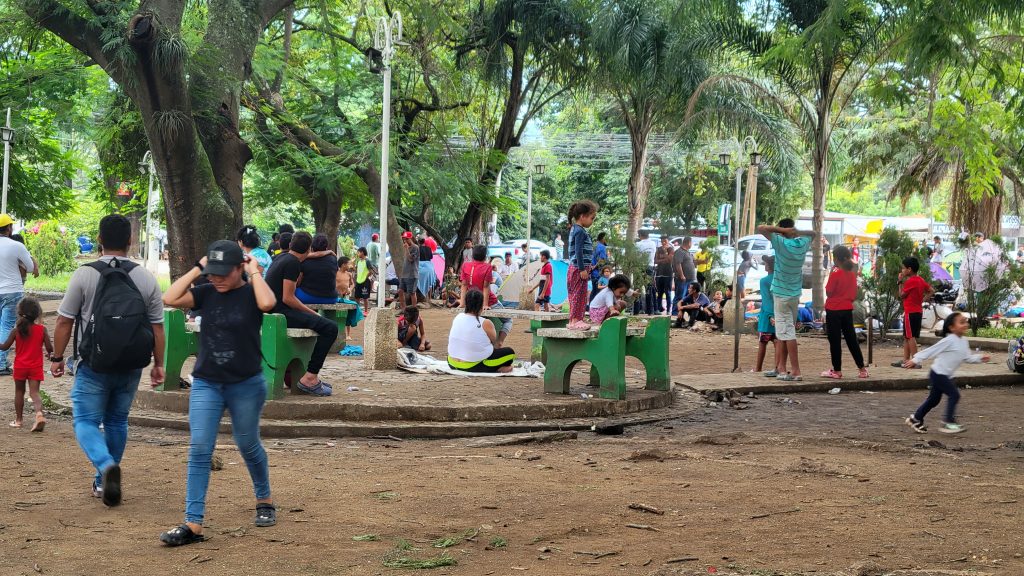
This first publication of 2024 provides an overview of the latest data, changes and trends in the context of most of the region's countries (Panama, Costa Rica, El Salvador, Honduras, Guatemala, Mexico, the United States and Canada).