Dominican Republic: Dajabón clergy against mass deportations
We share the communiqué issued by the clergy of the Province of Dajabón, in the Dominican Republic, in response to the massive deportations being carried out by the government, in which the human rights of migrants are being violated.
Positioning of the clergy of Dajabón, against the massive deportations:
28 November 2022
The country has the right to organise its borders and to enforce the migration law, what they do not have the right to do is to violate the fundamental rights of people. In the mass deportations, which we have witnessed in recent weeks, there are conditions in which the government cannot ensure due process, due to the high numbers of deportations that overwhelm the operational capacities of migration agents. We see that this situation prevents a correct execution of the protocols, in which all Haitian nationals who are apprehended in migration operations and the National Army are effectively purged. On the contrary, they are treated with methods that deny their rights. This action is in violation of the national constitution, laws and international conventions. For this reason we denounce that:
· Migrants are subjected to violent, humiliating and unprofessional procedures in the daily operations.
· Any uniformed officer can detain a migrant person, this is encouraging "macuteo" and promoting fear.
· There are deportations of children with social roots in the Dominican Republic, and we are saddened by the number of unaccompanied minors who have been taken to the border.
· The detention centres do not comply with the minimum standards that guarantee human dignity: bathrooms, furniture to sit or sleep on, nor are they provided with water, and children, pregnant women and nursing mothers are subjected to this situation.
Article 27 of the General Migration Law 285-4 states that,
"In cases where the deportation or expulsion of foreigners is appropriate, it will be carried out with due respect for human rights, in accordance with the laws in force and the agreements ratified by the Dominican Republic".
Any foreigner who is on Dominican soil must have his or her human dignity and rights respected and guaranteed by the State. The State, in all cases, is always the guarantor of rights; when this does not occur, the social agreement that sustains our society is undermined. The problem of migration governance in our country is clear. The only solution offered is repatriation, when this can be solved by regularisation. We need an efficient migration policy and the regularisation of Haitian labour.
Taking into account that the Dominican Republic depends on Haitian labour in several key sectors, such as construction, tourism, agriculture and domestic services, massive deportations could jeopardise the economic stability and food security of the country. We understand that the irregular status of many Haitians in the Dominican Republic is also the responsibility of employers who take advantage of this situation to exploit the labour force. If many migrants have not been able to renew their ID cards, this is due to the lack of offices that provide these services in the provinces where they live, they have to go to Santo Domingo. All this confirms that the government does not have a clear migration policy on Haiti.
The Church, which is Mother and Teacher, is deeply hurt by all these situations and teaches us that we cannot be indifferent to the pain of our brothers and sisters, that we are all children of God and that human dignity is above all (...) I have seen the affliction of My people (...) and I have heard their cry (...) for I am aware of their sufferings (Exodus 3,7). The history of revelation teaches us that God is not indifferent, He is attentive to the events of our lives and our societies, He cares and He is concerned. This sensitive dimension of God is the basis of divine justice. God does not close his eyes to the injustices of men and women, as is often the case with those who have to apply justice. Nor does God close his eyes to the phenomenon of mass deportations. God listens to the cry of his sons and daughters, who are persecuted as criminals, often beaten and locked up in spaces that are not suitable to guarantee the physical and moral integrity of many.
We ask the government
· Stop mass deportations.
· Solve the problem of the involvement of the military in human trafficking.
· Create municipal centres for the regularisation of migrants.
· Involve employers as co-responsible in the regularisation of migrants.
· Improve the infrastructure of detention centres and create safe spaces for minors, pregnant and breastfeeding mothers, who have to be repatriated.
|
P.
Jeshon Daniel Burdier Rodríguez |
P. Jesús de León Mercedes, MSC |
|
P.
Eulide Gracía Torres, MSC |
P.
Osvaldo Concepción Marte, SJ |
|
P. Roberto Guzmán Abreu, SJ |
P. Aquiles Ozuna, SJ |
|
P. Regino Martínez Bretón, SJ |
P. José Ramón Rosario |
|
Pedro
José González Martínez |
Albaro
de Jesús Pichardo |
|
José
Núñez Mármol, SJ |
|
Information from redjesuitaconmigranteslac.org
Source: redjesuitaconmigrantes
Related Posts:
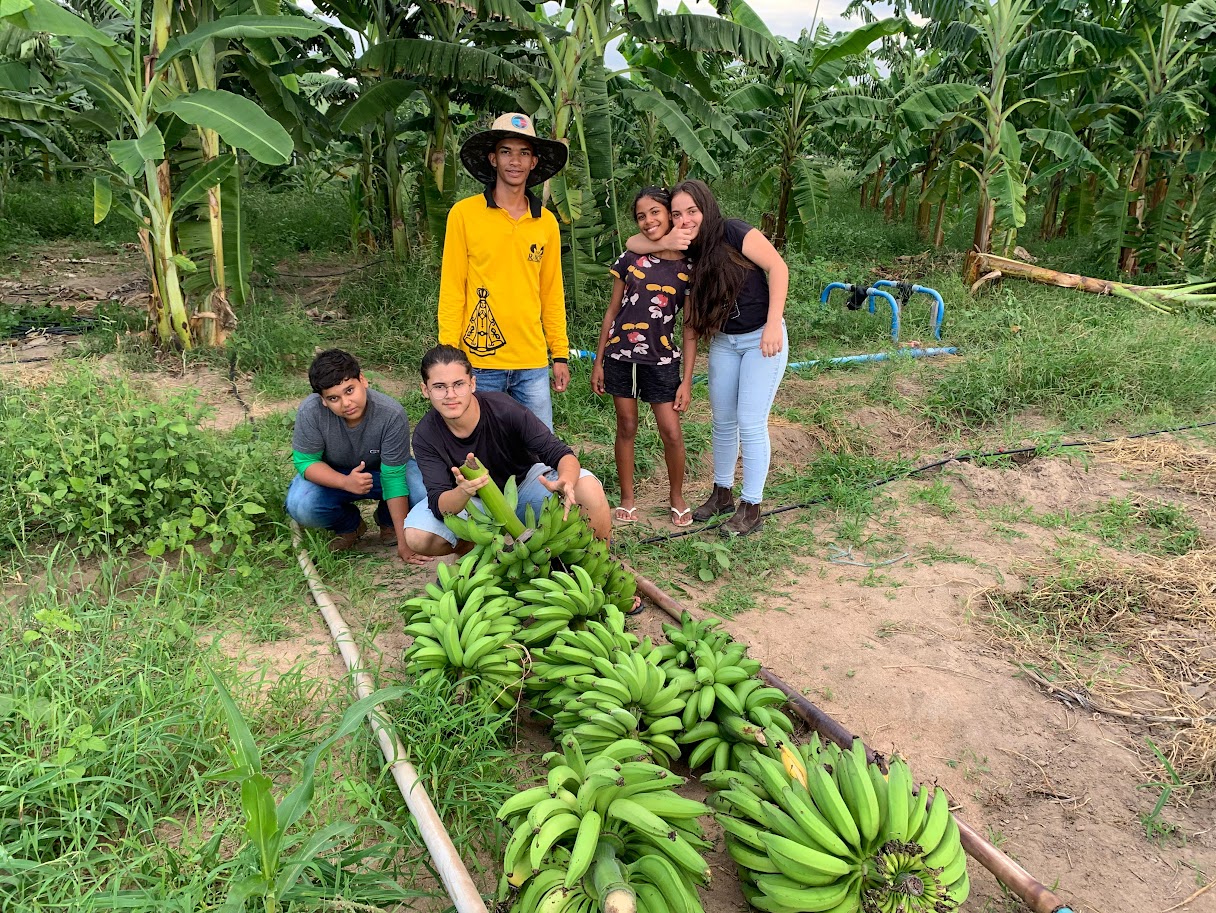
The Jaboticaba Agricultural Family School in Brazil reuses water for sustainable food production in a semi-arid region. Since 1993, it has combined agroecology with wastewater treatment to enhance food security and educate students. The project promotes environmental sustainability and aims to influence public policies in line with Pope Francis’s call for integral ecology.

His journey was marked by a profound sense of detachment, as he left behind his nationality, culture, security, history, and companions to embrace a completely foreign environment.
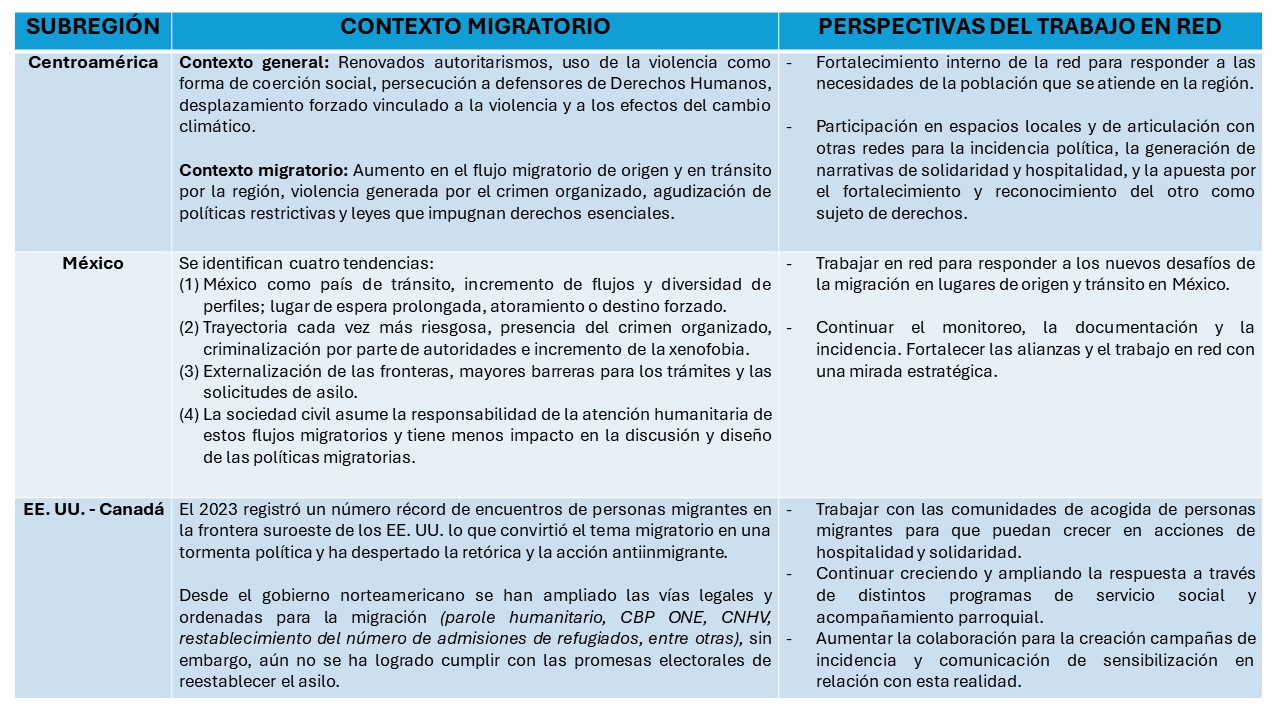
Jesuit Network with Migrants Central America and North America (RJM CANA) shared the first four months of the year report (January – April 2024): "They have been months of a lot of work to face the challenges in the migration context characterized by an increase in the migratory flow in vulnerable conditions throughout the region, however, also These have been months in which the fruits of networking have been confirmed".

From April 5 to 7, the Jesuit Radio Network in the Dominican Republic met at the facilities of the Loyola Polytechnic Institute (IPL) in San Cristóbal. During the meeting, the construction of a shared itinerary that seeks to focus on collaboration and contextualized radio communication marked by the Apostolic Preferences approved by the Society of Jesus for the coming years was highlighted.
On Wednesday, April 10, the European Parliament voted on the European Pact on Asylum and Migration. JRS Europe directors jointly opposed the pact and urged European institutions to reject it: "We cannot support a system that will allow the systematic detention of thousands of people, including children, at the EU external borders."
The Cartagena Declaration, adopted in 1984, emerged in response to the growing displacement crises in Latin America. Its importance lies in its expanded approach to defining a refugee, recognising the causes of displacement beyond armed conflict events. Despite progress in these 40 years, implementation challenges of the recognition criteria and the commitments made in the adopted plans persist.